




























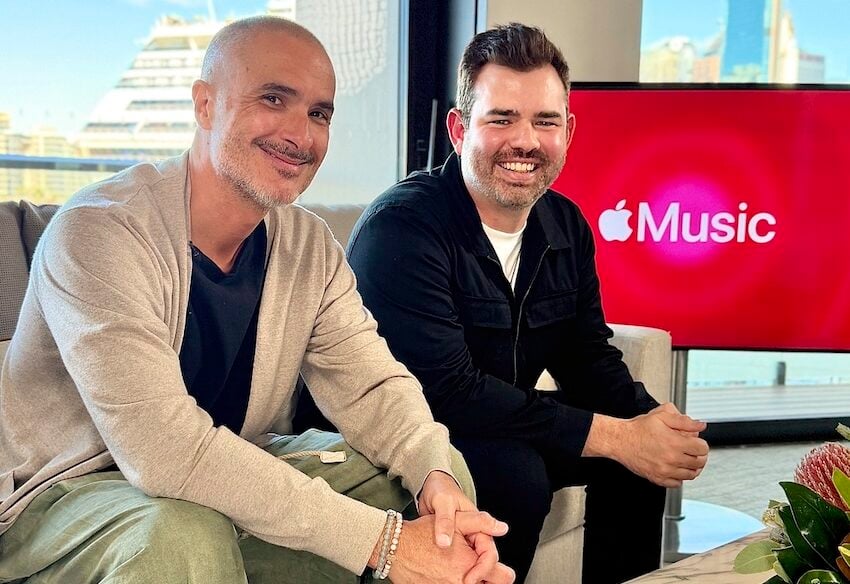
Apple Music’s global creative director and host Zane Lowe joins this week’s episode of the Rolling Stone Uncut podcast.
Ahead of his Vivid Sydney ‘In Conversation’ appearance at City Recital Hall this weekend, the New Zealand-born broadcaster sat down with Editor-in-Chief Neil Griffiths to unpack a decade at Apple Music, the craft behind his marquee interview series, and the state of the music industry in 2026.
Watch below or listen to the full episode on Apple Music and Spotify.
We last did an interview right before COVID, so much has changed since then in regards to streaming, AI. How have you navigated that being a tastemaker and a fan of music?
We must never forget it was a very, very strange and sad time, and if you want to zero in on just one particular focus point, let’s just talk about music within that much broader kind of experience. Hugely anxiety-inducing for working musicians, for the industry, for venues… so we’re back in business. Okay, what does that mean? Let’s just get back on the road. Let’s just get music in front of people again. Let’s get back to something that resembles normality. Now that might take a couple of years. And then throwing off the back of that as we’re just getting into a rhythm, oh, here’s this new scalable development that’s, depending on who you talk to, is going to replace music. Like, no, it’s not. So right now we’re in the middle of all that thrash.
I think we’re just now starting to hear first albums from some of these artists who were coming out of high school. They were in high school during COVID and if you don’t think that’s baked into their outlook and what they’re making through music, even in some subconscious way, then you’re crazy.
Is trending on TikTok and internet fame as important as the music?
Love Music?
Get your daily dose of everything happening in Australian/New Zealand music and globally.

I think that the internet is a very important tool and offers people the freedom to learn and create access. And I’m talking about creators right now, music people. To make music, to share music, distribute music and find an audience. I don’t think it has the answers. I don’t think it’s ever had the answers. The only people who have the answers are the people who make the music.
I do think it is an important tool for promotion. I think we’ve put too much emphasis on all social media algorithms that really are, by design, not really there for us to understand or to be able to utilise as tools. We’re sort of at the behest of their changing shape. I knew social media would change when I took some content that we created with an artist that has over 200 million followers, and it got 1,000 plays. I was like, you can’t even put this in front of the people that follow the artist that we just made the content with!
From my perspective, like, I lean into social media and use it like everybody else, but I don’t rely on it to have the answers for me. And I don’t expect it to do anything for me I’m not willing to do for myself. I literally look at it as a tool in the box.
Who was the interview that made you realise this is what you want to be doing for the rest of your life?
Thom Yorke. That was a dream for me. I just remember floating through that conversation because he was just so interesting and generous and cool and open. For me, as a lifelong Radiohead fan and Thom fan, to be in a situation where I felt like he wanted to be there and was so engaging in that moment was emotional. I’ve had lots of conversations with people that, where I’ve come up at the end of it and be just changed, you know? And it could be right down to I just feel really good about people.

