




























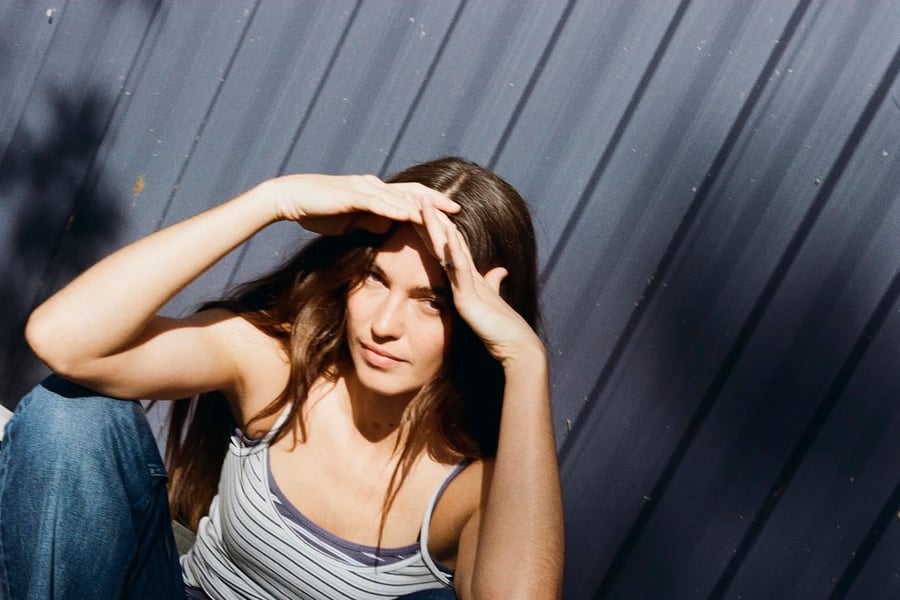
Kita Alexander’s highly anticipated second album Rage has arrived.
Described as a reclamation of self, the album comes after a lifetime of silencing her feelings and instincts to fit the societal mold expected of women. Drawing inspiration from her own life and shared experiences of others, she sheds her good girl expectations on Rage, searching within to meet her truest self.
“It’s about me embracing anger and not being afraid of it,” she tells Rolling Stone AU/NZ. “Not every song is about anger, but everything has a touch of it in it. I don’t think rage and anger need to be expressed loudly in your face. It can be communicated in a peaceful way.
“I’m not here advocating for throwing things or screaming really loudly at people. I’m just advocating for listening to that feeling and not being afraid of it.”
To celebrate the album’s release, Alexander will be heading off on an Australian tour in September, with shows in Melbourne, Sydney, Brisbane, Adelaide, and Perth. See here for all the details.
Ahead of that though, she sat down with Rolling Stone AU/NZ to give us an exclusive track-by-track breakdown of the album. Check it out below.
Love Music?
Get your daily dose of everything happening in Australian/New Zealand music and globally.

“The Good House”
“The Good House” was the second single and we really wanted to have it out early because it set up the world in a really beautiful way – the structure of the song, the storytelling, the instruments. It wasn’t like the big pop song that I wanted to get at radio, but I wanted people to understand the record.
“The Good House” is this feeling I have with myself of presenting one thing to the world while internally it’s a mess in there. My brain feels a little bit messed up, I get sick quite often, and I have this big heavy emotion that I’m not dealing with – which is rage.
“Metal Detector Man”
I love this song so much. It’s about me dissecting marriage – what a wedding ring means and the symbolism behind it all. Once you actually hear the lyrics in the chorus, I think it just dissects marriage and all the convoluted words attached to it, the pressures, the beautifulness. It’s everything.
The line that stands out to me is, ‘It’s only a rock – why is it so easy to put on and so hard to take off?’ It’s about a diamond ring, a wedding ring – why do we hold so much symbolism? Why is it so hard to take off? But that’s also so beautiful because it’s been like that forever. The circle itself is about infinity and love looping on itself. So yeah, it’s just me looking at marriage.
“Sentimental Letter”
This one feels like it’s for the girlies and I needed to hear it myself. I wish someone had told me earlier that it’s okay to have standards and boundaries and boxes you want ticked. I actually had a girlfriend very early on in my life who said, ‘You’ll never find the love of your life if you have boxes’. And I was like, ‘Wait, no. They’re there to protect you. They’re there for a reason’.
I have my daughter singing on it, which might not be completely appropriate because I swear all the time and I say clit in the middle – but she doesn’t sing those lines. She sings ‘I’m not your mom’, because I want her to know that. I made the mix engineer turn her up.
It was important to have her be a part of this track because it’s for the girls, it’s for everyone to realise that you don’t have to be someone’s mom. You can say, ‘I don’t want this and I want that’. I want her to know from a very early age that she doesn’t have to just be quiet and accept things the way they are.
“Worth It”
“Worth It” is kind of a follow-on from “Sentimental Letter” – it sits that way on the tracklist intentionally. It’s going, ‘Okay, even though I’m learning to have standards and boundaries, I still have this part of me that thinks, does that make me a hard woman? Does that make me not palatable if I have these big standards?’. And then it’s me coming to terms with the fact that I’m worth it. Even if I have boundaries and boxes I want ticked, I am still worth it. It might not be a completely smooth, easy road, but I have worth.
It’s about still having confidence in yourself – that even though you’re being loud, or you might have rage, or you might have standards, you’re still a good person and your love is worth it.
“Tell My Friends (ft. Christopher)”
Working with Christopher was a dream. It was so easy. We’d had a song in the works a couple of years earlier that fell through, but I’d always wanted to work with him. I could be wrong because I don’t know the Denmark music scene that well, but I’ve heard he’s the Justin Bieber of Denmark – and if that offends you, Christopher, I’m sorry! He’s this family guy, got a hot wife, got the kids, he’s talented, he has No. 1 singles in Denmark. I really wanted to tap into Europe, so this was a great collab.
I sent him the song and in less than 12 hours he sent back a new verse and chorus. I was like, ‘That’s it, you nailed it’. It was probably easier to work with him than someone from Sydney, despite him being on the complete opposite side of the world.
Melodically it’s actually one of the bigger pop songs on the record, even though it was written very quickly with Nalia and Aaron in LA. I was scared of it because it felt like such a big pop song, so we removed the drums and I added banjo – I consciously tried to pull it back. But then it felt like it was missing something, and I thought a second voice would be amazing. Having the woman’s perspective and the male’s perspective made sense.
“Tell My Friends” is about what happens when rage and anger gets a bit out of hand. You vent too much, you say things you don’t mean, and then you’re like, ‘Oh no, now they’re going to think that’. Gossip is such an important part of human nature and I love it, I’m not against it – friends should be able to gossip to each other. But sometimes it can get out of hand and you’ve said too much, over-exaggerated things, and then you’re chasing your tail. There have been plenty of getting-back-together breakup songs, but I’d never heard anyone go, ‘Shit, how am I going to tell my friends now?’.
“Avoidance”
I think this was the first song I ever wrote for the record, and I didn’t realise the record was being formed at all when I wrote it. It was one of those songs you write and go, ‘Oh my god, this is so deep – what am I avoiding? What is under there?’.
I actually really struggle to talk on the spot. If you asked me to give a speech at a wedding I’d be like, ‘Let’s get fucking drunk’. I am not romantically poetic on the spot – I have to think, I have to drop into myself and spend time with my own thoughts. That’s why I love songwriting so much; it forces me to do it.
When I finished “Avoidance” and listened back, it kind of scared me. Avoidance is one hell of a drug, and I do avoid looking at a lot of things because they scare me – I don’t know how I should feel, or it’s just too much to go into. I wrote it around the time of “Press Pause” and always knew it would come out eventually.
I almost wanted it as the first track on the record, but I thought it was too deep to open with. It sits in the middle and I think it works really nicely there – it’s a real insight into my brain, how I sweep things under the rug, how I used to idolise collecting moments in my life like scars on my body, like souvenirs. There are so many poignant lyrics in there and I really do love this song.
“Telepathy Is Real”
I love to believe things I hear because I want to believe the world is good – that people aren’t out to get you, they don’t want to lie to you. Even if someone has lied to me a bunch, I will still believe the next thing they say. One of the lyrics in there is this idea of, ‘I can believe you if I squint and look at you like this’. It’s about conspiracy theories – if you tell me there’s an alien walking down the street, I’m like, really? What colour was it? Tell me more.
I just love to believe the best in people. But sometimes I struggle to believe in the most magical thing of all, which is love. I doubt whether colleagues who I think are my friends actually like me. I even ask my kids, ‘Look, I was angry at you the other day, do you actually still like me?’. I’m pretty insecure about this one magical thing. Why am I believing the alien walked down the street, but not always believing in love? It scares me.
The title is “Telepathy Is Real” because I genuinely believe telepathy is real. And right at the end of the song I land on this idea that all this scepticism really isn’t me. I shouldn’t be sceptical about love, because I believe in magic and I believe there is more to this world than what we see.
“Miss Australia”
I’ve always had the title “Miss Australia” sitting with me. I’ve always wondered, if Americans like Taylor Swift can write “Miss Americana”, why can’t other people be so proud of their country. And even in asking myself that, I understand why it’s complicated here – our country is so recent and there’s so much trauma that has happened to the people of this country so recently that it’s hard to speak proudly of it without sitting with that.
But I had the title for a long time and kept asking myself, how do I make this into a song? As soon as I started thinking about Miss Australia, you’re thinking about pageants, about crowning yourself, about deciding you’re good enough to win that title. I have friends who’ve won Miss Australia and gone on to Miss World. But it’s not really about pageants – it’s about going, ‘Oh wait, I could never do that. I’d cut myself down before I even finish the thought’.
The song is me coming to terms with how I cut myself down just as much as other people cut me down. I hate that that’s in me. I hate that it’s a part of our culture and I want it gone. But most of all, in this song, it’s me doing it to myself, asking myself ‘How dare you think you can be this person, who do you think you are?’. And then right at the end I turn it around, because I want to be able to accept this for myself. I want this for everyone in Australia. I want everyone to succeed, because it only brings all of us up. It’s about reclaiming the success that I want for myself.
“Rage”
I really wanted to lead the rollout with this one because it maps the journey through the stages of anger and rage: first the rejection of the feeling, ‘I don’t know what this is’, to ‘Hang on, is this anger?’, to ‘Holy moly, I’m really feeling it, I want to get it out’ – and then the comedown after the rage.
I actually led my campaign with videos on social media about the five stages of anger and everyone was like, ‘What the fuck’s wrong with her?’. But I was being cryptic and trying to be cute. I love this song. I think it’s really me – it’s really Kita, the sounds are me, the song is me. It refrains from a traditional chorus, it’s hooky but soft, and it’s all about climbing toward the middle eight where I’m yelling and letting it all out.
“Low Rise Jeans”
I will always write songs about my sister. I struggle with every moment that changes in the world – whether it’s from skinny jeans to low rise jeans – because my sister’s not here to see it all, and I wish I could tell her about all these amazing things that have changed. I wish I could show her how much I’ve changed.
This one is fun and upbeat – it’s just wishing that the person who isn’t there anymore could be here to share everything with you. Whether it’s an ex-lover or someone you’ve lost, I think so many people can relate to that.
“Don’t Call Me Sunshine”
The song began because whenever I see people – whether I know them or not, even just someone saying hi to me on the street – I smile back and then as soon as they walk past me, I drop it. I thought it was just me. Am I just a fake person? Am I just pretending to be this happy sunshine girl when I’m not?
Even with Rage coming out, a lot of journalists have said, ‘You don’t seem like an angry person, everything we know about you is happy and sunshiny, you’ve got kids, you’re a wife’. And I’m like, ‘Yeah, but you don’t know me behind closed doors’. As soon as I leave a room, I power down.
I also feel mean about it sometimes – like, ‘Am I lying to everyone?’. But this song is saying, ‘Hey, don’t call me sunshine, because I’m not that, and I don’t want to be your sunshine. We can be friends, you can call me – but I’m not going to be this happy-go-lucky girl all the time. Don’t expect that of me’.
“Sunday Girl”
This is a really beautiful song that I wrote with Matt Corby – he’s playing piano. It’s all about the letdown, the comedown from this big emotion of rage. Like I wish I didn’t have to feel all these big feelings. I wish I could just be pleasant.
Even though the song before it is “Don’t Call Me Sunshine”, there’s still a part of me that wishes I could just be the morning sunshine on a Sunday and have that be me forever. But it’s not real – nobody can live on Sunday on repeat forever. There’s still a part of me that wishes it was possible though.
The lyric that stands out to me is, ‘It feels like December 25th, where we tell the kids that magic still exists’. I make Sunday pancakes every week. I really try to slow down with my kids on Sundays – I don’t book anything in, I want to be slow and present. And I love Christmas so much, it feels so magical. It’s another day I wish could be on repeat.
“Sunday Girl” is ultimately about feeling a bit overwhelmed with all these feelings. I actually just got off the phone with my naturopath and she said, ‘I’m so grateful to be able to live this big life’. “Sunday Girl” is that feeling – it might be hard and it might be overwhelming, but how lucky are we that we get to live it? Even though in the song I’m still trying, again, to avoid those feelings.
Kita Alexander’s Rage is out now.

