




























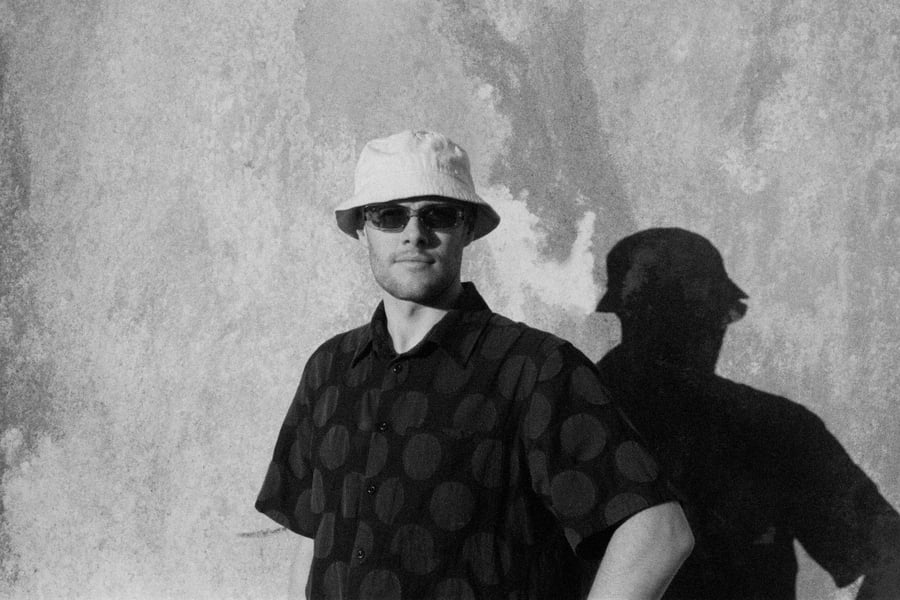
On stage, Cory Champion can be seen playing a drum kit, percussion instruments, synthesisers, samplers, or beat machines. He could be with Fat Freddy’s Drop, Lord Echo, Avantdale Bowling Club, Mara TK, or Louis Baker, leading his award-winning jazz group Clear Path Ensemble, or trying out something new. Champion also produces dub, techno, and electro-slated dance music under the name Borrowed CS. Once, he painstakingly built a hi-fi sound system and used it to host a listening party for his celebrated Clear Path Ensemble album, Black Sand. In all his practices, he’s a master craftsman who values form and function.
A fixture in New Zealand music for over twelve years, Champion is an open-eared performer and producer who is equally adept at supporting artists across genres and realising his own projects. Last year, he relocated from Wellington to Melbourne, where he’s been quickly embraced by his Australian contemporaries. If you’ve been following his career, it’s unsurprising. “Playing with him is total immersion and complete comfort,” explained Champion’s longtime collaborator, the jazz pianist/keyboardist and arranger Dan Hayles. “It’s a never-ending flow of questions and responses.”
Earlier this year, Champion started drumming for Fat Freddy’s Drop. Back in mid-May, I called him while the storied hi-tek soul band was on a three-night run at the Christchurch Town Hall. Over June, September and October, he’ll travel through Europe with them for the Based on a True Story 21st anniversary tour, a celebration of their classic album and the life and times of the group’s late leader, the great Chris Faiumu aka Mu. However, when we spoke, it was to talk about Champion’s career and his new Clear Path Ensemble album, Ascending.
Recorded solo, except for “Saying Something”, which features piano, Rhodes and vibes by Hayles, Ascending’s improvised compositions emerge as an abstraction of the spiritual jazz-funk and electronica sensibilities that colour his first three Clear Path Ensemble albums, Clear Path Ensemble (2020), Solar Eclipse (2022), and Black Sand (2025). Opening in the mode of American composers Steve Reich and Laraaji’s late ’70s to early ‘80s minimalist, new-age, and ambient explorations, the six-track album is a treasure trove of intuitive playing that feels rooted in a lifetime of deep engagement with music.
Ascending’s cover art is an acrylic-on-linen painting by the multidisciplinary artist Jade Townsend (Ngāti Kahungunu, Te Āti Haunui-a-Pāpārangi). She created it for From the Lion’s Mouth, her recent exhibition at Te Whare o Rehua Sarjeant Gallery in Whanganui. Fittingly, that exhibition was where Champion first discretely shared the album, letting its glistening, memory-lane melodies, lush chords, and reflective soundscapes hypnotise listeners unbeknownst as they gazed upon Townsend’s works.
Along with being an instrumentalist and a producer, Champion is a DJ, record collector, and cymbal maker. His relationship with music and the tools used to make and play it runs deep. Growing up on the Kāpiti Coast, he requested a drum kit at age 5, then temporarily settled for a recorder before taking community percussion classes. “I remember this poor guy trying to teach us how to play in time on these wooden drum pads,” he laughed. “Eventually, I proved I was serious, and my parents bought me a drum kit just before I started high school.”
Love Music?
Get your daily dose of everything happening in Australian/New Zealand music and globally.

In his first year at Paraparaumu College, Champion formed a band called Yeti with his friends Jack Boyes (bass), Steven Casey (guitar), and Tim Smith (rhythm guitar). He got a taste of the rush of the stage when they entered the Smokefreerockquest. Playing in Yeti also gave him a window into electronic music production, when one of his bandmates introduced him to MIDI and computer music. Intrigued, he realised he needed to know more.
When he wasn’t playing as a teen, Champion spent a lot of time listening. He was fascinated by Fat Freddy’s Drop’s cult Live at the Matterhorn CD, and The Mint Chicks, a noisy art-punk band making waves from the Hibiscus Coast. These memories make his drumming gig with Fat Freddy’s Drop even more significant. It’s about as genuine a full-circle moment as I’ve seen in New Zealand music.
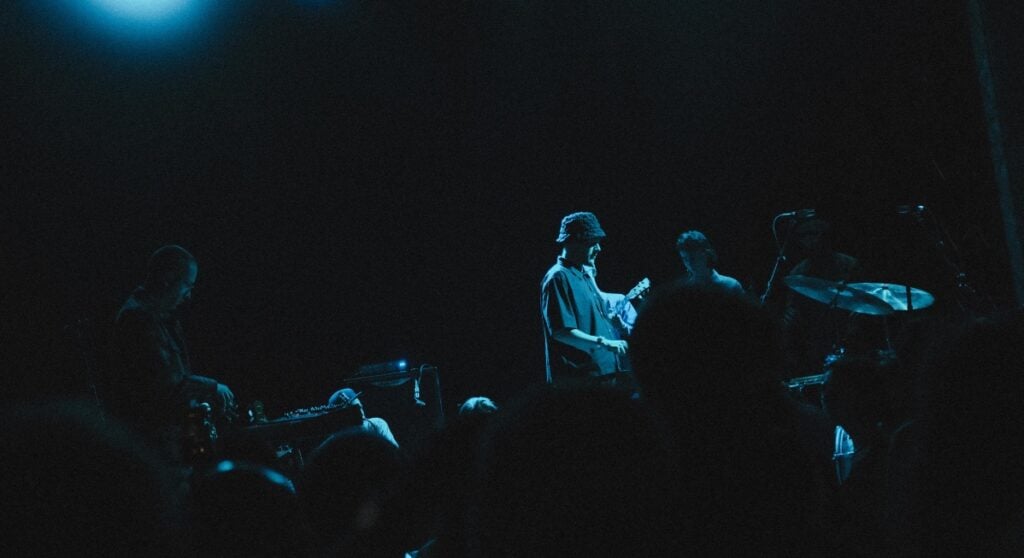
Image: Clear Path Ensemble Credit: Supplied
In high school, Champion took drum lessons from the musician James McDonald aka Jimmy Mac, who later worked as Lorde’s keyboardist and Ableton operator. “Jimmy would go into Wellington and get lessons from [the drum tutor] Lance Philip,” he explained. “It was in my mind that I could do that.” Soon enough, he was studying jazz under Philip and listening to the New Zealand School of Music’s big band rehearsals. An encounter with Miles Davis’ Cool & Collected compilation sent him down a wormhole he’s never really come out of. “I used to listen to music on the train every day,” he said.
After graduating, Champion went to the New Zealand School of Music. By this stage, he had a growing collection of records. He put them to use when Damian Jones, the owner of Wellington’s Meow venue, asked him to DJ at their jazz night. “I’d go in there on Sundays and use the turntables,” he says. “I was also doing a show on the university radio station.” Alongside jazz, he delved deeper into computer music. “I got obsessed with learning Ableton,” he explained. “It wasn’t about working in genres, it was about exploring it as a music-making tool.”
“I followed my nose,” Champion continued. “I’d buy a drum machine, learn more about Ableton, and mess about with synthesisers.” Eventually, he purchased an Akai MPC, a hardware music workstation famously used by US hip-hop producers like DJ Premier, DJ Shadow, and J-Dilla, and, closer to home, Mu from Fat Freddy’s Drop. As he admitted, it took him a while to join the dots between making tunes and DJing “I started watching Boiler Room videos and realised that producers would DJ, but as well as their music, they’d play other music they liked. After that, I connected it all up.”
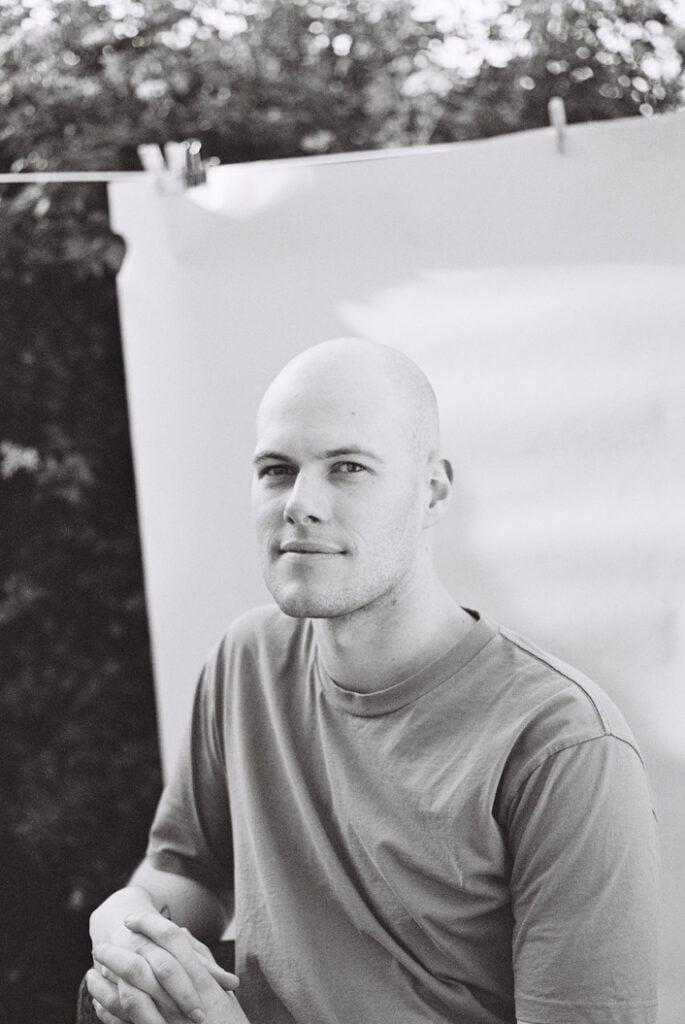
Image: Cory Champion Credit: Supplied
While he was studying, Champion played in a surf-rock combo called The Digg with his classmates Fabian Shaw (guitar/vocals), and Alexander Bleakley (bass). He also drummed in jazz groups around Wellington. As he saw it, his first break came when the Māori musician Mara TK asked him to play for his future soul group, Electric Wire Hustle. EWH took Champion overseas and helped him understand the broader musical landscape. “I started to understand more about how all these different genres like soul, hip-hop, house and techno could relate,” he reflected.
By 2015, Champion was uploading ambient, techno, and deep house tracks on SoundCloud and Bandcamp. A sea change was occurring, with a generation of indie, experimental, and noise musicians turning their hands to producing lo-fi house and techno tracks for boutique cassette and vinyl dance labels like Mood Hutt, 1080p collection, and Lobster Theremin. “Peers of mine like Thomas Richards, aka Mongo Skato, were releasing tapes overseas,” he said. “It was all happening on Soundcloud. Suddenly, labels overseas were reaching out to me to say, ‘We heard these tracks. Would you like to do a record for us?’”
Over the next decade, Champion signed a series of Borrowed CS EPs to 3BS, Margins, Money $ex Records, Buzzy Point, Planet Trip Records, and Wonderful Noise Productions. He also produced his own self-financed cassette and vinyl releases. Across projects like Process Knowledge (2025), Creative Writing (2024), and Arch (2020), you can hear his love and reverence for futuristic machine beats that emerged from Detroit, Chicago, New York, London, and Berlin, dovetailing with his Antipodean sensibilities. On the Rise N Shine EP, released through Planet Trip, he took his aesthetic to new levels on two red-hot vocal tracks, “All My People” and “Hearsay”, recorded with Steve Spacek and Mara TK, respectively.
In tandem with his efforts in the worlds of electronic music and DJing, Champion drummed for a laundry list of New Zealand talent — Louis Baker, Grayson Gilmour, Glass Vaults, Lord Echo, The Shocking Pinks, Estère, Lucien Johnson, Devil’s Gate Outfit, Aja, and Mara TK, to name but a few. Touring as a session musician took him around the country and further abroad. As time passed, his musical perspective became even broader.
The veteran Wellington-based bassist Johnny Lawrence is another of Champion’s longtime collaborators. Over the years, they’ve played together with Electric Wire Hustle, Louis Baker, Clear Path Ensemble, and most recently, Fat Freddy’s Drop. From his perspective, a lot of Champion’s adaptability comes down to how well listened he is. “If he’s not playing drums or making music, he’s listening attentively to something,” Lawrence said. “He understands the finer details of the music and immediately ingests it, which naturally comes out in his playing. Basically, he knows his shit and can play with anyone.”
In 2019, the influential Auckland saxophonist and producer Nathan Haines celebrated the 25th anniversary of his seminal jazzy hip-hop album, Shift Left, with a reissue and live shows. I remember Champion being briefly worried he wouldn’t be able to do a similar tour in the future. The following year, the cult label Cosmic Compositions released Clear Path Ensemble’s self-titled debut on vinyl, followed by a digital EP of electronic remixes produced by some rising talents from New Zealand, Germany, and the US: Kush Jones, Christoph El Truento, AceMo, Glenn Astro, Daniel Hayles, and Champion himself.
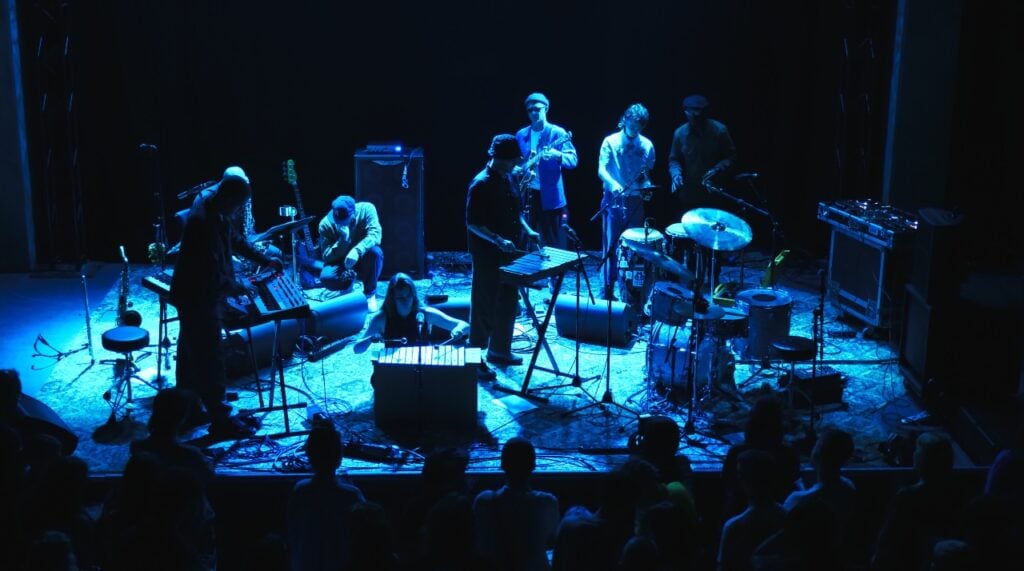
Image: Clear Path Ensemble Credit: Supplied
Clear Path Ensemble’s music spoke for itself, but as with many aspects of his career, Champion arrived at the first album incrementally. The jazz composers of his generation would come up with an idea, apply for arts funding, and use it to record an album. Instinctively, he knew he needed to work at a slower, more exploratory pace. Along the way, he balanced studio sessions and gigs with odd jobs, teaching music, stints at a car yard and a fruit store, and later lecturing at Massey University.
“For Clear Path Ensemble to happen, I had to have the means to do it,” Champion explained. “I’d been building a collection of studio gear while I was making the Borrowed CS records. Then I got access to a vibraphone. As soon as that happened, I felt like I could just do a project with that sound and record it myself.”
In the wake of Clear Path Ensemble (2020), Champion had the opportunity to sign his second CPE album, Solar Eclipse (2022), to Soundway Records, a prestigious independent label founded by the British DJ, record collector, and producer, Miles Cleret. At the time, the label had taken an interest in releasing music from New Zealand and Australia, notably Lord Echo, Julien Dyne, and Flamingo Pier. Having played with Echo and Dyne, adding Champion into the mix made sense. “My read was that I fit into the larger idea of what Soundway was doing at the time,” he reflected. “Lord Echo percussionist releases a cosmic jazz album, has a sort of ring to it, doesn’t it?”
Soon enough, Champion was invited to present Clear Path Ensemble at music festivals in Auckland and Wellington, including Catacombs, Lōemis, The Others Way, and the Wellington Jazz Festival. After Solar Eclipse, he went on holiday to Japan with his partner. There, he was blown away by the country’s deep listening culture, as exemplified by the jazz kissa, a type of cafe or bar focused on vinyl, high-end audio systems, and more often than not, good quality whisky. “I saw how powerful it would be to make something that would be suitable for that sort of environment,” he said.
Emboldened, he felt ready to fully conceptualise his next album, before tracking it as part of an epic three-day run, when his musical community in Wellington came together to record three albums in a row: Clear Path Ensemble’s Black Sand, woodwind player/composer Louisa Williamson’s Groundwork, and a yet-to-be-released project led by Dan Hayles. “It’s cool, because I’m not living there anymore and Louisa has moved to London, so those records are a real time capsule of a moment in time,” Champion reflected.
Despite the impact of Clear Path Ensemble’s first two albums and live shows, Champion struggled to find a label for Black Sand. After spending a winter banging his head against closed doors, he paid to press the ambient jazz album on vinyl himself. Three weeks before he launched Black Sand with an intimate listening party at Wellington’s Vogelmorn Hall, Champion spent a day improvising the recordings that became his fourth CPE album, Ascending.
Black Sand wasn’t even out, but he already had a follow-up ready. If that isn’t a window into how Champion works and what he’s capable of, I don’t know what else to tell you. Not long after the album was released, Gilles Peterson, the influential UK broadcaster, tastemaker, and DJ, showcased its glorious minimalist/new age slanted high point “Cascade d’Ars” on his BBC Radio 6 show.
Several months later, Champion received the 2025 APRA Best Jazz Composition Award for the same song. Only time will tell what awaits him in the wake of Ascending and the projects to follow. “When I’m in doubt, I just do the DIY thing,” he said. “I’m confident with it. I know if I do it right, I’ll always be sweet.”
Clear Path Ensemble’s Ascending is out now.
Martyn Pepperell is an award-winning freelance music journalist, broadcaster and DJ from Te Whanganui-a-tara, Aotearoa.

