



























Find out more about our Māori-language initiative here.
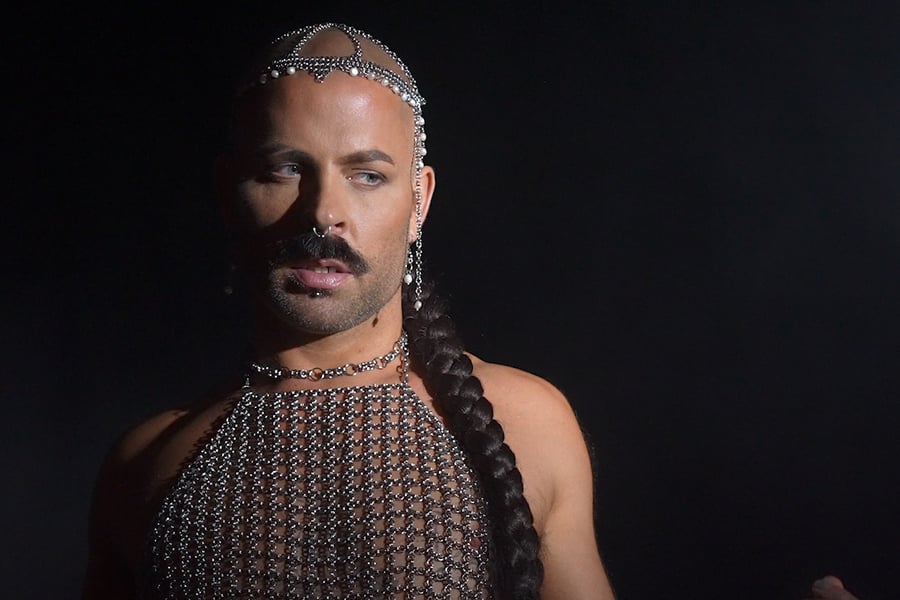
Ardon England demands your attention.
A rising star of Aotearoa’s electro-pop scene, England crashed the Official Aotearoa Music Charts with I’M THAT BITCH earlier this year, his EP landing at No. 4 on the Top 20 Aotearoa Albums Chart as well as No. 23 on the Top 40 Albums Chart.
He then became quite the talking point at the 2026 Aotearoa Music Awards, despite not being nominated (yet), drawing attention with his striking red-carpet appearance.
England then dropped “WHAI MAI RĀ”, the te reo version of his song “EGO”, just in time for Matariki (listen below).
Taken all together, these actions are the work of an artist and person finally coming into their own. “The song is about self-belief and stepping into your power… I’m also allowing myself to make music that feels authentic rather than trying to fit into expectations,” he told us.
“Famously un-famous pop star,” England self-deprecatingly writes in his Instagram bio, but that might be the case for much longer.
Love Music?
Get your daily dose of everything happening in Australian/New Zealand music and globally.

He’s now garnering a growing following, both on streaming platforms and social media, thanks to his “unapologetically queer and unapologetically Māori” style and sound, which mark him out as one of the most singular artists anywhere in Aotearoa.
Below, England reflects on his career journey, his relationship with his Māori identity, his current creative era, and much more.
Follow Ardon England’s music here and here.
Rolling Stone AU/NZ: As we look ahead to a new year in the Maramataka, tell us how you’ve been going and what’s ahead for you?
Ardon England: This Matariki feels like a full-circle moment. I’ve just released “WHAI MAI RĀ”, the reo Māori version of my song “EGO”, which was made possible through the Waiata Takitahi initiative with support from NZ On Air. Releasing it during Matariki felt right because it’s a time to reflect on where you’ve come from while setting intentions for where you’re going.
Looking ahead, I’m focused on taking this project as far as it can go, touring, releasing more music, and continuing to build a career that celebrates both my Māori identity and my queer identity without compromise.
This year’s Matariki theme was all about encouraging all people to celebrate Matariki together. How did you mark the occasion this year?
I’ll be celebrating the best way I know how: through music. “WHAI MAI RĀ” is my contribution to this year’s celebrations, and being able to release a waiata in te reo Māori during Matariki feels incredibly special. I also get to celebrate alongside everyone who helped make this project possible. Music is always better when it’s shared.
The song is about self-belief and stepping into your power. Even though it’s inspired by my own experience as an artist, I hope people can hear themselves in it too. Matariki reminds us to honour those who came before us, celebrate where we are now, and dream about what’s next. That’s exactly what this release represents for me.
View this post on Instagram
Where are you from in Aotearoa?
I’m from Whanganui but whakapapa to Ngāti Kahungunu and Te Āti Awa.
Whanganui will always be home. It’s where I first discovered music, dance, and performance. After spending years away chasing opportunities, every time I go back I’m reminded that sometimes the strongest inspiration comes from returning to where your story began.
How would you describe the space you’re in creatively at the moment?
I feel more confident creatively than ever before.
For a long time I was figuring out where I fit, but now I know exactly what I want Ardon England to be. It’s electronic music with live vocals, big performance energy, and storytelling that’s unapologetically queer and unapologetically Māori. I get to be the queer artist I wish I’d had growing up.
I’m also allowing myself to make music that feels authentic rather than trying to fit into expectations. Whether that’s singing in English, te reo Māori, or somewhere in between, I’m following instinct more than trends.
Do you think your Māori identity is something you consciously write about, or has it become impossible to separate from who you are as an artist?
To be honest, growing up I felt disconnected from my culture. I’m still on my reo journey, and I think I always will be.
Being Māori isn’t something I switch on. It’s something I’ve come to realise has always been part of me. I just needed to understand it, embrace it, and acknowledge it. It’s a part of how I see the world. Every song, every performance, and every creative decision is shaped by te ao Māori, even if the song isn’t explicitly about being Māori.
Creating “WHAI MAI RĀ” deepened that connection even more. It reminded me that learning te reo Māori isn’t about being perfect. It’s about showing up, honouring the language, and continuing to grow. I hope that encourages others who might feel they’re “not Māori enough” to reconnect in whatever way feels right for them.
Some emotions seem easier to express in one language than another. Have you found te reo Māori has allowed you to express things you couldn’t quite say in English?
Absolutely.
Te reo Māori has a depth that’s hard to describe. Some kupu hold generations of meaning, connection, and emotion that don’t always have a direct English equivalent.
Translating “EGO” into “WHAI MAI RĀ” wasn’t just about changing words. It completely changed the way I connected to the song. It made me think more deeply about every lyric and what I actually wanted to communicate. It became something much more spiritual than I ever expected.
Do you think Māori music is still underrepresented in Aotearoa music? If so, what can be done to change this?
We’ve made incredible progress, and it’s exciting to see waiata in te reo Māori becoming part of mainstream listening.
The challenge now is making sure that support doesn’t stop once Matariki or Te Wiki o te Reo Māori ends. Māori artists deserve year-round investment from radio, festivals, streaming platforms, media, and funding organisations.
Representation also matters beyond language. I’d love to see more space for artists who exist across multiple identities, whether that’s queer, Māori, Pasifika, or anything else. The more stories we hear, the stronger our music scene becomes.
View this post on Instagram
What’s your favourite waiata of all time?
“Tōrea” by Makaria Beery, Hamiora Tuari, Mere Arihi Pipi-Takoko, and Pere Wihongi.
It’s a song mum and I have always connected over. We always end up singing it together when we’re having a drink haha. It’s one of those waiata that never gets old, no matter how many times you hear it.
It’s such a beautiful song with so much meaning behind it. More than anything, it’s the feeling you get when you’re singing it. It reminds me of my mum and gives us a way to connect through our culture, and I think that’s really special.
Who’s one young Māori artist you think our readers should know about?
I’d have to say Takatapunani.
They’re an incredibly talented DJ, producer, and artist who I’ve only recently discovered, and I genuinely think they’re bringing something fresh to Aotearoa’s music scene. They’re pushing boundaries, creating their own lane, and I can see them doing some really big things. Definitely keep your eye on them.

