





























This feature is part of a series on New Zealand cinema.
In this year’s New Zealand International Film Festival (NZIFF) programme, alongside myriad new titles and showcases for young directors, sits a classic of Aotearoa cinema, made by one of its very best filmmakers.
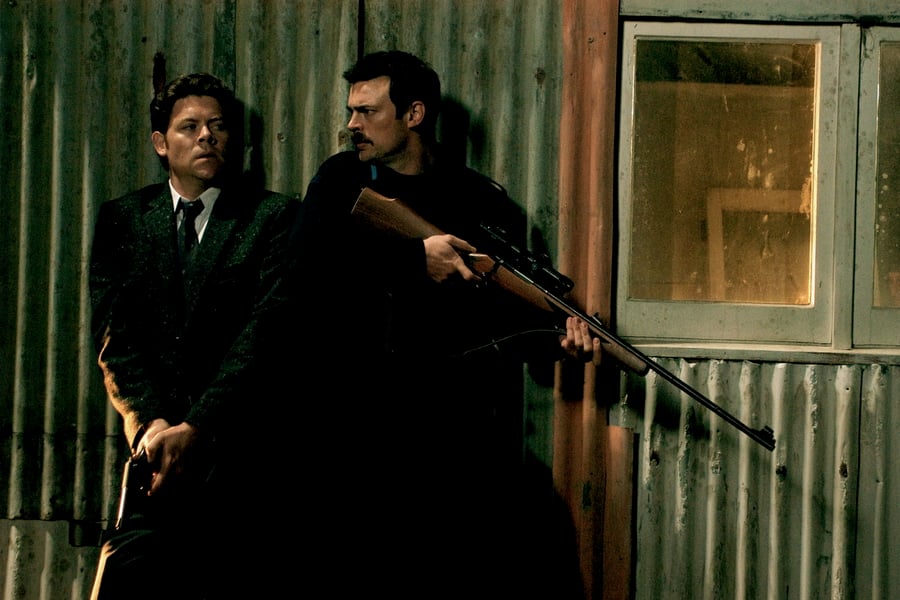
Out of the Blue, Rob Sarkies’ second full-length feature, turns 20 this year, which makes now the ideal time for it to return to the big screen.
Having shown early promise with his debut Scarfies (1999), a black comedy set in and around his hometown of Ōtepoti Dunedin, Sarkies took on decidedly heavier subject matter for his sophomore film.
Before the Ōtautahi Christchurch mosque shootings of 2019, the deadliest mass shooting in New Zealand history took place not in a big city but in Aramoana, a tiny coastal settlement just north of Dunedin. On November 13th, 1990, David Gray, a well-known face in the local community, went on a day-long rampage with a semi-automatic rifle, killing 13 people in total.
Just 16 years later, Gray’s massacre formed the basis of Out of the Blue, and Sarkies’ decision to revisit the tragedy was initially decried by some Kiwis, primarily those working in the media.
Sarkies’ film, however, turned out to be the furthest thing from a sensationalised, stylised account of the tragedy. Instead, Out of the Blue was a sensitive, albeit raw, reconstruction of a community losing its innocence at the hands of one man. Given the film was being helmed by an Otago boy, the media, you feel, should have given Sarkies more grace at the time.
Love Music?
Get your daily dose of everything happening in Australian/New Zealand music and globally.

“‘Out of the Blue’ isn’t really a film about David Gray. It’s about the community of Aramoana… They discovered strength that they didn’t know they had,” as NZ On Screen’s Dan Slevin wrote.
“Making these kinds of films tends to be an exercise in building trust, listening, and addressing concerns directly,” he tells me via email. One key measure saw Sarkies and his crew avoid filming “sensitive scenes” in the township, while the working title Aramoana soon changed to Out of the Blue.
Upon its release, Sarkies’ film was a hit at the New Zealand box office, becoming one of the top 10 highest-grossing local films at the time. It premiered at Toronto International Film Festival (TIFF) in September 2006, and while showing a deeply Kiwi film at one of the world’s most prestigious festivals was meaningful to Sarkies, the local reaction meant much more to him.
“The most memorable experience of ‘Out of the Blue’ was privately screening the film for the Aramoana families and the total silence in the theatre afterwards,” he recalls. “As the families exited, one of them — a farmer of few words — just looked at me with tears in his eyes, nodded and said ‘yep.’ That’s the best response I have ever received to any film.”
Playing around the country at NZIFF 2026, with the next screening at Lido Cinema in Tāmaki Makaurau Auckland tonight (August 4th), Sarkies reveals that this run marks the first time he’s watched his own film back in 20 years. “I hope I like it!” he says.
Our expansive email conversation took in Out of the Blue, Karl Urban, who played a police officer in the film, Pike River, Sarkies’ incredible 2025 film about another real-life tragedy (the Pike River Mine disaster of 2010), and the trials and tribulations of the Aotearoa film industry. Read it in full below.
Find out more about Out of the Blue here.
Rolling Stone AU/NZ: Did you watch Out of the Blue back much over the last 20 years?
Rob Sarkies: I haven’t watched it since its New Zealand release 2006, so the first screening at NZIFF in Auckland will be the first time I have seen it in 20 years. I hope I like it! It will be screening off a 35mm print in its Auckland festival screening, which will be quite a thing to see since I’ve gotten so used to digital projection.
What’s your abiding memory from that time in your life? Premiering at TIFF must have been a memorable experience.
Premiering at Toronto was fun but these international events are, for me, never as meaningful as the big screenings back home. The most memorable experience of Out of the Blue was privately screening the film for the Aramoana families and the total silence in the theatre afterwards. As the families exited, one of them — a farmer of few words — just looked at me with tears in his eyes, nodded and said “yep.” That’s the best response I have ever received to any film.
Were you initially hesitant about making a film about such a terrible real-life tragedy 16 years after it happened?
I was, although I felt it was a story that deserved to be told. I was approached by producer Steven O’Meagher who had optioned the book Aramoana, 22 Hours of Terror by Bill O’Brien. I took it on knowing someone else would if I didn’t, and felt I could do it with the sensitivity the subject matter deserved. Being from Dunedin, I was acutely aware of the responsibility of it all.
What first drew you to the tragedy as a filmmaker?
Beyond the obvious human drama of the situation, it was the place and the people. I felt this event was unique as it occurred in an isolated community where everyone involved, including police and perpetrator, were part of a community. The police responding knew David Grey and also knew every victim. So it felt like a very New Zealand version of this kind of tragic event. Aromoana felt like a microcosm of New Zealand itself – isolated, a place of primal beauty, a strong sense of a community, but with a darkness sitting there.
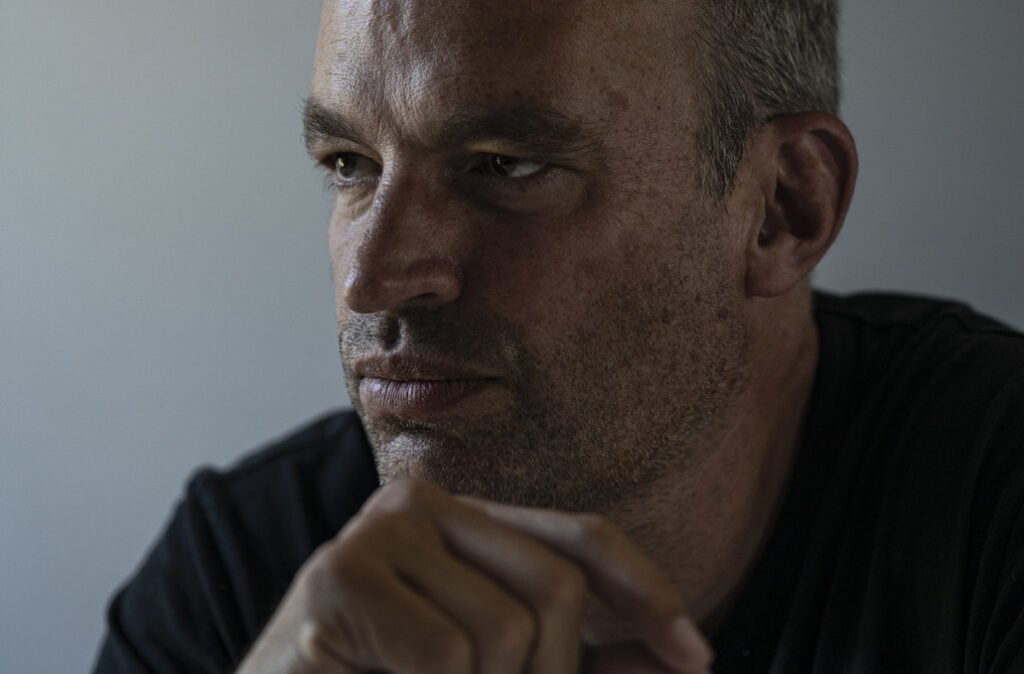
Image: Rob Sarkies Credit: Supplied
Do you remember where you were when the massacre took place?
I was editing some commercial at the Dowling Street studios of TVNZ in Dunedin. I was kicked out by the news crews who flew down to cover the event. I remember the sound of helicopters and how warm and still that day was. To think these tragic events were unfolding just a few kilometres up the road was surreal.
Was there much opposition to the film at the time?
There was, mostly expressed through the media, but in fact writer Graeme Tetley and myself were working closely with many members of the community from the beginning of the writing process. Making these kinds of films tends to be an exercise in building trust, listening, and addressing concerns directly. We took care to not film sensitive scenes in the township and also changed the working title from Aramoana to Out of the Blue in response to community feedback.
What was Karl Urban like as an actor back then? Did you always expect his career to take off as it has?
Karl was already getting established internationally when we made the film, so it was a real coup to have him involved. He took the responsibility of the role very seriously which included spending time with Nick Harvey, the real person he was playing. Karl really ‘got’ the anchored tone of what I was going for and was a total pro to work with. It is a far cry from many of the more heightened roles he has played in Hollywood, which I think shows his breadth.
Is there a young Kiwi filmmaker coming through that you’re excited about?
Gosh, so many. I’ve been hosting a workshop series called ‘The Approach’ with up and coming NZ directors this year, trying to share my experience a bit, and I’m so excited by the folk coming through. Amongst them is Ella Gilbert, a super-talented filmmaker who has come through the Jane Campion ‘Wave in the Ocean’ programme and has a feature called Desert Road that should go into production next year.
Tell me about being a working filmmaker in Aotearoa. Have you felt supported by your country’s film industry?
The reality of being a working filmmaker in Aotearoa is that you have to do a bit of everything. I have made a decent career of making features, television drama (series and one-offs), and commercials. My NZ features would not have been made without the funding organisations of New Zealand Film Commission and New Zealand on Air – so yes, I have felt supported by them. And I have been supported by suppliers including Park Road Post (Peter Jackson’s post facility here in Wellington) which goes above and beyond to help local filmmakers. I am lucky to be making films in this kind of environment where it isn’t just about the money.
How have you noticed the Aotearoa film industry change over the decades? Has it gotten better or worse?
Essentially there are two film industries in Aotearoa. The one supporting international production has been the superstar – our crews and facilities are truly world class. However the second industry, the one creating local product, has struggled over the past 20 years. There is no shortage of talent but there is less money and films have become much more expensive to make, partially because crew rates have risen due to international productions.
I have no issue with crew being paid well, but the funding for local stories and fresh talent has not kept up. My first film, Scarfies, was 90 minutes long and I had 36 days to shoot it. My most recent film, Pike River, was over 2 hours long, much more complex, and due to limited funding I had 28 days to shoot. So yeah, for local productions it has gotten worse. Much worse.
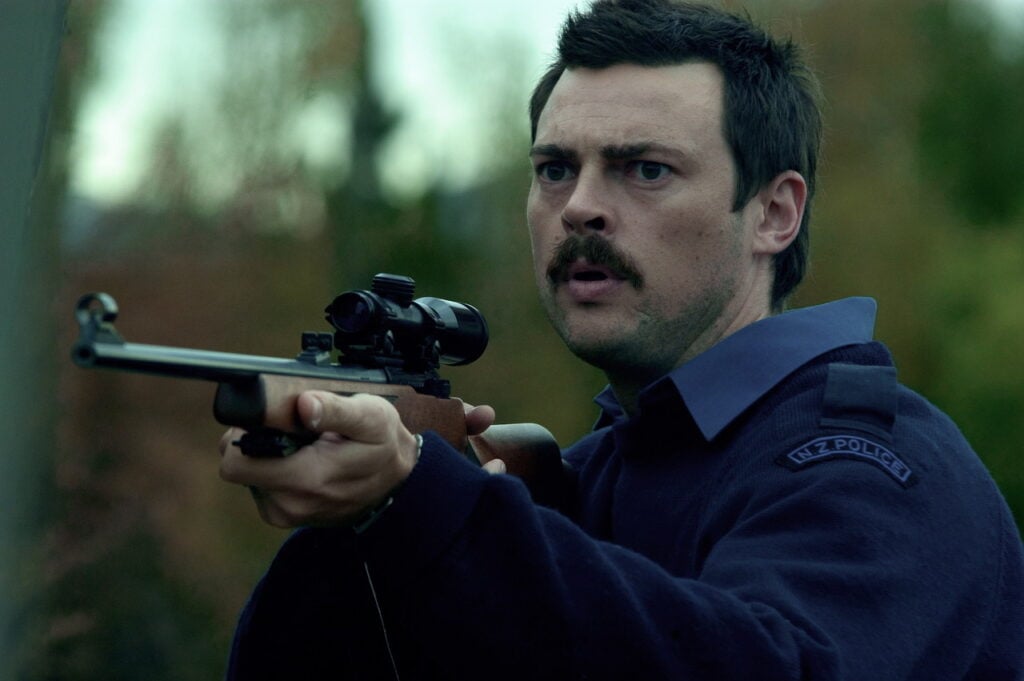
Image: Karl Urban in ‘Out of the Blue’ Credit: Supplied
Was funding easier to come by in the 2000s compared to now?
It has always been tough to find funding but it has gotten tougher. The New Zealand Film Commission spent around $13 million/year on domestic film production 20 years ago when I made Out of the Blue, and spends around $17 million/year now. When you take inflation into account, that’s a significant reduction in real terms.
Meanwhile, the NZ government spends well over $200 million per year on international rebates to attract Hollywood productions. 17 vs 200! The difference is stark, and I think shows short-term thinking from successive governments. We need New Zealand stories and storytellers – where are the next Peter Jacksons or Taika Waititis supposed to grow from if we don’t fertilise the ground?
What one thing would you change about the Aotearoa film industry?
Triple the funding available for local production. We would make twice as many films and they would be realistically funded. That’s twice as many local stories told to be shared with New Zealand and the world. Twice the chance of the next Taika/Peter/Jane coming through. It would be transformative and it could be done tomorrow if there was the political will.
I’ve been covering Dunedin and Otago a lot on Rolling Stone recently for its musicians. It’s incredible just how so much great music has come out of the area. Why does it produce so many wonderful artists?
You have these waves of talent that crop up in particular places at particular times. I saw it in Dunedin in the music scene there when I was a kid, and it inspired me to think you could make great things in an isolated place. When I moved to Wellington I saw it happening again in the Wellington music, theatre and film scene of the mid-1990’s/early 2000s. I reckon it is a combination of isolation, supportive organisations who back the talent they see (like Flying Nun Records and Batts Theatre in Wellington). But the talent itself is the key – this is typically a wave of young people coming out of arts-focused schools and universities who are supporting each other and are also competitive with each other. And perhaps something in the water.
I’ve got to ask about Pike River too. An excellent film. Were you happy with the audience’s response to it?
Thank you. The audience response in New Zealand was incredible. I did about 20 Q&A screenings throughout the country and people were clearly deeply moved and angered by it. There were 20 standing ovations for Sonya Rockhouse and Anna Osbourne (the real people the film’s main characters are based on) everywhere it played. I think it opened a lot of eyes to what happened, and also what we are becoming as a country.
How was it working with Melanie Lynskey and Robyn Malcolm?
A dream. I mean, honestly that combination felt like dream casting for this story, and we were so lucky to have them. Mel and Robyn are both lovely people, fantastic actors, and were so committed to honouring Sonya and Anna, who they were playing.
Do you have any future projects lined up at the moment?
Yes, of course, but I tend to quietly bever away until I’m ready to announce the next thing.

