





























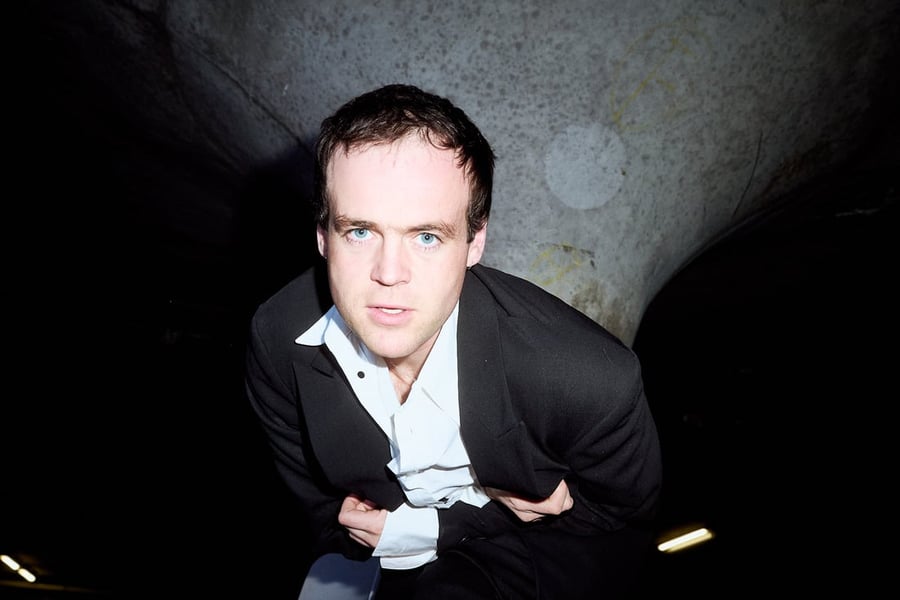
If you were in Melbourne last month and fancied a chicken ‘n’ chips dinner, you might have gotten more than you bargained for.
On Saturday, July 11th, DC Maxwell played a show at Croxton Roosters, transforming a nondescript takeaway into a full-on DIY rock venue.
In footage posted to social media, he looked like a man possessed, sliding along the chequered floor while howling his songs, his face beetroot red and his eyes tightly closed.
That’s the beauty of DC Maxwell: there can’t be many more committed people to this whole music lark in ANZ right now.
Whether he’s performing inside a chicken shop to unsuspecting diners or showcasing his music to the industry at SXSW Sydney, the mercurial NZ-born, Melbourne-based singer-songwriter gives all of himself to a performance; every crowd, every listener, is treated the same.
View this post on InstagramLove Music?
Get your daily dose of everything happening in Australian/New Zealand music and globally.

Maxwell’s live prowess translated very well to record on The Singer, his second album, which dropped at the end of May.
The Singer followed Maxwell’s well-received debut album, Lone Rider, which earned him a Taite nomination for Best Independent Debut. Lone Rider also made it into our Best New Zealand Albums of 2023 countdown.
DC Maxwell’s latest album featured in our mid-year New Zealand albums list earlier this month.
“The independent release finds the NZ-born, Melbourne-based musician drawing on ’90s influences such as PJ Harvey and Nick Cave to create a rousing alt-rock collection,” we praised.
The Singer was a community-driven creation, featuring production by Bonnie Knight (Amyl and the Sniffers, Angie McMahon), vocal contributions by Hatchie and Georgia Maq, and piano instrumentation by Good Morning‘s Stefan Blair.
Cult indie musician Will Oldham, aka Bonnie “Prince” Billy, also lent a “fateful feature” to Maxwell’s record, appearing on standout track “Half Real”.
We just had to get Maxwell and Oldham together for a wonderful and insightful artist-on-artist interview, which you can check out below.
Once you’ve read the pair’s conversation, you can catch Maxwell on tour over the next two weeks. He’ll play Sydney, Newcastle, and Melbourne, with a BIGSOUND showcase thrown in for good measure. Ticket information is available here.
DC Maxwell’s The Singer is out now.
DC Maxwell: Congratulations on your album [Bonnie “Prince” Billy’s ‘We Are Together Again’] — it’s wonderful. When I listen to it, it feels very direct and bracing, kind of like a confrontation of the current moment. Not overtly political, but speaking to the hardening of hearts that’s happening right now. How much of that was something you thought about consciously as you were writing the songs, or did it come out naturally?
Will Oldham: Thank you so much.
As maybe an overthinker, I’m accustomed to questioning things in a certain way and putting that into the music here and there. This time — well, the record was recorded about a year ago, or started around then, but the songs had been worked on for years leading up to it. With those two things in mind, I found it disturbing and astonishing how applicable it turned out to be to certain crises of the moment.
I feel like I’m constantly bitching and questioning people about their practices, because so much of what we do is done thoughtlessly, with pretty much obvious bad outcomes. I don’t understand it — if you could improve your surroundings, or the world in general, for other people and for kids, it seems like a natural thing you’d want to do. But people are significantly reluctant to take even the simpler steps.
DC Maxwell: I wanted to ask quickly about working with you, because that was honestly an incredible experience for me, and it’s still kind of nuts. I just want to say thank you. From your point of view — someone I’ve listened to for a long time, someone I look up to a lot — for you to just say yes, jump on the song, and come in and work together was so incredible. How did that happen? Why did you decide to do it?
Will Oldham: In approaching music in certain ways, the more you do it, the more you work the intuition muscle — because on stage, you have to, all the time. You have to do things you couldn’t even describe to somebody, problem-solving in ways that can’t be put into language, because it’s just something that happened — you could spend a year trying to write a six-page document about how you got through a really difficult set one night and turned it into a wonderful musical experience. But in playing music there’s all this intuition, and it was wonderful — you look for certain clues in the way the communication goes. The way you made the approach, for example, computed with me. I understood your language in a way I could sympathise with, and it felt like we were off to a good start, because I understood what you were asking, what you were talking about musically. Sometimes someone will say something and I just think, I don’t know, because we obviously aren’t speaking the same language.
And then, of course, it was beyond — it’s nutballs, wonderful and interesting — to the point where you question the very nature of reality, that where you were recording was a three-minute walk from where I was staying in Los Angeles. It’s beyond crazy. And it’s like, well, it’s just a coincidence, and you think — I’m not sure I 100% buy that it’s just a coincidence. There’s more involved, and we just wouldn’t be able to tell unless we took copious amounts of hallucinogens together on a full moon — then we’d be like, that’s why. That’s why you’re staying there.
DC Maxwell: To me it was magical — I was still questioning whether it was ever going to happen, and then I stepped out of the studio and you came almost running across the road from where you were staying, and you still had glitter from your show on. It was just such a magical experience.
Will Oldham: And then being in there with you all — it’s such an incredible process, and you have to seize any chance you can to be in a room with other creators, being put on the spot. It’s one of the things we live for in our work — that kind of experience.
DC Maxwell: Yeah. Watching you work in that moment, so on the spot, and coming up with what you were coming up with, was pretty amazing. I don’t know if I told you, but it was so hard to pick a take, because you were amazing on almost every one — we did maybe seven or eight, I can’t quite recall, maybe more — and the different decisions you made each time were incredible. I remember thinking, “Okay, this is what a true musician is” — this ability to bring something to the song.
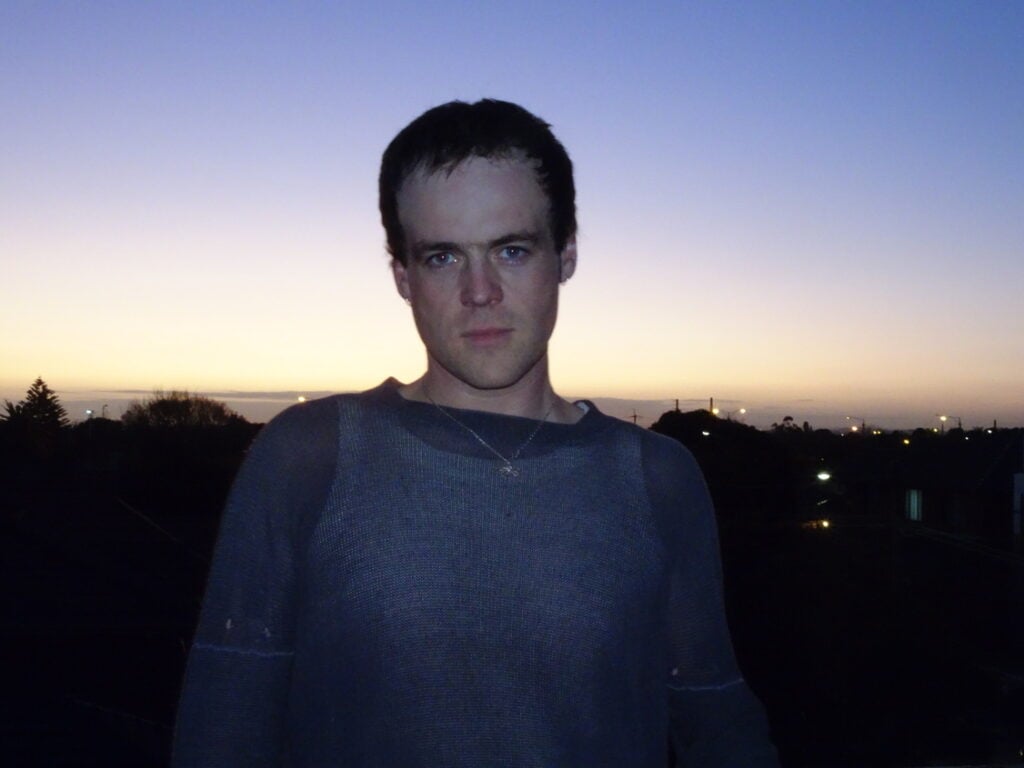
Credit: Supplied
Will Oldham: Some people are famous, for lack of a better phrase, because they’re great. I’ve had a few amazing experiences — two really stand out in my life. One was in my teens, when I was in a film called Matewan, alongside James Earl Jones.
Back then, they’d shoot on film, send it to the lab, and it would come back a day or two later — we’d gather in a local movie theater and watch the dailies. I saw a scene James Earl Jones did, and what he brought to each take. I was only sixteen, so it blew my mind — but I also knew, that’s what I want to do one day: understand how to give that to the people I’m working with.
Then again, in 2006, I was invited to sing on a record in Nashville that George Jones was also singing on. The producer, who’d just lost my father — he was really sweet about it — said, “Why don’t you come down next Tuesday, George Jones is going to be here, you do your parts, he’ll do his the same day, might be fun.” And watching George Jones, even at that point in his life, drive himself up to the studio, walk in, do a take, and just blow your mind — and then, “How do you feel, George?” “Well, I could do another one if you like.” So we did another one, and it was a completely different thing. Both takes were, as we understand it, canonical, beautiful, expressive George Jones — but in different directions.
I thought, how do you get there? Part of it is that every time you sing a song, it’s effectively a new song, because you’re trying to apply it to the current situation — time compresses and expands while you’re working. It’s this great experience of time expansion when you’re doing a take, without having to take any substance — you think, I’m doing a take on a three-minute song, but I’m going to spend the next ten days, in that three minutes, singing it. Instead of turning left at that corner, I’m going to turn right, because there’s a used clothing store down the street I want to look at on my way to the next lyric.
View this post on Instagram
DC Maxwell: That’s amazing — especially because, for me, that song is so rooted in place. I’m thinking of very specific places from my childhood and teenage years, where I grew up. That’s an amazing way to think about music — in terms of moving through an actual environment.
Will Oldham: Yeah. And then it’s nice to get to a point where the song represents the specific time, place, state of mind, or emotion you were in — and then it becomes more like a filter than an event itself. So you’re singing it again in the present, and once you know the song well enough, you can look at today, tonight, your community now, the emotional things you’re going through now, through this thing you’re deeply familiar with, that you’ve experienced again and again. It functions like a filter for seeing the present, because it has structure built on emotional experience that can be modified to fit a new situation.
DC Maxwell: That’s very beautiful. I like that a lot.
Will Oldham: Because you don’t want to be intimidated by your song, thinking, I don’t want to go to that place tonight — you want to be able to play it anyway. So it has to become something else; it’ll come back to what it was originally, at times it’ll surprise you, but you want it to be independent of those things, and applicable to something new, so you don’t grow to resent the song, or hate it, or fear it, or get bored by it.
DC Maxwell: That’s a very incredible piece of advice. Thank you, seriously — I could feel myself starting to fear that song, because it comes from quite an intense place.
Will Oldham: I can hear it — I can hear it in your delivery. It’s like you’re delivering it right down the middle of the alley to get that strike. And now you have the opportunity to try spinning the ball and see what happens — maybe another gutter ball, but it was fun watching you roll down that alley.

