



























Find out more about our Māori-language initiative here.
Matariki is always a special time, but it was extra significant for Ra Charmian this year.
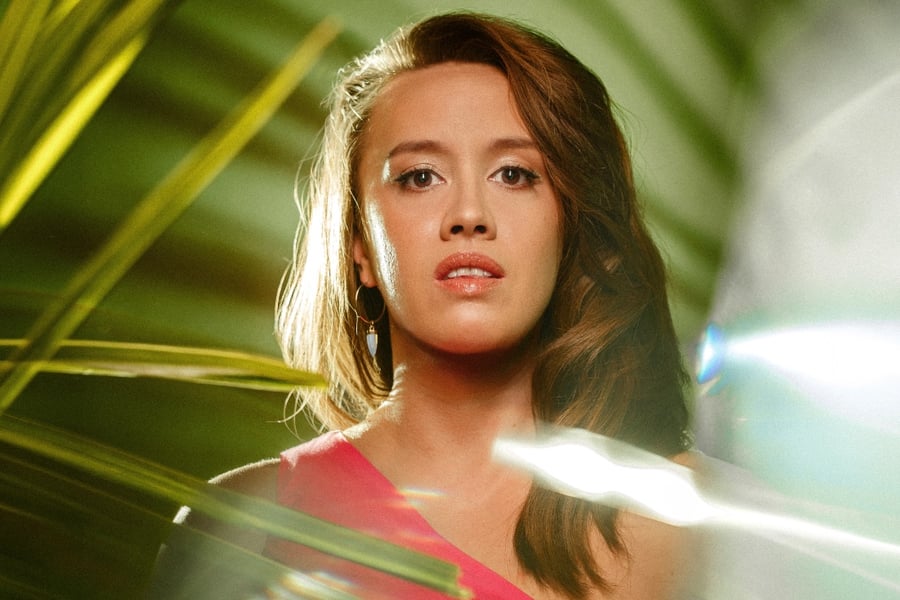
The Aotearoa duo of Rā Toia Booth and Hayden Booth shared “Matariki e ara”, a stunning original bilingual waiata, to welcome in the Māori New Year.
“For us, Matariki is one of the most meaningful times of the year,” Rā Toia said about the release. “Life moves so quickly that we don’t often give ourselves permission to stop. Matariki reminds us to sit still for a moment, remember the people we’ve lost, celebrate the people still beside us, reconnect with the natural world, and think intentionally about the year ahead.”
With its themes of remembrance and renewal, “Matariki e ara” was the perfect song for the season, urging listeners to slow down, take stock of their life, and remember loved ones.
Their reward for one their best waiata to date was their second entry on the Official Aotearoa Music Charts, with “Matariki e ara” peaking at No. 19 on the Hot 20 Aotearoa Singles Chart last month. That followed a No. 15 slot for previous single”Kia Puāwai” in April.
Not a bad start to 2026, in other words.
Love Music?
Get your daily dose of everything happening in Australian/New Zealand music and globally.

As we head into the second half of the year, we caught up with Rā Toia to discuss the duo’s music, her connection with Matariki, her te reo journey, and more.
Follow Ra Charmian’s music here and here.
Rolling Stone AU/NZ: As we look ahead to a new year in the Maramataka, tell us how you’ve been going and what’s ahead for you?
Rā Toia Booth: It’s been a really exciting season for us with performing and releasing music, but of course, at the same time, we’ve been trying to also spend time together as whānau.
Our son was born during Matariki two years ago, which has made the period even more special. We named him Morgan Matariki after my late dad, Morgan. It feels incredibly fitting, because for us Matariki is about remembering those who’ve gone before us while looking ahead with hope and gratitude for what’s to come.
Once our Matariki release is out in the world, we’ll probably take a breath over the Matariki weekend before heading straight back into recording for our album release later this year.
Where are you from in Aotearoa?
I whakapapa to Ngāpuhi and Tainui. I was raised in Te Tai Tokerau, which will always feel like home.
How would you describe the space you’re in creatively at the moment?
We’ve always loved performing live, and that’s still a huge part of who we are. There’s nothing quite like connecting with an audience and sharing our waiata in person. At the same time, we’re finding ourselves spending more time recording. Right now, we’re in a real songwriting and recording phase, and that’s where a lot of our creative energy is going.
Hayden spends countless hours producing our music, while I focus on writing melodies and lyrics, so, it’s become a really collaborative process. Juggling that with raising a two-year-old has definitely been challenging, but it’s also been incredibly rewarding. I never realised just how much of a balancing act it would be, but we’re loving this season of life.
Do you think your Māori identity is something you consciously write about, or has it become impossible to separate from who you are as an artist?
It’s become impossible to separate.
Although I’ve always sung in te reo Māori, writing original waiata has been a completely different journey. Early on, I definitely felt a sense of insecurity about not being fully fluent, and I put a lot of pressure on myself to get everything right.
Over the last few years, though, writing and performing in te reo Māori has really grown my confidence. It’s also helped me understand the language on a much deeper level. I still have so much to learn, but now I feel much more comfortable in my own skin, and that naturally flows into the music we create.
Some emotions seem easier to express in one language than another. Have you found te reo Māori has allowed you to express things you couldn’t quite say in English?
Absolutely. Te reo Māori carries such depth and beauty that it’s not always easy to translate directly into English. Sometimes a single kupu can hold layers of meaning that take an entire sentence to explain in English.
Writing in te reo has made me think more deeply about what I’m trying to say. It’s such a poetic language, and when you really begin to understand the meaning behind the words, there’s a beauty to it that’s hard to describe.
Do you think Māori music is still underrepresented in Aotearoa music? If so, what can be done to change this?
I think we’ve seen huge progress over the last few years, which has been amazing to watch. More waiata in te reo Māori are reaching mainstream audiences than ever before, and that’s something to celebrate.
I think the next step is making sure that support continues all year round. Māori artists shouldn’t only be celebrated during Matariki or Te Wiki o te Reo Māori. Continued support from radio, streaming platforms, media and live events gives artists the opportunity to build sustainable careers and keep creating.
View this post on Instagram
What’s your favourite waiata of all time?
Lately, I’ve completely fallen in love with “Whiti Te Marama” by Hirini Melbourne.
I only discovered it recently, but it stopped me in my tracks the first time I heard it. It’s such a unique waiata. The way Hirini Melbourne wrote it, the guitar accompaniment, the timing and phrasing — everything feels so intentional and unlike anything else I’ve heard. It’s incredibly moving, but also so understated.
We performed it as part of our Matariki set this year, and the more time I spend with it, the more I appreciate the craftsmanship behind it. It’s become one of those songs that I know I’ll carry with me for a very long time.
And who’s one young Māori artist you think our readers should know about?
I’d have to say Jaedyn Randell.
She has one of the most incredible voices in Aotearoa, and I think she’s an artist more people should know about. I love how effortless she makes it all sound — I’m really excited to see where her career goes because I think she’s got a huge future ahead of her.

