




























Find out more about our Māori-language initiative here.
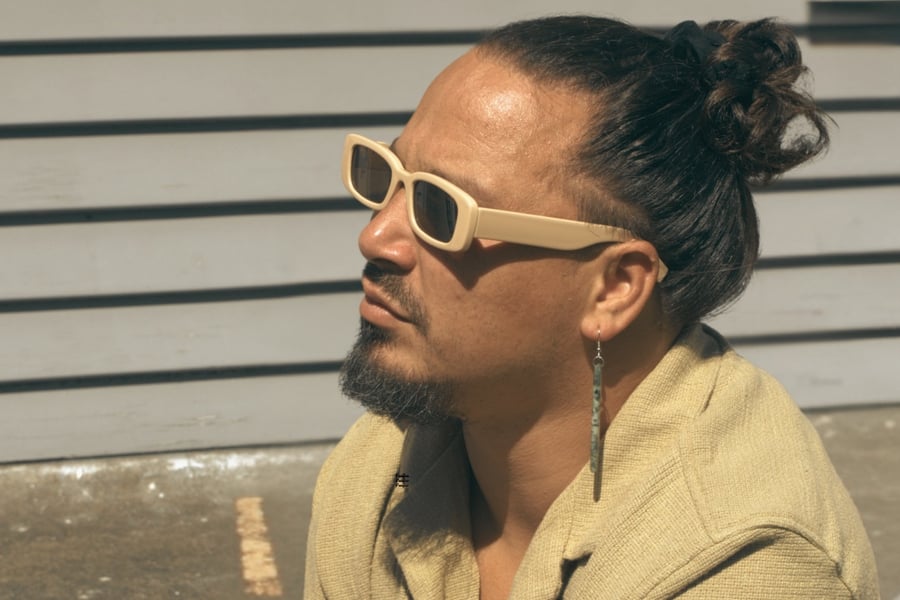
Aotearoa loves — loves —reggae music, and Israel Starr has been a, well, star of the scene for over a decade now.
So far, 2026 has been one of his strongest years yet, featuring singular solo singles and cool link-ups.
“Loving You” found the Māori and Rasta artist getting deep, penning a vulnerable song for his partner. “I’d been thinking about proposing, and this song helped me express those emotions,” he said at the time. “I wanted to create something pure and spiritual — something that reflects the true essence of love.”
Starr followed that up with “Roots Session”, a collaboration with another Aotearoa reggae heavyweight, Lomez Brown, and Hawaiin artist Irie Love.
Another reason this year has been momentous for Starr: he changed his artistic moniker to Iharaira Starr from Israel Starr, using his te reo Māori name for his art.
His first album under the new name, The Producers Chair Vol. 3. Way Finder. The Quiet Achiever, dropped last week, featuring bangers like “Aotearoa Rastafari” and “Love Is All We Need”.
Love Music?
Get your daily dose of everything happening in Australian/New Zealand music and globally.

What makes the standard of Starr’s recent drops all the more impressive is the fact that he’s a full-time, stay-at-home dad, not always the easiest thing to navigate while you’re trying to pursue a career in music.
This last year has been really exciting and challenging at the same time… On the flip side, it has been the most exciting time. It’s almost like I love living on the edge…” Starr told us.
We caught up with the hard-working musician to discuss his new album, his Māori and Rasta identities, his love of a classic Bob Marley song, and much more.
Follow Israel Starr’s music here and here.
Rolling Stone AU/NZ: As we look ahead to a new year in the Maramataka, tell us how you’ve been going and what’s ahead for you?
Iharaira Starr: This last year has been really exciting and challenging at the same time. The landscape for a musician has changed drastically and finding where I fit into the new ways and making a living from it while being a full-time, stay-at-home father has been the toughest transition. On the flip side, it has been the most exciting time. It’s almost like I love living on the edge haha.
In previous years, I didn’t understand how I could take time for granted, and now that I only have four hours to do music mahi for three days of the week, I’ve come to realise how precious it is. And the awesome thing is, I’ve never been more productive!
Where are you from in Aotearoa?
I whakapapa to Tokomaru Bay, East Coast! Born in central Auckland, but have been living in Welly since I was 13.
View this post on Instagram
How would you describe the space you’re in creatively at the moment?
I feel like this next album is my best work to date. This really does express who I am and where I am at mentally more than any other album. I feel like I’ve matured creatively and found a nice sweet spot of being able to express my meditations on a song while still being relatable. In traditional reggae music, we tend to take subject matter on head-first with no sugar-coating on the lyrics. And I have embraced that wholeheartedly, like for example my song “Beat You Down” on my last album which deals with domestic violence with raw lyrics.
So I’ve always tried to find that balance of being hearty but then have more palatable songs on a project to balance it out. This time, I’ve been able to express those unique perspectives but in a somewhat more poetic and mature way within that one particular song, rather than trying to balance it out with a love song on the album. Creatively mature.
Do you think your Māori identity is something you consciously write about, or has it become impossible to separate from who you are as an artist?
Yeah, it’s definitely something that I think about when writing songs. Like, how can I express who I am personally as a Maori and a Rasta. Of course, it’s impossible to separate who I am, because when you grow up Māori, you naturally will put those thoughts into anything you express or create. So that’s always happened naturally, but I do think over the little while, I have embraced the relationship [with] my Māori and Rasta identity, trying to show how this perspective is unique.
Some emotions seem easier to express in one language than another. Have you found te reo Māori has allowed you to express things you couldn’t quite say in English?
I’ve found this more so the case in my personal life when dealing with hard subjects or conversations where it could be slightly confrontational. I had an example recently, where instead of saying “I felt disrespected by you,” I was able to use the word “whakatika”. This allowed me to express this in a way that I was still able to hold my mana about me and not feel like a victim. Express my point of view with calmness and love rather pointing the finger.
Do you think Māori music is still underrepresented in Aotearoa music? If so, what can be done to change this?
As long as we have a government that has no regard for our language, then there is always going to be hills to climb. Structural racism still exists, even within our music industry. We’ve come a long way, but we’re still not there yet. The long game is about making sure that our generation and the next know and care about Māori values, so that when they eventually get into positions of power, they uphold our mana.
What’s your favourite waiata of all time?
That’s like asking what’s your favourite child haha. It’s too hard to choose, but one that is special to me, and in fact all Rasta, is “One Drop” from Bob [Marley].
Why? OK, little backstory. Rasta have gatherings and ‘dances’ regularly where anyone is invited. Throughout the night, the DJs or bands can play anything they want (of course, mostly conscious music), but there comes a certain time in the dance called ‘Prime Time’ where in this space of time ONLY Rasta music is allowed to be played. Normally, late in the dance. At this time every Rasta reports to the dancefloor. To signal the beginning and end of this short period the DJ will play “One Drop”. It’s a magical time that feels like a true celebration.
And who’s one young Māori artist you think our readers should know about?
Hone is the future. Kid’s got it all to really make a big impact and have a successful career. Just needs to drop knock knock sta!!

