



























Find out more about our Māori-language initiative here.
One of the most deeply moving releases in Aotearoa music this year coincided with Matariki.
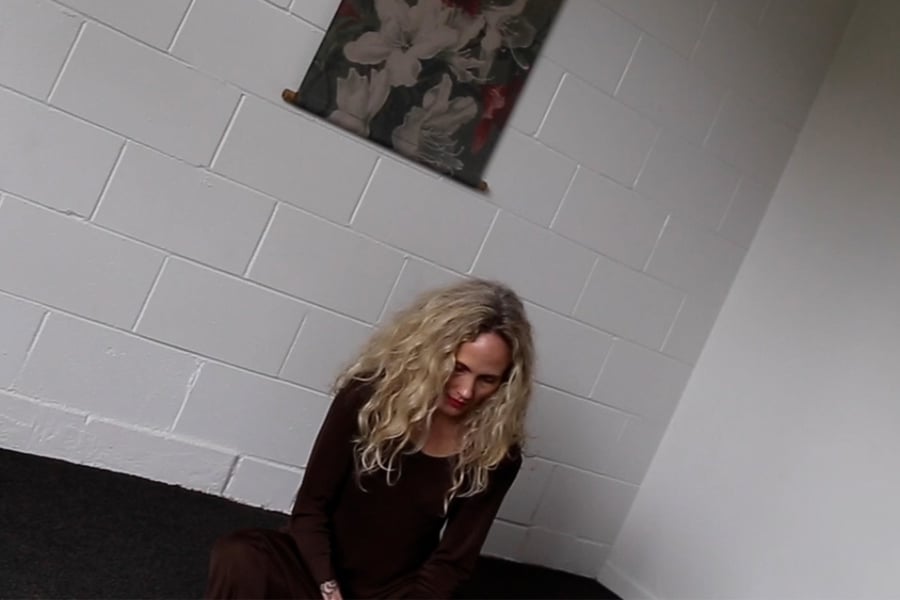
It came from Tipare, a Tāmaki Makaurau-based multimedia artist, who contemplated intergenerational tuku iho — a foundational concept in te ao Māori encompassing traditions, values, knowledge, and legacy — on the powerful “Star Scars”.
“It’s about cleansing, forgiveness, loving people with emotional or spiritual scars, being depleted and being refilled again, reincarnation, and that we are star dust as taught by our tupuna,” Tipare eloquently says.
The song idea came to the singer-songwriter following a conversation with someone who’d spent a lot of time in prison. Initially envisioned as two poems, Tipare eventually made it into a waiata after seeking out space and solace in her haukāinga.
“I packed up my bag and gears and headed home to Mōkau so I could be free,” she explains. “We have the most beautiful crystal-clear, star-filled nights back home.
Love Music?
Get your daily dose of everything happening in Australian/New Zealand music and globally.

“I was so happy and just set up the mix and did all the harmonies in one go.”
Listen to both the final version of “Star Scars” — produced by Andrew Meyer and mastered by Neil Baldock — as well as the demo above and below.
Following her single release, we caught up with Tipare to find out more about her life and music, her te reo journey, her thoughts on the Aotearoa music industry, and more.
Follow Tipare’s music here and here.
Rolling Stone AU/NZ: As we look ahead to a new year in the Maramataka, tell us how you’ve been going and what’s ahead for you?
Tipare: I’ve been feeling profoundly blessed to be an artist, with all its trauma and beauty. It’s been a super intense, busy time for me, but it’s everything I need it to be. I’m deeply immersed in the creation of my first EP Graphite, and that’s my next major project ahead.
Where are you from in Aotearoa?
My whānau are from the Ngāti Waiora hapū of Ngāti Maniapoto. Our rohe extends from a little place called Aria in the King Country to Mōkau by the sea. But I currently live in Tāmaki, so I tell people I truly am the whakatauki: Mokau ki runga, Tāmaki ki raro (Mōkou above, Tāmaki below).
How would you describe the space you’re in creatively at the moment?
The space I’m in creatively at the moment is the most challenging and complex state so far. The project I’ve embarked upon is pulling all the streams of wairua I work within, and forcing me to construct things [that] I have no idea how they’ll turn out. It’s scary and exhilarating at the same time. I just pray constantly I get it right and it appears as it’s meant to. I feel incredibly honoured to be making Graphite.
Do you think your Māori identity is something you consciously write about, or has it become impossible to separate from who you are as an artist?
My Māori identity is something I think about constantly. The world and how you fit in to it makes you. But my art comes from somewhere else other than the physical, so I’m conscious of that as well.
I guess, for me, what ultimately comes out is a genetic inheritance of whakapapa, the whakatō of mātauranga that’s been planted in me through wānanga with tohunga, and then this thread to te Atua nui. I don’t know why I do what I do or write, I just do what I truly feel I’m being told to do.
Some emotions seem easier to express in one language than another. Have you found te reo Māori has allowed you to express things you couldn’t quite say in English?
This is absolutely true. I find speaking to be the hardest part of life. I think that’s why I make art. My brain doesn’t work with words that way very well. And yes, the concepts within the languages are polar opposite. I feel safe within te reo Māori. Rested. He reo whakatau. English is like walking a tightrope and everyone is waiting for you to fall. Yet I find myself constantly put in position where I have jobs that require a sort of spiritual translation between the both. So that shows me I’m not in charge haha.
View this post on Instagram
Do you think Māori music is still underrepresented in Aotearoa music? If so, what can be done to change this?
I think the term ‘Māori music’ needs to be broadened and supported in its evolution. I also think there’s been a hyper-focus on artists becoming influencers, which is not the job of an artist. And that is nothing against influencers, they have a very important role. But I do think the funding bodies need to make space for alternative types of expression for Māori music, while supporting them financially to reach their audiences with expertise support for utilising the platforms. And mainstream should look for ways to help evolve raw talent. This will grow the entire industry and everyone involved.
What’s your favourite waiata of all time?
This is impossible to answer hahaha! Can I say “Star Scars”? It soothes me immensely. It’s me. But I know I didn’t make it, something much larger than me did. And that gives me hope.
And who’s one young Māori artist you think our readers should know about?
Hinemaea Ngātai. She is the most incredible beautiful composer from Te Arawa. Her voice is like a flower petal. Her reo Māori compositions are divine.

