




























Find out more about our Māori-language initiative here.
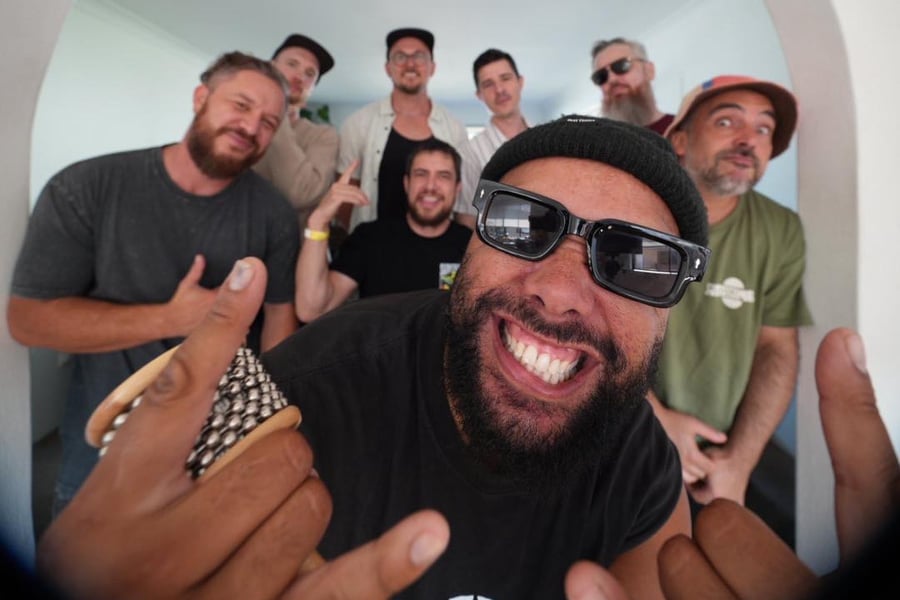
If there’s one Aotearoa EP you need to check out in the second half of the year, it’s MANA by SUB-TRIBE.
The Pacific bass heavyweights teased the release last week with “For the Land”, their second excellent single of 2026 so far, a song that highlights SUB-TRIBE’s diverse sound, melding R&B, Afro rhythms, and plenty of bass together into one anthemic package.
“For the Land”, which explores the sacred bond between people and the earth, is anchored in the up-and-coming group’s Māori heritage, opening with dialogue honouring the natural world and acknowledging Papatūānuku, Tāne Mahuta, and Tangaroa. In this way, the song is a reminder to us all that we must take greater care of the earth for the rangatahi.
“For the Land” follows “Te Waka”, a collaboration with Casual Healing which explored the idea that humans are all passengers on the same waka, carrying the responsibility to honour the past and create a better future.
The quality of songs like “For the Land” and “Te Waka” is earning SUB-TRIBE a growing legion of fans both in Aotearoa and Australia, and the latter country is where the group can be found over the coming weeks.
After playing two shows in Queensland over the weekend, they next head to Sydney on August 29th, Manly on September 5th, Port Macquarie on September 11th, Coffs Harbour on September 12th, followed by a final Aussie tour show in Brunswick Heads on September 13th. Ticket information is available here.
Love Music?
Get your daily dose of everything happening in Australian/New Zealand music and globally.

Over Matariki, we chatted with SUB-TRIBE about their upcoming EP, their Māori identity as a group, the current strength of Māori music, and much more.
Follow SUB-TRIBE’s music here and here.
Rolling Stone AU/NZ: As we look ahead to a new year in the Maramataka, tell us how you’ve been going and what’s ahead for you?
SUB-TRIBE: We’ve been going well and steady, enjoying some downtime from gigs to start rolling out some new music and material from our next upcoming EP, MANA. Still a lot of spinning plates for us at the moment, whānau and mahi as per usual, but after recently signing with Loop, the label has helped make all the difference in taking the weight of admin and organising the backend of the rōpū. Not to mention some hearty plans moving forward.
This year’s Matariki theme was all about encouraging all people to celebrate Matariki together. How did you mark the occasion this year?
This year we’ll be marking Matariki together from Australia. We’ll begin with a karakia, sing a few waiata, share kai, and take time to reflect on the loved ones we’ve lost over the past year. It’s also a chance for us to reconnect with our whakapapa, honour our tūpuna, and set our intentions for the year ahead. While one of us was raised in Taranaki, where Puanga marked this season, as a band we love that Matariki brings everyone together — wherever they are in the world.
In some iwi like those from Taranaki, as well as Whanganui and parts of the Far North, Puanga (the star Rigel) is the key marker of the Māori New Year. In these regions, Matariki can be harder to see because of the local landscape or the timing of its rise. So those iwi instead look to Puanga to signal the start of the new year. It’s the same time of reflection, remembrance and renewal, just guided by a different star.
Where are you from in Aotearoa?
Our singer, Te Oranga/Ray hails, is from Taranaki and Huntly. The brothers, Tommy-John and Jevon, were raised in Murupara (Ngāti Rangitihi/Ngāti Manawa/Ngāti Toa) but moved to Wellys/Tītahi Bay to start their schooling round those ways.
How would you describe the space you’re in creatively at the moment?
I would say we’re in a Responsive Creative Space at the moment. While that implies responding to environment and information in today’s technological age, it’s also the case in our working and logistical process too. Especially as bigger bands with many time constraints, needing to juggle different commitments, and wearing different pōtae, it’s quite common for us to be sharing ideas and kōrero in our group chats online first, then individually responding with other ideas and suggestions, so once we do lock in at the studio, while there’s room for some free-form stuff, there’s already creative response and direction ready to roll.
Do you think your Māori identity is something you consciously write about, or has it become impossible to separate from who you are as an artist?
I don’t think it’s something I consciously force into my writing — it’s just become part of who I am. Earlier in my career, I probably wasn’t as connected to that side of myself as I am today. But the more I’ve learned about my whakapapa, our history, and our voyaging traditions, the more naturally it’s found its way into the music. Creating “Te Waka” really strengthened that connection. I realised I wasn’t just writing songs — I was telling stories that have been carried by our people for generations. So, now it’s become impossible to separate my Māori identity from the artist I am, because it’s simply part of how I see the world and the stories I want to share.
View this post on Instagram
Some emotions seem easier to express in one language than another. Have you found te reo Māori has allowed you to express things you couldn’t quite say in English?
There are certain emotions and ideas that just carry more depth in te reo Māori. Some words hold generations of meaning that are hard to translate directly into English. Even though I’m still on my own journey with the language, I’ve found that singing in te reo lets me express a feeling before I even think about explaining it. It feels less like I’m performing and more like I’m honouring something that’s always been there. For me, te reo doesn’t replace English — it adds another layer of meaning and connection to the stories we’re trying to tell through our music.
Do you think Māori music is still underrepresented in Aotearoa music? If so, what can be done to change this?
I think Māori music is in one of the strongest places it’s ever been, and that’s something to celebrate. We’re seeing more artists embracing te reo Māori even like us in Australia and telling our own stories, but there’s always room for more. The key is continuing to back our artists — not just during Māori Language Week or Matariki, but all year round. We need to keep investing in rangatahi, creating opportunities, and making sure our stories are heard because Māori music isn’t a genre — it’s part of the soundtrack of Māori.
View this post on Instagram
What’s your favourite waiata of all time?
That’s a hard one! Aotearoa waiata? For the band as a whole, it’s gotta be “Rua Kenana” from David Grace, but for our singer Ray, it’s “Te Ukaipo” from Iwi.
And who’s one young Māori artist you think our readers should know about?
I’d say Casual Healing. He’s creating music that’s authentic, soulful, and proudly rooted in who he is!!! We’ve been lucky enough to work with him on “Te Waka”, and I think he’s only just getting started. He’ll definitely be an artist to keep an eye on.

