






























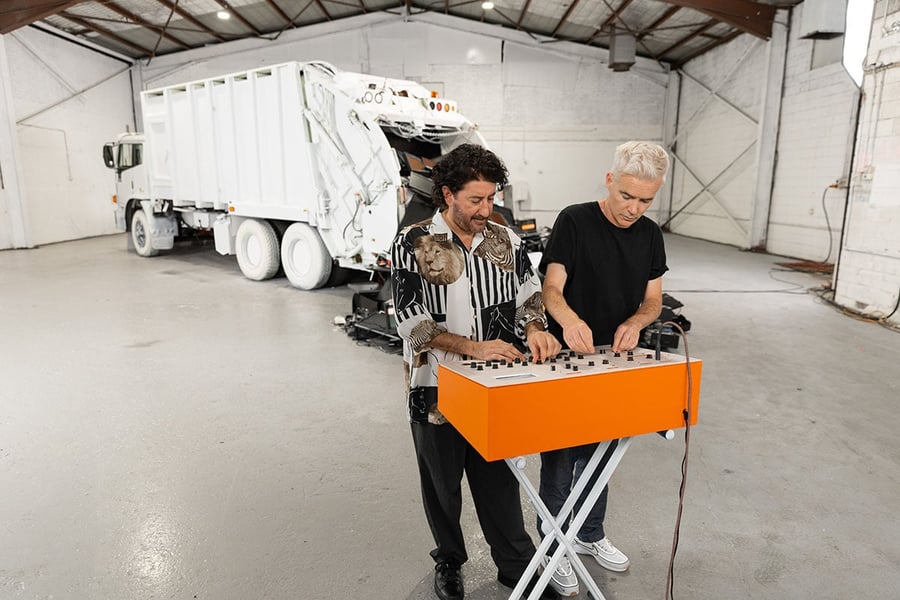
For more than two decades, The Avalanches have built a reputation on the art of transformation, turning forgotten fragments of vinyl, tape and found sound into expansive, kaleidoscopic electronic music. Now, the ARIA-winning duo have taken that philosophy beyond the studio.
Working with Telstra as part of the company’s Second Life Sounds initiative, the group helped design a fully functional synthesiser built largely from discarded electronics — old phones, gaming consoles, cables and other components that might otherwise end up as e-waste. The instrument is intended as both a creative experiment and a tangible reminder of a growing environmental issue: Australians produce around 20 kilograms of electronic waste per person each year — among the highest rates in the world — while an estimated 65 million unused devices sit idle in drawers and cupboards across the country.
In the conversation below, The Avalanches discuss the scale of Australia’s e-waste problem, how their sample-driven approach to music shaped the project, and why repurposing old technology felt like a natural extension of their creative process. They also touch briefly on what’s next for the band — even if, for now, they’re keeping most of it under wraps.
Rolling Stone AU/NZ: How did this idea first come about?
The Avalanches: We were approached by Telstra to take part in their Second Life Sounds initiative last year and loved the idea straight away. It’s not often you get asked to turn discarded tech into something creative. Even more so, we loved what it was trying to do — shifting the needle by shining a light on the ever-growing problem of e-waste and encouraging people to think differently about how we manage it.
Tell us a little about the e-waste problem currently facing Australia. How bad is it…?
It’s pretty confronting. Australians generate around 20 kilograms of e-waste per person every year — almost three times the global average. By 2030, that’s projected to reach 657,000 tonnes annually. When Telstra put that into perspective as the equivalent of 12 Sydney Harbour Bridges, it suddenly made the scale of the problem feel very real.
Love Music?
Get your daily dose of everything happening in Australian/New Zealand music and globally.

But what really stayed with us is that around 65 million devices are sitting idle in homes across the country — roughly three unused devices per person. That’s not some distant landfill story. It’s our drawers, cupboards and storage boxes.
Telstra’s ambition with Second Life Sounds is about shifting that mindset. The synth becomes a symbol of what’s possible when old tech is reimagined and given a second life, instead of being forgotten.
View this post on Instagram
Have you personally struggled with holding onto too many old devices?
Definitely, I’ve still got old phones, computers and hard drives tucked away at home, and I’m sure most Australians are the same. You upgrade a device and tell yourself you’ll deal with the old one later, and before you know it, it’s been sitting in a drawer for years.
This synthesiser is such a great creation. Do you think that more instruments could be created in environmentally friendly ways?
Absolutely. Music has always had a strong DIY spirit, and artists are constantly experimenting with unconventional materials. We’ve seen guitars made from circuit boards, synths built from recycled vapes, and even drum kits made from old television sets. That’s what made this project with Telstra so interesting, where tech that’s reached the end of one life has been repurposed into something that can create entirely new sounds.
How involved were you in making the synthesiser?
We worked closely with the team, consulting on the design, as well as the functions and features. Seeing it all come together into something playable was pretty incredible — and it sounds even better than we expected.
How did your sample-led musical style influence this project?
Our sound is built from repurposing old audio fragments and turning them into something new, so building a synth from recycled materials felt like a natural progression for us. We were really excited by the prospect.
What’s the plan for the instrument? Take it with you on live shows?
We’re leaving it in the safe hands of the Telstra team, with the synth on display from March through April in the window of Telstra’s Melbourne Discovery Store on the corner of Bourke and Swanston Street.
It’ll be right there for people to discover on their daily commute. You can see the instrument up close, then head inside and responsibly drop off your own old devices. It closes the loop in a really practical way — creativity on display, and a simple way for people to take action themselves.
What’s the main goal of Second Life Sounds?
From our perspective, it’s about awareness and inspiration. E-waste can feel like a distant environmental statistic, but it’s actually deeply personal — it’s the phone you haven’t switched on in ten years, sitting in a drawer.
For Telstra, it marks a broader ambition: working toward reusing, recycling, repairing or donating one smart device for every two sold, by 2030.
Ultimately, the collaboration encourages people to see their unused devices differently — to trade them in, repair them, donate them or recycle them responsibly through Telstra, rather than letting them gather dust.
What about The Avalanches — are you working on any new music you can tell us about.
Yes, we’re always working on new music. We probably can’t say too much at the moment though — it’s still likely a few years away.
We named you the greatest Australian electronic act of all time last year. Well deserved. How did that feel?
It felt fantastic. It really was a great honour to be named among so many wonderful and talented electronic artists. The scene is flourishing at the moment — there are so many new artists making incredible music and keeping us inspired year after year.

