




























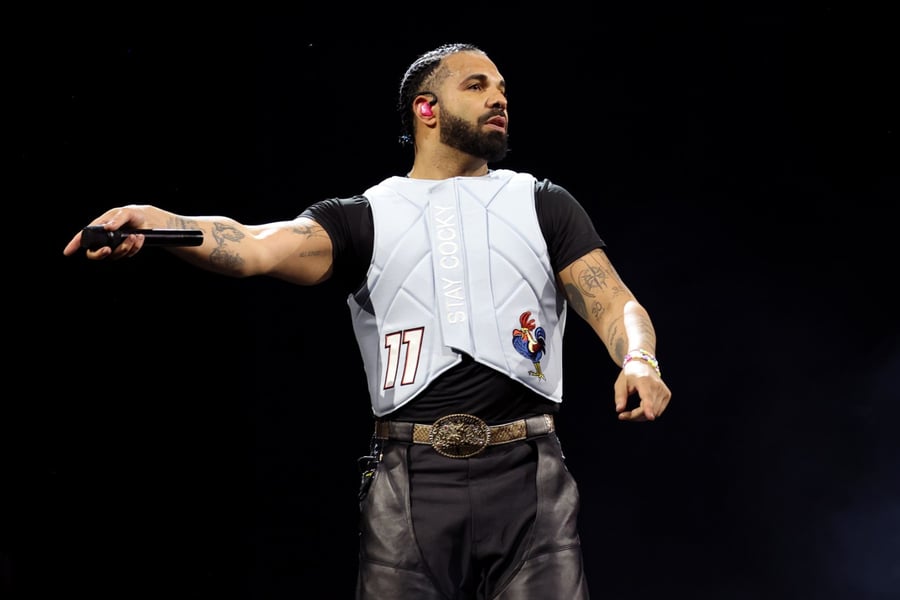
A federal judge has paused a lawsuit accusing Drake and streamer Adin Ross of using the online casino platform Stake.us to bankroll a “bot army” that allegedly artificially inflated streams of Drake’s music.
In a 20-page opinion obtained by Rolling Stone, U.S. District Judge Leonie M. Brinkema ruled Thursday that the plaintiffs agreed to binding arbitration with Stake when they accessed the platform to play casino-style games. The agreement requires them to pursue their claims against Stake before a private arbitrator rather than in court, the judge said.
Brinkema essentially halted the plaintiffs’ related claims against Drake, Ross, and Australian co-defendant George Nguyen until the arbitration is resolved. She noted in her opinion that the plaintiffs had not yet served any of the three men with the lawsuit.
Attempts to reach representatives for Drake, whose legal name is Aubrey Drake Graham, and Ross were not immediately successful on Friday.
The lawsuit was first filed last December. It followed a month after a different complaint filed in federal court in California alleged that Spotify “turned a blind eye” to “billions of fraudulent streams” of Drake’s music. That lawsuit, in which Graham is not a defendant, is still pending.
A judge dismissed an earlier version of the Spotify complaint in June, saying the plaintiff failed to show Spotify had a duty to protect him and failed to show how he was substantially harmed. The plaintiff, the rapper RBX, born Eric Dwayne Collins, filed a first amended complaint on July 13, claiming the alleged fraud diverted at least $600 million in royalties from other artists over a nearly four-year period through 2025. He also added that streamshare plays a significant role in an artist’s career, saying it’s “critical that Spotify’s calculations are accurate.”
Spotify is due to respond to the amended complaint by Aug. 11.
Love Music?
Get your daily dose of everything happening in Australian/New Zealand music and globally.

In the now-halted case naming Graham as a defendant in federal court in Virginia, the plaintiffs allege the singer engaged in a conspiracy to “prey upon consumers,” unlawfully expose them to the “substantial risks of gambling addiction,” and jeopardise their financial well-being. The plaintiffs claim they were “influenced to participate” in Stake’s “predatorial gambling environment” after viewing Drake’s paid promotion of the site, including live-streamed gambling sessions and giveaways.
The lawsuit is not the first to target Graham, 39, and Ross, 25, over their ties to Stake. Last October, a Missouri man filed a similar proposed class action against the men and Stake’s parent company, Sweepsteaks Limited.
The Missouri and Virginia-based lawsuits both allege Stake.us uses an unlawful, dual-currency system that bundles virtual, purportedly non-redeemable “gold coins” with a second type of token, called “Stake Cash,” that can be cashed out for real money. This type of dual-currency model is considered a loophole by critics and has faced backlash from legislators. California Gov. Gavin Newsom signed a bill last year to help address the problem.
Lawyers for Stake did not respond to an email seeking comment sent Friday.
From Rolling Stone US

