




























From joining the Coachella line-up of 2017 with his twenty-piece band to his current world tour, Hans Zimmer is nothing if not immune to all boundaries pertaining to genre, and the boxes many artists find themselves expected to exist within, being careful never to cross the line. The composer behind Interstellar, Dune, Inception and many more critically acclaimed milestones of
cinema brings his world tour, aptly titled Hans Zimmer Live – The Next Level, to Perth’s RAC Arena.
It should feel incongruous to see a name like Hans Zimmer beside Lady Gaga and and Kendrick Lamar, even more so to consider his show as being “an unexpected triumph that turned the film composer into a festival legend”. This is the man who wrote the score for The Dark Knight, the ubiquitous sounds of The Lion King and continues to expand his discography and attach his
name to some of the most historically acclaimed films and scores in music film history. From Bond to Boss Baby, it’s impossible to cover all of Zimmer’s contributions, and his tour doesn’t even attempt such a feat. Instead, The Next Level is a divinely orchestrated collection of vignettes of Zimmer’s career, and one that belongs entirely unto itself.
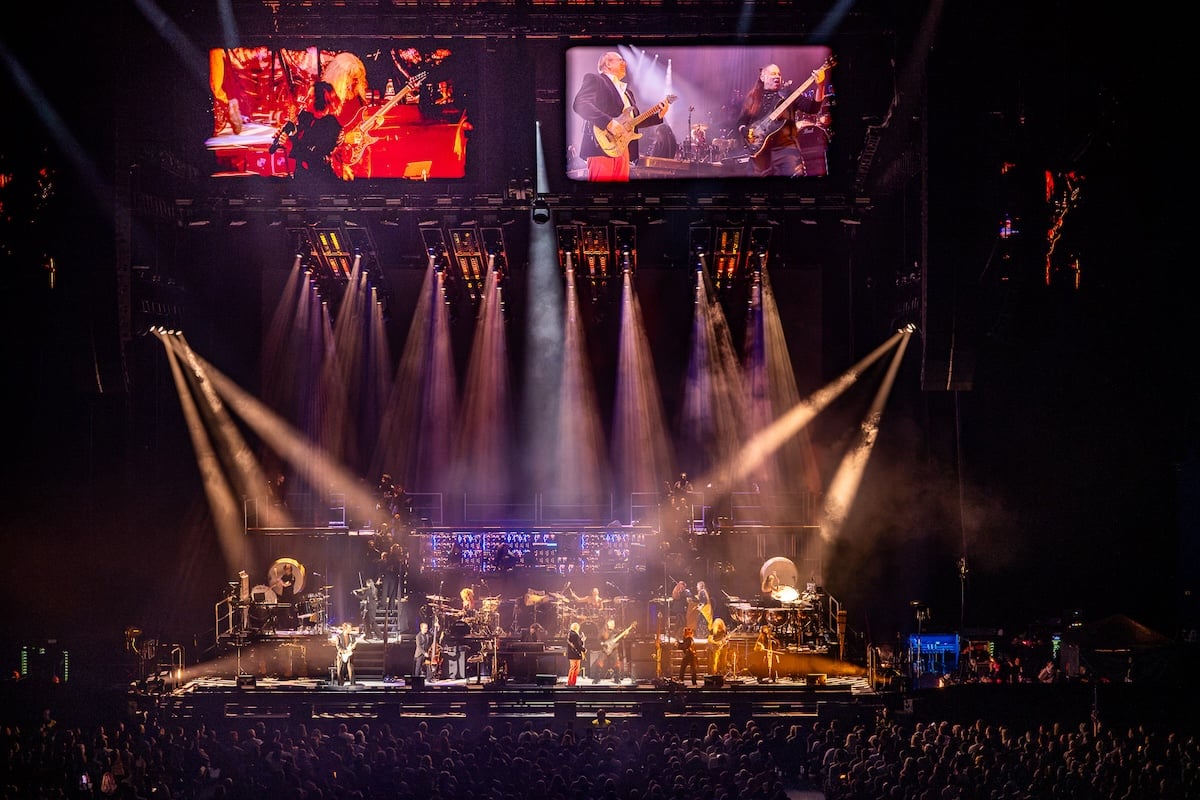
The show is expertly bisected into equally arresting sets, the first traversing the valleys of Batman, Hannibal and Sherlock Holmes. The second spends time inside of Dune: Part Two, Pirates of the Caribbean and closes triumphantly with Inception’s “Time.” Among his enormous troupe is Guthrie Govan, Mariko Muranaka, Alexandra Tirsu and Australia’s Amy You. Each band member was offered a personalised tribute throughout the show, Zimmer often lost for words when regaling the audience with tales of their musicianship.
What is astoundingly clear amongst Zimmer’s diverse array of musicians is that he scoured the world for the best of the best, collecting them first as friends before they became intertwined collaborators. The collective has been playing together for twelve years, Zimmer making remarks about an upcoming anniversary.
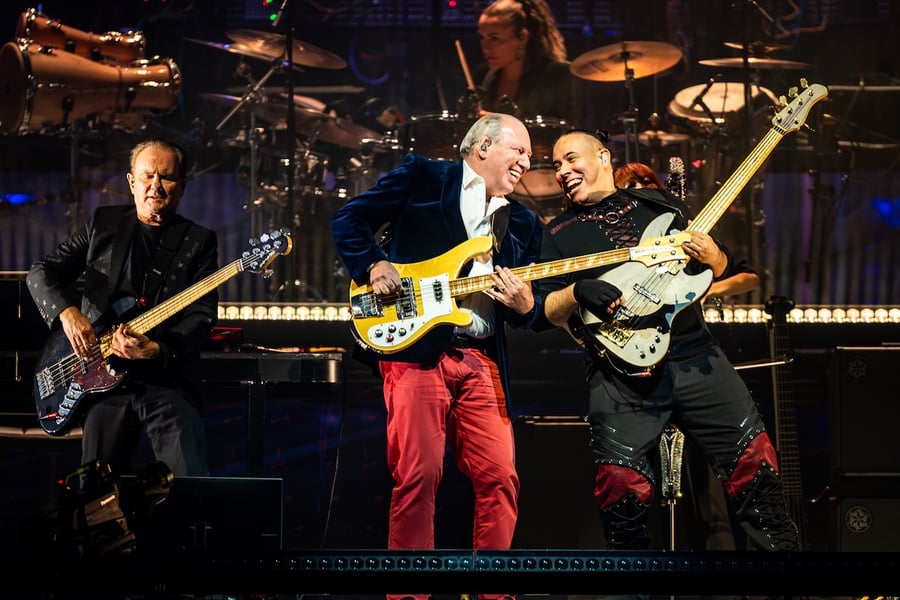
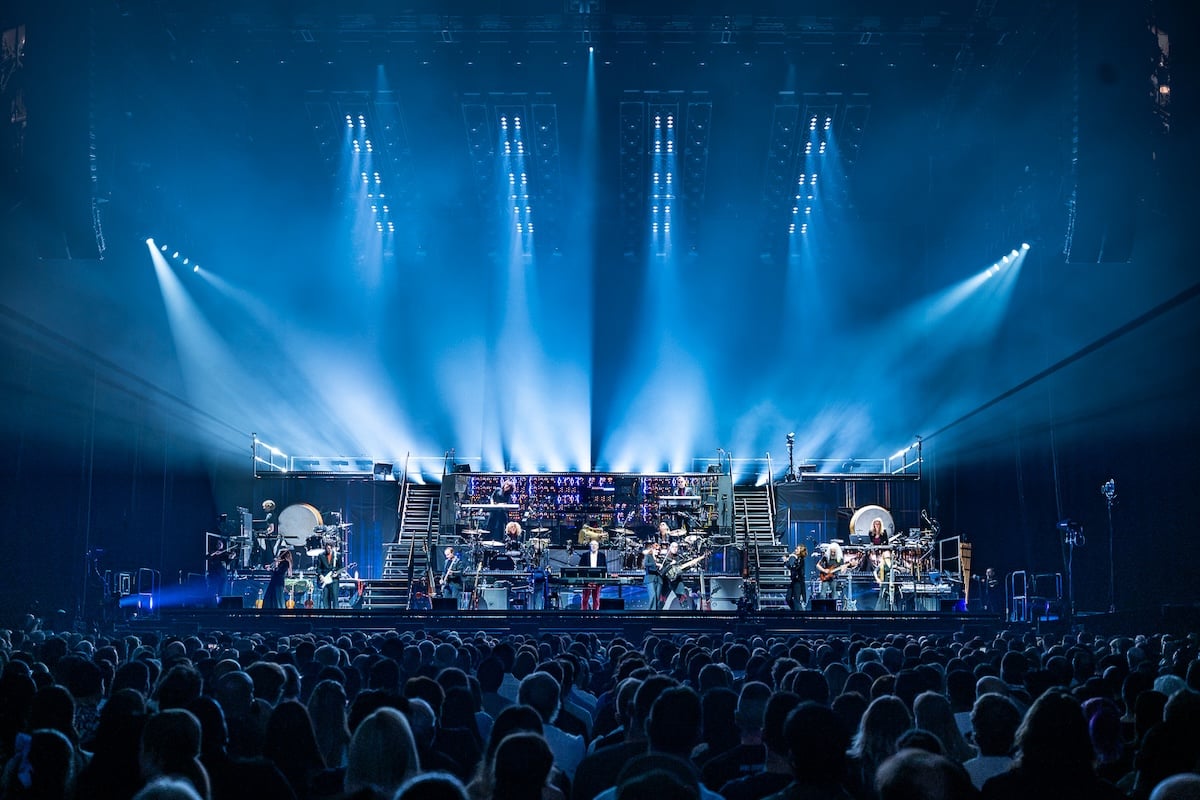
Zimmer first emerges from the four-tiered stage, descending the stairs with a joyful, bouncing and if not slightly hurried gait. Donned in red pants and a black blazer, Zimmer picks up a bass and begins with what feels like an impromptu jam session with the band, but is actually the beginning of “The Dark Knight Suite”. During the harrowing opening of “Dune”, the PA ostensibly blows. Vocalist Loire Cotler continues despite her mic cutting out, her professionalism and commitment so astute that I thought perhaps it was a planned event, a moment to highlight the raw power of her instrument. This balance of causal, loose intimacy and sophisticated elegance was to be struck indefinitely.
Love Music?
Get your daily dose of everything happening in Australian/New Zealand music and globally.

Zimmer’s audience is so enrapt and respectful that hardly a phone is raised, barring Interstellar, but I hesitate to spoil the spectacle that accompanies the piece. Perhaps this was the residue of an audience anticipating a typical orchestral concert, but the sense of collective presence in the arena was enormous and at times unbelievable.
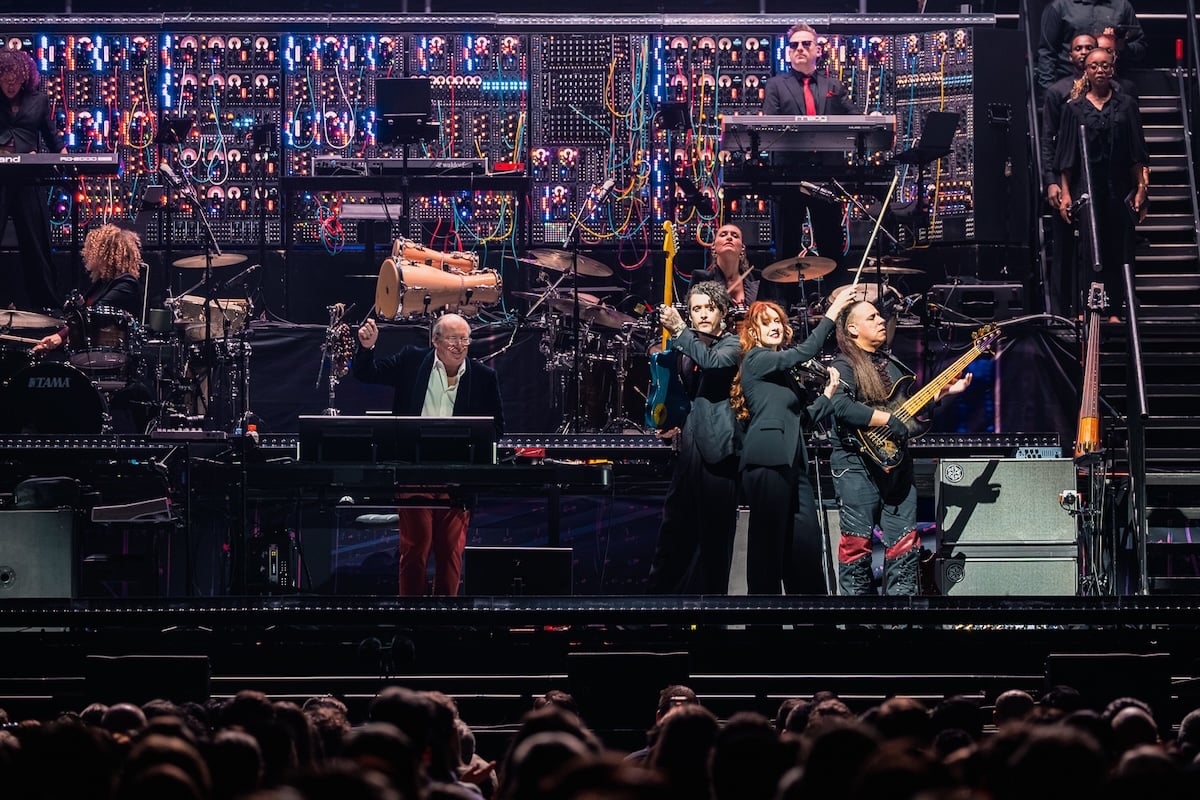
To not mention the percussion section of this outfit would be to miss a crucial, defining element of The Next Level. Dual drum kits, occupied respectively by Aicha Djidjelli and Holly Madge, hold the centre of the stage, their bodies in unison for ninety percent of the show. One kit would never have been enough, and the solo during “The Angles and Demons Suite”, featuring percussionist Aleksandra Suklar and music director Steven Doar – or ‘Mr. Gorgeous, as Zimmer referred to him, is an undeniable highlight.
“Most of my time is spent in a dark room writing movie scores. A room without windows,’ Zimmer says, looking up and out at the thousands of eyes before him. “This is just a big room without windows.” Zimmer intermittently speaks about his process, name-dropping Christopher Nolan and explaining the entire ethos behind “Sherlock Holmes” before a blood-splattered map of London becomes the central visual, and he apologises for what was about to happen.
The entire show feels like an exercise in trust and synergy, and perhaps an excuse for Zimmer to stroll the stage and admire his work in the capable hands of others. Ethereal and hypnotic, watching the show play out was like glimpsing Zimmer’s imagination, perhaps the vivid daydream he envisions while trapped in his windowless room, visualising what could be. His face exudes glee at watching the vision unfold, his work becoming a living, breathing thing. These compositions have yet another form to take on, their malleable quality further proving their timelessness.
Mariko Muranka’s performance of “To Every Captive Soul” is enchanting. Rising out of the stage in an ever-expanding blood red gown, the material drapes lower and lower as if in perpetuity, flowing delicately over the edge of the tier. Muranka, surrounded by vocalists with candles held sensitively between palms, captivates from the first hums of sound to the distant echo of a finale.
Zimmer admits early on that, “I don’t really know how to do this, if you forgive me we’ll just treat it like a dinner party and have a bit of fun.” Improvisation seems to be at the heart of Guthrie Govan’s arresting performance, as Zimmer comments joyously, “Every night it’s a completely different solo. You really startled me tonight.” He goes on to say that Govan is the greatest living guitar player, in large part due to his imagination. “You are singular in this world,’ Zimmer concludes. At the end of “Part One,” visuals for Gladiator are perhaps in reference to the “Nero fiddled while Rome burned” idiom, a journey within the show itself. Veronika Vitzkova is a delight to watch; her ability to transform a wind instrument into something as rock and roll as an axe or a five-string bass is deeply captivating.
Zimmer may not feel like he knows what he’s doing on stage in an arena, but that doesn’t matter. The musicians that surround him breathe life into something that may have stayed trapped in the windowless room or remained confined to the big screen, but together they bring something truly remarkable and utterly singular into existence. This is a once-in-a-lifetime show performed by a once-in-a-lifetime composer and dozens of once-in-a-lifetime musicians.

