


























Home Music Music Lists

The 100 Greatest Punk Albums of All Time

We rank the 100 greatest punk albums of all time: Ramones, Clash, Sleater-Kinney and more.
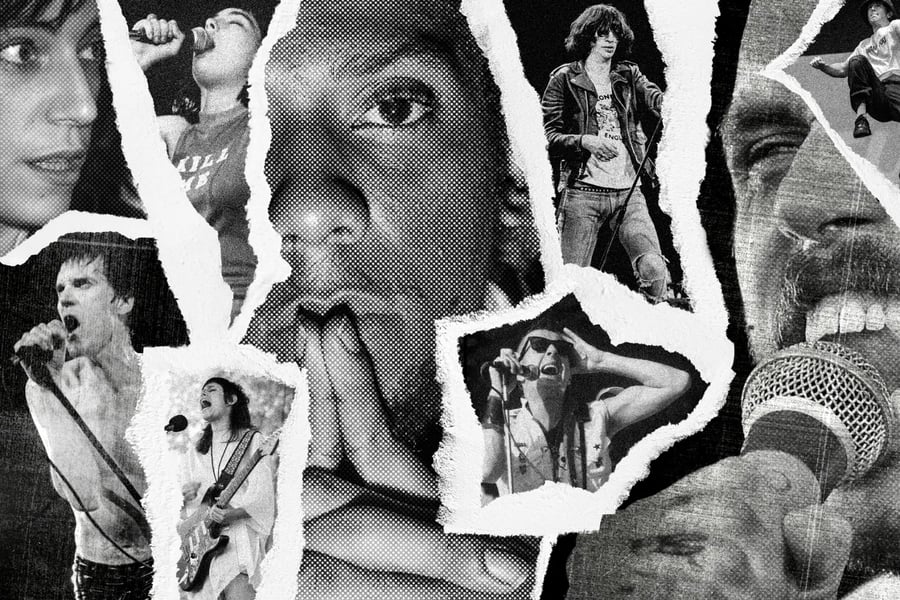
Punk albums photo illustration

ILLUSTRATION BY MATTHEW COOLEY

Punk rock started in 1976 in New York, when four cretins from Queens came up with a mutant strain of blitzkrieg bubblegum. The revolution they inspired split the history of rock & roll in half. But even if punk rock began as a kind of negation — a call to stark, brutal simplicity — its musical variety and transforming emotional power was immediate and remains staggering. To celebrate the 50th anniversary of the Ramones’ toweringly influential self-titled debut, we’ve compiled a list of the 100 Greatest Punk Albums of All Time.

If Ramones was Year Zero for punk rock, it didn’t come without precedent, so we included essential forebears like the Stooges, the New York Dolls, and Patti Smith, artists who were punk in spirit before the style really had a name. When punk did happen, it was an explosion of ideas and possibilities. Along with the Sex Pistols and the Clash, Black Flag and the Descendents, Bad Brains and Minor Threat, you’ll find Gang of Four mixing funk attack and Marxist theory, the ice-storm goth of Joy Division, the Mekons’ existential country visions, riot grrrl radicals like Bikini Kill and Sleater-Kinney, ska punk from Rancid and Operation Ivy, multiplatinum pop-punks Green Day and Blink 182, and new-look hardcore bands like Turnstile and Soul Glo.

Punk and its many offshoots have spawned so much great music that we’ve included a list of 200 related albums to check out. “Punk rock should mean freedom,” said Kurt Cobain in 1991, just as Nevermind was exploding punk values across the middle American mainstream. Here’s one map to where that freedom can take you.

Photographs in illustration by:

Richard E. Aaron/Redferns/Getty Images;  Lindsay Brice/Michael Ochs Archives/Getty Images; Peter Noble/Redferns/Getty Images;  Gus Stewart/Redferns/Getty Images; Jim Dyson/Getty Images; PAUL BERGEN/ANP/AFP/Getty Images; Paul Bergen/Redferns/Getty Images; Lisa Lake/Getty Images/Anheuser-Busch; Richard McCaffrey/Michael Ochs Archive/Getty Images

Contributors:

, , , , , , , , , , , , , , , ,

Love Music?

Get your daily dose of everything happening in Australian/New Zealand music and globally.

From Rolling Stone US

7

The Sex Pistols, ‘Never Mind the Bollocks Here’s the Sex Pistols’

The Sex Pistols caused a national scandal when they showed up with their notorious singles “Anarchy in the U.K.” and “God Save the Queen.” Their manager, Malcolm McLaren, used the outrage the band engendered to market the look and attitude of punk across the globe. But what can sometimes get lost in the band’s myth is the power and inventiveness of the music itself. With singer Johnny Rotten’s Cockney nasal growl, Steve Jones’ blowtorch guitar, and Paul Cook’s crashing wall of drums, their first and only studio album stands as a testament to the anger and frustration of life during the late 1970s, when inflation was raging, systems were breaking down, and politicians were doing nothing about it. Sound familiar? —E.G.P.See also: Sex Pistols, The Great Rock ‘n’ Roll Swindle (1979); Sex Pistols, Spunk (1977)

6

Wire, ‘Pink Flag’

No LP summed up the infinite possibility in punk’s radical simplicity better than this 35-minute, 21-song debut. Every track creates its own reality: the post-punk clockwork (lifted by Elastica, among others) of “Three Girl Rhumba,” the 28-second tabloid nightmare “Field Day for the Sundays,” the cultural studies Rubik’s Cube “12XU.” Among Wire’s targets was the scene itself; as Greil Marcus described it in his 1978 Rolling Stone review, “Pink Flag represents British punk rock trying to climb out of a hole, and the hole, as perceived by Wire, seems to be punk rock itself.”  Its songs covered widely, its influence was huge. In the words of Black Flag’s Henry Rollins: “A perfect album.” —W.H.See also: Wire, Chairs Missing (1978); Elastica, Elastica (1995)

5

Sleater-Kinney, ‘Dig Me Out’

The Olympia, Washington, trio Sleater-Kinney had already made waves before their third album arrived, but Dig Me Out cemented their signature lineup, rocketing them to best-band-ever contenders. With the addition of drummer Janet Weiss, Corin Tucker and Carrie Brownstein’s vocal and guitar interplay found the right propulsive, dynamic match. The album delves into relationships, romantic and otherwise — from the title track’s careening declaration “Dig me out, dig me in/Out of this mess” to the vulnerable call-and-response vocals in “One More Hour” to the way band wraps social commentary about traditional roles into a melodic refrain on “Little Babies.” The tangle of emotions unfold throughout with ferocity and heart. —A.L.See also: Heavens to Betsy, Calculated (1994); Excuse 17, Such Friends Are Dangerous (1995)

4

The Clash, ‘The Clash’

The Clash’s self-titled flame-thrower debut, a brittle-fuzz volley of politicized rage and street-choir vocal hooks, transformed British punk from a brawling adolescent turmoil to a dynamic social weapon in songs like “White Riot,” “London’s Burning,” and “I’m So Bored With the U.S.A.,” a fuck-off to Yankee cultural imperialism. Joe Strummer and his co-writer, guitarist Mick Jones, were not born debaters; manager-Svengali Bernie Rhodes pressed them to go topical. But the effect — propelled by bassist Paul Simonon and original drummer Terry Chimes, produced by the band’s live-sound man Mickey Foote — was a pivotal British fury. CBS in America refused to issue the album, citing fidelity issues; a 1979 edition had later singles added. The original remains the sound of a riot being born: a new London calling without fear or compromise. —D. Fricke  See also: The Clash, Give ‘Em Enough Rope (1979); The Clash, Black Market Clash (1980)

3

The Minutemen, ‘Double Nickels on the Dime’

The Minutemen drove up from San Pedro, the blue-collar California port town — three corndogs who smashed every cliché about how much you could say in a punk rock song, musically and politically. Guitarist D. Boon and bassist Mike Watt were childhood best friends, teaming up with drummer George Hurley. Double Nickels on the Dime is their sprawling 1984 double-vinyl classic, full of brotherly warmth as well as wiseass humor — as they declare in “History Lesson, Pt 2,” “Our band could be your life.” Boon and Watt spiel back and forth, stretch out into jazz and folk picking, do slam-bang anti-capitalist rants like “This Ain’t No Picnic.” They even cover old faves by Steely Dan, Creedence Clearwater Revival, and Van Halen. But tragically, D. Boon was killed in a 1985 van crash, just days after they released their final album, 3-Way Tie (For Last). —R.S.See also: The Minutemen, What Makes a Man Start Fires? (1982); Saccharine Trust, Surviving You Always (1984)

2

X-Ray Spex, ‘Germfree Adolescents’

“Some people think little girls should be seen and not heard, but I think … oh bondage, up yours! One, two, three, four!” Now that’s how you kick off a debut single, and that’s how a teenage multiracial London girl named Poly Styrene became an overnight feminist punk-rock poster girl. She had braces on her teeth and wore her own homemade Day-Glo rags, screeching about consumer society in anthems like “Art-I-Ficial” over saxophone blasts, chanting “I am a poseur and I don’t care! I like to make people stare!” These London kids were so raw, their explosive debut album couldn’t even get released in the U.S. But Germfree Adolescents became a world-of-mouth cult classic, passed from hand to hand, inspiring artists from the Slits to Sleater-Kinney to the Beastie Boys. Styrene died of cancer in 2011, but her legend lives forever in anthems like “Plastic Bag” and “The Day The World Turned Day-Go.” —R.S.See also: Essential Logic, Beat Rhythm News (1979); Delta 5, Singles and Sessions 1979-1981 (2006)

1

Ramones, ‘Ramones’

When the Ramones recorded their debut album for $6,400 in February 1976, the agenda was simple: “Eliminate the unnecessary and focus on the substance,” as Tommy put it in 1999. But the brilliance of punk’s most influential and enduring record — how four disparate outcasts from the American adolescent mainstream made such original single-minded fury — remains hard to define. Stork-like singer Joey was a pop kid chanting “Hey ho, let’s go!” at the start of “Blitzkrieg Bop.” Guitarist Johnny pared Dick Dale and Bo Diddley down to the airtight, bluesless staccato of “Beat on the Brat” and “Loudmouth.” Bassist and primary lyricist Dee Dee wrote about what he knew (drugs, despair, hustling) with telegramatic wit. And drummer Tommy, a former recording engineer on Jimi Hendrix sessions, co-produced Ramones, guarding its brevity and purity. “We thought we could be the biggest band in the world,” Johnny recalled. In a way, they would be. This is where it began.–D. FrickeSee also: Various Artists, CBGB: A New York City Soundtrack 1975-1986 (2025); Ramones, Hey Ho, the Anthology (1998)
