

























Home Music Music Lists

The 100 Greatest Punk Albums of All Time

We rank the 100 greatest punk albums of all time: Ramones, Clash, Sleater-Kinney and more.
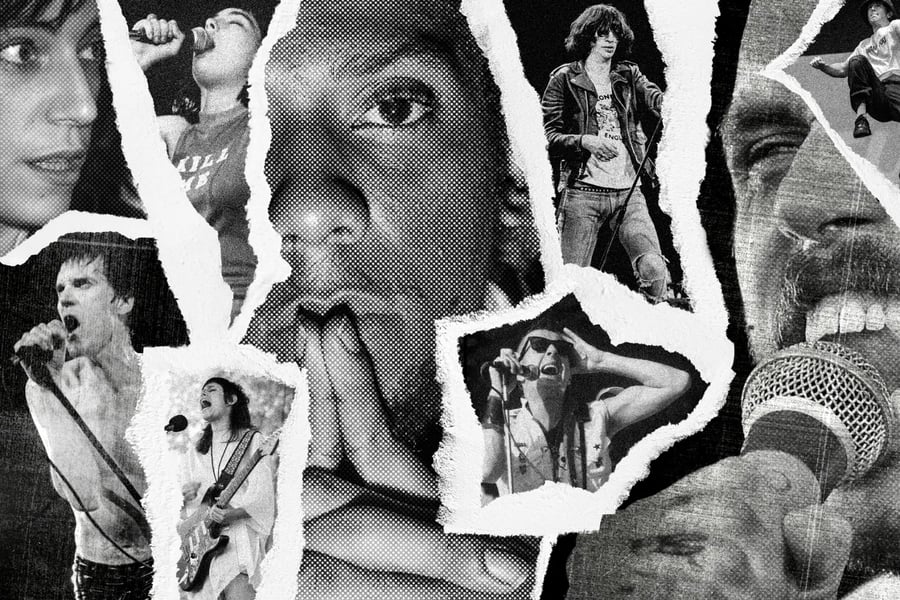
Punk albums photo illustration

ILLUSTRATION BY MATTHEW COOLEY

Punk rock started in 1976 in New York, when four cretins from Queens came up with a mutant strain of blitzkrieg bubblegum. The revolution they inspired split the history of rock & roll in half. But even if punk rock began as a kind of negation — a call to stark, brutal simplicity — its musical variety and transforming emotional power was immediate and remains staggering. To celebrate the 50th anniversary of the Ramones’ toweringly influential self-titled debut, we’ve compiled a list of the 100 Greatest Punk Albums of All Time.

If Ramones was Year Zero for punk rock, it didn’t come without precedent, so we included essential forebears like the Stooges, the New York Dolls, and Patti Smith, artists who were punk in spirit before the style really had a name. When punk did happen, it was an explosion of ideas and possibilities. Along with the Sex Pistols and the Clash, Black Flag and the Descendents, Bad Brains and Minor Threat, you’ll find Gang of Four mixing funk attack and Marxist theory, the ice-storm goth of Joy Division, the Mekons’ existential country visions, riot grrrl radicals like Bikini Kill and Sleater-Kinney, ska punk from Rancid and Operation Ivy, multiplatinum pop-punks Green Day and Blink 182, and new-look hardcore bands like Turnstile and Soul Glo.

Punk and its many offshoots have spawned so much great music that we’ve included a list of 200 related albums to check out. “Punk rock should mean freedom,” said Kurt Cobain in 1991, just as Nevermind was exploding punk values across the middle American mainstream. Here’s one map to where that freedom can take you.

Photographs in illustration by:

Richard E. Aaron/Redferns/Getty Images;  Lindsay Brice/Michael Ochs Archives/Getty Images; Peter Noble/Redferns/Getty Images;  Gus Stewart/Redferns/Getty Images; Jim Dyson/Getty Images; PAUL BERGEN/ANP/AFP/Getty Images; Paul Bergen/Redferns/Getty Images; Lisa Lake/Getty Images/Anheuser-Busch; Richard McCaffrey/Michael Ochs Archive/Getty Images

Contributors:

, , , , , , , , , , , , , , , ,

Love Music?

Get your daily dose of everything happening in Australian/New Zealand music and globally.

From Rolling Stone US

36

Bratmobile, ‘Pottymouth’

Fast, bubbly, and brutal, the debut album by Olympia, Washington, trio Bratmobile is a riot-grrrl classic. Singer Allison Wolfe and drummer Molly Neuman published the pioneering zine Girl Germs, a title they turned into a playground chant for one of their best songs. Driven by Erin Smith’s breakneck surf-punk guitar, the band’s lone full-length LP was political yet poppy, coquettish yet caustic, packing a lot into just under 30 minutes — from a sneering cover of the Runaways’ “Cherry Bomb” to the vitriolic “Fuck Yr Fans” to “P.R.D.C.T.,” a sobering look at abusive assholes. Pottymouth’s silly title belies a record that packs a punch that leaves your ears ringing. —B.E.See also: Mecca Normal, Mecca Normal (1986); Various Artists, Kill Rock Stars (1991)

35

The Misfits, ‘Misfits’

As with any great slasher movie, hardly anybody gets out of Misfits alive. And if they do, they’re damaged for life. There’s Patty Hearst, “machine gun in her hand,” on “She,” and JFK on “Bullet,” a reminder that “Texas is the reason that the president’s dead.” Then there are all the gory scenes from some monster magazine: “Vampira,” “Astro Zombies,” “I Turned Into a Martian,” “Die Die My Darling.” There is no perfect Misfits compilation, but this 1986 hodgepodge of singles and deep cuts from punk’s bloodthirstiest band (commonly referred to as Collection) comes closest thanks to “Where Eagles Dare” (“I ain’t no goddamn sunuvabitch!”), the Metallica favorite “Green Hell,” and Misfits’ masterpiece, “Horror Business.” Don’t go in the bathroom with Glenn. —K.G.See Also: Misfits, Legacy of Brutality (1985); Samhain, Initium (1984)

34

Various Artists, ‘Wanna Buy a Bridge?’

Label samplers don’t often end up in the hall of fame, but this 1980 compilation of British independent powerhouse Rough Trade’s singles (from its then-new American arm) is a marvel in its own right. It opens with a roof-raiser, Stiff Little Fingers’ “Alternative Ulster,” then surveys the scenes that punk had splintered into: Delta 5’s sly noise-funk koan “Mind Your Own Business,” Young Marble Giants’ hauntingly minimal “Final Day,” Cabaret Voltaire’s industrial juggernaut “Nag Nag Nag.” Six of its 14 bands are fronted by (or entirely) women; by its end, even Robert Wyatt’s languid cover of a Chic song spits political and musical fire. —D.W.See also: Swell Maps, Jane From Occupied Europe (1980); Young Marble Giants, Colossal Youth (1980) 

33

Velvet Underground, ‘White Light/White Heat’

We can argue all day about the Velvet Underground’s best album, but their second record, White Light/White Heat, is definitely their proto-punk testament, cranking the urban aggression into the red. The Velvets recorded it in the New York dog days of 1967, yet they sound a million miles away from the Summer of Love. It climaxes with “Sister Ray,” 17 minutes of blissed-out feedback — Lou Reed and Sterling Morrison’s guitars, John Cale’s crazed organ, Mo Tucker’s primitive drums. Near the end of his life, Reed called White Light/White Heat “the Statue of Liberty of punk, with the light on top.” Let freedom ring. —R.S.See also: The Velvet Underground, The Quine Tapes (1969/2001); Lou Reed, Street Hassle (1978)

32

Big Black, ‘Atomizer’

Fronted by soon-to-be-in-demand producer Steve Albini, the Chicago noise-rock titans Big Black set a new standard for guitar savagery on their debut album. Backed by a drum machine that’s runaway-train relentless, the guitars are set to puree and liquify. Yet, what’s striking is how catchy their violently twisted riffs are. The subject matter of Albini’s songs now often comes off like a zine-era version of clickbait (most notoriously “Jordan, Minn.,” about a child abuse scandal that proved to be fake), but highlights like the small-town arson fantasy “Kerosene” (later covered by St. Vincent) are genuine attempts at grappling with real-life ugliness. Atomizer is still terrorizing decades later. —J.G.See also: Big Black, Songs About Fucking (1987); Shellac, At Action Park (1995)

31

Joy Division, ‘Unknown Pleasures’

Punk bands like to name-check alienation, but none have ever manifest it as chillingly as Joy Division. On their debut, producer Martin Hannett isolated sounds as if each band member were alone in his own meat locker. Frontman Ian Curtis, with his foghorn baritone, sang about pain and the absence of pleasure, about “feeling” as something lost or endured, about “blood sport” and “acting out your own death.” Yet there was beauty in his keening voice and the music’s silvery clang. Curtis hanged himself less than a year after the LP’s release, deepening the music, which would decisively coin post-punk, launch a generation of goths, and remain perhaps punk’s bravest album. —W.H.See also: Joy Division, Closer (1980); New Order, Movement (1981)

30

Fugazi, ‘Repeater’

A genuine D.C. supergroup, Fugazi joined Dischord Records co-founder and Minor Threat frontman Ian MacKaye with singer-guitarist Guy Picciotto, drummer Brendan Canty from emo-pioneers Rites of Spring, and bassist Joe Lally. After two expansive EPs, the band locked into a spare, wildly influential sound on this explosive debut. Melodies are stripped back to alarm screeches (“Repeater”) and thick, sweeping chordings (“Turnover”). Picciotto considers the power of the word “no”  on “Blueprint,” and the drummer gets some on the instrumental “Brendan No. 1.” MacKaye barks against “Greed” and “Merchandise” but closes the album with “Shut the Door,” an economical story of an overdose death that became an epic onstage. —J.G.See also: Various Artists, State of the Union (1989); Fugazi, In on the Killtaker (1993)

29

Replacements, ‘Sorry Ma, Forgot to Take Out the Trash’

Right from the start, the Replacements had their own snotty sound, with resident poet Paul Westerberg croaking about booze and despair over the band’s self-proclaimed “power trash.” Bassist Tommy Stinson was still in ninth grade when the ‘Mats blew out of Minneapolis with this hardcore quickie debut, speeding through comic tantrums like “Raised in the City” and “Shiftless When Idle.” (According to the liner notes, “Kick Your Door Down” was “written 20 mins after we recorded it.”) “Johnny’s Gonna Die” offered a surprisingly bluesy this-party’s-been-closed eulogy for junkie Johnny Thunders, a few years in advance. The boys went on to greater glories, with Let It Be and Tim, but Sorry Ma is where their legend begins. —R.S.See also: The Replacements, Stink (1982), Gang Green: Another Wasted Night (1985)

28

The Germs, ‘(GI)’

A lot of L.A. punks of a certain age have a “Germs burn”: a circular cigarette burn that could be administered only by a member of the band or by someone else who already had one. The Germs only completed one album — 1979’s Joan Jett-produced (GI) — before singer/provocateur/lyrical genius Darby Crash killed himself (the day before John Lennon’s death). But after the hilariously sloppy debut single “Forming,” they became something worth getting branded for: the West Coast’s premier art-punks, fast, weird, and out of control, propelled by guitarist Pat Smear, who later played with Nirvana and joined the Foo Fighters. —D.W.See also: Urinals, Negative Capability … Check it Out! (1996); The Bags, All Bagged Up: The Collected Works 1977-1980 (2007)

27

Pere Ubu, ‘Terminal Tower: An Archival Collection’

Recorded in 1975, “Heart of Darkness” stands among punk’s great opening salvos, born not in New York or London but, of all places, Cleveland. “I don’t see anything that I want!” yowled David Thomas over the strangled guitar of Peter Laughner. He’d be dead two years later, at 24, while Thomas and crew continued as one of America’s most uncompromising post-punk bands. But this collection of early singles and B sides, including the chillingly anthemic “Final Solution” — with more Laughner guitar brilliance — is deep heartland noir, in spirit anticipating Hüsker Dü, the Replacements, even Bruce Springsteen’s Nebraska. —W.H.See also: Pere Ubu, The Modern Dance (1978); Rocket From the Tombs, The Day the Earth Met the Rocket From the Tombs (2002)

26

Ramones, ‘Rocket to Russia’

In the summer of 1977, the Ramones released “Sheena Is a Punk Rocker,” the story of a girl breaking away to New York City and living out the CBGB dream. It’s the greatest song ever written about punk rock’s liberating power, and the Ramones’ third album made good on its promise with their funnest, most outrageously catchy record — all hopped up with mutant anthems like “Teenage Lobotomy” and “Cretin Hop,” surf rock for subway riders like “Rockaway Beach” and their cover of the Trashmen’s “Surfin’ Bird,” and heart-on-sleeve anthems like “I Wanna Be Well” and “Here Today, Gone Tomorrow.” Rocket to Russia didn’t have songs about beating on brats or sniffing glue. It was the album that proved the Ramones could bash out world-hugging songs that could ascend to pop heaven. —J.D.See also: Ramones, Leave Home (1977); The Only Ones, Special View (1979)

25

The Raincoats, ‘The Raincoats’

The first full-length from English foursome the Raincoats channels the anything-goes spirit of punk into giddy, elliptical bursts of joy. Their ramshackle cover of The Kinks’ “Lola” channels that chestnut’s gender-bent euphoria, while the start-stop “Life on the Line” captures the feeling of dwelling on the edge with cracked compassion. Reissued in 1993 with debut single “Fairytale in the Supermarket” as its opening track, The Raincoats still has a freshness that can be chalked up to the group’s unorthodox lineup (thanks to Vicky Aspinall’s violin and the occasional sax skronk). But its greatness is even more rooted in a worldview that takes “No one teaches you how to live” (from “Supermarket”) as a dare instead of a lament. —M.J.See also: Gina Birch, I Play My Bass Loud (2023); Horsegirl, Phonetics On and On (2025)

24

Mission of Burma, ‘Vs.’

“I think we’re just a closet prog-rock act that happened during punk,” Mission of Burma’s Clint Conley once said. The Boston avant-screech band pioneered an arty attack with its 1980 DIY debut single, “Academy Fight Song,” incorporating psychedelia and tape loops, mixing Syd Barrett and John Coltrane with the Stooges. Vs. was their abrasively complex bombshell, a headphone record that really explodes: Conley’s furious “That’s How I Escaped My Certain Fate” and “Deadpool,” Roger Miller’s throbbing guitar trance “Trem Two,” drummer Peter Prescott’s raging “Learn How.” Burma broke up way too soon in 1983, when Miller developed hearing damage, yet returned in the 2000s — still ahead of their time. —R.S.See also: Mission of Burma, The Obliterati (2006); Volcano Suns, The Bright Orange Years (1985),

23

The Descendents, ‘Milo Goes to College’

Testosterone and caffeine are powerful drugs, and the 1982 album that L.A.’s Descendents thought would be their first and last (because singer Milo Aukerman was going off to school) is cranked up on both of them. Milo is a wild-eyed document of callow adolescent indignation; all four songwriters put a lot of vigor into insisting what they’re not (“losers,” fake punks, slaves to the sex drives that pain and confuse them). But between Frank Navetta’s barre chords, Bill Stevenson’s octuple-time/stop-on-a-dime drum flourishes, and Tony Lombardo’s ultra-tuneful lead bass, Milo invented pop-punk as it’s remained for the past three decades and change. —D.W.See also: Descendents, Somery (1991); Fastbacks, …And His Orchestra (1987)

22

Minor Threat, ‘Complete Discography’

Musically, conceptually, and ideologically, the teenage neatniks of Washington, D.C.’s Minor Threat were as pure as it got. The three phases of their three-year existence are all here: 1981’s precise, billion-miles-an-hour four-chord rage rants, the Out of Step album’s heavier arrangements and heavier emotional load, and their final EP’s savagely beautiful kiss-off to their audience and their youth. Singer Ian MacKaye (later of Fugazi) and drummer Jeff Nelson co-founded the Dischord label; bassist Brian Baker later joined Bad Religion. The hardcore punk scene they ruled, and the straightedge movement MacKaye inspired, venerate them to this day. —D.W.See also: Various Artists, Flex Your Head (1982); Beefeater, House Burning Down (1987)

21

Television, ‘Marquee Moon’

In 1974, nearly every rock rock band had long hair, dressed flamboyantly, and played fluid, blues-based rhythms. Television consciously rejected those rules: Their guitars evoked ink-pen crosshatches, not lava lamps. After helping build the stage at the legendary club CBGB, guitar hero Tom Verlaine’s quartet would find a cult audience over the next couple of years. The band’s 1977 debut captures its clockwork arrangements and heavenward guitars at their zenith — stark, thrilling, high contrast, and dotted with Verlaine’s sidelong poetry (“I was listening, listening to the rain/I was hearing, hearing something else”). Secret hero: Fred Smith, whose bass is the definition of less is more. —M.M.See also: Television, The Blow-Up (1982); Peter Laughner, Take the Guitar Player for a Ride (1994)

20

Green Day, ‘Dookie’

Green Day’s major-label debut exploded across teenage America in the wake of Kurt Cobain’s death like sweet, manic relief. Dookie was an irresistible paradox: 14 songs about overwhelming despair detonated with Who-ish zeal and radio-tight pop craft, made by a trio steeped in indie-punk ideals. The album was singer-guitarist-songwriter Billie Joe Armstrong’s “journal about what it was like,” he said in 2014, “to live as a street kid” — desperate for emotional connection in “She” and “When I Come Around,” frustrated to an atomic degree in “Longview.” Brutally frank and deliriously fast, Dookie finished the job started by the first Ramones album — it put punk in the mainstream for good. —D. FrickeSee also: Green Day, Kerplunk! (1992); Lifetime, Hello Bastards (1995)

19

Bikini Kill, ‘Reject All American’

Bikini Kill’s early releases had been defined by Kathleen Hanna’s unhinged vocals — missives at abusive dads and creepy carnies, screamed odes to the tough girls she loved. But Reject All American took a huge leap in terms of melody, arrangement, and instrumental virtuosity that lined up more with label mates Sleater-Kinney than their earlier work. Sure, there’s the opening track “Statement of Vindication,” which pulls the listener in with a screaming nursery rhyme. But when Hanna turns her focus to grief on songs like “R.I.P” — she’d lost multiple friends to overdose and suicide in short succession, including Kurt Cobain — the band leaned away from distortion to show riot grrrls everywhere they didn’t need to rely on the same three chords. —E.G.P.See also: Bikini Kill, The Singles (1998); Various Artists, There’s a Dyke in the Pit (1992)

18

Buzzcocks, ‘Singles Going Steady’

The eternal question: “Ever fallen in love with someone you shouldn’t have fallen in love with?” Pete Shelley, the bard of the Buzzcocks, seemed to suffer this crisis six or seven times per song. These Manchester kids were the pop-punk originators, in the days when violating those boundaries was still taboo. They specialized in insanely catchy three-minute gems about hormonal angst, from “Orgasm Addict” to “Ever Fallen in Love?” to the mature breakup song “Oh Shit!” Shelley chronicled queer desire in the underground — not even the punks were ready for this. But this perfect 1979 greatest-hits album remains the pop-punk fountainhead. —R.S.See also: The Buzzcocks, A Different Kind of Tension (1979); The Dentists, Some People Are on the Pitch They Think It’s All Over It Is Now (1985)

17

Bad Brains, ‘Bad Brains’

The Black Washington, D.C., Rastafarian jazz-fusion band Mind Power fell in love with punk rock, renamed themselves after a Ramones song, and set out to play even faster and harder. Bad Brains, their debut album, didn’t appear until 1982 — and then only on cassette — but they were already heroes of the East Coast punk scene, on the strength of their scorched-earth live performances and 1979’s terrifyingly fast “Pay to Cum!” single (reprised here). And they refused to conform to anyone’s expectations: The album’s frantic hardcore tracks (“Sailin’ On,” “Banned in D.C.”) are punctuated by spaced-out dub and reggae interludes. —D.W.See also: Bad Brains, I Against I (1986); Government Issue, Boycott Stab (1983)

16

Gang of Four, ‘Entertainment!’

“Guerrilla war struggle is a new entertainment,” singer Jon King declared with biting incantation in “5:45,” a prophetic treatise on television news on the most rhythmically kinetic and politically incisive record of British punk’s golden age. Underneath the Marxist trimmings, Gang of Four were a genuine revolutionary force in their pursuit of working-class justice through tightly wound knots of enraged funk (“Not Great Men”) and avenging-disco syncopation (“At Home He Feels Like a Tourist”), slashed by guitarist Andy Gill’s blues-free swordplay. Truly fusing James Brown and early hip-hop with the bullet-point minimalism of the Ramones, Gang of Four were Rage Against the Machine a decade ahead of schedule. —D. FrickeSee also: The Proletariat, Soma Holiday (1982); Rage Against the Machine, Rage Against the Machine (1992)

15

New York Dolls, ‘New York Dolls’

The New York Dolls didn’t last long: They banged out two 1970s albums of androgynous sex-crazed guitar trash, then fell apart. But that’s all they needed to help invent punk. These boys loved to dress up and pose as bad girls — as singer David Johansen boasted in Rolling Stone in 1972, “We like to look 16 and bored shitless.” Their debut album was packed with gutter-glam anthems like “Personality Crisis,” “Trash,” and “Looking for a Kiss,” with Johansen strutting in his jet-boy swagger over Johnny Thunders’ maniac guitar fuzz. The Dolls inspired younger bands who wanted to be them — the Ramones, the Clash, the Sex Pistols — but their music remains a timeless soundtrack for dressing up and acting up. —R.S.See also: New York Dolls, Too Much Too Soon (1974); David Johansen, David Johansen (1978)

14

X, ‘Los Angeles’

X were always way too arty to fit in with the L.A. hardcore scene: Singers John Doe and Exene Cervenka met at a beatnik poetry workshop. They were also a married couple, the ultimate taboo in such a kill-your-elders atmosphere. But X had a flawless four-album run in the early Eighties — 1981’s Wild Gift is practically the punk Rumours. They kicked it off with this raw debut, where Doe and Cervenka yowl over the manic thrashabilly of guitarist Billy Zoom and drummer D.J. Bonebrake. Their L.A. is a town full of psycho creeps, racists, killer speed freaks, losers — but they call it home. It all ends with their theme song: “The World’s a Mess, It’s In My Kiss.” The Doors’ Ray Manzarek produced; X paid respects with a version of “Soul Kitchen” that would have scared Jim Morrison right out of town. —R.S.See also:  X, Wild Gift (1981); Flesh Easters, A Minute to Pray a Second to Die (1980)

13

Hüsker Dü, ‘Zen Arcade’

The Minnesota power trio Hüsker Dübroke all the rules of hardcore with this 1984 opus, blowing Mohawked minds all over America. At a time when it was still controversial to learn a fourth chord, they dropped a double-vinyl concept album, telling the story of a young guy escaping a broken home and making his way in the city. Bob Mould and Grant Hart traded off spit-and-growl vocals in savagely emotional blasts like “Whatever” and “Something I Learned Today,” but the music expanded into psychedelic backward-tape effects, piano and the acoustic folk rage of “Never Talking to You Again,” plus the closing 14-minute feedback instrumental “Reoccurring Dreams.” The Hüskers went on to poppier heights like New Day Rising and Flip Your Wig, yet this is their punk triumph. —R.S.See also: See Also: Hüsker Dü, Metal Circus (1983); Bob Mould, Here We Go Crazy (2025)

12

Patti Smith, ‘Horses’

Punk was still in its earliest days when the downtown poet Patti Smith released Horses in 1975, but she turned the whole movement’s concept inside out with her debut. The lyrics’ to-the-quick imagery and guttural passion give Horses its fire; the record’s beauty is only enhanced by the push-pull interplay she has with her band, which combines the loose deftness of a late-night bar act with the snarling fury of any safety-pin-studded combo. Smith’s defiant stance on the cover is echoed on the album, with tracks like her ragged reinvention of Them’s “Gloria” and the doom-driven “Land” turning rock into not just free, but liberated verse. —M.J.See also: Patti Smith, Easter (1978); PJ Harvey, Rid of Me (1993)

11

Black Flag, ‘Damaged’

“We! Are tired! Of your abuse! Try to stop us! It’s! No uuuuuuse!” Black Flag walked it like they talked it, banding together to fight back against a hostile world that was actually doing a damn good job of trying to stop them. Damaged is the pinnacle of Southern California hardcore, with Greg Ginn’s demented noise guitar and Henry Rollins’ musclebound “pain is my girlfriend” rage. Damaged got them in legal trouble with their label, which refused to release it and denounced it as “an anti-parent record.” Which it is — not to mention anti-cop, anti-government, anti-TV, anti-beer, and what else you got? Yet Damaged remains a revolutionary noise, from a band whose van was its foxhole. Best line, from the clincher “Rise Above”: “We are born with a chance.” —R.S.See also: Black Flag, The First Four Years (1984); Various Artists, The Blasting Concept (1983)

10

The Clash, ‘London Calling’

In 1979, reeling from management changes and a ballooning cloud of expectations, Joe Strummer and Mick Jones sequestered themselves in the gritty, low-stakes solace of London’s Vanilla Studios, unlocking a kind of magic as they logged marathon days messing around with covers, playing football, and demoing what would become their monumental double album. A six-week recording sprint followed, solidifying a tableau of now-classics — from “Clampdown” to “Guns of Brixton” to the title track — that blared messages of political disillusionment and existential anxieties that resonate more with every passing year. While the mind-bending traces of ska, jazz, and rockabilly influences continues to vex purists to this day, that omnidirectional spirit mapped out the outer limits of what punk and rock could be. —J.L.See also:  The Clash, Sandinista! (1980); The Specials, The Specials (1980)

9

Nirvana, ‘Nevermind’

“Punk rock should mean freedom,” Kurt Cobain said in an interview just as he was becoming alt-rock’s self-canceling messiah. He loved the Raincoats and Black Flag, and he loved Black Sabbath and Aerosmith too. Nevermind went o­ff like a grenade in the American mainstream, turning junior-high dances into mosh pits with music that embodied Cobain’s dream of punk rock that the metal kids he grew up around in rural Washington could love. On songs like “In Bloom,” “Breed,” and “Territorial Pissings,” he took the punishing sludge of the Pacific Northwest underground rock scene and made it into something relentlessly catchy, powerfully opaque, and weirdly empathetic. —J.D.See also: Nirvana, In Utero (1993); Nirvana, Bleach (1989)

8

The Stooges, ‘Fun House’

Brute force was the Stooges’ modus operandi, and their second album (produced by Kingsmen keyboardist Don Gallucci) captures their onstage madness best: Iggy Pop howling like a werewolf, guitarist Ron Asheton hammering out blues-riff elaborations on as few chords as he could get away with (“T.V. Eye” basically has one), lyrics boiled down to lapidary mantras, and grooves repeated endlessly because the band can’t stop pummeling. Until punk rock caught up with what they’d pioneered, young alien types everywhere spotted each other by their Stooges albums. In the words of Sonic Youth’s Thurston Moore, “The Stooges were the perfect embodiment of what music should be.” —D.W.See also: Iggy and the Stooges, Raw Power (1973); Iggy Pop, Lust For Life (1977)

7

The Sex Pistols, ‘Never Mind the Bollocks Here’s the Sex Pistols’

The Sex Pistols caused a national scandal when they showed up with their notorious singles “Anarchy in the U.K.” and “God Save the Queen.” Their manager, Malcolm McLaren, used the outrage the band engendered to market the look and attitude of punk across the globe. But what can sometimes get lost in the band’s myth is the power and inventiveness of the music itself. With singer Johnny Rotten’s Cockney nasal growl, Steve Jones’ blowtorch guitar, and Paul Cook’s crashing wall of drums, their first and only studio album stands as a testament to the anger and frustration of life during the late 1970s, when inflation was raging, systems were breaking down, and politicians were doing nothing about it. Sound familiar? —E.G.P.See also: Sex Pistols, The Great Rock ‘n’ Roll Swindle (1979); Sex Pistols, Spunk (1977)

6

Wire, ‘Pink Flag’

No LP summed up the infinite possibility in punk’s radical simplicity better than this 35-minute, 21-song debut. Every track creates its own reality: the post-punk clockwork (lifted by Elastica, among others) of “Three Girl Rhumba,” the 28-second tabloid nightmare “Field Day for the Sundays,” the cultural studies Rubik’s Cube “12XU.” Among Wire’s targets was the scene itself; as Greil Marcus described it in his 1978 Rolling Stone review, “Pink Flag represents British punk rock trying to climb out of a hole, and the hole, as perceived by Wire, seems to be punk rock itself.”  Its songs covered widely, its influence was huge. In the words of Black Flag’s Henry Rollins: “A perfect album.” —W.H.See also: Wire, Chairs Missing (1978); Elastica, Elastica (1995)

5

Sleater-Kinney, ‘Dig Me Out’

The Olympia, Washington, trio Sleater-Kinney had already made waves before their third album arrived, but Dig Me Out cemented their signature lineup, rocketing them to best-band-ever contenders. With the addition of drummer Janet Weiss, Corin Tucker and Carrie Brownstein’s vocal and guitar interplay found the right propulsive, dynamic match. The album delves into relationships, romantic and otherwise — from the title track’s careening declaration “Dig me out, dig me in/Out of this mess” to the vulnerable call-and-response vocals in “One More Hour” to the way band wraps social commentary about traditional roles into a melodic refrain on “Little Babies.” The tangle of emotions unfold throughout with ferocity and heart. —A.L.See also: Heavens to Betsy, Calculated (1994); Excuse 17, Such Friends Are Dangerous (1995)

4

The Clash, ‘The Clash’

The Clash’s self-titled flame-thrower debut, a brittle-fuzz volley of politicized rage and street-choir vocal hooks, transformed British punk from a brawling adolescent turmoil to a dynamic social weapon in songs like “White Riot,” “London’s Burning,” and “I’m So Bored With the U.S.A.,” a fuck-off to Yankee cultural imperialism. Joe Strummer and his co-writer, guitarist Mick Jones, were not born debaters; manager-Svengali Bernie Rhodes pressed them to go topical. But the effect — propelled by bassist Paul Simonon and original drummer Terry Chimes, produced by the band’s live-sound man Mickey Foote — was a pivotal British fury. CBS in America refused to issue the album, citing fidelity issues; a 1979 edition had later singles added. The original remains the sound of a riot being born: a new London calling without fear or compromise. —D. Fricke  See also: The Clash, Give ‘Em Enough Rope (1979); The Clash, Black Market Clash (1980)

3

The Minutemen, ‘Double Nickels on the Dime’

The Minutemen drove up from San Pedro, the blue-collar California port town — three corndogs who smashed every cliché about how much you could say in a punk rock song, musically and politically. Guitarist D. Boon and bassist Mike Watt were childhood best friends, teaming up with drummer George Hurley. Double Nickels on the Dime is their sprawling 1984 double-vinyl classic, full of brotherly warmth as well as wiseass humor — as they declare in “History Lesson, Pt 2,” “Our band could be your life.” Boon and Watt spiel back and forth, stretch out into jazz and folk picking, do slam-bang anti-capitalist rants like “This Ain’t No Picnic.” They even cover old faves by Steely Dan, Creedence Clearwater Revival, and Van Halen. But tragically, D. Boon was killed in a 1985 van crash, just days after they released their final album, 3-Way Tie (For Last). —R.S.See also: The Minutemen, What Makes a Man Start Fires? (1982); Saccharine Trust, Surviving You Always (1984)

2

X-Ray Spex, ‘Germfree Adolescents’

“Some people think little girls should be seen and not heard, but I think … oh bondage, up yours! One, two, three, four!” Now that’s how you kick off a debut single, and that’s how a teenage multiracial London girl named Poly Styrene became an overnight feminist punk-rock poster girl. She had braces on her teeth and wore her own homemade Day-Glo rags, screeching about consumer society in anthems like “Art-I-Ficial” over saxophone blasts, chanting “I am a poseur and I don’t care! I like to make people stare!” These London kids were so raw, their explosive debut album couldn’t even get released in the U.S. But Germfree Adolescents became a world-of-mouth cult classic, passed from hand to hand, inspiring artists from the Slits to Sleater-Kinney to the Beastie Boys. Styrene died of cancer in 2011, but her legend lives forever in anthems like “Plastic Bag” and “The Day The World Turned Day-Go.” —R.S.See also: Essential Logic, Beat Rhythm News (1979); Delta 5, Singles and Sessions 1979-1981 (2006)

1

Ramones, ‘Ramones’

When the Ramones recorded their debut album for $6,400 in February 1976, the agenda was simple: “Eliminate the unnecessary and focus on the substance,” as Tommy put it in 1999. But the brilliance of punk’s most influential and enduring record — how four disparate outcasts from the American adolescent mainstream made such original single-minded fury — remains hard to define. Stork-like singer Joey was a pop kid chanting “Hey ho, let’s go!” at the start of “Blitzkrieg Bop.” Guitarist Johnny pared Dick Dale and Bo Diddley down to the airtight, bluesless staccato of “Beat on the Brat” and “Loudmouth.” Bassist and primary lyricist Dee Dee wrote about what he knew (drugs, despair, hustling) with telegramatic wit. And drummer Tommy, a former recording engineer on Jimi Hendrix sessions, co-produced Ramones, guarding its brevity and purity. “We thought we could be the biggest band in the world,” Johnny recalled. In a way, they would be. This is where it began.–D. FrickeSee also: Various Artists, CBGB: A New York City Soundtrack 1975-1986 (2025); Ramones, Hey Ho, the Anthology (1998)
