


























Home Music Music Lists

50 Innovators Shaping Rap’s Next 50 Years

From Ice Spice to Kenny Beats, Druski to DD Osama, these are the rappers, producers, fashion designers, and creators helping point the way to hip-hop’s future
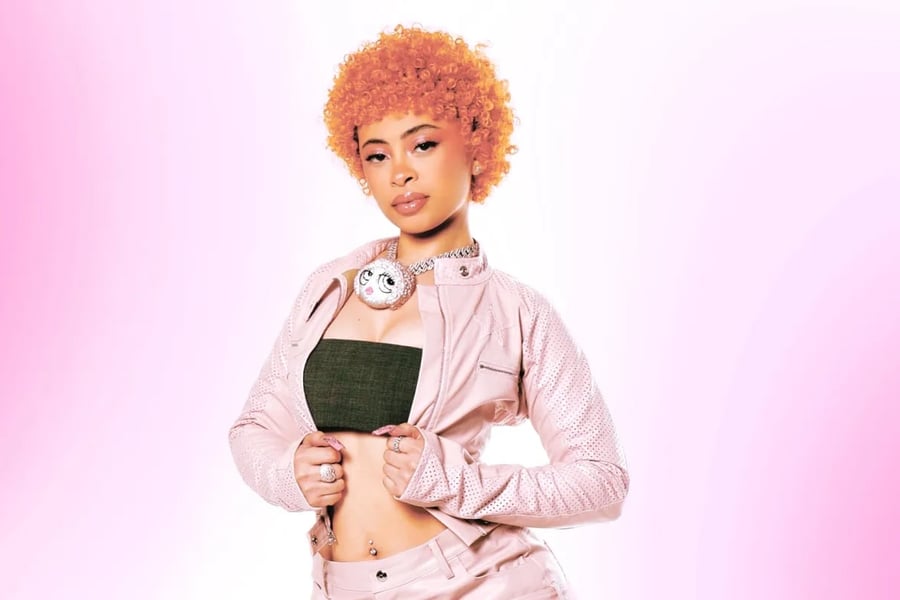
Ice Spice

COUGHS*

HIP-HOP WAS BORN IN THE BRONX IN THE summer of 1973. To celebrate the music’s 50th anniversary, Rolling Stone” will be publishing a series of features, historical pieces, op-eds, and lists throughout this year.

In 50 years, hip-hop has transformed, evolved and taken on any number of different shapes and contexts while remaining an undeniably distinct art form. You don’t quite know why something is hip-hop, but it strikes you as immediately as any physical quality. The rap world has invented new forms of expression as its adapted to the internet and other technological changes, all while remaining true to its essence, the indomitable spirit at the heart of this culture. More than just artists, today’s rap world is a constellation of figures all interlinked by the lineage they share with hip-hop’s forebears. Whether they’re rappers, producers, fashion designers, or online creators, hip-hop is as stuffed with talent as ever.

While the genre remakes itself too rapidly to predict far into the future, we decided to highlight 50 figures who are changing the game — and who will help shape rap’s next 50 years. While there are hip-hop movements bubbling up all over the globe, our list centers on figures in the English-speaking world and, to keep things fresh, avoids names who were featured on Rolling Stone’s recent Future 25 list. This unranked survey is focused on the younger generation coming up (as opposed to veteran superstars) and is in no way exhaustive, as the number of people shaping the multifaceted world of hip-hop extends far beyond 50. But it’s a glimpse of good things to come. —Jeff Ihaza

From Rolling Stone US

Latto

In 2020, when Latto titled her debut album — and herself — Queen of Da Souf, it seemed more like a hopeful manifesto than a reality. She was 21, had been grinding since she was a 16-year-old contestant on a rap show helmed by Jermaine Dupri, and had barely cracked the Hot 100. And yet, Latto has rapidly made good on that title in the three years since, becoming a rising superstar thanks to a combination of diligence, development, and strategy. “A lot of people just do this for a check: Make a catchy song, and go viral,” she told Rolling Stone as her breakthrough single, “Big Energy,” climbed up the charts last year. “But I was at the end of the real cypher come-up, the groundwork, passing-out-CDs thing.” Even now, as a budding titan, that selling CDs-out-the-trunk fervor persists in her. It’s what makes her sophomore record, last year’s 777, feel so urgent. (It was the first album she put out as “Latto,” having originally gone by “Miss Mulatto” as a kid, then simply “Mulatto,” aiming to flip the script on the identity struggles that she faced growing up with a white mother and Black father south of Atlanta.) Everything she’s put out since has been even better. You can hear how much sharper her already-potent raps are from single to single, album to album, feature to feature, holding her own beside Cardi B, Trina, Gucci Mane, Mariah Carey, Lil Baby, and Megan Thee Stallion. She’s carved out a home for herself on the charts (“Seven,” her hit with Jungkook of BTS, went to Number One this summer), charged up Coachella, scored major-brand deals, and has been nominated for the Best New Artist Grammy. The rap game is certainly starting to look like her kingdom. —M.C.

Saucy Santana

Hip-hop has been notoriously heteronormative for decades. As its patriarchal walls crumble a little, Saucy Santana has burst through them with killer attitude, snarky wit, and an insatiable appetite for a good time. “I see a lot of records that are blowing up now aren’t very calculated,” he said at a recent Spotify event in his new home of Atlanta. “It’s not like ‘We have to reach this algorithm.’ I see a lot of fun, free music is happening right now, and that’s what I’ve always been doing.” His uninhibited personality pops off his tracks, making them go viral, like 2020’s “Material Girl” and “Walk.” As a gay rapper, he follows in the footsteps of all kinds of hip-hop changemakers, from Big Freedia to his close friends Yung Miami and JT of City Girls, to assert his talent, fashion sense, femininity, and his right to express all three without remorse. “I wanna have my feet in every genre,” Santana told Rolling Stone. “Two years from now it’s giving the face of fashion, it’s giving the face of makeup, it’s giving Grammys, it’s giving movies … the shit that I can do in two more years, I can’t even imagine,” Santana says. —M.C.

Key Glock

The 2021 murder of Young Dolph was grotesquely heartbreaking, but ask Key Glock and he will tell you that you have to stay strong for the family. The Memphis rap revival has been partly led by Key Glock, a cousin of Dolph. Glock’s a traditional Memphis rapper with a slur to match and a pugnacious tone that adds to his arsenal as a rapper. See the earthy “Dirt,” off of Glockoma 2, where the number-one rule is to get the money — a rule that Dolph taught him. Glock is a rapper meant for the strip clubs and the speakers booming from trunks, especially if you are on Elvis Presley Boulevard. If Dolph was the boss, then Glock was his lieutenant. Since Dolph’s murder, Glock has been tasked with being the leader of Dolph’s Paper Route Empire label. The ghost of Dolph hovers all over Glock’s music. He’s the next one in Memphis, even though that goes deeper than the chains and money. It’s in his legacy. Glock’s latest record, Glockoma 2, his first since his cousin was murdered, is a testament to rap’s raw emotive spirit. “I just sat still. I didn’t force or rush it; I had to deal with time,” he told Rolling Stone of his process on the album. “I wasn’t feeling it. It wasn’t in me to record. I was grieving, bro. Ain’t no way around it.… Everybody has a date. You can’t run from it, no matter what it is.… When it is your time, it is your time. You got to wake up, live your best life, and be prepared.” —J.B.

Noname

Hip-hop is at its core protest music, born from the experiences of Black folks on the margins. While the genre’s become a cultural and commercial juggernaut, artists like Chicago-raised Noname maintain an ethos that’s adversarial to assimilation. Her catalog is a testament to rap as a tool for revolution, full of big ideas delivered in an elegantly elastic flow. And she matches her ethos with action. “I don’t do brand deals, I don’t take advances,” she told Rolling Stone in 2021. “I don’t like doing things I know are going to build on my celebrity because that’s not ethical when I’m trying to be anti-capitalist.” —J.I.

Lucki

Chicago rapper Lucki built a steady fan base over the course of a decade, all while avoiding the telltale pitfalls of young artists in the internet era. His searing vulnerability — letting his tangled emotional interior unfurl over moody trap beats — has made him one of rap’s foremost storytellers. He counts Drake, Future, and Playboi Carti as supporters, which is all you really need to know about his depth and range. Lucki’s 2023 release, Flawless Like Me, is a vibrant distillation of his best talents and proof that the 27-year-old MC is only just getting started. —J.I.

J.I.D.

Dreamville rapper J.I.D has had a cult following since his 2017 debut album, The Never Story, which drew on his autobiographical insights from growing up in East Atlanta, his ear for rhythm, his sandpaper singing voice, and his knack for lyrical precision — all attributes that have only grown more potent since. His storytelling reached impressive heights on last year’s The Forever Story, which brought J.I.D’s lore full circle with recollections of fighting and family — and at its most compelling, the literal intersection of the two on “Crack Sandwich.” He has classic panache and a modern touch, somehow reminiscent of early Eminem, Q-Tip, and Big L all at once. And sure, he has the blessing and mentorship of his label boss, J. Cole, but he has a texture, technicality, and acumen all his own. J.I.D’s manager, Barry Hefner, told Rolling Stone last year, “I think J.I.D just wants to deliver great art to the world. I don’t think he really understood what it took to be at the highest of levels. As he grows, he’s starting to realize some of this shit [he] just doesn’t care for.” —M.C.

Annabelle Kline-Zilles

Founder of the video series and curation channel That Good Sh*t, Annabelle Kline-Zilles interviews up-and-coming hip-hop artists with the level of interest and care you’d expect from a major publication. As the avenues for discovery become more dispersed via technology, her platform provides a service that seems increasingly essential, making sense of the endless stream of new music being released online. In addition to interviews, the brand hosts events and curates playlists that highlight up-and-coming talent. In a time when label executives are apparently distraught over the lack of new superstars, Kline-Zilles sees the power of grassroots movements led by young people. As the old guard continues to struggle to make sense of the changing world around us, platforms like That Good Sh*t are here to usher in the next generation. —J.I.

BNYX

The breakout star from Philadelphia production collective Working on Dying, BNYX has been one of the defining rap producers of 2023, with credits on Travis Scott’s Utopia (“Meltdown,” “K-Pop”), Drake’s “Search & Rescue,” and Lil Uzi Vert’s “Aye.” (He also worked on half the tracks on Yeat’s 2022 EP Lyfë.) Contributing to “Meltdown” seems poised to bring him a new level of name recognition, as the unofficial “Sicko Mode” sequel works better than most attempts to recreate a hit, thanks to BNYX’s thunderous bass and 808s. His work with Yeat is particularly remarkable, as he crafts gritty, textured trap beats that are bizarre enough to bring out the best in the oddball Portland MC without sounding cluttered or labored over.BNYX has become a fixture on rap Twitter for his wry comedic sensibility, genuinely interesting insights into his work, and an earnest appreciation for his success — he’s an easy figure to root for. On YouTube and Soundcloud, he’s shared ambitious genre-inspired remixes of Playboi Carti and Yeat that incorporate everything from heavy metal to bachata to afrofuturist electronica. BNYX is part of a new crop of internet-savvy producers like Kenny Beats and Illmind who have established strong social media presences, helping them establish the kind of profile that in the past has been reserved for the Timbalands and Scott Storches of the world.His sonic palette is moody and dark, making him a natural collaborator with artists like Travis and present-era Drake, with woozy low ends that are punctuated by the occasional squealing synth or string line. But he’s also made beats for funny man-turned-MC Zack Fox that showcase his fluency with the ‘90s Memphis sound, Toro Y Moi-style psychedelic pop, and pumping, drum machine-driven R&B. These tracks marry the two sides of BNYX, cinematic star producer and social media jokester, always in on the joke but knowing when to play it straight. —G.R.

Martine Rose

Brands like Nike, Tommy Hilfiger, and Stüssy are lining up for a chance to collaborate with designer Martine Rose, and for good reason. Her knack for mixing modern menswear with a rebel mentality has even landed her a Kendrick Lamar shout-out. “And I’m best dressed, movin’ forward,” Lamar rapped, donning her brand while getting on his private jet in the video for “The Hillbillies,” a track with Baby Keem. For Rose, not following traditional fashion-industry systems has become a huge part of her appeal to musicians and consumers alike. “I was always a bit ambivalent. Even when I went into fashion, I wasn’t really into the industry,” she recently told GQ. “I don’t do the fashion thing. It bores me to tears.” —K.R.

Kaytranada

Kaytranada is the missing link. For decades, artists have tried to build a bridge between dance music and hip-hop, two Black musical traditions that have spent generations positioned as opposites, and then Kaytranada came along. With a sample selection as rooted in a love for Black music as the earliest pioneers of hip-hop, Kaytranada builds a seamless connection between disco, house, and rap that can turn a dance party into a rap show, or rather, prove how the two should’ve never been separate in the first place. Recently, Kaytranada linked up with the rapper Aminé for a joint project titled Kaytraminé; the result is a bona fide proof of concept, as Aminé’s playful flow finds a comfortable home in Kaytranada’s dance-floor-ready production. As the hip-hop world contends with its place on the charts, its innovators can already see beyond the horizon where hip-hop, dance, and, according to RZA, Afrobeats, exist as one. It’s a world Kaytranada is built for. —J.I.

Tay Keith

Producer Tay Keith has created a sound signature that’s uniquely his own. You can hear it in Sexyy Red’s lascivious “Pound Town,” Travis Scott’s world-conquering “Sicko Mode,” Drake and 21 Savage’s stuntin’ anthem “Jimmy Cooks,” and several other singles that make the Memphis producer one of the hottest in mainstream rap. The bass in these tracks thrums hard with propulsion, like a musician working a stride rhythm. “I was born into this shit and raised in this shit. Memphis music is all I listened to and all my family listened to,” Keith told Rolling Stone in 2022. “The Three 6 and all that shit, like that sound.” Yet Keith’s contributions to the Memphis legacy are distinct, too, and not just because he doesn’t rely on the horrorcore keyboards that fueled so many Triple Six classics. He couches his beats in melodies that can feel orchestral and foreboding, like on Gucci Mane and Lil Durk’s controversial shooter anthem “Rumors,” or lilting and whimsical, like on Lil Nas X’s “Holiday.” They feel indisputably modern as well as informed by the past, all as he stamps each one with a tag cribbed from a session with Tennessee rapper Lil Juice: “Tay Keith, fuck these niggas up!” —M.R.

JPEGMafia

On Scaring the Hoes, the joint album between resident rap eccentric Danny Brown and JPEGMafia, the latter wrangles an almost impossible emotional texture out of distorted electronics and chaotic drum sequences. It’s a hallmark of JPEGMafia’s work, which by now spans more than a decade, first in the underground corners of the internet and more recently in the mainstream. His rise is indicative of the kind of hip-hop star that actually makes sense in this new era, where virality is a given but fan devotion isn’t. “Peggy” as he’s affectionately known by his fans is uniquely gifted in how he’s able to transmit a feeling – often something close to delirium and rage – with the authenticity of a close friend. It’s why, at a recent concert in new York City, you could hear chants of “Peggy” ring out from hordes of teenage devotees. JPEGMafia has spent much of his career on the fringes, but onlny because he was so far ahead of his time. Now, it seems, the rest of the world is beginning to catch up. – J.I

F1LTHY

There’s no denying the appeal of punk and heavy metal to today’s rap listener, and there’s no sign that the genre-blending we’ve seen from artists like Playboi Carti and Lil Uzi Vert is going away anytime soon. That’s why Philadelphia producer F1lthy, known for crafting sounds as guttural and crunchy as his name suggests, is quickly becoming a bonafide hitmaker. Drawing on a sonic palette replete with distorted drums and blistering 808s, the founder of the producer collective Working on Dying is largely responsible for rap’s recent push towards the mosh pit. And thanks especially to collaborations with artists like Lucki and Drake, F1lthy is helping shape the sound of modern rap.—J.I.  

Clint419

The elusive U.K. designer behind the ascendant streetwear label Corteiz, who’s known as Clint419, has quickly become a major force in both fashion and music. Just as U.K. rap begins its global takeover, Corteiz has armed the scene’s biggest names, like Dave and Central Cee, with a uniform fit for hip-hop dominance. The brand’s tasteful selection of garments feels in many ways like an update on the ethos of Nineties brands like Stussy and Supreme, except where those labels found inspiration in the rap world, Corteiz is much closer to the ground level, a product of the culture itself. Drake, rap’s de facto global ambassador, even shouted out Clint in his “On the Radar Freestyle” with Central Cee, so it’s only a matter of time until the company’s slogan, “Runs the World,” becomes a reality. —J.I.

WordPress › Error

Error establishing a Redis connection

To disable Redis, delete the object-cache.php file in the /wp-content/ directory.
