





























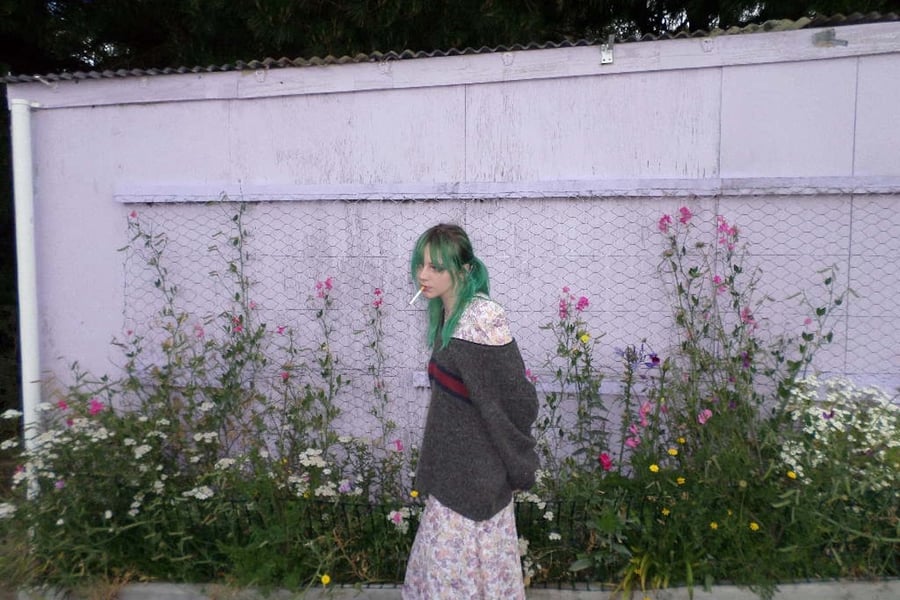
Mieke first found an audience with fragile songs released as “mieke?” that sounded more like personal voice notes than finished recordings. She even titled some tracks as “voice memo 1”, “voice memo 2”, etc. This didn’t stop them from garnering a million streams between them. Mieke soon realised there was a power to this raw approach.
“I went through this stage of being really lonely, I would just pick up my guitar and sing little songs,” she tells Rolling Stone AU/NZ. “I was listening to a lot of Sparklehorse and Kurt Cobain at the time. I posted ‘4.53am’ and people said really nice things, which gave me the confidence to think maybe that way of expressing myself was genuine. I enjoyed the emptiness and realness that came with posting something that I recorded with my phone on my bed.”
She developed a similarly lo-fi visual aesthetic, with photos and videos that had the rough pixelation of an old digital camera. The resulting clips looked like they’d been drawn from some lost corner of the early ’00s internet, though with the feel of an art-house film or low-budget horror movie.
As she gathered online followers, she was approached by music labels both at home and abroad, though she soon realised that they were a poor fit.
“Ultimately, labels never would have served me, as they don’t have the means to understand the underground scene. I was only ever good branding to them, whereas my audience has always understood the music and me as a person, not as an aesthetic.”
Mieke also started a new band with her friend Jed Hayes, partly inspired by her newly found interest in Slowdive. However, this did create a challenge given that she suffered from terrible stage fright. This traced back to high school, when she’d even asked her music teacher if she could film her end-of-year performance rather than do it in front of classmates. She cried through the performance and yet the teacher still cruelly showed the video to the rest of the class.
Mieke and Hayes added guitarist Isabella McGlynn-Christison and drummer Noah Brennan to form Wallflower. The band revelled in creating washes of distorted guitar that threatened to bury the vocals entirely. When Mieke was invited to play a festival in Canada, she decided to not only take Hayes as her sideman, but also arrange a slot for Wallflower at the festival, and so brought the other two members too.
Love Music?
Get your daily dose of everything happening in Australian/New Zealand music and globally.

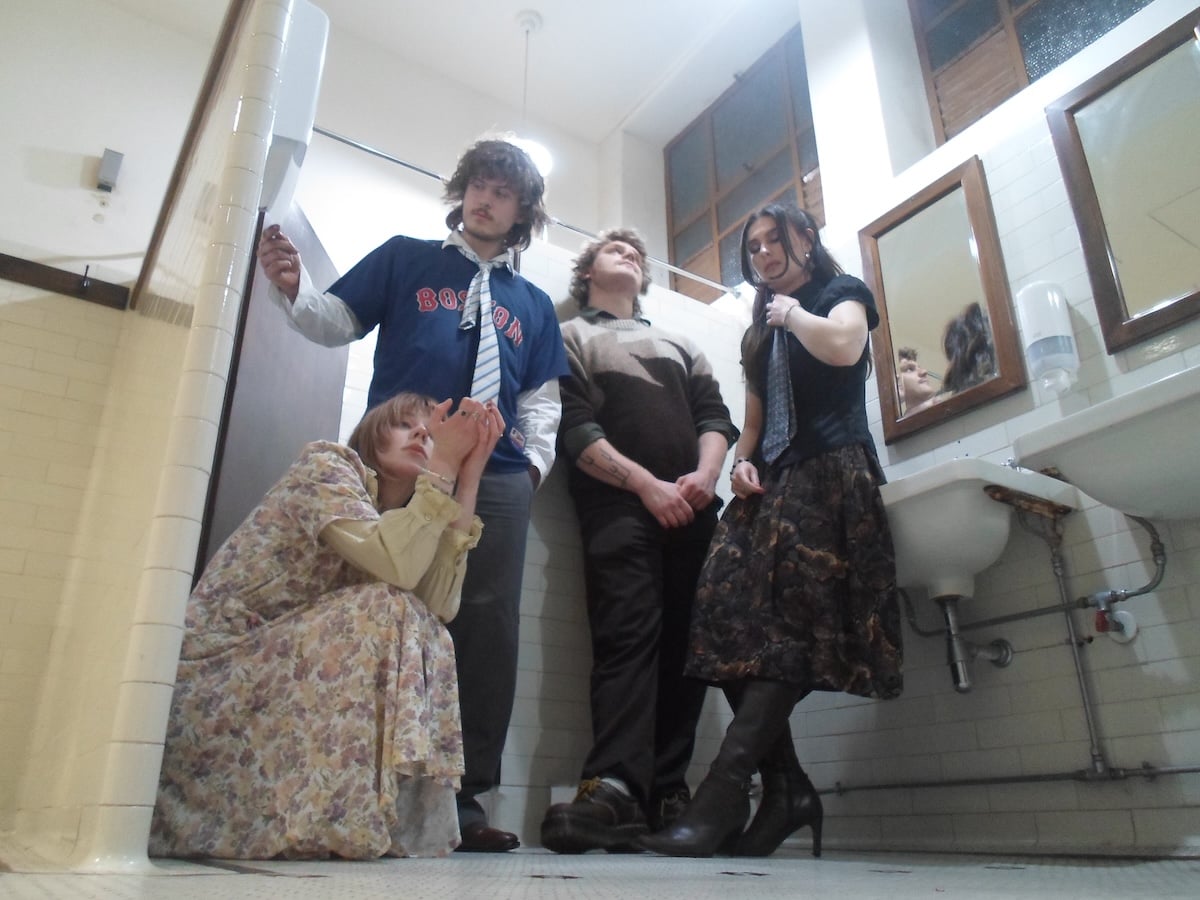
Wallflower. Image: Shannon Knight
The second album by mieke? – 2025’s frau eva – saw her sound develop sonically with noisy guitar tracks that spanned the gap between grunge (“kinderwhore”) and shoegaze (“kissing maggots”), while she continued to drop in excerpts of voice recordings and found sound to keep a thread to her earlier work.
Mieke and Wallflower found kindred spirits in another new Wellington band, King Hit, whose music also draws from shoegaze, but with a heavier edge. Guitarist Stefan Jenkins had originally formed the band with drummer Seb Bell to play surf punk and had enlisted bassist Felix Bird after being impressed with his duo Park Flyers. However, their music turned away from yelled lyrics and fast-paced tempos after they added vocalist Caitlin Gabb, as Jenkins explains.
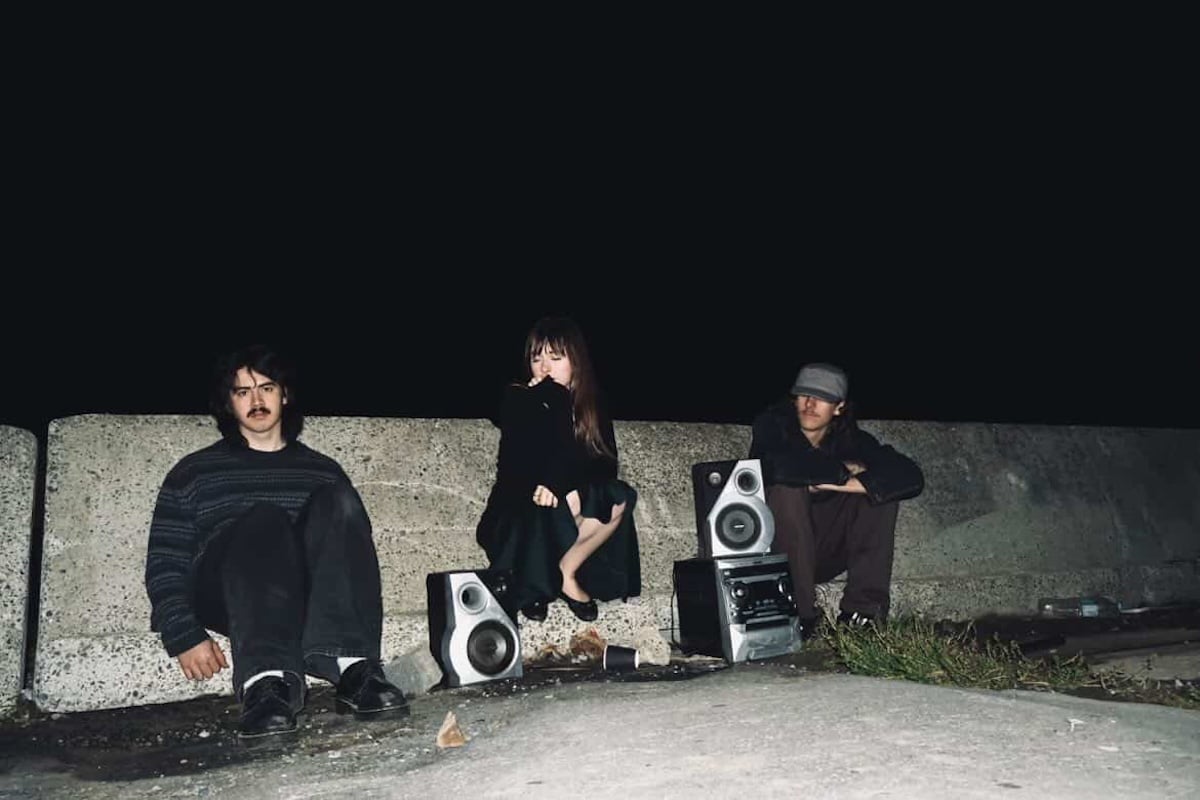
King Hit. Image: Evie Thomson
“Caitlin had a completely contrasting soft singing voice. At this point, Thomas Waddington (from The World Is Against You) got me into listening to julie, an LA based grunge-gaze band with a female and male dual lead vocalist setup. This inspired our first single ‘Asterisk.’ Other similar US bands like They Are Gutting A Body Of Water, Wisp, and Feeble Little Horse became huge influences over our more grungy sound.
“However, what really sucked me in was moving backwards in time again to more ’90s bands like (the obvious ones) My Bloody Valentine, Slowdive, Lily’s, Ride, and 2010s band Whirr. They have less of the attack of modern shoegaze bands but focus more on the ethereal side; the floating vocals amongst a swamp of reverb is something to get lost in.”
King Hit joined the Glasshead collective run by Waddington and Evie Thomson, which helped them become regulars on the Wellington live scene. The band line-up has recently changed with Bell replaced by Ocean Faloon-Cavander, though Jenkins says their aim continues to be to remake what a guitar band can sound like, with My Bloody Valentine being a key influence.
“One of the reasons that the buried-vocals-with-big-guitars sound endures is Kevin Shield’s ethos on guitar: trying to make it sound like anything but. Using it as a fluid texture through effects and glide strumming. I was instantly hooked, and now I pretty much exclusively have my hands on the whammy bar every time I play.
“When you mix in the mega reverbs and distortion, it’s like the guitars are melting and reforming over and over, all within the same tune. Having the soft ethereal vocals amongst all this is like watching Alice fall down the rabbit hole while whacky shit flies by.”
In some ways, Wallflower and King Hit can be seen as following on from earlier Wellington groups such as The Golden Awesome, Salvia Palth, and Over The Atlantic, who also mined from the shoegaze sound, while still retaining the openness to move in other directions. In contrast, fellow Wellington group Hail Meteor! see themselves more in the tradition of post-punk/post-rock groups like Sonic Youth and Flying Nun noisemakers Bailter Space (also formed in Wellington).
Guitarist David Coventry says he is also a fan of My Bloody Valentine, but has always seen them as separate from the other bands tagged as shoegaze and didn’t take an interest in those groups. Instead, Coventry spent his youth playing in noisy post-punk bands and – after taking a few years off – intended to continue in this direction, but realised it was no longer possible:
“Unfortunately I found my body wouldn’t/doesn’t allow for that kind of hard edged approach. I have ME/CFS, which really limits my ability to perform in the ways I’d really like to, so I’ve made a compromise with myself and resorted to using pedals more than previously to create the kind of bent musicality I am always after.”
This led Hail Meteor! to embrace warped, wall-of-sound guitars and this effort was boosted by the addition of second guitarist John Kingston, who practically has “a house built of guitar pedals,” while drummer Simon Waterfield provides a tom-heavy propulsiveness. This thundering sound provides a counterpoint to sweetly-tinged vocals of singer/bassist Isobel Joy te Aho-White, and she also brings uniqueness to her lyrics by drawing on her experience as a wahine Māori. Their unique sound has earned them support slots for acts like Mogwai and Throwing Muses.
Coventry admits that there can still be an element of nostalgia in fans being drawn to their sound, though he also believes there is more to it than this.
“I think there is a desire to muck about with the edges of musicality, to make it strange as it’s within this strangeness a lot of our love and pain seems to sit, waiting to be discovered and named and obliterated in song or lyric,” he says.
“When you name something, a certain something vanishes and something else rushes in to fill the void. It can be both frightening and exhilarating.”
This sense of reaching for the intangible through sound also echoes with how Mieke describes her own music and the imagery that goes with it. “My favourite thing is finding where there is a crossover between reality or unreality. Also the dreamlike quality of nostalgia and memories. How that intersects with dreaming. I guess all of my art is born from those in-between spaces.”

