





























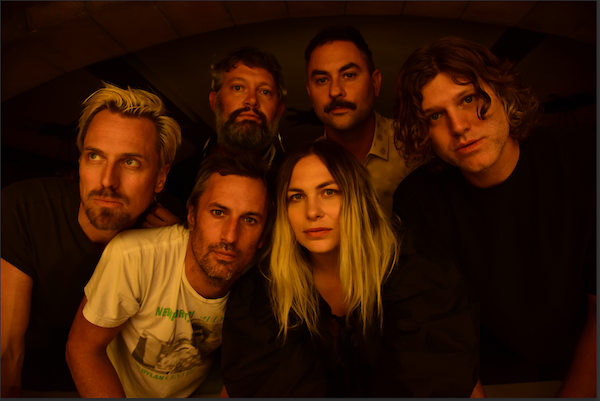
Few bands have navigated the ebbs and flows of modern folk music with the consistency of The Head and the Heart.
Emerging from Seattle in the late 2000s, the six-piece built their reputation on communal songwriting and a sense of shared humanity that’s remained intact even as their sound has expanded far beyond its acoustic roots. While trends have shifted and cycles have come and gone, The Head and the Heart have continued to evolve on their own terms, guided by instinct rather than industry pressure.
That instinct is front and centre on 2025’s Aperture, the band’s sixth studio album. Self-produced and created with a renewed emphasis on collaboration, the record offers something of a reset, or return, to the core dynamic that first defined The Head and the Heart, while still reflecting the perspective of a band 15 years into its journey.
And the crowds are loving it. The Head and the Heart have just wrapped up their biggest Australian shows to date, supporting The Lumineers on a run of arena dates – a first for the band locally, and a clear signal of their growing footprint here. It marks a particularly significant moment as interest in folk-leaning, story-driven music continues to surge among younger audiences, with artists across the genre finding renewed momentum in the post-pandemic landscape.
We caught up with The Head and the Heart’s Tyler Williams and Jonathan Russell while the band were in town.
Rolling Stone AU/NZ: Guys, good to meet you. How has the tour been so far? How many times have you come to Australia?
Love Music?
Get your daily dose of everything happening in Australian/New Zealand music and globally.

Tyler: This will be the fourth [time]. 2018, I think was the last time. The pandemic obviously kind of screwed some things up but it’s so nice to be back. Yeah, the tour’s been great.
And playing arenas to Australian fans, what’s that been like?
Tyler: It’s refreshing honestly. I feel like we’re so used to playing the States now that you get out there, and also being with the Lumineers, their fans are so amazing, we feel right at home.
Jonathan: Yeah, it’s nice to be in arenas, which is obviously a bit of a leap for us in general, but it’s nice to be on a bill with a familiar genre. Do you know what I mean? It’s a very fitting tour.
We spoke with [Lumineers frontman] Wes right before the end of last year and he mentioned how big of a fan he is of you guys and made a point to, similar to what you said, get someone who not only fits the music but the style and, more importantly, is a friend. Have you guys toured with the Lumineers before?
Tyler: Back in the day. Yeah, when we first started we first started together. We were touring the Pacific Northwest and it was so funny. We had a show booked in Boise, Idaho, we’re driving out from Seattle and we passed this van and the licence plate was Lumineers. We were like, ‘that must be the band we’re playing with tonight.’ We’re hanging out the windows, waving at them and stuff. Yeah, we played a bunch of shows together in the early days, like bars for $5, restaurants and stuff. It was very house shows. It was really low key.
Jonathan: We’ve both seen one another in the era when you’re kind of going, ‘is this going to work?’ They’re from Denver, we’re from Seattle, and we were both kind of trying to stretch out familiar towns. It’s emotional actually for me to be on these stages and to see where they’ve grown to, where we’ve grown to, and now we’re kind of full circle back together. It’s pretty beautiful actually.
View this post on Instagram
This style of music, not that it wasn’t ever popular, but it’s blown up particularly with younger audiences now – think of the Noah Kahan’s of the world. The Lumineers, these are obviously their biggest Australian shows to date, and it feels like despite Covid and bands sometimes losing momentum, they’ve only gotten bigger. Similar to the Lumineers, you guys have never left this genre and spot. Have you noticed that shift in audience? Was there a moment in time where there was this explosion of new interest in the genre?
Tyler: I mean, definitely in the past, since Covid happened, it was amazing to be playing some festivals and seeing Noah come up and being like, ‘wow.’ It’s so great because it feels like it’s in the lineage of what folk music is about, right? Bringing it to the next generation and then they carry it on. There was like a torch passing a little bit and it’s refreshing to see that that still happens out there.
What’s really fun about it is you’re still getting introduced to Australia. But in a couple of months you’re playing Red Rocks. So is that a weird experience where you’re playing one of the most iconic venues in the world in a matter of months, but here in Australia, like you said, the underdog is probably a good term to use, right?
Tyler: I feel like it’s always been the case for us.
Jonathan: It works different parts of your brain when you’re here. We played a show at the Princess Theatre in Brisbane to people who obviously had heard of our band, but hadn’t necessarily seen us play. It makes you kind of rediscover some of these songs. And remembering what the meanings of these songs were. In the States, you start imagining this is maybe the twelfth time they’ve seen you, and so they don’t necessarily need the backstory of what the song means, but down here, I’m almost visiting the library of the band and being like, ‘oh yeah,’. It’s turning me into a bit of a different performer just because you’re playing to a new audience again. So it’s nice. I feel like that would be good to carry back to the States anyways, you know, it just makes you a little more dynamic.
Tyler: We go right into a Brandi Carlisle arena tour in the States, which is like a month long. So it’s great to go from opening for Lumineers to opening for Brandi Carlile. We haven’t been the opening band for a long time, you know, so I think it’s flexing muscles and figuring out ways of doing things that we haven’t had to really think about in a while. It’s refreshing.
Jonathan: Even on that tour, as lovely as a fan base as we have in the States, there’s still plenty of people who were going to be a new artist to them. So this is just a good way to figure out how to present yourself when people are still discovering you. Back to the Lumineers fans though, I feel like it’s really nice. I feel like people are really receptive to hearing stories and taking a moment to pause and really giving context to a song, which I greatly appreciate. So it’s been really nice. I feel like the Australian audience is really down to earth and just like very human.
View this post on Instagram
Have you noticed this kind of shift and growth in the band and the audiences you’re playing to?
Jonathan: I think when we made Aperture, which is the album that we just released, we went back to producing ourselves, we relied less on production, and we started writing much more internally as a full band from the very beginning. I think the sounds that we sort of inherently are gravitating towards is part of, like we’ve been discussing, part of that full reemergence. So I feel like people have probably heard of our band, but it’s almost as if it’s this new surge of folk music that’s coming back around. Because we do folk music, but we’ve also sort of branched out. So I don’t know, I feel like some people are kind of remembering that this is also something we do. We’re sort of starting to see like another gust come back into our sails in that way.
Tyler: Yeah, it’s interesting. We almost became alternative Radio Kings for a moment there with these big rock anthems. I think this record was about more intimacy and more, like John was saying, just the six of us vibing together. So I don’t see that stopping anytime soon.
Jonathan: It’s nice to see people wanting people making music. I remember when we were touring maybe 10 years into our career, festival circles were getting much more into dance, pop, which I listened to as well. But you know, at some point you were just ‘okay, that’s where the people are leaning.’ You just don’t want to invite yourself to that kind of a party. But it’s nice to see it coming back to people realising there is more of a soul, I think, when it’s everyone on stage, affecting the sound. It’s great. That reminds me of the Lumineers because as familiar as we are with their music, even being friends and all, I haven’t seen this many of their shows because we see them every night now. It’s really nice to see the musicianship on there on stage. And it’s cool to get to see the nuance because we’re watching every night. They’re a fantastic band.
Yeah, it’s weird parallels to draw, but the pop punk emo genre is another where in the mid 2000s, it was the biggest thing ever. And then it vanished. And there were bands in that scene that either just gave up because it wasn’t worth it, or they stuck with it and now they’re reaping the benefits. I don’t think folk was in that same bus, it didn’t disappear. It’s just gotten gradually and gradually bigger. What’s your attitude towards newer artists who might either just be fresh out of the box or who have notably changed their sound to more folk because they know that’s what people love right now?
Jonathan: It’s convenient to be able to see that but when you’re an artist, they might just be finding their way. You know, so I think just give yourself time to find your own voice. I remember thinking on the first record, ‘okay, I found my voice.’ But in all honesty, now we’ve been doing it for 15 years and I feel like I’m now starting to find my voice. So it just takes time. What you might think is, is who you are your identity, I think the beautiful thing about being a human being is different things happen in your life and your identity changes and your writing style changes. And for me, I think it’s really valuable and worth it and exciting to stick with it longer because there’s there’s just new chapters that that might surprise you.
Tyler: What one person thinks is authenticity might actually not be or it could be perceived in that way. But it could also just be somebody who’s trying to find themselves and trying to experiment with their sound. And it’s somebody like David Bowie, would you have called him inauthentic for going down a different path? I don’t think so. I think that music is not just genre based, it’s inspiration based, really, wherever you feel the heart of it.
Jonathan: Yeah, it’s that fine line of being aware of the perception of you, it’s impossible to ignore that entirely. And it’s probably not the best thing to entirely ignore it. But at the same time, it’s important to sort of shield yourself from that, because you just have to write with what’s authentic to you. And let’s be honest, if the majority of what’s around you is a sound, it’s gonna permeate you. When we started our band in Seattle, I had moved out there from Virginia, I had no intentions of becoming a folk band, you know what I mean? But the people I met, there was a big Americana sort of scene happening in Seattle at the time and everyone I met, it was the way the fabric was designed of these people we met and became our band, you know, it just permeates you. And focusing on the similarities and differences is a healthy thing.
Tyler: Also allowing yourself to be inspired, and move in that direction without second guessing or wondering what somebody is going to find authentic. Like, ‘man I really love this, can I just go do that?’ Sometimes we overcomplicate it by thinking critically about things and a lot of times it should just be more feeling.
View this post on Instagram
Speaking to that, you mentioned there before about younger artists who are just trying to find their voice, just keep at it. Thinking back to you guys playing in front of 12 people in Boise, what was your North Star at that time?
Tyler: Well, I mean, Beatles. You know, it was funny because when we signed to Sub Pop, no one said we were a folk band. They were going, ‘wow, you sound like the Beatles.’ We weren’t going for anything, we created a sound of music and it was never this preconceived idea of where we were headed. We loved a lot of different things – The National, Wilco, Beatles, hip hop, everything. I think at the time it was like the Beatles were this group of people who were creating songs, it’s a unit with different singers on one song and they would mash parts together, it was the idea that you could have different singers in the band and kind of create this collective broken social scene was a big North Star in that sense, but it was never like, ‘hey, we’re going to be a folk band.’ I think it’s just what naturally came out of these six people. Then when you listen to Aperture, it’s like, ‘oh yeah, those six people naturally create this without outside interference.’ Like that’s the vibe.
Jonathan: Every time we get back together, because we live kind of spread out in the States, every time we kind of come back together to make a new record, I don’t know that we’ve ever had a blueprint that we’re getting together. It’s almost like we checked back in and by then, you know, depending on which of the six people you ask, we’ve probably been listening to completely different styles of music. Or somebody has had a child now, or somebody has been travelling a lot. It’s like a blank board to start seeing where we all are.
Tyler: Somehow we end up on the same page together usually.
Jonathan: What is funny is the previous record, Every Shade of Blue, we did that one so separate. And I will say it’s the least cohesive album we ever made. Because of Covid, we never were able to come back and just check in and really be tethered. We were sort of in our own satellite stations. And if you listen to that record, we also didn’t shave anything off, we put it all in there and it’s all over the place. It has some of my favourite songs, but in this conversation, I’m like, we never got to do our check in before we sat down and started writing, we were all shooting the different directions and you can hear it. So it’s nice to get back together and check in before we start going.
And the reason for Aperture to go self-produce, was there a very pointed direct reason for that? Or was it just a, ‘you know what, let’s kind of explore where we’re at 15 years in?’
Tyler: I think it was kind of all of the above. There was an idea of what happens if you take away that safety net. Because a lot of times when you’re writing songs and you’re creating with a producer, there’s a tendency to use them as the tiebreaker. Like when you’re doing a math problem, you have to show your work in school, you know, do the whole problem. It’s almost a shortcut to get the answer that you might be looking for. But when you do all the work together and you have the arguments and you have the battles about the different parts and how they fit together and how they should feel, then you’re really coming out with something that you feel is the product of your soul and not just a product that was put together. Working with the producer for us has always been challenging because there’s so many producers in this band, like every one of us is, that there’s a mutiny of the mind that happens where you’re like, ‘nah man, I think we could do this better.’ In the trying is where I think this band actually finds its sound, in the trying to create something together as six people. And I don’t think one person influencing it, that hasn’t been helpful for us.
Jonathan: I don’t know if any of us really know anything about music theory. We’re all very self-taught and I think we leave in more irregularities, less conventional ideas are left in, whereas when we were working with the producer sometimes, it was our third record when we first worked with the producer, so we were also hungry for knowledge. We were aware of the fact that we were very self-taught and so for a little while we were willingly putting ourselves in a situation to learn from producers. But to your initial question, I think Aperture was a reaction to kind of missing some of those irregularities, missing our personality remaining in our songwriting. Not that the songs on those produced records weren’t our personalities, but I think there’s some things that get left in that are a little more irregular that initially made us the sound that we had. You get older, you kind of get a little more confidence and more awareness of who you are and you’re like, ‘yeah, that’s cool, leave that in.’ I feel like I’m rambling, but I think that makes sense.

