




























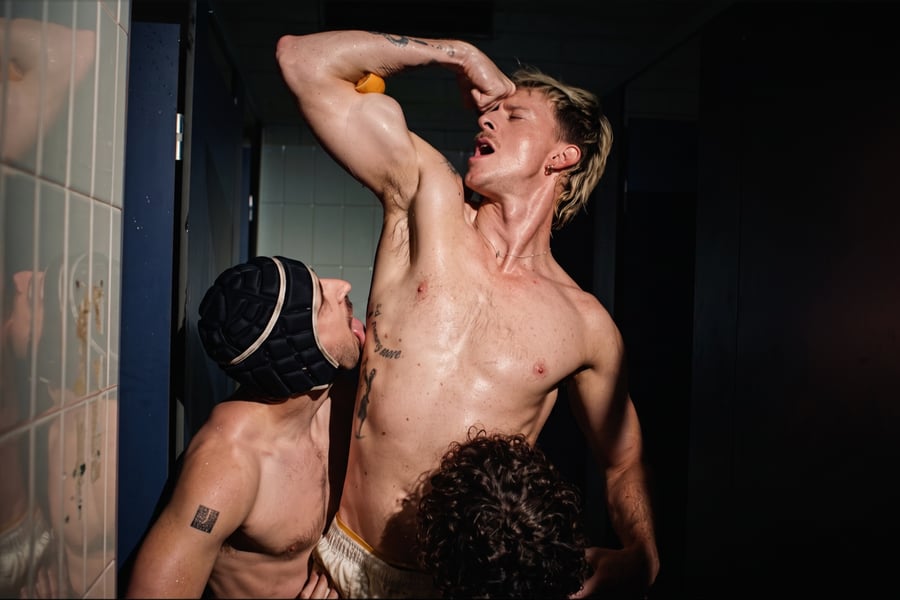
When ANDY and the team first watched back Mitch Brown’s romantic scenes for ‘Can’t Wait’, the room went quiet.
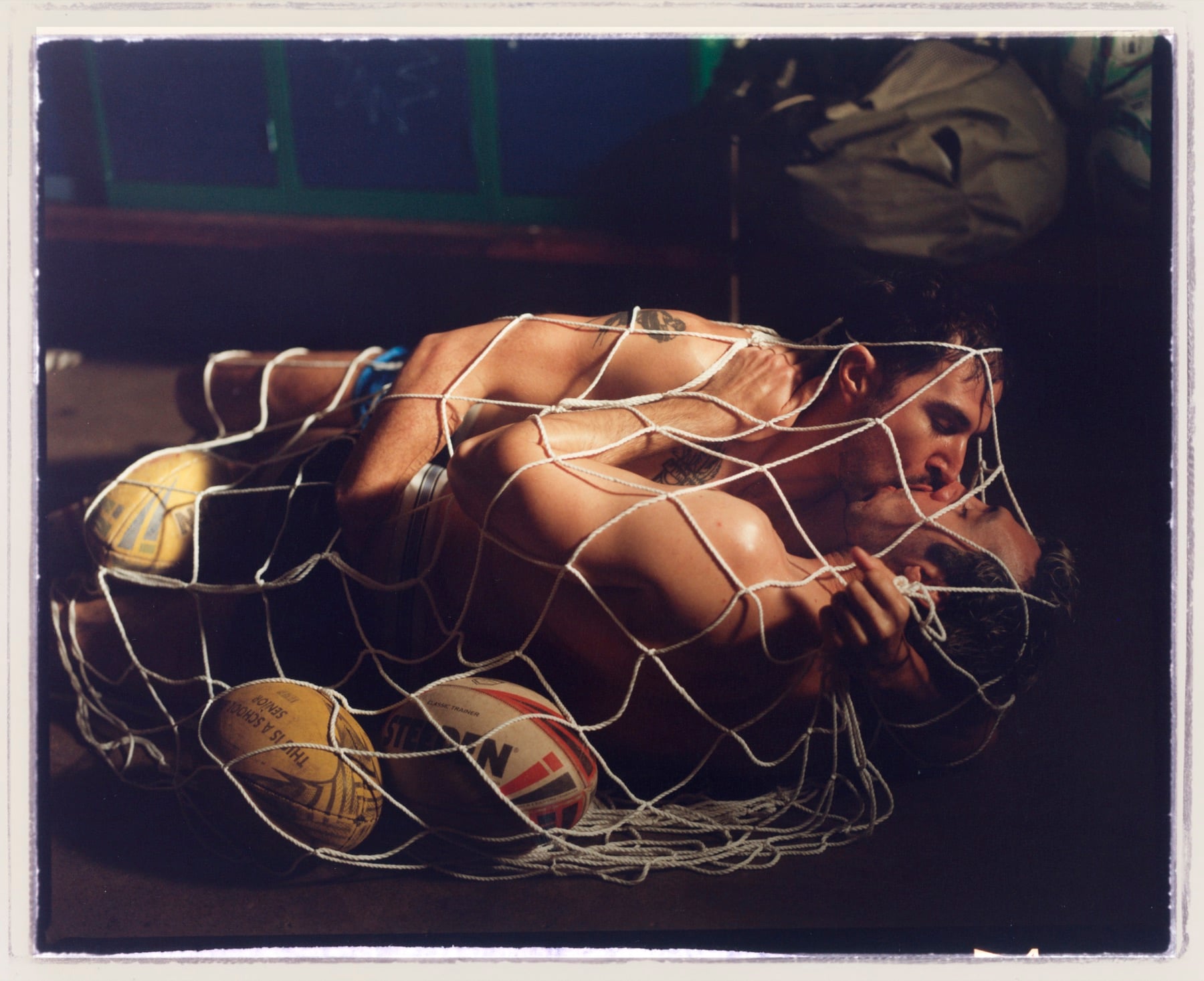
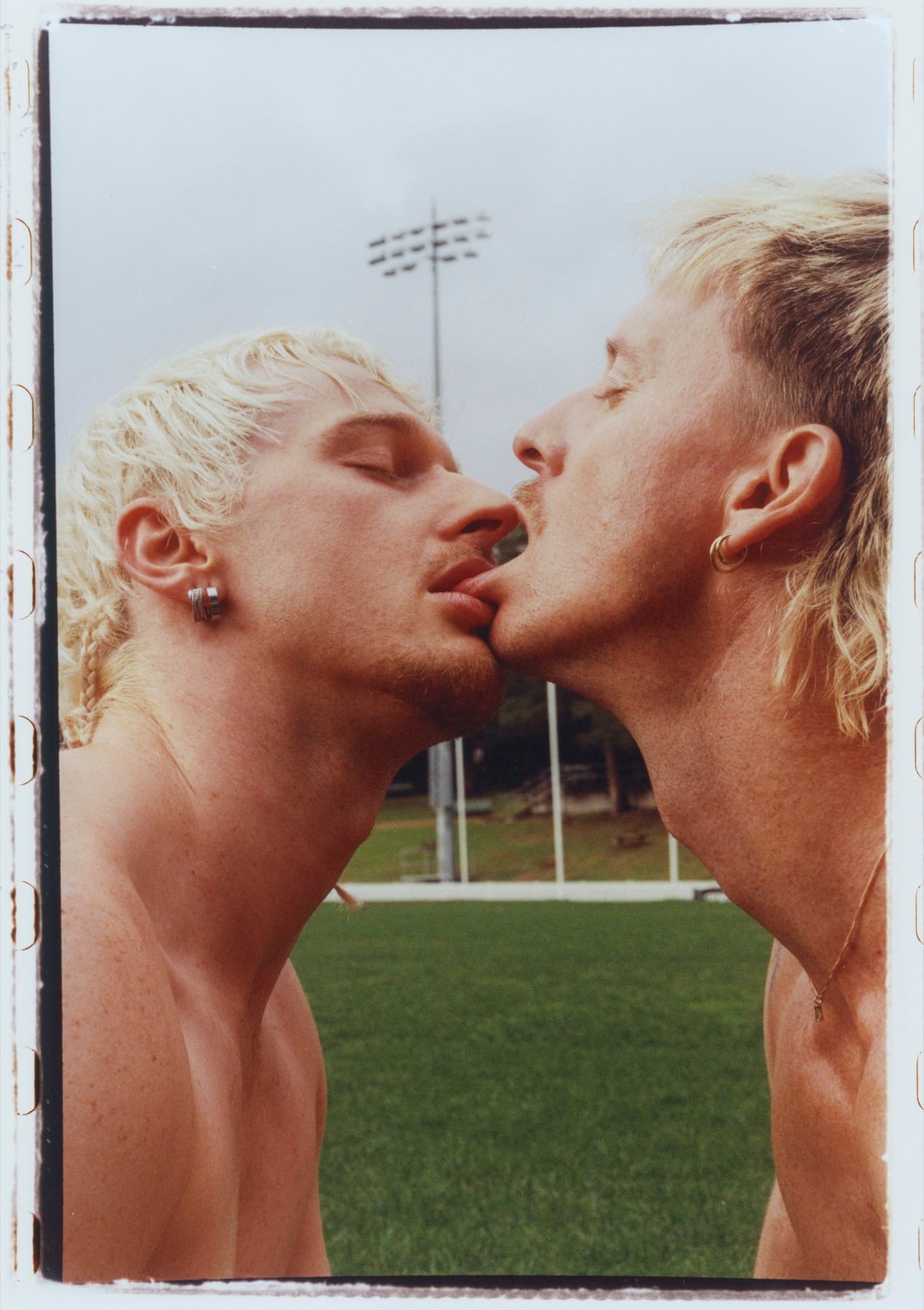
Brown, the former West Coast Eagles player, had been cast as ANDY’s love interest. Until then, the video had played with aggression, rivalry, bodies colliding, and the homoerotic charge ANDY sees in contact sport. Then the tone shifted.
“Honestly, when we filmed them and watched it back for the first time, you could hear a pin drop,” ANDY says. “I think everyone could feel that we were commenting on something very real, very raw and very beautiful.”
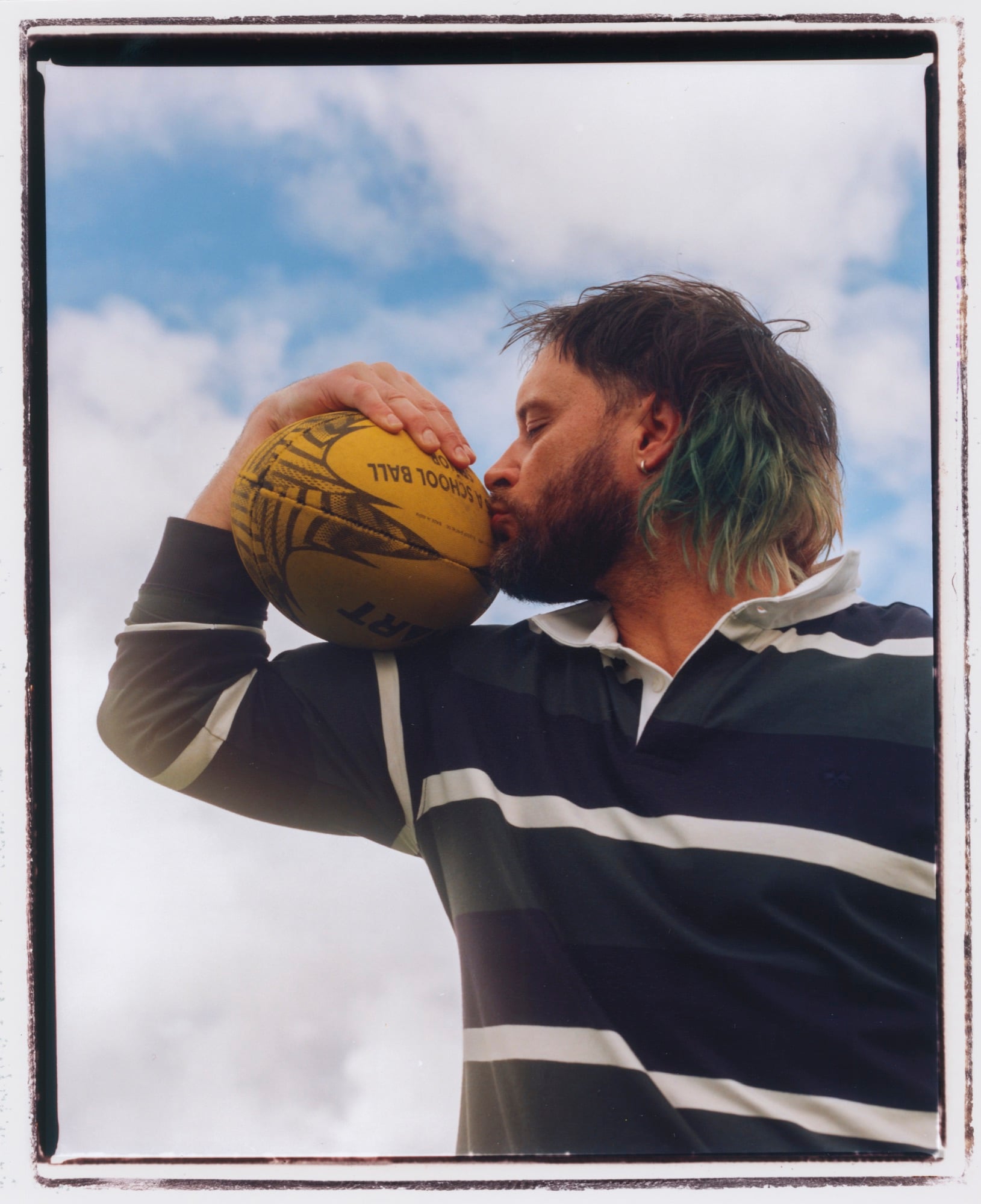
Released today, ‘Can’t Wait’ brings Brown and rugby league great Ian Roberts into a sporting fantasy conceived by Australian pop artist ANDY, directed by Harry Welsh and produced by DIVISION.
For Brown, playing another man’s romantic interest on a football field carried its own weight.
“I spent so much of my playing career being conscious of what I said, how I behaved and what people might assume about me,” he says, “and now I’m on a footy field – although a different code – kissing another man for a music video. There’s a nice full-circle feeling to that.”
The three men come to the project from very different places. Roberts publicly came out as gay while still playing professional rugby league in 1995. Brown publicly identified as bisexual nine years after finishing his AFL career. ANDY grew up gay around rugby culture, learning early that there could be an enormous difference between the physical intimacy boys were allowed to perform and the desire they were allowed to name.
Love Music?
Get your daily dose of everything happening in Australian/New Zealand music and globally.

The question connecting them is deceptively simple: what happens when queer desire is no longer treated as something that threatens a man’s place in the team?
‘What if it was safe?’
ANDY traces the idea back to his Catholic boys’ school in Manly, where rugby sat at the centre of school culture and, as he recalls it, the school motto promised to turn “Manly boys into manly men”.
Around him were showers, wrestling, roughhousing, wedgies, and the constant physical closeness of adolescent boys.
His own attraction to them was another matter.
He remembers moments of fantasy arriving almost involuntarily, then snapping himself out of them to protect himself.
“So with the song and video I wanted to show these snaps,” he says. “Highlight that physicality. You could be looking at someone and then a fantasy plays out, and you snap yourself out of it to protect yourself.”
In ‘Can’t Wait’, he stops snapping out of it.
The fantasy keeps going.
Photography: Lula Cucchiara
“I wanted to demonstrate what a culture shift could look like,” ANDY says. “What if it was safe? What if being gay or queer was just fucking normal?”
His imagined version of sport is intentionally excessive and horny, but ANDY says the destination is ultimately romance and consent: a world where the captain can kiss his boyfriend at the end of the game and nobody needs to convene a press conference to explain it.
That tension runs through the music, too.
‘Can’t Wait’ combines football chants with intimate recordings from ANDY’s own life. He wanted the track to feel primal and increasingly difficult to contain, “a constant push and pull” that eventually explodes.
Roberts and Brown weren’t names attached to an existing concept. Their histories were part of it.
“They are the message,” ANDY says. “This is what masculinity can look like. It’s fluid, soft and so beautiful.”
‘I wasn’t doing it for any cause’
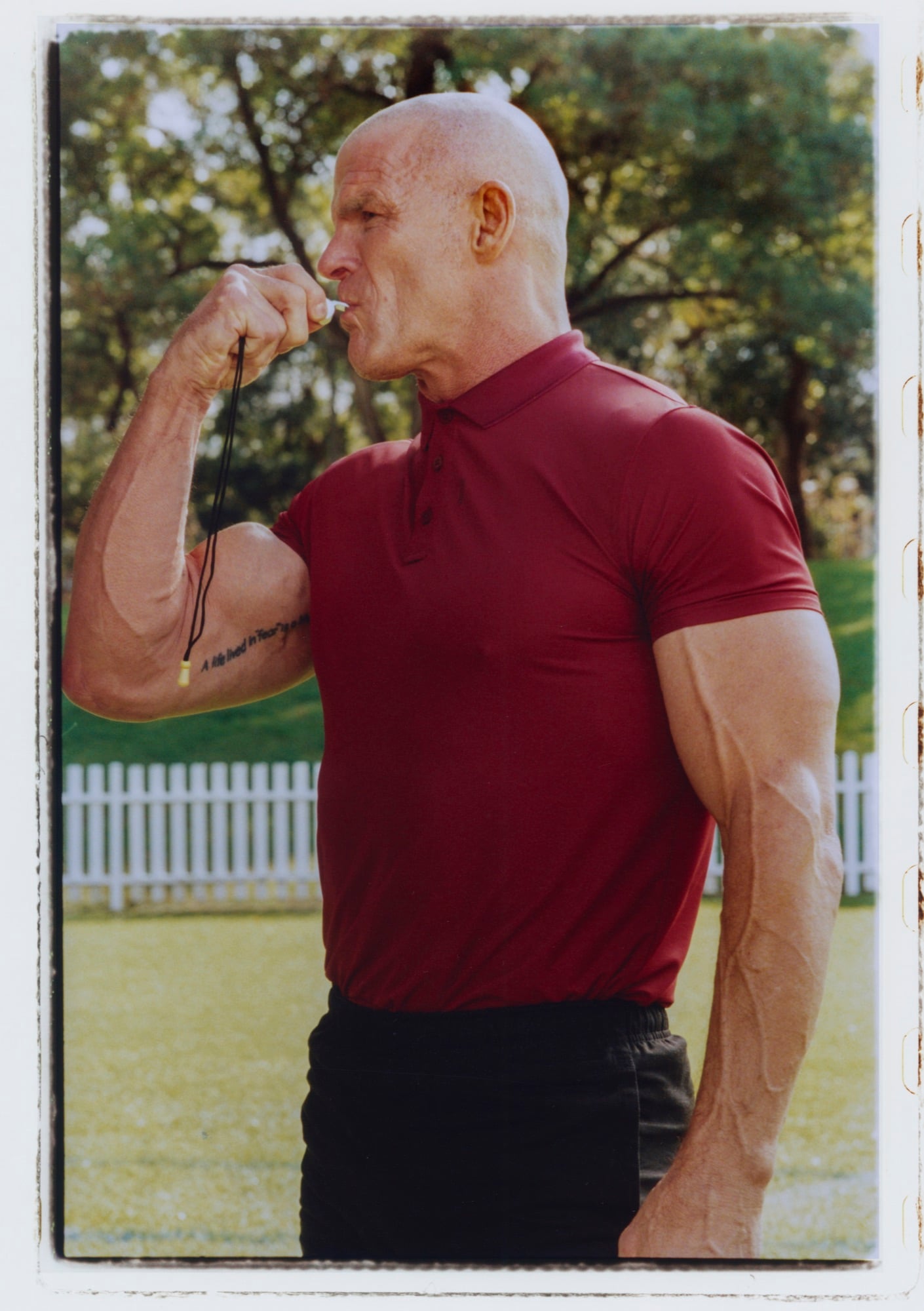
More than three decades have passed since Ian Roberts publicly came out as gay while playing professional rugby league.
It is tempting to look backwards and cast the moment as the deliberate beginning of a movement.
Roberts doesn’t.
“I didn’t ‘imagine’ anything would change,” he says. “I wasn’t doing it for any cause. I was doing it for my own sense of self.”
He talks instead about an obligation to be truthful to his family, his partner, and himself. He says he was fortunate never to have felt uncomfortable with his attraction to men, even when he understood that the world around him did.
ANDY sees a trailblazer. Roberts is clear that he made the decision for himself. The significance it later took on does not change that.
Asked why he agreed to appear in ‘Can’t Wait’, his answer is considerably simpler.
“I love being gay,” Roberts says. “Being gay has been my superpower.”
Photography: Lula Cucchiara
That pride coexists with frustration that the sporting conversation remains necessary.
“It’s sad there is still so much work to do in this space, particularly in men’s sport,” he says.
For Roberts, education remains central to changing that.
“It all starts with education, education, education.”
The public milestones since Roberts came out have remained relatively rare.
Brown publicly identified as bisexual in August 2025, nine years after his final AFL season. In March this year, former Brisbane Lions player Leigh Ryswyk became the first current or former male AFL player to publicly come out as gay.
Then in June, former NRL player Kane Evans publicly came out as gay, becoming only the second male NRL player to do so after Roberts. Evans described having concealed his sexuality during his playing career; his announcement drew public support from current and former figures across rugby league.
None of those milestones should be read as a scoreboard.
No athlete owes the public a coming-out announcement.
The more useful question is what makes someone feel they can exist openly without believing that one piece of information will alter everything people think they know about them.
That is where Brown’s experience becomes particularly revealing.
‘As a footballer or as a man’
Asked what would have needed to change for him to feel comfortable being openly bisexual during his AFL career, Brown opens with a question of his own.
“How long have you got?”
“Ultimately, it would have needed to feel like being bisexual wasn’t going to change how I was seen as a footballer or as a man.”
Photography: Lula Cucchiara
Brown describes the accumulation of things that can appear small from the outside: teammates genuinely being comfortable around queer players, coaches and clubs refusing to tolerate homophobic jokes, and seeing openly queer men remain fully accepted inside teams.
He also believes the way traditional football media handles sexuality has contributed to the fear surrounding disclosure.
For Brown, there is a difference between an organisation saying everyone is welcome and knowing the people beside you will see you exactly the same way tomorrow.
Recent events show why that distinction still matters.
In August 2025, Adelaide player Izak Rankine received a four-match suspension for using a homophobic slur. He was the sixth AFL-listed player to be suspended for homophobic language across roughly two seasons.
In June this year, Gold Coast’s Max Knobel received a four-match suspension after admitting to using a homophobic slur in a VFL match.
Both apologised.
Rugby league has confronted its own tensions. In 2022, seven Manly players declined to wear the club’s rainbow-trimmed inclusion jersey, citing cultural and religious beliefs. Then-coach Des Hasler apologised for the way the initiative had been handled, while the club proceeded with wearing the jersey.
Roberts, whose own history with Manly is deeply connected to his coming out, welcomed the decision to proceed.
Taken together, these moments resist any easy verdict on Australian football. Support and prejudice can exist inside the same code, club, or dressing room, sometimes at once.
For Brown, ‘Can’t Wait’ offered a chance to step into a version of that world where he didn’t have to explain himself first.
“It’s not just a sexy queer footy fantasy,” he says. “Underneath all of it, it’s about what it feels like to be a young queer person trying to find yourself in a really masculine environment. I know that feeling very well.”
The Romance Was the Point
For ANDY, casting Roberts and Brown also meant taking responsibility for how their bodies and histories would be used.
“I felt a huge responsibility to make sure they felt safe and represented in a way they felt comfortable with,” he says.
One of his earliest conversations with Brown involved asking whether he would be comfortable spitting Gatorade into ANDY’s mouth before passionately kissing him.
Brown was in.
With Roberts, the video explores another turn: the moment an aggressive wrestle can slip into something euphoric and queer.
But ANDY wanted Brown to become the emotional centre of the film.
Photography: Lula Cucchiara
“The heated rivalry moment where all the eroticism and horny energy shifts and becomes something deeper, something romantic and tender with real feeling,” he says. “His shots to me are the heartbeat.”
Working with both men also changed the way ANDY understood his own memories.
It affirmed, he says, that he had not imagined the contradiction he grew up with: other boys could move through physical closeness without having to name or defend what it meant, while his own attraction could feel like something that had to be contained.
Brown comes at that contradiction from another direction. Roberts brings something different again: not the story of a man learning to accept being gay, but of a man who says he always did.
Their experiences do not need to match for the three of them to belong in the same film.
A music video cannot determine what happens inside the next dressing room. It cannot make another footballer come out, nor should that be its measure of success.
What it can do is change the image.
In ANDY’s version of the sporting world, the captain still has a jersey, a team, and a game to play.
He also has a boyfriend waiting at the end of it.
Eventually, nobody should need an explanation for the kiss.

