





























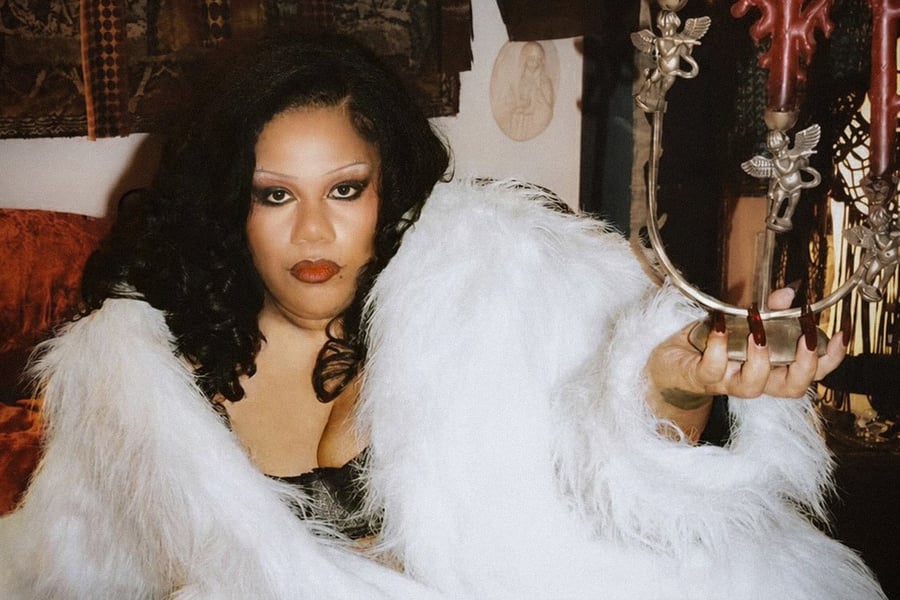
Five years ago, Lisa Wright, the big-voiced singer-songwriter better known as Romi Wrights, packed up her life in Tāmaki Makaurau Auckland and moved her young family home to Upper Hutt, 26 km north-east of Te Whanganui-a-Tara Wellington. She began studying carpentry at a community polytechnic in nearby Porirua to help renovate her parents home and took a job as a cleaner at an early childcare centre.
“That was one of the most depressing points in my life,” she admits on a phone call. Having previously run a vibrant multi-purpose studio called After Ours, being back in Upper Hutt was jarring. “I’d come off the high of running this space and being surrounded by a community, but I was broke and really struggling,” she continues.
While she was working in the evenings, Wright would often listen to the Tāmaki Makaurau student radio station 95bFM online. “One night, I was mopping the floor and my song ‘Bring It Back’ came on,” she recalls. As the song’s retro orchestral soul sound poured through the speakers, something locked into place. “I remember tearing up and thinking it was a sign that this wasn’t the end,” she says with a warm tone. “It was like the universe was reminding me things were going to be alright.”
Today, Wright is doing okay. Instead of carpentry, she’s now studying music law and plans to eventually divide her time between singing and working as an entertainment lawyer.
Since 2023, she has released a series of celebrated singalong singles through local label Mānuka Recordings, warmed up stages for visiting US and UK stars like Lee Fields and Kokoroko, and performed at some of the country’s best festivals, including Splore and CubaDupa. “I’ve become a lot braver with my decisions and learned to trust myself,” she says. “These days, I face things with confidence, determination and resilience, but I credit a lot of this journey to the people I’ve met along the way. I wouldn’t have come this far without help.”
On July 30th, Wright released her debut album, Andy (named one of our favourite Aotearoa albums of the year so far), through Mānuka Recordings. In its title, the album memorialises her close friend, the late Andrea Orani, aka Andyheartthrob. It’s not just about Orani though. It’s about Wright, everyone she loves, and the world around her.
Love Music?
Get your daily dose of everything happening in Australian/New Zealand music and globally.

Written and recorded with her longtime producer Kenny Sterling and a cast of some of the finest contemporary session musicians in Aotearoa and Ireland, including members of The Circling Sun, LEAO, and Clear Path Ensemble, as well as her friends and family, Andy is an expansive tribute to love, heartbreak, loss, and reconnection, told through twelve songs that draw strength from the spirit of 1970s soul, jazz and funk.
It’s also an intimate, open-hearted exploration of the many joys and pains we all experience in one shape or another. I say all of that to say this, Andy is, without a shadow of a doubt, one of the most significant local releases of the year in Aotearoa. Fittingly, it debuted atop the Top 20 Aotearoa Albums Chart.
However, to make an album like this, Wright had to live a little first. Growing up between Porirua and Upper Hutt, she had a difficult childhood. “It was rough,” she admits. “I didn’t have a lot of stability during my upbringing, but when I think about my life now and where I come from, I’m really grateful. I feel like I became the person I am because of everything I went through.”
Thanks to encouragement from one of her aunties, writing poetry, lyrics and singing came to her naturally. At age sixteen, she had the opportunity to spend a year and a half living with relatives in Tokelau. “That was life-changing,” she says. “Living there put a spotlight on my culture, traditional dance and music.” While she was living on the island, she also learned that her great-grandmother had been a composer. “I believe my talents and gifts were passed down from her.”
View this post on Instagram
After returning to Aotearoa and finishing high school, Wright spent several years in a Christian church she now looks back on as a cult. “Eventually, I started to realise there were things about it that just weren’t right,” she admits.
Rather than leaving outright, she moved up to Tāmaki Makaurau, transferred to another church and started studying at the EXCEL School of Performing Arts. Within a year, Wright had dropped out and was juggling hospitality and retail jobs with singing covers in pubs, bars and venues around the city with her first proper band, Lisa Wright and The Elected.
Just as things were looking up, something happened that almost made her give up. “I was dealing with a talent agency,” she remembers. They put her in a studio with a producer. At the end of the session, he made an off-the-cuff comment: “This is never going to work—your voice has too much soul!” Wright found it devastating. For years afterwards, she couldn’t even bring herself to go near a recording studio. Having just become a young mother, she had plenty of other things on her mind, at least for a time.
In 2017, Wright was offered the opportunity to take over a commercial lease in the city. Having witnessed the arrival of a new generation of visual artists, musicians and DJs, she felt the urge to get involved. “I wanted to create a space where we could do things and be together,” she says. The result was After Ours.
As well as hosting exhibitions and small gigs, After Ours also became home to DJs Anonymous. Led by Orani, it was a community event where emerging and established DJs could meet and share skills and ideas. Fittingly, Orani and Wright became close friends during the After Hours years. “With Andy, I really felt like I’d found my person,” she says. “She felt like family. Even when I wasn’t singing, she was my biggest fan.”
In 2021, Wright crossed paths with Kenny Sterling and Dylan Biscuit from Mānuka Recordings when she hosted Biscuit’s debut photography exhibition at After Ours. Later that night, while she was talking to Sterling at the afterparty, they realised they had common ground and agreed to make some music together. “I was pleasantly surprised when he sent me some demos,” she says. “Once we started working, I felt overwhelmed with joy.”
While Wright, Sterling and their collaborators were recording the songs that would become her album, Orani passed away from cancer. When she died, Wright felt like part of her had died as well. “I wish I could give you a nice story that everything is great now, but I always feel like something is missing,” she says.
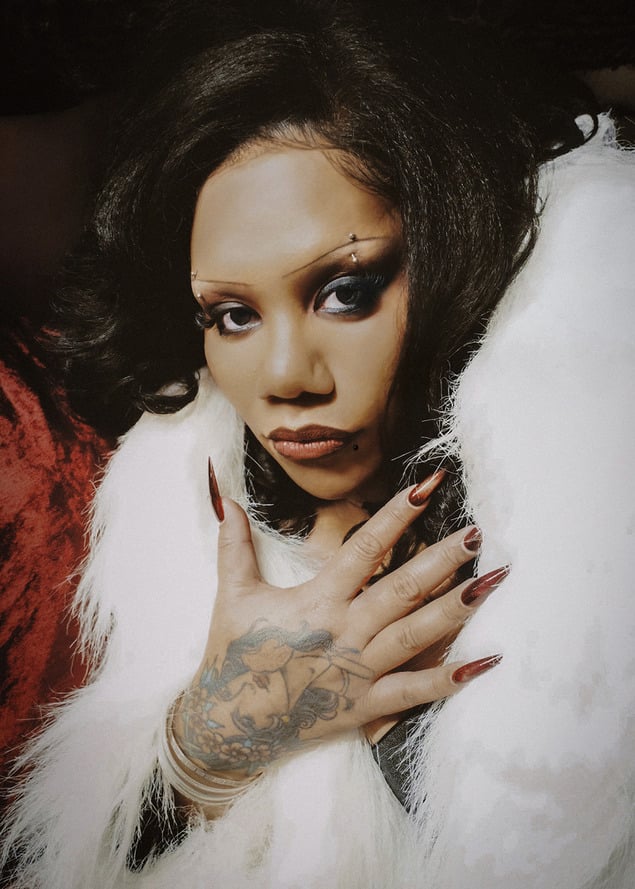
Credit: Jordyn Hawker
However, as Orani’s community grieved, Wright became increasingly aware of the influence her friend had had on her songs. Eventually, it became clear there was only one possible title for the album, Andy.
“When we were announcing it, I was happy, but I felt sad,” she reveals. “Andy was the friend I’d tell everything to. We always used to celebrate together, but I understand this is my way to give back to her and remember her.” Which is exactly what she does, while singing stirringly in incandescent melodies over the elegant pianos, strings, woodwinds and rhythm sections that ripple beneath her voice.
After we finish our phone call, a thought occurs to me: it would have been just as interesting and informative to talk to Romi Wrights half a decade ago, when she was studying carpentry and working as a cleaner in the evenings. In an industry that often worries about the wrong things, she’s one of those special individuals who is thoroughly in touch with herself, her weaknesses and her strengths. She knows where she comes from and where she wants to go.
Romi Wrights’ Andy is out now through Mānuka Recordings.

