



























Over the last 15 years, there has been a rise in interest in mid-winter city music festivals across Australia and Aotearoa. Generally speaking, the format is a series of standalone concerts and nightclub gigs held at nearby venues, often tied together by pop-up art installations, light displays, food courts, or bars. If you’re reading this, chances are you’re familiar with popular examples of the form like Dark Mofo in Hobart, Sydney’s Vivid LIVE, or RISING in Melbourne.
Lōemis, an 11-year-old festival held in Te Whanganui-a-Tara Wellington, isn’t as well known as the aforementioned events, but it deserves to be on your radar.
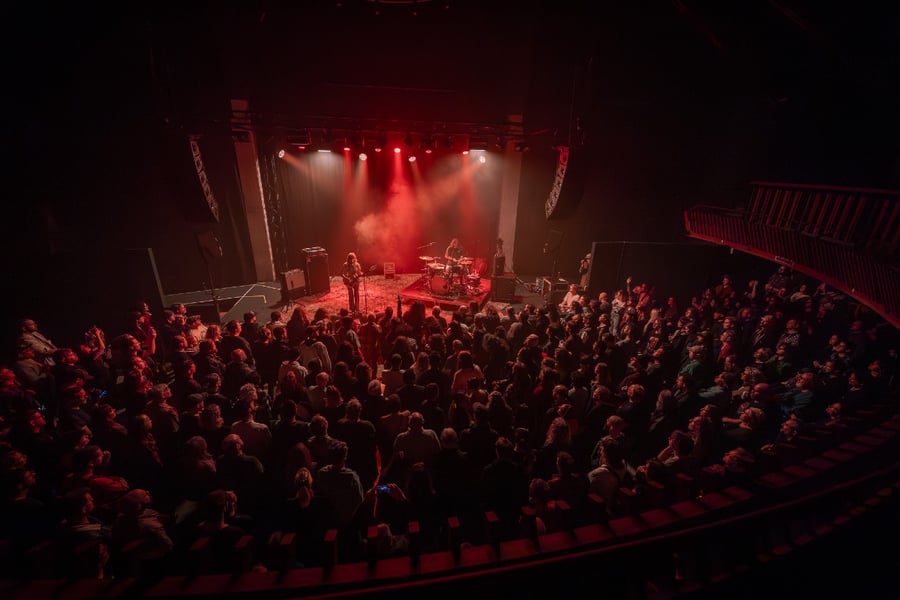
Between June 9th-21st, they’re hosting close to 30 events, an expansive and invigorating mix of music, film, food, dance workshops, art shows, and surreal public processions.
On the music front, Lōemis offers a dazzling array of international post-punk, psychedelic rock, synth-pop, ambient, and dance acts, bands and DJs, such as Acid Mothers Temple, Cate Le Bon, Chanel Beads, Kavari, Kelly Moran, Lydia Lunch, Mei Semones, Snapped Ankles, and These New South Whales.
They’ll also be presenting some sublime local exclusives. Expect Dimmer frontman Shayne P. Carter reimagining his songbook with the New Zealand Symphony Orchestra, multi-genre songwriter Troy Kingi tackling hip-hop with a posse of Night Lords, and a Midwinter Solstice Ball with some of Auckland’s best underground club DJs at the controls.
Outside of its core concert programming, Lōemis 2026 also includes a special screening of the cult Swedish-American folk horror film Midsommar, a bustling night market, and Melbourne’s Hope Street Radio popping up at Puffin Bar for a weekend. Add in various other curiosities, and you’ve got a festival that reveals itself as a smorgasbord of multi-sensory delights.
In advance of the proceedings, Rolling Stone AU/NZ spoke with the festival’s founder and artistic director, Andrew Laking. We talked about the festival’s origins, its organic growth, and why Wellington is a great place to run events that take risks and try new things.
Love Music?
Get your daily dose of everything happening in Australian/New Zealand music and globally.

Ticket information for Lōemis 2026 can be found here.
Rolling Stone AU/NZ: Congratulations on taking Lōemis into its eleventh year.
Andrew Laking: It feels like an achievement.
Lasting for five years as a festival is an accomplishment. Making it to ten years is incredible, especially in our current climate. Can you give us the backstory on Lōemis?
I spent 20 years working as a full-time musician. I was based in Europe for about ten years, and spent a lot of time touring. In 2012, I came back to New Zealand. I was still doing a few shows and gigs, but a couple of years later, I switched more into production. I set up a literary festival with my partner, Claire [Mabey], the Verb Writers and Readers Festival. It was originally a one-off event called LitCrawl, which is a literary crawl in the CBD.
View this post on Instagram
Could you explain the LitCrawl concept? It’s relevant to what Lōemis has become.
We wanted to create a bunch of literary events across venues that people could access easily and would recognise, basically our favourite little haunts across the city. In the first year, we used about 14 different venues, cafes, bars, and bookshops. The idea was that there were a whole bunch of events happening simultaneously, and you could pop into whatever you wanted. It created a lot of energy. Actually, that format has really sprung up in music here lately, through festivals like Great Sounds Great, etc.
Basically, it’s about creating an engaging experience for people across different spaces in the city.
Sometimes the venues you use can influence how audiences approach an event. There are a lot of people who might not go to a literary event in a bookshop, but if it’s in a basement bar and they can grab a drink, they might change their mind.
Do you think LitCrawl and Verb got you thinking about what else you could do?
After I stopped touring, I needed to reorient myself. I thought about teaching music, but that wasn’t my thing. I tried applying for some jobs, but no one was interested in my CV. I spoke with Claire, and we thought we could run events. She had experience working at festivals, but her background was publishing and writing. So we tried LitCrawl. After we’d done that for a couple of years, I decided to do Lōemis.
The Vogelmorn Bowling Club had just opened. I approached them about a one-off event there. I thought, “We’ll do a food event in the middle of winter.” We had music, literary readings, just a bunch of different things. It all went really well. The year after, we expanded beyond the food event to include some standalone music events and the like. It evolved very organically from there.
Was there a point where you started thinking about what the mid-winter city festivals in Australia, like Vivid, Dark Mofo, and later on Rising, were doing?
Actually, that happened really early. By the second year, I knew Dark Mofo had popped up in Hobart. I contacted them in 2016 or 2017 about the possibility of sharing some acts, but we weren’t in a financial position to do so. A couple of years later, I talked to them again, but then COVID hit. Working with these festivals has been on my mind for a while. The idea of bringing a few acts from Dark Mofo to Wellington was quite appealing.
I wasn’t able to make it happen until a couple of years ago, when I started talking to WellingtonNZ about support to get it over the line. They suggested I talk to a promoter, David Benge, who has helped us a lot in making it happen.
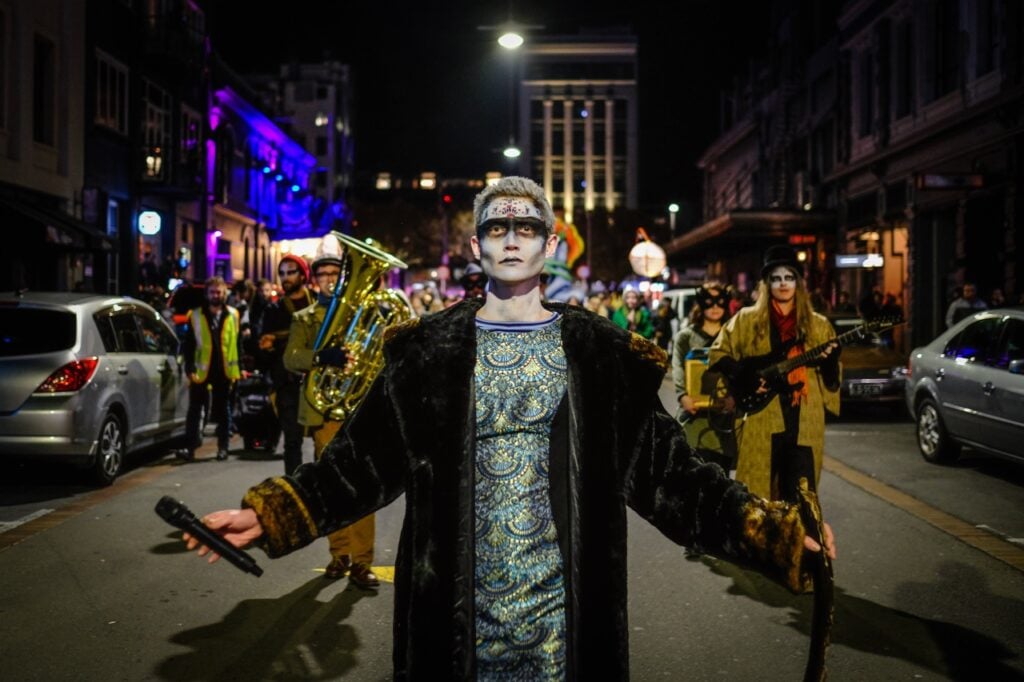
Image: Solstice Procession Credit: Vanessa Rushton Photography
This year, your programme balances an amazing mix of international acts with New Zealand musicians like Shayne Carter and Troy Kingi presenting new or relatively new works.
I’ve always been interested in the idea of presenting new work at festivals. It’s about bringing things to the city that don’t normally happen here. There are already a lot of great acts that tour New Zealand regularly, so it makes more sense to showcase something new. This builds up a really cool ecosystem, and an audience who understands it is about new stuff, and actually expects it. Testing the waters is a really interesting side of art.
There’s a really nice ambient gig at Erskine Chapel in Island Bay, ‘O Vere Beata Nox (O Truly Blessed Night)’ with a taonga pūoro quartet, Orchestra of Spheres, and other acts. Another sneaky one is the ‘Night Market’. The composer David Long is doing a really cool gig there. It’s probably snuck under the radar.
What have some of the big shifts been in terms of how you’re doing things at Lōemis in recent years?
We’ve partnered with WellingtonNZ, which has been a big help with marketing. That’s helped us access funds that let us do more, but that sort of thing comes with expectations about the event’s scale and size. Working with [David Benge] and these international acts comes with expectations as well. We’ve had a push towards larger events.
Several of the shows are at Meow Nui, which is located inside the former Salvation Army Citadel church building. They’ve been open for about a year and a half now. What are your thoughts on what they’ve added to Wellington?
They’ve added heaps. There are so many shows on sale there now, and it’s hard to imagine where else some of those acts would be playing in Wellington if they weren’t there. I know the owners well. They’d been looking for a larger venue space for a long time. It’s a great venue.
Between Meow Nui and the re-opening of the Wellington Central Library, the city has been feeling a lot better lately.
I think the key things for the arts in Wellington are the geography and all the cool little venues contained within it. Meow Nui is a really important part of that, but Lōemis stretches out into the suburbs as well. We’ve got an event out at Erskine Chapel in Island Bay, and another at the Zealandia bird sanctuary in Karori. We’ve also got a show at the Hall of Memories, which recently reopened.
The other thing that makes festivals like Lōemis and Verb work in Wellington is the sheer number of artists who live in the city and can create interesting work. Part of the festival’s role is to support and encourage these types of things. I’m in regular contact with a lot of artists. Sometimes they suggest ideas to us, and other times we suggest ideas to them. Something we do a lot of is co-producing events with other people. It’s cool to help shape an idea, find a venue for it, and get it over the line.
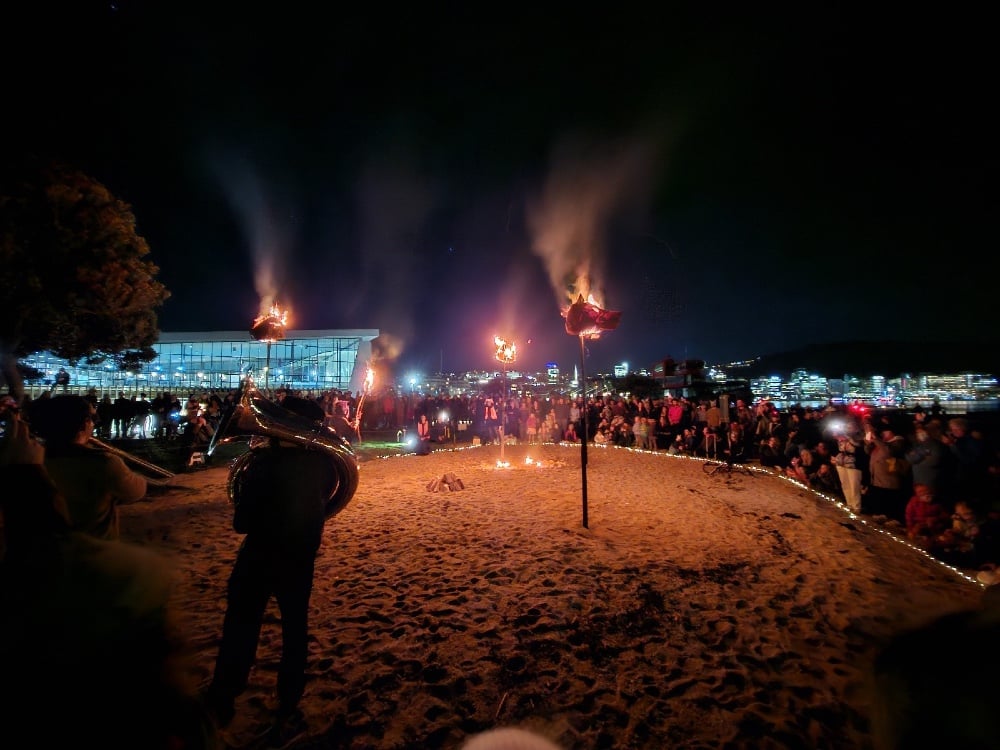
Image: Wolf Run 2024 Credit: Supplied
If someone reading this was thinking about visiting Wellington from out of town or overseas, what else would you suggest they do while they’re here?
The food scene is amazing. We have so many cool little cafes and restaurants. You can have a great time checking out the craft beer breweries. That’s what I’d do if I were visiting. There are always cool shows going on outside the festival as well. The local jazz scene is brilliant.
What has Lōemis taught you about Wellington?
There’s a constant stream of amazing artists here who are really great at collaborating. I’ve become friends with guys like Toby Laing from Fat Freddy’s Drop, who always comes off tour with heaps of cool ideas. I think it’s a good city for making things happen. It’s small enough to be connected. If you keep working, you can create really cool things. The public is up for it as well.

