




























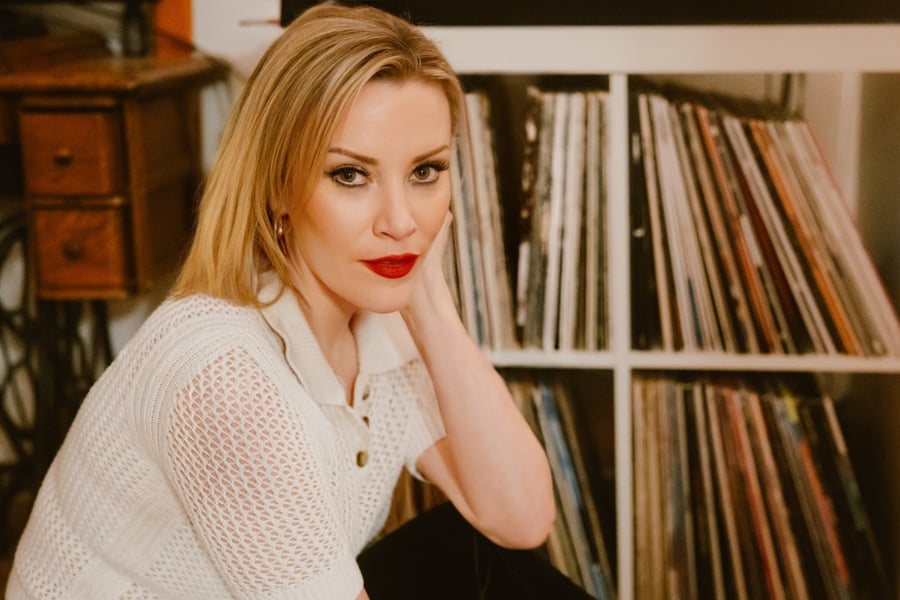
Angel Origgi
Making Music, Making Ends Meet with Lisa Crawley: ‘I Don’t Think Anyone Chooses Independent Music Because It’s the Easiest Career’
Well-travelled Aotearoa New Zealand singer-songwriter Lisa Crawley is the latest guest in our 'Making Music, Making Ends Meet' series
Musicians have always worked day jobs and side hustles to fund their art, and as Australia and Aotearoa continue to battle a cost-of-living crisis, the need to do so grows greater.
In Making Music, Making Ends Meet, Rolling Stone AU/NZ meets different musicians to discuss their life away from music, how they sustain their careers, and what they think needs to be done to improve our music industry.
Through a mixture of op-eds, interviews, videos, and more, our new series captures their experiences, both good and bad, as well as their hopes and fears for the future.
Next up is well-travelled Aotearoa New Zealand singer-songwriter Lisa Crawley, whose music career has taken her to Japan, England, Australia, the US, and beyond.
Crawley has supported big-name artists such as John Mayer, Suzanne Vega, and Paul Weller, while basing herself in Los Angeles has led to incredible TV gigs working on This Is Us, Nancy Drew, and Good Trouble.
Below, Crawley reflects on the ups and downs of being a working musician, reveals all about her life in LA, tells us about her great new single “Hurry Up and Wait”, and much more.
Lisa Crawley’s “Hurry Up and Wait” is out now.
Love Music?
Get your daily dose of everything happening in Australian/New Zealand music and globally.

Rolling Stone AU/NZ: Can you remember your earliest job?
Lisa Crawley: When I was around 10, I’d busk outside Kmart in West Auckland playing the recorder. I had a big Reader’s Digest Children’s Songbook and would work my way through it for a few hours. Looking back, it’s probably the first sign that I was determined to make music my career.
At 15 I got a job at Dunkin’ Donuts and was probably their worst employee. I was constantly taking time off for performing-arts commitments, and every time I made a coffee I’d panic that the customer wasn’t going to like it. I also had to dress up as a giant coffee cup and wander around the mall. As much as I enjoy dressing up, when it became compulsory I decided it was time to move on.
Have you had a favourite job?
It’s hard to pick one because so many of my jobs have only been for a season. Playing Mandy Moore’s piano hand double on This Is Us was pretty surreal. I also loved working as the accompanist on The X Factor in New Zealand — it was exciting travelling the country and working alongside artists I’d grown up listening to.
One of my favourite regular gigs was hosting a weekly piano karaoke night in Melbourne. I loved seeing people get up and sing in front of a crowd when they were convinced they “couldn’t sing.” Watching someone surprise themselves was incredibly rewarding
Has the balancing act between music and work gotten easier or harder over the years?
When your ‘work’ is also music — but not necessarily your own music — it can be a tricky balance.
When I do too many gigs playing for other people — corporate events where you’re essentially musical wallpaper, writing “happy and upbeat” songs for advertising briefs, or four-hour cover gigs that finish close to 2am — it can be difficult to go home and find the creative energy to write something personal. By the end of the night my battery is completely flat.
As I answer these questions I’m actually on a flight to Minnesota to perform as Christine McVie in ‘Rumours’, a Fleetwood Mac tribute band. Many of the towns we visit aren’t places I’d otherwise end up, so it’s become an unexpectedly wonderful way to see parts of America that are very different from Los Angeles.
Back in New Zealand and Australia I generally earned more from this kind of work because I was a bigger fish in a smaller pond. I moved to Los Angeles a month before the pandemic on a music visa, knowing very few people, and suddenly found myself starting again in a much more competitive city where the pay is often lower and the cost of living is significantly higher.
That said, LA has this incredible way of making all my musical worlds overlap. Playing cocktail piano at a small dinner party unexpectedly turned into a singalong with Jack Black and his bassist John Spiker, which eventually led to me making my latest record with John. I met my frequent collaborator Rob Kleiner at a sync songwriting conference, and we’ve since written and recorded a number of songs together. I met my music video director, Will Cook, around a piano while playing jazz standards, and playing in a corporate band has even led to working as a musician on television shows.
So while it’s definitely become harder financially, it’s also become more creatively rewarding. I just have to be really intentional about carving out time for my own music — for both my career and my sanity.
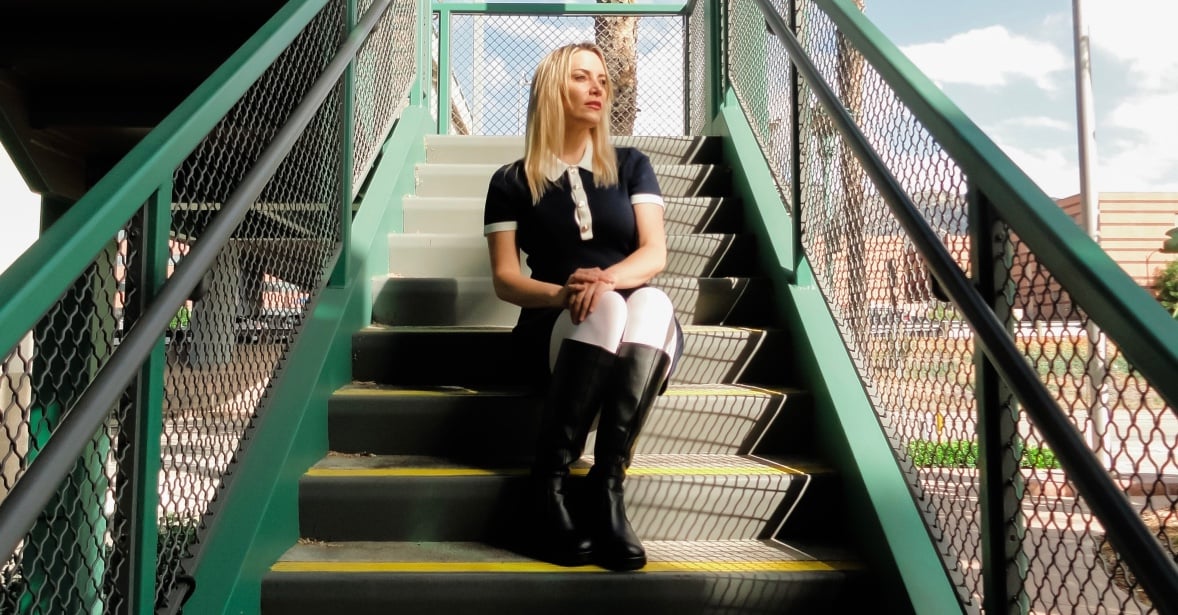
Credit: Angel Origgi
What significant sacrifices have you made to make it as a musician?
I’ve moved countries, lived with a lot of uncertainty, missed family events, and invested money back into music instead of more traditional milestones like buying a house.
I’ve spent countless unpaid hours writing, recording, promoting, organising tours, and learning what feels like an endless number of songs. I don’t really see them as regrets — they’ve been conscious choices — but there have definitely been sacrifices along the way.
I don’t think anyone chooses independent music because it’s the easiest career. You do it because every now and then a song connects with someone you’ve never met, and that still makes all the uncertainty worthwhile.
Do you think there’s a taboo in the music industry about working part-time jobs to fund one’s career?
Absolutely. I think there’s still an outdated idea that if you’re ‘successful’, you should only be making money from your original music.
The reality is that many incredibly respected artists teach, perform corporate gigs, compose, produce, play sessions, tour with other artists, or even work outside music altogether. We should probably celebrate that rather than hide it.
For a long time I felt embarrassed about the ‘working musician’ side of my career because I had friends signed to labels who seemed to be doing their own music full-time. Eventually I realised there isn’t one version of success, and I learned far more by asking those artists questions than by comparing myself to them.
None of those jobs make you less of an artist — they’re often the reason you’re able to keep making your own music.
Tell us about the economics behind your most recent tour. Was it self-funded?
Almost all of my touring has been self-funded. Income comes from ticket sales, merchandise, performance fees and, occasionally, grants, but there are so many expenses behind the scenes: flights, accommodation, transport, musician fees, rehearsal time, marketing, and production. Even a ‘successful’ tour doesn’t necessarily translate into significant profit.
How thin are the monetary margins when it comes to something like a national tour?
Very thin. One unexpected expense — a cancelled flight, lower-than-expected ticket sales or equipment rentals — can wipe out your margin.
As a solo artist, every decision becomes a balancing act. I often perform solo because touring with a full band dramatically increases costs through additional flights, accommodation, transport and musician fees. I love playing with a band whenever I can, but financially it isn’t always viable.
Do you worry that independent musicians are going to be priced out of touring in the near future?
For sure. Touring has become significantly more expensive while audiences have more entertainment options competing for their attention. I think live music remains incredibly important, but without better support there’s a real risk that only artists with significant financial backing will be able to tour consistently.
Perhaps I should be better at crowdfunding, but there’s always someone who seems to need the help more than me. As much as I’m trying to cut back on the less creative gigs, live performance still feels like one of the few parts of music AI won’t be able to replace any time soon — I sincerely hope, anyway.
Have you found it easy or difficult to get funding for your releases and touring over the years?
Funding has always been competitive. I was fortunate to receive some NZ On Air single and video grants over the years, but I’ve also self-funded many releases and projects. Grants are incredibly valuable, but they can’t be relied upon as a business model because they’re never guaranteed.
Have you found your fanbase to be based more overseas or at home?
It’s become quite international over the years. I’m originally from New Zealand but have spent time living in Japan, London, Melbourne, and now Los Angeles, so my audience has gradually spread across different countries. That’s been one of the joys of releasing music independently — you can build a community in places you’ve never even visited.
I went back to London 15 years after living there to play a show and, to my surprise, had a decent audience who’d continued to follow my music over the years. When I was 19 I performed at a hotel in a remote town in Japan, and nine years later I booked a show in Tokyo where someone who remembered me from playing in Tim Finn’s band turned up with flowers.
New Zealand is where many of my longest-standing fans are, and it was wonderful to go back recently and play a show surrounded by some of my favourite people.
View this post on Instagram
What can the government do better to support artists and musicians?
Continued investment in touring, recording, and export opportunities is incredibly important, but I’d also love to see more support for the spaces where music actually happens. Small venues are essential to developing artists, and supporting grassroots music ultimately strengthens the whole industry.
Too many iconic venues have disappeared over the years, taking with them the places where artists first build communities and audiences.
How important has your music community been to your career?
It’s been everything. Music can be quite isolating, especially as an independent artist, so having other musicians to share advice, opportunities, and encouragement with has made a huge difference. Some of my favourite collaborations and opportunities have come simply through being part of a supportive creative community.
I’d just moved to LA before the pandemic and was unable to work or earn any income, so I kept myself occupied by hosting piano karaoke on Instagram, where friends and strangers would join me live and sing a song of their choice while I accompanied them on piano. The lag was pretty unbearable and it wasn’t paid, but it kept a lot of us entertained during lockdown.
What do you think needs to be done to improve the live music scene in ANZ?
Protecting grassroots venues is vital, but so is rebuilding the habit of people going out to discover artists they don’t already know. Live music thrives on curiosity — not just on buying tickets to artists you’re already familiar with.
Finally, tell us about your latest release
My latest release is “Hurry Up and Wait”, a song about living in that strange space between hope and uncertainty. In a larger sense, it explores the feeling of waiting for life to happen while trying not to stand still. It’s about bad timing, indecisiveness and feeling like you’re stuck on repeat.
Sonically it’s one of my favourite recordings I’ve made, blending piano-led indie-pop with some unexpected textures — including omnichord, clarinets, and recorder (all those busking sessions outside Kmart finally came in handy).
The music video was shot at a tiny drive-in theatre where I once worked for seven months. Officially I was hired as a ‘musician’, but I also set up the drive-in cinema, cleaned the bathrooms and, as my boss requested, ‘introduced’ the movies into a fake microphone — even if there were only two people in the audience. It had been about two decades since I’d had a non-musical job, and it wasn’t an easy period of my life, so returning there years later to film a video for my own music felt surprisingly full-circle.
Two weeks earlier I also released a live piano and vocal EP, Songs I Like But Did Not Write – Vol. 2. It’s a collection of songs I love that I recorded completely off the cuff after a producer didn’t show up for a session, leaving me with unexpected recording time at Village Studios. I’d never covered any of them before, but they’d all shaped me as a songwriter, so I sat down at the piano and hit record.
I’m excited to get back into full writing mode and work towards a new album. And if I have to work playing four hours of requests regularly to help fund it, so be it.

