




























Cybele Malinowski
Making Music, Making Ends Meet with Katie Noonan: ‘I’m Having Trouble Getting Bums on Seats and I’ve Been Doing This for 30 Years’
Katie Noonan chats to Rolling Stone AU/NZ for Making Music, Making Ends Meet, a series focused on musicians during the cost-of-living crisis
Musicians have always worked day jobs and side hustles to fund their art, and as Australia and Aotearoa continue to battle a cost-of-living crisis, the need to do so grows greater.
In Making Music, Making Ends Meet, Rolling Stone AU/NZ meets different musicians to discuss their life away from music, how they sustain their careers, and what they think needs to be done to improve our music industry.
Through a mixture of op-eds, interviews, videos, and more, our new series captures their experiences, both good and bad, as well as their hopes and fears for the future.
Next up is Katie Noonan, one of Australian music’s most enduring singer-songwriters, who is preparing to release her 30th studio album, Alone but all one, later this month (pre-order here).
But even releasing 30 records and winning multiple ARIA Awards doesn’t make an artist like Noonan immune to the perils of the music industry.
Below, she reflects on surviving on the dole during her George years, balancing motherhood and music, maintaining her artistic integrity, the positives and negatives of being an independent musician, and more.
Rolling Stone AU/NZ: Let’s start with your earliest jobs — your first gig, your first taste of what this life would actually look like.
Love Music?
Get your daily dose of everything happening in Australian/New Zealand music and globally.

Katie Noonan: In February 1996, I got in my brother’s Datsun Bluebird and drove from Brisbane down to the Gold Coast to Seagulls — which was a sort of surf club/RSL. Before the scourge of pokies, it was a great music venue. I drove down and saw Jeff Buckley play. I was 18, I’d just finished a year of an opera degree and realised I didn’t love opera enough for it to be my obsession. And I saw Jeff Buckley and went, “Holy moly — whatever that is, I want to be part of that magical, otherworldly world.”
I went back to Brisbane and started a band with my brother Tyrone, my flatmate James Stewart, and his identical twin brother Nick. Two sets of siblings and a bunch of hippies in a share house in Bardon in 1996 — exactly 30 years ago. Our first gig was at the Battle of the Bands at the Griffith University National Band Comp. I played a lot of djembe and may have done some fire twirling outside the venue. I was in full hippie mode. That was our first gig as George.
My first proper paid gig, though, was something called ‘Ground Control to Major Fun’ — a David Bowie tribute night at The Zoo in Brisbane. The Zoo was a legendary venue, run by two amazing women, Joc [Curran] and C [Smith]. That was my home. I ran a jazz series there with my ex for over a decade, presenting jazz once a month.
Were you working a day job at that point?
I was studying music, so I got Austudy, which was great. Then once I finished my degree, I went on what we called the dole — jobseeker now, I suppose. As a band, we knew where every single dole office was in every town and city in Australia, because we’d be on the road gigging and gigging, sleeping on floors, doing gigs for crazy small amounts of money. Our first gig in Sydney, we played at the Excelsior in Foveaux Street in Surry Hills and got 10% of the bar — which was $27. Split across a seven-piece band…
Back in the ’90s, it was very much you’ve got to move to Sydney or Melbourne, and we didn’t want to. We loved Brisbane. We were proud of our home and our history. We were very much a Brisbane band, and our family and friends were there. But we did meet with a manager, Kim Thomas — who was managing The Whitlams at the time — who said you have to tour to Sydney and Melbourne every two months. And we took that advice very seriously.
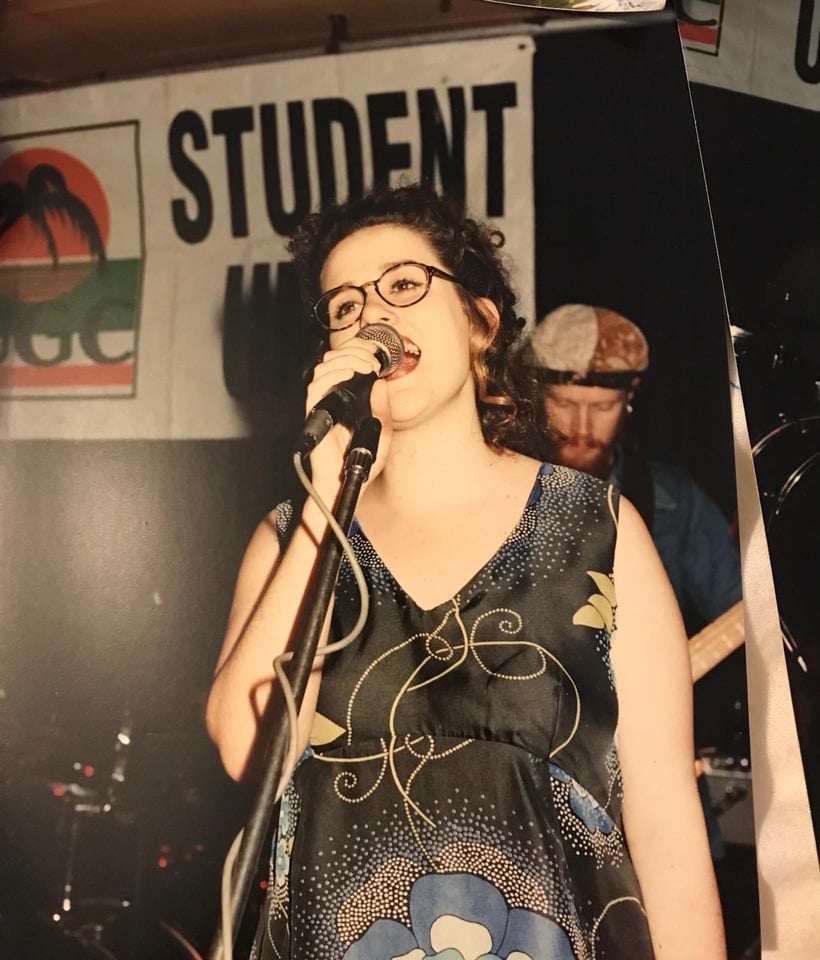
Image: Katie plays her first gig with George Credit: Supplied
For a while there, I pretended to be our own agent, ringing venues, pretending to be someone else. We just gigged and gigged and gigged. And thanks to community radio and triple j, we’d show up to Bendigo, Ballarat, Rockhampton, Mackay, you name it, and there’d be people there.
Back then, there was also a law requiring all international acts to have a local opening support act. That was huge for us. We supported Macy Gray, we supported Coldplay, we got to play to stadium-sized crowds who’d never heard of us. We put on a decent show, they became our fans, they followed us to the next gig. It was a very organic process.
One of our first regional tours was supporting The Whitlams through Queensland. Then we toured with Midnight Oil, did lots of double bills with emerging bands like The Waifs. We slept on floors, slept in cars, drove a lot of kilometres, and just built it. Our determination was to sound like no one else. That was inspired by Jeff Buckley — seeing him live and going, “What the hell is this music? I can’t describe it. Isn’t that awesome?”
The ’90s were also a pretty exciting time for interesting pop music. Björk’s Debut came out, Radiohead’s OK Computer, Tori Amos, PJ Harvey, Nick Cave & the Bad Seeds. It was a very eclectic post-grunge moment where suddenly there was a home for music that didn’t fit in a little box. We were part of that.
We were fiercely independent for a long time, and then we had a bidding war between record companies, which meant we could negotiate terms to our artistic advantage. According to our lawyer, we were the first band in Australian history to have complete creative and artistic control written in ink in our contract.
And then you made the decision to step away from George — which couldn’t have been easy.
It wasn’t, because we were at a very successful, unexpectedly successful, level of crossover success. But I’d gotten married and fallen pregnant and realised I couldn’t really be in a band. Being in a band is a huge commitment, and I wanted my number one commitment to be my family — being a mum and a wife. I really needed to just be my brother’s sister, not his bandmate and business co-worker. We’d been together for 10 years. We had a really good innings.
How did you find balancing music, work, and motherhood?
When I started, it was incredibly difficult. There were very few women I could talk to. Deborah Conway, Claire Bowditch — a small handful. And if you look at the generation before those women — Chrissie Amphlett, Renée Geyer, Carol Lloyd – none of them were mothers. Joni Mitchell’s “Little Green” was about having to give up her child for adoption because it was impossible to be a single mother and an artist.
And it was also a legal issue. In Australia, it was illegal to be a mother and work — or to be married and have a job — until 1968. Those legal structures stopped a lot of women from being mothers and anything else. That was only about 60 years ago. It takes generations to undo those things.
Merle Thornton — Sigrid Thornton’s mum — and the women of the second-wave feminist movement in the ’60s helped negate those archaic laws. Merle was working for the ABC, was married, didn’t wear a wedding ring, tried to conceal her pregnancy — and the moment they realised, she was immediately sacked. She came to Brisbane and discovered women weren’t even allowed to drink in the bar areas of pubs.
She was doing the first-ever gender studies degree at UQ, and all the men would go to the pub to discuss the legal issues they were studying, and the women weren’t allowed to join. There was a line of women with children waiting in cars outside, so she chained herself to the bar at the Regatta Hotel.
That was deep Joh Bjelke-Petersen-era Queensland — very dark days for feminism and equality. But it was women like her who changed things for people like me.
Even so, in the early ’00s I’d have to explain to lovely young promo women that I’m the food source, so yes, I do need to breastfeed every three hours. That’s not negotiable. But in a lot of ways, the music industry is actually surprisingly family-friendly if you can call the shots. You can turn your backstage into a little crèche. If you’ve got a partner or a team who’ll help, you can breastfeed in the set breaks. My kids came everywhere with us — but it was expensive. Once they were two, I had to pay for four tickets on the plane, not just one.
And this is a job with no maternity leave, no sick leave, no superannuation. Having a child is a genuine financial investment — you will lose money. That’s just a fact.
Since becoming a mum, I’ve prioritised creating a safe space for women, for working mums, for pregnant mums, for mums with babies. When I was music director for the Commonwealth Games soundtrack — an all-female band celebrating great Commonwealth female singer-songwriters — the recording studio was essentially a crèche. One musician was breastfeeding, one was pregnant, there were toddlers running around. It was awesome.
You’ve talked about staying true to your artistic instincts throughout your career — were there moments where that came at a real cost?
I got offered what I’m pretty sure was $50,000 for “Release” to be used in a Johnson & Johnson tampon ad. And I was like… that’s a strange choice. Also, I had big questions about Johnson & Johnson’s ethics. I just said no. At the time I was broke. I turned down an enormous amount of money. But back then, having your song in advertising was the death of integrity.
Then Feist sold “1234” — which she co-wrote with the amazing Australian artist Sally Seltman — and it got synced to Apple, and suddenly syncing wasn’t the death of integrity, it was actually quite cool. Now syncing is a core part of passive income for musicians. I’ve never had much luck in that world, unfortunately. But I stand by that decision for what it was at the time.
The other big one was the “Breathe in Now” film clip.
We’d already spent about $40,000 shooting this clip with a director the record company suggested — it was terrible. Shot in a greenhouse in summer, there was an exploding rose, we all looked like we were dying because we were. A total Mills & Boon disaster.
I went to FMR, who we were signed with and said, “We have to bin it. We can’t use it.” And I rang back our friends Sarah and Sean from Square Eyed Films — who’d made all our previous clips — with basically no budget, a bunch of students with borrowed cameras, and our mates in front of them.
That’s the “Breathe in Now” clip, shot in the rehearsal room of Rock and Roll Circus, now called Circa, in the Judith Wright building in Fortitude Valley. Because we had that creative control written in our contract, they couldn’t fight us on it. You never get a second chance to make a first impression — and that song ended up being quite a big thing for us.
How did things evolve when you moved into your solo work?
After George, I had two children very quickly — two under 18 months — and then tried to find my voice as a solo artist, which was very, very scary. I moved to Sydney because that’s where my record label was. FMR had been bought by Warner. I signed to Sony after that, and then eventually I started my own label and I’ve been independent ever since.
At Sony, I was given complete creative freedom. I wanted to work with Nick DiDia — who’d worked with Rage Against the Machine, Pearl Jam, Springsteen, Powderfinger — and we co-produced together. Then I wanted to make a jazz record in New York with amazing jazz musicians, and Sony said, “Yeah, go for it.”
But when the head of Sony at the time wanted me to do a Dusty Springfield tribute record, I said, “That’s not happening. My next album is Elixir with Tom Shapcott, I’ve already written half the tunes, that’s what I’m doing.” We parted ways totally amicably. They could have left me signed and shelved the record for years — but they didn’t. They let me go.
Let’s talk about the landscape now. Do you worry that independent musicians are going to be priced out of the industry entirely?
It’s difficult for me, and I’m lucky enough to be in my 30th year.
When I started, the first death knell of live music was poker machines. Gambling is the most horrendous illness — it destroys families every single day. Venues with pokies clear their profits by 11am, and from there on they’re just fleecing addicts. I wish there was a way to make those venues invest those enormous profits back into community. If you have pokies, you should have to have live music. Something like that.
Then of course the internet — digital streaming platforms, an unlegislated space where very smart people created platforms that are incredibly useful but unbelievably unethical. Spotify is the worst offender. Their royalty rates are outrageously bad. And not only that, over half of their library is completely fake — created by AI, using our intellectual property to create fake accounts and fake music so they don’t have to pay anyone.
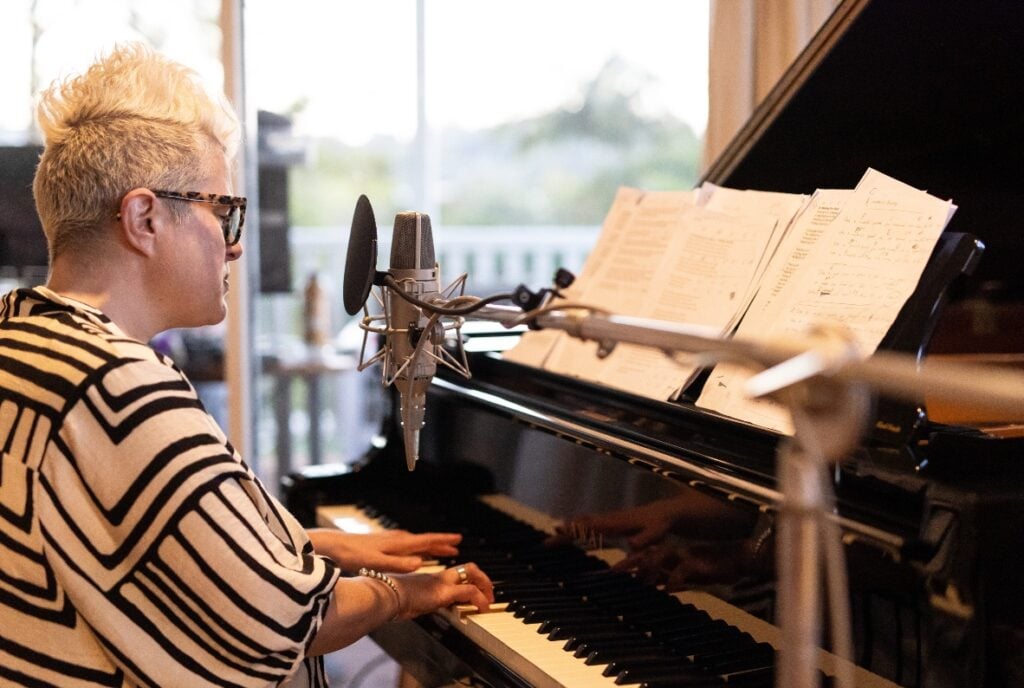
Image: Katie works on her new album Credit: Supplied
I remember Lars Ulrich taking Napster to court in the early ’00s. I wish he’d won. The record labels were in such denial about this huge force that was coming. Now there are probably two generations who believe music is just a free thing on the internet that they don’t have to pay for.
Don’t get me wrong, I love DSPs — I consume music that way myself. But I’ve never made squat from Spotify and I never will.
For Australian artists, I always go and buy the physical stock as well, because that’s the only way we can keep going. You used to make albums because they made money. Nowadays, albums are purely a tool for touring and self-expression — they cost more than ever, especially if you choose to pay your musicians properly, which I do.
When I started, albums cost $30 — now they’re basically free. If you account for inflation alone, an album should cost about $100 today. A cup of coffee was a dollar then and it’s six bucks now.
Then there’s the loss of the local support act rule — every international act used to have to have a local opener. When Taylor Swift toured, her support act was American. Back in my day, we supported Macy Gray in stadiums. We played to 20,000 people who’d never heard of us. That was the foundation of our audience. That rule no longer exists.
And there are no quotas for Australian content on radio either. In Canada, it’s at least 30%. Here it’s something pathetic — I think it’s around 6%, and there’s no law about when it has to air. They can just play it between 1am and 6am when no one’s listening.
There’s no countdown anymore either. When I started there was The Today Show, Sunrise, Good Morning Australia, Rove Live — so many TV shows had live music. Now there’s basically nothing.
What about the cost of actually getting out on the road?
For my current album tour, I’m doing eight big shows. Four are 100% my risk, and four are venue-presented. And I’m just about to announce what I think is a 27-date regional tour from September to December — and that’s pretty much all my risk too. Smaller venues, lower overheads.
I write a lot of grants — in COVID, my full-time job was writing grants. I lost a lot and I got a lot and I learned a lot.
We recently found out we received a Contemporary Music Touring Program grant, which is for me to engage regional string players. All of that money goes to the musicians — it won’t go to me.
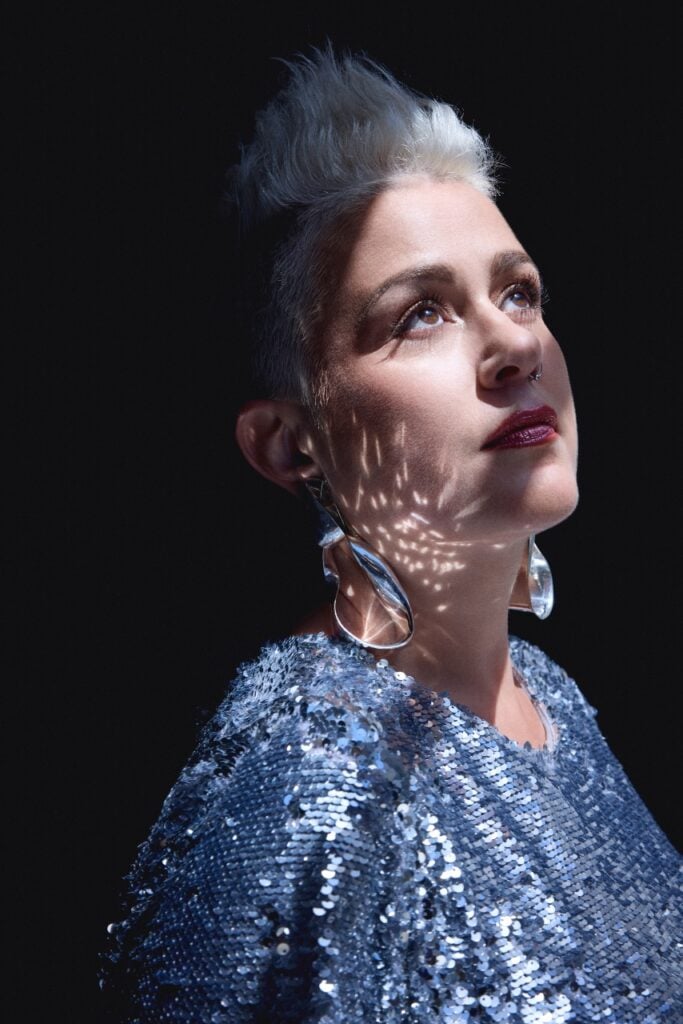
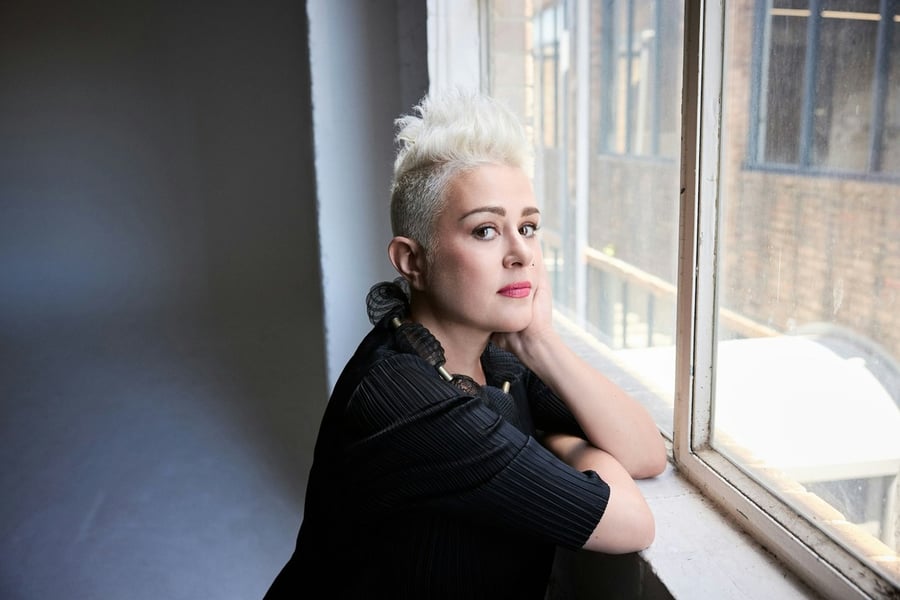
Image: Katie Credit: Cybele Malinowski
But it’s awesome. It means I get to play with a string quartet, and they’ll actually be paid properly. We asked for $50,000 and got $25,000, and I did the budget last night — it’s gone in a second once you pay a few flights, extra accommodation, and the musicians.
Has it gotten easier or harder to get that kind of funding as you’ve become more established?
It sort of is [harder] and it isn’t. With AVÉ [Australian Vocal Ensemble] — my vocal ensemble — we’ve commissioned 63 new works in four years. We’ve created paid work to the tune of over $300,000 for Australian composers. That’s amazing. But it seems easier to get funding to commission new works than to get funding for core organisational costs, which means all my work as artistic director is predominantly pro bono.
Private philanthropists like commissioning new works because there’s a tangible result. They can say, “I commissioned that piece.” Whereas saying “I gave someone a salary to do the spreadsheets” is not quite as exciting. It’s a catch-22.
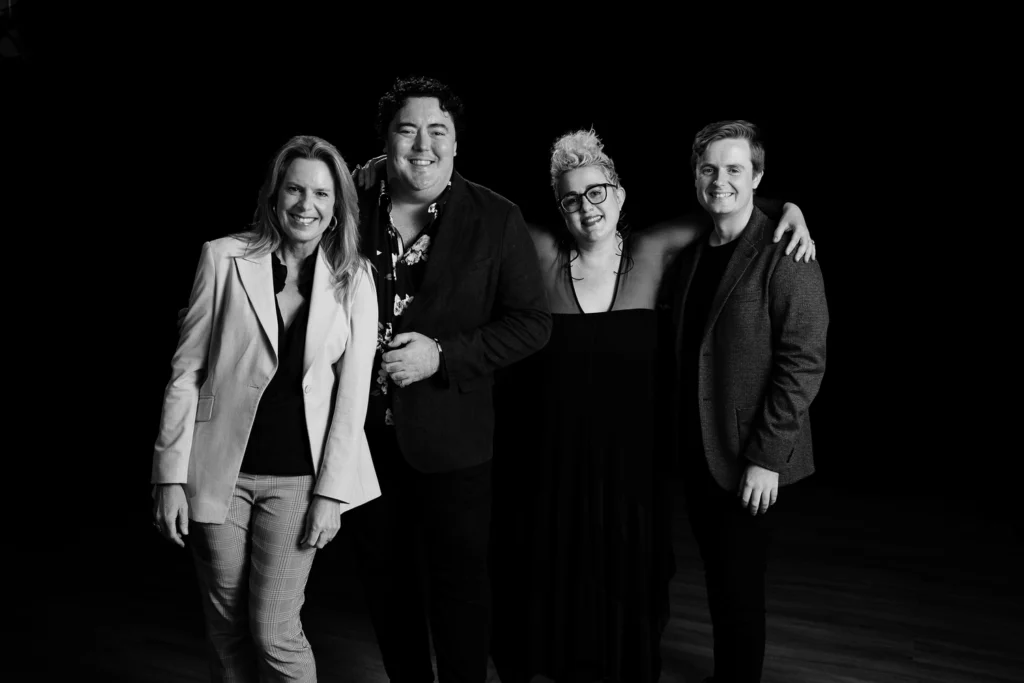
Image: Katie and the AVÉ Credit: Supplied
My advice: get help writing grants. I’m better at getting grants for other people than I am for myself. It’s hard to talk about yourself. Go to the grant-writing workshops. There is money there at a federal, state, and local level.
Reach out to your local member too — it is literally their job to answer you. They get paid a six-figure salary to represent their electorate and you’re part of it. Just ring them up and say, “G’day, I need some help. I think my music matters.”
I feel I am deeply and gravely concerned for the next generation of storytellers.
I’m having trouble getting bums on seats and I’m someone who’s been lucky enough to be a full-time musician for 30 years. And I’ve never cancelled a show in my life, but, you know, [at] some I’ve lost so much money. And it’s just that cut-through, it’s so hard.
I don’t do TikTok and I don’t do Snapchat and I don’t do all the other, whatever they are, platforms. I didn’t even want to do Facebook and I didn’t even want to do Instagram, but they’re the two that I do do. And I’ve really tried to foster a beautiful, caring, supportive community in my world.
You often talk about the transformative power of music in community, and you’ve put that into practice in a real way with things like the Eumundi School of Music on the Sunshine Coast.
Music education is something I could talk about all day. The lack of quality music education for kids is devastating — and unfortunately the best music education is predominantly at wealthy private schools. When it comes down to music lessons or school uniforms, the lessons go. I think the last real cultural advocate leader we had was Paul Keating, 30 years ago.
I’ve raised about half a million dollars for the Eumundi School of Music over 10 years — but it costs at least $60,000 a year to run. And I’ve always done a lot of charity work because I consider my job a privilege. But the local community and the sense of belonging it creates… you can’t put a number on that. I’ve literally had arguments with local councils who want to know how many ‘bed nights’ a music program generates. And I say: it’s not about ‘bed nights’. It’s about your community.
There’s also a dire loneliness epidemic right now. Kids are depressed and spending enormous amounts of time on screens. There are so many things music could fix. Every great leader in the world pretty much learned an instrument as a child — left brain, right brain, sense of connection, sense of hard work and reward. The evidence is there. There are reams and reams of reports on the benefits of music education. Use them.
You mentioned wanting to step more into an advocacy role. What does the legacy picture look like for you?
Eumundi School of Music and AVÉ are definitely two legacy projects I want to live beyond me.
I want there to be a vocal ensemble that young singers can aspire to be in and actually receive a salary for — like the hundreds of instrumentalists employed in our symphony orchestras. The Opera Australia Chorus exists, but the average salary is about $50,000 a year, which barely anyone can live on. And the CEO is probably on eight times that.
If the only musicians you pay on a salary earn an eighth of what the admin staff earn, that’s a fundamental problem.
I think the small-to-medium sector in Australia is desperately underfunded.
The Song Company — a 42-year-old small-to-medium arts organisation, leaders in their field — recently collapsed. I think all government-funded organisations should have minimum quotas of Australian content. Not 50% — we’re a small country, that’s not realistic — but more than the token boxes that get ticked and then it’s old dead white guys from the 19th century for the rest of the year. I love Beethoven and Tchaikovsky — I will always love them — but it can’t be all you play, because it doesn’t reflect who we are.
There’s got to be youth engagement. There’s got to be First Nations storytelling. There’s got to be an attempt at gender parity. Otherwise we’re going to lose a whole generation of storytellers.
What keeps you going when it feels overwhelming?
The thing to remember is that you, the consumer, have the power — and I think we’ve forgotten that.
At every gig, I do my Spotify spiel, and I’ve had so many people say they left Spotify and joined Tidal. That’s already 300% more in royalties for the music you’re streaming. Then go to the artist’s website and buy a t-shirt or a tote bag or anything. Buying a ticket to a show is the main thing — but I know people can’t always afford that right now.
View this post on Instagram
And I think we’re going to return to community. House concerts, community halls, bring it back to what really matters. The way we all survived COVID was through the arts — we read books, listened to albums, watched films, watched livestreams. The arts give us hope — and that is what the world desperately needs right now.
I remember the minute George decided to take ourselves off the dole and pay ourselves the equivalent of it — whatever that was, basically nothing — and we were like, “Holy shit, we’ve made it. We can pay ourselves this.” We were very lucky.
But now I genuinely worry for the next generation. It’s so tough. And it’s up to people who are already in the industry to help them. Otherwise we’ll lose them. They’ll become accountants.
Life without music is not a life worth living. So yeah — we keep fighting.

