






























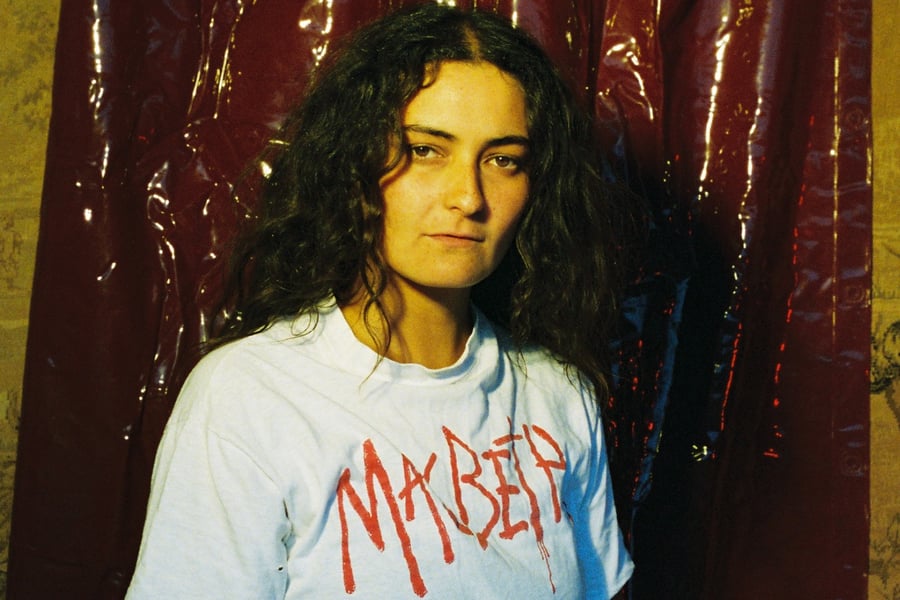
Over the past year, culture writer Emma Gleason has been discussing a concept she calls ‘Tāmaki Noir’. As she explained in her newsletter Crust, “Tāmaki Noir is more of a feeling than a theme or genre. Or perhaps it’s a cinematic lens. It’s probably all of these and more.”
Tāmaki Noir is a way of seeing Tāmaki Makaurau as a South Pacific metropolis with secrets and a seedy underbelly. “It’s immorality, antiheroes, crime and ceiling fans,” Gleason wrote. “Flair, style and charisma. Grimy fences. Derelict buildings and big, shiny new builds. Luxury cars and lowered sedans. Raw edges and elegant facades. You know it when you see it.”
Hannah Lynch, who records as Hun Lynch, is a Tāmaki Makaurau artist who works across music, film, theatre, and writing. During a video call, I asked for her thoughts on Tāmaki Noir. “I’m getting goosebumps thinking about this,” she said. “I feel like there’s so much about Tāmaki that is quite gothic. Maybe this isn’t the right word, but it’s quite brutalist, too. Sometimes I’ll be looking at these huge concrete buildings, and realise they’re stained on the sides because it’s always raining.”
Recently, Lynch released her debut album Sycophant through Noa Records, home to a wave of left-field Pacific artists like LEAO, who invited her to open for them when they performed at Roundhead Studios as part of Neil Finn’s Infinity Sessions. The LP is a psychedelic reimagining of the traditional singer-songwriter form, enshrouded in shades of trip-hop, musique concrète, art-pop, and syrupy, slo-mo electronica.
Written and self-produced by Lynch, Sycophant feels like a contemporary Tāmaki Noir soundtrack. It’s also a riddle wrapped in a mystery inside an enigma. “With music, I can say what I want to say, but it’s cushioned by the abstraction of singing, sound, instrumentation, and performance dynamics,” Lynch reveals. “I can say things through music I would be scared to say in an interview.”
Despite its timely arrival, Sycophant took shape slowly. “I wrote this album in Tāmaki across my twenties,” Lynch explains. “In a sense, it’s my perspective on what that looked like. I wasn’t really making choices about what I wanted to put on the page. It was just what came out. It really came down to what I needed to exercise privately through music-making. I think a lot of that was around shame, guilt and reaching for salvation.”
Love Music?
Get your daily dose of everything happening in Australian/New Zealand music and globally.

Raised in a family with Fijian, Samoan, Māori, and Pākehā roots, Lynch grew up in an evangelical Christian community. The church choir provided her with foundations as a singer. However, from a young age, something about it all didn’t sit right with her, and vice versa. “I always knew, and everyone else always knew, that something about me didn’t fit there,” she admits.
As a teenager, Lynch found a way out of attending church by taking up surfing. “There was a club out in Piha on Sunday mornings,” she continues. Once she’d started, she spent the next eight years in the ocean whenever she could. “My mum would drive me out, and I’d live on people’s couches and go surfing.”
Located on the West Coast of Tāmaki Makaurau, Piha Beach’s landscape reaches into the sublime; on a misty morning, it feels like you could slip between realms. That same otherworldly feeling runs through Lynch’s songs, especially “Bright Air” and “Loloma”.
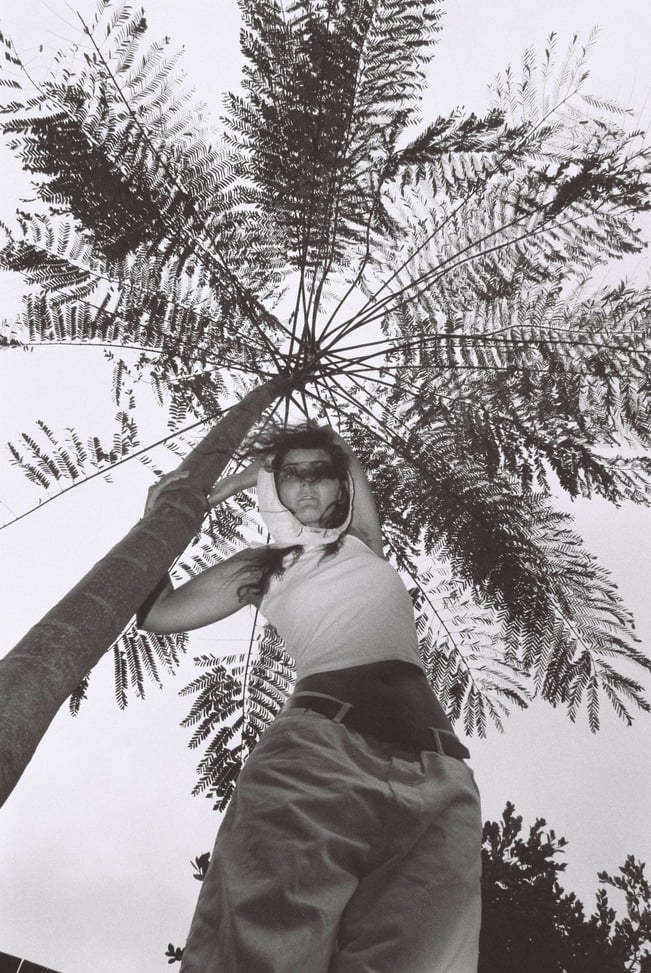
Credit: Nicola Sandford
“I think there is a sense of scale I feel inside Tāmaki, or inside the ideas my songs inhabit that reminds me of standing up high on the rocks and looking down on this thrashing water,” she says. On reflection, Lynch realised how much learning to navigate the rough ocean waters had shaped her as a teenager. “Piha’s so brutal and unforgiving, but loving as well,” she continues. “When you go there, you’re at the mercy of it. You have to figure out how to submit yourself to it, and stay safe.”
After high school, Lynch found herself adrift. “I didn’t know what to do,” she admits. On a whim, she auditioned for Toi Whakaari, Aotearoa’s leading drama school, in 2016. Two years later, she graduated and began finding her way into theatre, film, and television, most recently playing a lead role in Mum, I’m Alien Pregnant, a New Zealand comedy-horror that premiered at the 2026 Sundance Film Festival.
Over the last 10 years, Lynch has also continued to develop as a songwriter, musician, and writer. “I think of these different modes as vehicles for experience, expression and catharsis,” she explains. “The question is which tool do I want to pick up at that moment?”
Although Sycophant is a product of Lynch’s personal experiences, skills, and dogged persistence, she’s quick to credit her partner’s encouragement and support. “When I met her, she was like, c’mon get some of this stuff off the ground,” Lynch reflects. “She’s a contemporary dance choreographer. So much of my life is inspired by her brilliance.”
Similarly, she acknowledges her community, Noa Records, and their director and A&R Navakatoa Tekela-Pule. “I have the most amazing friends,” Lynch says. “I get a lot of support and awhi from them. They’d use my weird GarageBand songs in their short films or ask me to make scores for their dance works, even though I had no experience. I’ve been so supported and championed.”
Twelve days before release, Lynch and Noa Records hosted a listening party for Sycophant at Aesum Music House in Grey Lynn. Outside, the city continued to hum, streetlights reflecting off rain-slicked roads as cars cruised towards destinations unknown. Inside, her songs unfolded with the logic of a dream, populated by dancing ghosts and the possibilities of what might be. ‘Tāmaki Noir’, you’ll know it when you feel it.
Hun Lynch’s Sycophant is out now.

