



























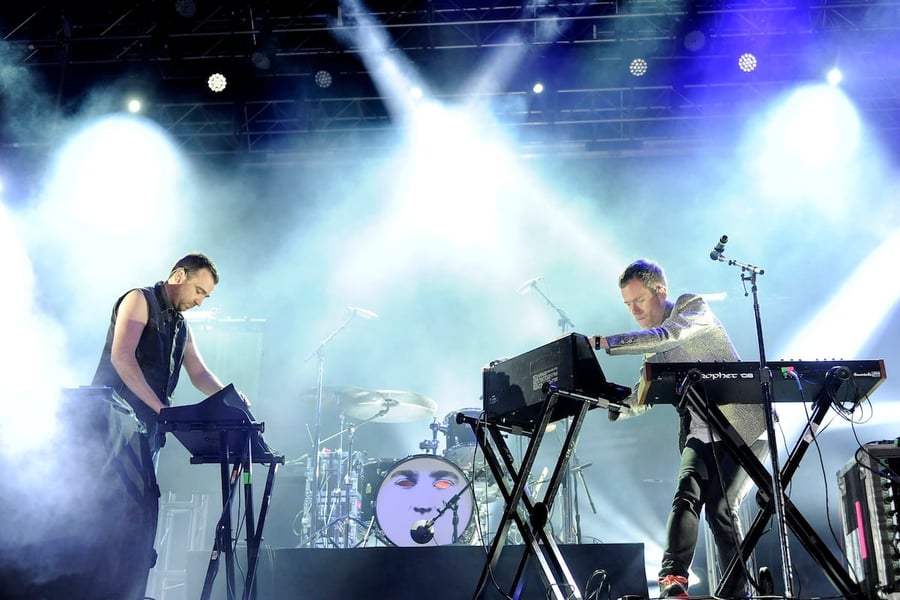
This week, The Presets announced brand-new event Foreverafter, bringing together some of the most influential names (and former Modular label-mates) from the 2000s Australian and New Zealand dance scene.
The local legends will headline a bill that includes Cut Copy, Bag Raiders, Ladyhawke, Bang Gang DJs, and FUKHED for shows in Melbourne, Sydney, and Brisbane this coming January.
To celebrate the announcement, Rolling Stone AU/NZ sat down with the acts to look back on the era that shaped them, the records and parties that defined it, and the scenes worth paying attention to now.
The Presets (Julian Hamilton)
What’s your favourite memory of the 2000s Australian dance scene?
It was a crazy, exciting time in Australia. The world wasn’t as closely connected in 2003 as it is today — we were putting out our first EPs when Myspace was still in its infancy — so while we were inspired by new music coming out of New York and Paris, we also felt so far away from those places. That distance was important. It meant we were able to forge our own tight scene and sound. The small parties we’d play in Sydney and Melbourne were off the hook, and they also acted as a kind of incubator, giving us the chance to hone our sound and style before unleashing it on the rest of the world.
Who was your favourite act of the Modular era?
The Avalanches’ debut album is still untouchable — a masterpiece. Ladyhawke made some of my favourite indie-dance-pop from that era. But I can’t go past Cut Copy as one of my favourite bands of all time. So many memorable pop tunes, dripping with uncompromising indie disco and acid house swagger. They always got the balance between radio and the dancefloor just right. Total class. Perfection.
Love Music?
Get your daily dose of everything happening in Australian/New Zealand music and globally.

Modular-era acts went on to inspire bands like RÜFÜS DU SOL. Did you know at the time you were part of something that would shape the next generation?
When Kim and I were first making electronic music, we were really inspired by Australian producers who came before us — Itchie and Scratchy, Severed Heads, Ollie Olsen, and all the underground Clan Analogue artists. I guess it makes sense that the scene we went on to help build would inspire younger acts, although we didn’t know it at the time. It’s so nice when we chat to Flume or the RÜFÜS boys or Ninajirachi, and they tell us how much that time meant to them. No doubt the massive goals they’re all kicking now will inspire another generation after them. I can’t wait to hear it.
Do you have a favourite dance act right now that Australian and New Zealand music lovers should get behind?
There are a lot of excellent Aussie artists doing huge things all around the world. My favourite is Haai. She makes really great music and has collaborated with Jon Hopkins and Fred again.., but her DJ mixes are particularly brilliant. She completely pushes the boundaries of what a club mix can be — blending techno, electro and house with psych rock, spoken word, found sounds. There’s a wild abandon in her mixes that reminds me a lot of the freedom of the early 2000s scene, where anything was possible as long as it made you feel like dancing.”
Cut Copy (Tim Hoey)
What’s your favourite memory of the 2000s Australian dance scene?
It was probably in the beginning, when we were trying to establish a scene. There was this cross-pollination of dance and rock music happening in Melbourne. We were going out every night, seeing new bands and listening to what DJs were playing in bars and clubs. We had the idea that we wanted to be a live band with instruments, along with a lot of electronics and sequencers, so we could play both rock venues and nightclubs.
It felt very grassroots because there wasn’t any radio or press shining a light on what was happening. So we’d just put on diverse lineups with bands and DJs and hold parties all over the city — basically anywhere that would have us. Nightclubs, bars, RSLs, house parties, warehouses. Then we had the idea of starting our own label, Cutters Records, and releasing our friends’ music.
Heading up to Sydney and playing the Bang Gang and Modular parties was like stepping into another world. It felt very different, but we all had the same vision and were kindred spirits, in a way — they probably dressed better, though. We were lucky enough to tour overseas early on, and we’d hear the same records all over the world, including a lot of Australian artists, so it felt like a global movement even though social media wasn’t what it is now.
Who was your favourite act of the Modular era?
Not a Modular act — or a dance music act, for that matter — but My Disco were the best live band in Australia. We saw them play all over the city and managed to play a couple of shows together. Shout out to anyone who was at the Cut Copy/My Disco Christmas party at Honkytonks. They were a force of nature live, and still are.
The defining record from that era, though, was Midnight Juggernauts’ Dystopia. Andy would play us demos from that record at house party kick-ons and in the clubs we were DJing at. It sounded like the perfect combination of dance music production and pop songwriting.
Did you know at the time you were part of something that would shape the next generation?
I think we were stoked to play outside of Melbourne, let alone on the other side of the world. Even hearing “Future” on the radio for the first time was pretty mind-blowing.
But you always want to give back. We started the label to help bring artists along with us, and we always wanted to have acts on the bill that were doing cool things our audience might not have seen or heard. We haven’t been shy about paying respects to the acts that came before us — artists like Gerling or The Avalanches, who paved the way for us. So I don’t think you can ask for much more than hearing you might have inspired someone to create music.
Do you have a favourite dance act right now that Australian and New Zealand music lovers should get behind?
I’m a dad in my mid-40s, so for the last two years all I’ve listened to is nursery rhymes or long, slow, evolving music like “Stars of the Lid” to get my daughter to sleep. I also live in a pretty isolated part of New York, so I’m not sure I’ve got my finger on the pulse of what’s happening in Australia and New Zealand, but anyone on the WAT Artists roster is worth following — a lot of super interesting, forward-thinking artists on there.
Ladyhawke
What’s your favourite memory of the 2000s Australian dance scene?
There were a couple of cool dance scenes going at the same time in Australia and New Zealand. Some epic party nights came out of those scenes. Wellington had a party night called Neon Sleep, which was right in the middle of the neon/indie-sleaze era, and a huge one in Sydney was Purple Sneakers, which anyone from that era will remember. I wish I had some specific memories from either of those, but to be perfectly honest, those years are a blur.
Who was your favourite act of the Modular era?
Definitely New Young Pony Club. Our paths crossed many times, especially in London. We played some shows together — they’re a phenomenal live band and really sum up the sound of that era for me.
Did you know at the time you were part of something that would shape the next generation?
I think when you’re living in the moment, it’s incredibly hard to see what you’re actually a part of. It definitely felt like an exciting time for music. There was a bunch of us who all lived in Kings Cross and Potts Point — myself, Michael DiFrancesco (Van She, Touch Sensitive), Jono Sloan (Empire of the Sun), Kirin J Callinan (Mercy Arms), who I actually shared a wall with — we were literal neighbours. Nick Littlemore (Pnau, Empire of the Sun) had a studio walking distance from my place on Ward Avenue. We were all creating music and messing around with synths. I feel like what we had going on in Sydney back then was a real community, and it properly introduced me to the art of collaboration.”
Do you have a favourite dance act right now that Australian and New Zealand music lovers should get behind?
I think there are some incredible women coming out of the Australian and New Zealand dance scenes at the moment — Ninajirachi and Alison Wonderland, for example. And in New Zealand, if you haven’t checked out Half Queen, she’s fostering an important dance movement over there.
Bag Raiders
What’s your favourite memory of the 2000s Australian and New Zealand dance scene?
I remember the first time we played Splendour in the Grass — maybe around 2008. We finished and went side of stage to watch The Presets play, I think in the dance tent, and just saw this huge swell of people emerge right before they started, spilling out all the sides of the tent. In my memory, they started with “Are You the One?” and the whole thing was just pandemonium. So good.
Who was your favourite act of the Modular era?
It’s hard to go past Muscles as someone who was just doing something so totally different to anyone else, then or now. We did a regional tour with him around 2010 or 2011, and it was fun to hang out with him too — a really unique and cool guy. I hope he’s in a basement somewhere right now working on a majestic double album that’s gonna blow everyone away.
Did you know at the time you were part of something that would shape the next generation?
Yes, it felt like we were all part of something for sure — a kind of groundswell. I think one thing that made it nice was that I didn’t see a lot of egos or competitive types in the scene at all. It was really friendly and supportive; everyone was hanging out, partying. I think that helped.
Do you have a favourite dance act right now that Australian and New Zealand music lovers should get behind?
I’m loving music coming out of Sydney and Melbourne again — people like Soul Wun, Loods, Airwolf Paradise and the Notwithoutfriends crew. It’s starting to feel like a coherent scene coming out of Oz again, which is music to my ears.
Bang Gang DJs
What’s your favourite memory of the 2000s Australian and New Zealand dance scene?
The Never Ever Land tour with Daft Punk was quite unbeatable as a moment in time. It was a culmination of rambunctious Australian bands supporting what was, at the time, the most incredible and inspirational electronic act in the world. To join this behemoth of an event on tour around Australia was a privilege to be part of, and will be etched in our minds forevermore.
Who was your favourite act of the Modular era?
The Bumblebeez are — and were — the most underrated act of that era. To this day, the music sounds like nothing else.
Did you know at the time you were part of something that would shape the next generation?
Not really. Living in the moment was very much a key part of the success of what was going on at the time. Even though everyone was trying to be forward-thinking, that probably didn’t extend further than the next weekend, which was always just around the corner.
Do you have a favourite dance act right now that Australian and New Zealand music lovers should get behind?
There’s a small resurgence of bands and DJs being pushed on the same lineup in equal measure, which feels like a positive step forward. As AI insidiously creeps into recorded music, live music and art is becoming more important and essential than ever before. People who are willing to take risks are going to stand above those who fall into line.
Backfence in Sydney have started things off in a fresh direction, and down south events like Hopkins Creek are keeping things community-focused with musically diverse lineups that champion local musicians.
Pre-sales start from 1pm local time on Monday, July 6th, before general public sale opens from 2pm on Tuesday, July 7th. Click here for more details.
Foreverafter 2027 Australia Tour
Sunday, January 17th
Sidney Myer Music Bowl, Melbourne, VIC
Saturday, January 23rd
Carriageworks, Sydney, NSW
Saturday, January 30th
Riverstage, Brisbane, QLD

