





























This DJ Bax interview is part of a new Scene Report on Dunedin. Check out the series here.
When you think of Dunedin music, chances are that a band first springs to mind. Perhaps one of the classic ‘Dunedin Sound’ bands, like The Clean or The Chills, or maybe someone newer like Die! Die! Die! or Six60.
Electronic music, though? Probably not, at least not in a historical sense. DJ Bax, however, is trying to change that.
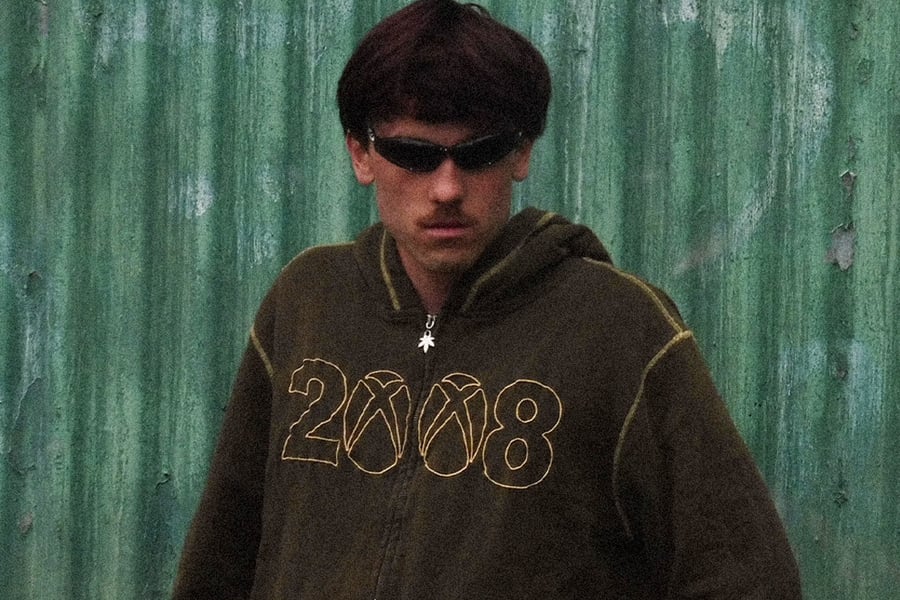
He’s a DJ (duh) and producer who’s making a name for himself in Aotearoa and beyond through his energetic sound that’s bringing donk music to Dunedin.
“Silly,” is how he describes his sound. “Definitely silly… silly, fast, hard.”
When we catch up on a call, he’s just returned home from a gig across the ditch in Geelong. Being booked for shows in Australia is part of Bax — real name Robbie Baxter — going all in on music.
“I studied for two years but then dropped out and started my sparky apprenticeship… I qualified like a month ago but I’m doing it [music] full time now,” he tells me.
Love Music?
Get your daily dose of everything happening in Australian/New Zealand music and globally.

Bax has been based in Dunedin since moving here for high school in 2013, over a decade ago. Like a lot of now-electronic musicians, he started out making music in a much different genre.
“I played guitar since I was really young… in high school I made some indie stuff with guitars and pianos and that sort of thing for a mate of mine,” he says. “[P]robably like two, three years ago I started taking what I do now fully seriously… Like, either it happens now or it doesn’t happen at all.”
He’s watched Ōtepoti’s electronic music scene grow significantly over the past few years. At the beginning, DJs like him were non-existent at the start, so Bax never heard his sound bouncing around the scene.
“The music that I’m making now, no, not at all. Back when I was making stuff with more… guitar and stuff, there was heaps of that going around… There’s like a rap scene [now] and there’s always the bands. The band scene is awesome, to be honest… they’re all doing pretty well, I guess.”
The growth of electronic music in the city culminated in a surprising landmark moment recently.
“People are kind of catching onto it [donk], I think, in Dunedin. Like I judged this DJ comp recently and there was a guy DJing donk… if you’d told me that two years ago, that would have blown my mind!
“It was such a relief because when I did it [the competition], it was me playing my stuff and then [everyone else] drum and bass DJing.”
“That’s probably why you stood out in the first place…” I say.
“Yeah, I think I played all my own production… I think that might have scored me some points, hopefully.”
A chaotic blend of hardcore, house, and trance, donk has been a thing since around 2003, back when ‘Scouse House’ took off around northwest England. Bolton ravers Blackout Crew briefly made it into the mainstream with their 2009 breakout single “Put a Donk on It”, but the genre remained mostly underground for the next 10 or so years.
Donk started out as a bit of a joke in the UK, not taken seriously by old-school electronic music fans, but the tide has changed. Time Out even covered its growing popularity in London last year.
“There was a point when I thought we were doomed when the whole ideation of making music seemed to shift to, ‘Lol, I put a donk on it,’ and a load of really horrible music came out. I think, I hope, we’ve passed through that now,” DJ Fingerblast told Time Out.
“Donk is the sound of an offbeat bass line between the kick drums,” DJ Lobsta B said in the same feature. “Imagine you’ve got a plastic drain pipe and you hit the end of it with a sandal, it would make a donk.”
Donk goes hard, typically played at 150+ BPM, and anything goes when it comes to a mix; a donk producer doesn’t give a fuck about playing something hip — they just mix whatever the hell they want.
“My mum is a group fitness instructor for Les Mills, so the songs I grew up listening to were ‘Everytime We Touch’ by Cascada… I then found a genre called SoundClown which just had the stupidest mixes and when you speed them up it becomes DONK and that’s my thing,” Bax told Critic Te Ārohi last year.
Bax, for example, has donk-ified everything from Rick James’ groovy “Super Freak” to Pharrell and Robin Thicke’s “Blurred Lines” to, um, the South Park theme song. (Note to any reader who lives in a block of flats: do not play donk at 6am with your windows open — your neighbours will be grumpy.)
Bax wasn’t joking when he used the word “silly” to describe his sound. But to call what he does just “silly” would be dismissive, because there’s clearly a lot of passion and talent going into his tracks.
His music and the entire genre is hectic, exhilarating, and delirious. It might be an acquired taste, but there’s a lot of fun to be had for those listeners who do acquire said taste.
It’s not an accident that donk has surged at the same time as sped-up songs have taken over TikTok and hyperpop producers have entered the mainstream. The independent Ninajirachi famously led this year’s ARIA Awards nominations with her EDM-meets-hyperpop debut, I Love My Computer.
And, as Time Out noted, donk is clearly connecting in a big way with the new generation of club-goers, writing that it’s “extremely zeitgeisty, in a ‘ketamine-chic’, ironic kind of way: attracting the fashion students, bedroom producers, models and misfits.”
“Five or six years ago, donk really started to come back and that’s when I finally started to release my music, which I started making 15, maybe 20 years ago,” Lobsta B told Time Out.
Lobsta B, in fact, has been a major influence on Bax, as have other overseas artists like 3DMA, but he makes sure to give a local label its flowers.
“[W]hen I was in high school there was a collective called Garbage Records, like Wax Mustang and Jack Berry… those guys were like my idols,” he says.
Why is electronic music on the rise in Dunedin?
“I think it’s a lot more accessible for students and stuff because not everybody knows how to play an instrument, other than everybody has a PA system, guitars, amps, drums, all of that… All you need is a USB and some speakers,” is Bax’s view.
An illuminating stat: out of all the countries who listen to Bax’s music, New Zealand is nowhere near the top.
“[Y]ou can see on Spotify… what places listen the most. It’s like Australia, Germany, England, Scotland, France, and then New Zealand’s like number 20 or something.”
“I didn’t expect New Zealand to be 20th!”
“Yeah, spots like Dublin, Berlin, which is crazy… I guess I should probably move to Melbourne.”
Bax has released music on several respected labels, including the UK-based Donkline as well as Redline Records and Norman Foreman at home. He’s gained a dedicated fanbase along the way, now boasting over 17K followers on SoundCloud and over 140,000 monthly listeners on Spotify.
It helps that he’s able to play supportive venues like Carousel Bar and Lounge, just off the city’s nightlife hub, the Octagon.
“That’s where me and my DJ friends started off doing these things… on Friday they have a resident DJ… people go there expecting — it doesn’t even sound drum and bass,” he tells me.
“When I first moved here I could not believe how dominant drum and bass was. It blew my mind,” I note.
“I always thought about that, how… there’s lots of drum and bass DJs, [I] don’t know if [there’ll] be an opportunity for people who like the same music as me… I still catch myself thinking that, because it happened so slowly and gradually, [but] I’ve actually got a cool group of DJs and musicians and stuff [around me].
“We tend to know each other as well. Like if I go to a band gig, I know a couple of the members [from] the skate park or something. It’s not a big town.”
While he foresees moving overseas to build his career in the future, and is already doing “organisational steps” for a European tour, Bax is very happy to call Dunedin home.
“I was actually chatting about this with my landlord today, and she was saying that there’s not enough things for people to do, and I think that’s what breeds creativity… [we’re] forced to come up with [our] own things and I guess that ends up being music,” he says.
“I think that if I leave I’m definitely gonna come back here. I don’t know what it is.”
Stream DJ Bax’s music here. Catch him at Matakaranama 2025 on December 31st.

