





























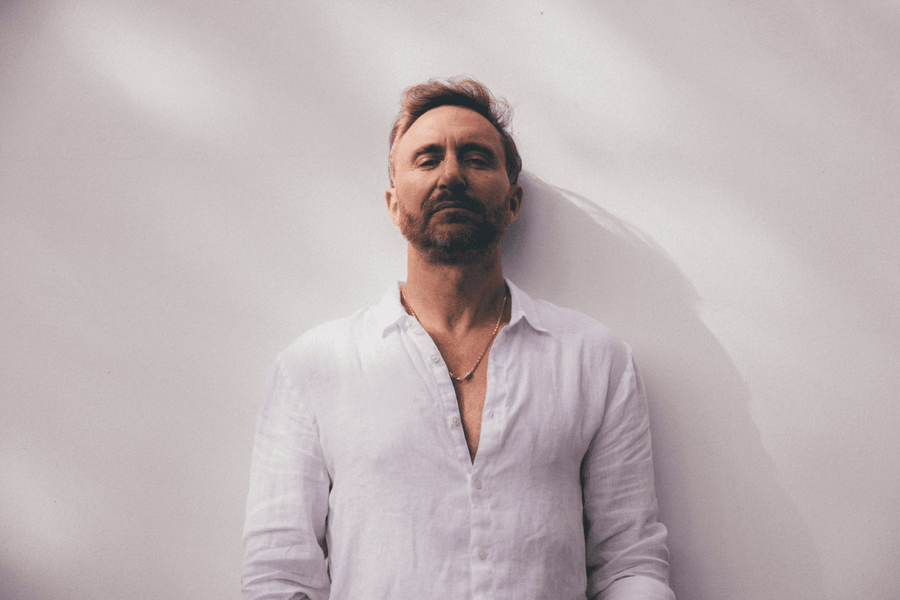
Three sold-out Stade de France shows announced for 2026 in Paris. A world tour that took him from Latin America to Asia, with a stop at India’s Sunburst Festival. Las Vegas shows set to kick off this spring. At 57, David Guetta is still setting the tempo — and not slowing down. In 2025, he was crowned World’s No. 1 DJ for the fifth time by DJ Mag, alongside titans like Martin Garrix and Armin van Buuren. Now, as he launches ‘The Monolith Tour’, the EDM pioneer is once again reinventing the party.
“A set has to be a collective experience.”
He started out spinning records in a gay club in Paris at 17. For Guetta, music is more than sound — it’s a social force. In this exclusive conversation with Rolling Stone France, he reflects on the path that brought him here, the culture that shaped him, and the passion that keeps him moving forward. Intensity. Emotion. Future amplified.
Rolling Stone France: What was your first musical shock — the moment you thought, “That’s what I want to do”?
David Guetta: There were a few. Back in the ’80s, when I was a teenager, pirate radio turned my world upside down. Club DJs were mixing live. I was hooked — the way they linked tracks, the mystery behind each remix… I could listen for hours. Then one night at Roger Boîte Funk, I saw Dee Nasty doing his thing — real hip-hop, real vinyl. Boom. Mind blown. Later came the house legends: Frankie Knuckles, Eric Morillo, David Morales… and that was it for me. I wanted to be a DJ.
What kind of music was playing at home when you were growing up?
Honestly, not much. But I was obsessed with funk — Marvin Gaye, Stevie Wonder. I played them on repeat. They’re still my foundation. That soul, that warmth — it’s never left me.
Love Music?
Get your daily dose of everything happening in Australian/New Zealand music and globally.

You started mixing in the 1980s, when rock ruled and New Wave exploded. Did that energy shape your first sets?
Not really ! I started at 17 in a gay club in Paris called Le Broad. I was into funk, disco, Black music. But New Wave ruled the scene back then. The owner told me: “You’re good, but if you don’t play New Wave, you don’t get the job.” I knew nothing about this kind of music, so I had to learn on the job to blend funk, disco, and New Wave together. That mash-up already carried the seeds of electronic music — drum machines, synths, and a deeply funky soul. Two pillars that still define me today: cutting-edge electronic production and raw soul emotion.
Like rock, EDM fills stadiums. Does it have the same potential for rebellion and longevity?
Absolutely. House isn’t a passing fad — it’s been around for nearly forty years. Today, dance music has a bigger market share than rock. In its early days, house and techno were pure underground, a social revolution, especially in England where they brought everyone together—from aristocrats to kids on the same dancefloor. That’s the vibe I’ve stayed loyal to: a set must be a collective, almost spiritual experience, where differences are left at the door.
Your shows have the visceral energy of a Stones or Queen concert. Did rock frontmen inspire you?
I didn’t grow up with rock, but with black music. Still, bands like Kings of Leon and Coldplay inspired me. Their energy and raw emotion really struck me. The first time I met Chris Martin I told him: “Man, you influenced me so much.” He laughed and said: “Yeah, I heard.” (Laughs)
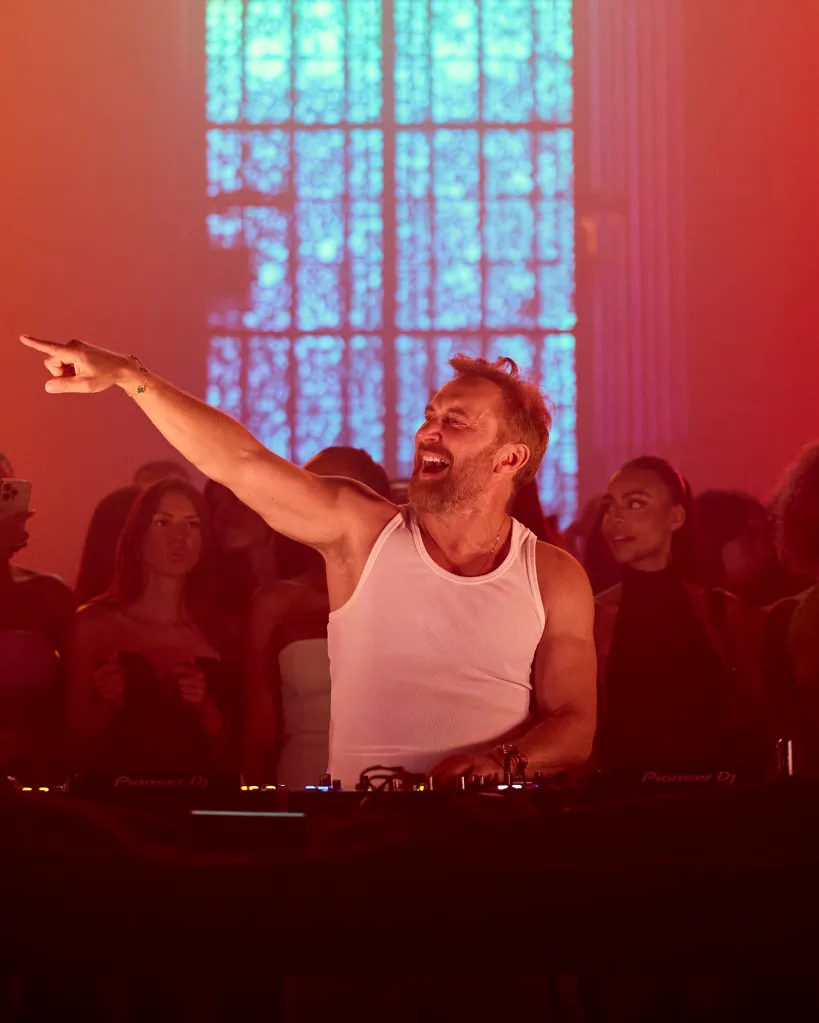
Credit: WALTERMPAZ/COURTESY OF [UNVRS] IBIZA
Pure love for what I do. I crave challenges, stepping out of my comfort zone, taking risks, questioning myself. Being on stage is a drug. In Ibiza, I’ll work on music in the morning, then test a track that same night in front of thousands. Nothing beats watching a crowd lose it to an idea born just hours earlier.
Your Ibiza party, F*** Me I’m Famous!, is legendary. Is it also your laboratory?
Totally. I test new tracks there, I check out other DJs, underground scenes. I catch what’s buzzing, what’s about to blow up, and turn it into songs that can connect with a bigger audience.
F*** Me I’m Famous! has become iconic. How has the concept evolved?
It started as a joke — a sarcastic take on my own life and the VIP hype at Les Bains Douches, where celebrities paraded nonstop. I’d watch this game of seduction between stars, models, and girls showing up just because a big name was in the room. I thought it was hilarious. Then I got famous myself, and some people took it literally. But it was always self-irony. The moment you start believing your own hype — you’re done.
And your new UNVRS residency, Galactic Circus — what’s its DNA?
We live in an era of screens and 3D visuals. But I come from a time of total decadence, when parties were about people—dancers, acrobats, real interaction. With Galactic Circus, I want to put humans back at the center, in a modern club with modern music.
Like a modern ringmaster?
Exactly. My role is to orchestrate the party, to guide the collective energy.
Is interactivity with the crowd the future of clubbing?
It’s already here. DJing is about reacting to the crowd, feeding off their energy. I don’t see myself as a star — I’m partying with everyone else. A DJ improvises and has to read the venue, unlike a band stuck to a setlist and that constant energy exchange — that’s the secret to a great night.
You grew up with vinyl, CDs, digital decks. Does analog still play a role in your work?
A little — but honestly, it’s almost romantic now. (Laughs) In Ibiza I’ve got a Rhodes piano, but with today’s sound design and plugins, digital sounds just as good. No need to haul heavy synths everywhere. What I do love is adding acoustic touches — like the horn section I used on a track I dropped in October, “Gone Gone Gone” with Teddy Swims. That brings another soul to the music.
Does AI excite you or scare you?
AI fascinates me. I’m even beta-testing for a company working on it. It doesn’t scare me, because it can’t replace imagination. A musician draws from what he’s heard, learned, digested. AI does the same — just with a million references. It can democratize technique, but it won’t replace the spark. Innovation and soul will always be human.
Do younger generations party differently?
Yeah, I think they’re more passive. In the ’90s, clubs were incubators for trends—music, fashion, ideas. Now the internet has taken over, but it’s less organic. Clubs aren’t the creative hubs they once were.
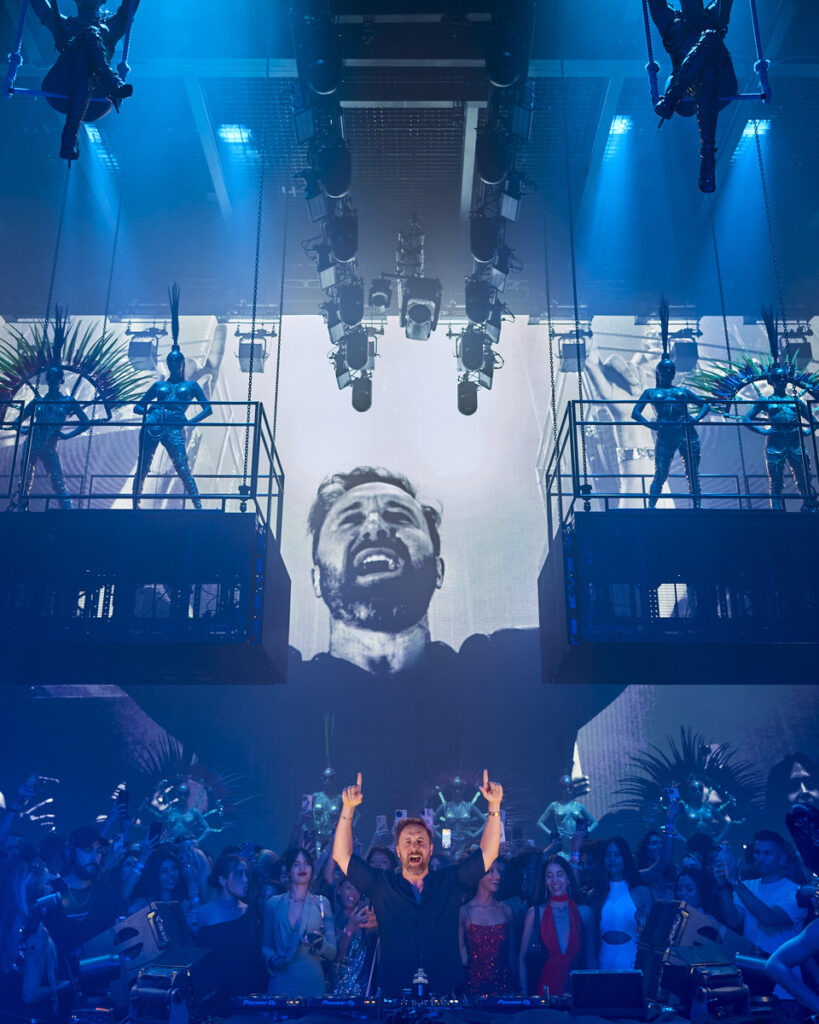
Credit: STEFANO MANZONI/COURTESY OF [UNVRS] IBIZA
Sia blew me away. One of the greatest voices and songwriters in the world. Her creativity, her instinct — they’re just insane.
Smartphones are everywhere in clubs. Do they kill the emotion?
I deal with it better than some. People want to capture a moment, share it. At the start of a set, everyone’s filming, then they let go. What bothers me is the loss of freedom. Back in the day, you could go wild without worrying about being filmed. Now everyone’s afraid of getting caught on camera. (Laughs)
Could you still do a tiny set, just for fun?
Of course. I saw Bob Sinclar spinning funk at the reopening of La Main Jaune recently — amazing. Those nights where you just play what you love, no format, no rules — that’s pure joy. Like Bob, I started out doing eight-hour sets. That musical culture lets us go anywhere.
You’ve won countless awards. Is there one you’re especially proud of?
Honestly, I take them with a grain of salt. Awards are political. It’s nice to get them, but my real rewards are ticket sales, streams—and above all, the connection with my crowd.
You recently remixed Bonnie Tyler in “Together”. Young club kids who don’t even know the original sing it at the top of their lungs. Do you see yourself as a bridge between generations?
That’s the first goal of DJing — building bridges across eras, styles, generations. I’ve stayed true to that vision from the start. A great set balances nostalgia, bangers, and fresh tracks. You move the crowd while keeping them surprised.
Which of your hits surprised you the most?
“I’m Good”. We made it in 30 minutes, just for fun. It sat on my hard drive for two years, the label didn’t want it. Then I played it live, someone sampled it on TikTok — and boom, it became a monster hit.
Ever danced alone in the studio to one of your tracks?
All the time. (Laughs) When I stumble on an idea, I blast it and dance like crazy. That’s the best moment!
From Rolling Stone France

