





























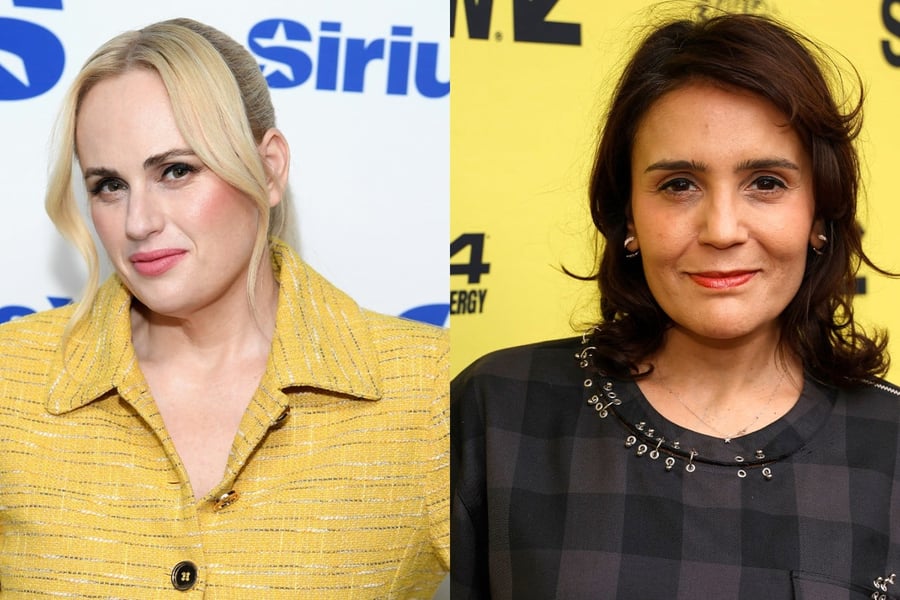
A Los Angeles judge said Tuesday he would grant Amanda Ghost’s request to sharply narrow the breach of contract lawsuit filed by Rebel Wilson in their messy legal war over their movie The Deb. The judge struck sweeping allegations about Ghost and her past conduct from the complaint, whittling the case down to lesser claims against other defendants linked to the comedic film, which Wilson directed.
The ruling from the bench marked a significant procedural victory for Ghost, the chief executive of AI Film, which produced The Deb. It also came a week after the same judge gave Ghost’s lawyers a green light to take a deposition and subpoena documents related to two alleged “smear” websites targeting Ghost. In court filings, Ghost’s lawyers alleged the sites were commissioned on behalf of Wilson by the same crisis management firm embroiled in Blake Lively’s legal war with Justin Baldoni.
At Tuesday’s hearing in Superior Court, Judge Thomas Long said he would remove several pages of Wilson’s complaint that accused Ghost of a long history of “seedy practices and unethical behavior.” He said the claims, including the allegation that Ghost stole partial ownership of the James Blunt song “You’re Beautiful,” were irrelevant to the core issues in the case.
“That’s not the kind of stuff I would be letting in at trial,” Judge Long said. “We do not have time to say, ‘Let’s go back to the beginning of time, when this person first started their career.’” He called the allegations “debris that just obscures the real issues in the case.”
The judge also said he was granting Ghost’s request to be dismissed from all but one of the causes of action naming her as an individual defendant. (She did not ask to be dismissed from the cause of action where Wilson claimed intentional infliction of emotional distress.)
While the judge said he would grant Ghost’s demurrer, he didn’t immediately rule on whether he would give Wilson one more bite at the apple, meaning another chance to file yet another amended complaint. He took that matter under submission, promising a final ruling soon. Either way, the lawsuit would proceed on Wilson’s breach of contract and fair dealing claims against AI Film.
The wild legal battle between the women has been unfolding publicly since Wilson jumped on Instagram in July 2024 and accused Ghost of “inappropriate behavior” towards Charlotte MacInnes, the lead actress of The Deb, and “embezzling funds from the film’s budget.” She also said Ghost was trying to bury her directorial debut. Ghost denied the accusations and sued Wilson for defamation, claiming the actress-director was lashing out because she didn’t get a writing credit on The Deb. Three months later, Wilson filed her contract lawsuit in the form of a cross-complaint.
Love Music?
Get your daily dose of everything happening in Australian/New Zealand music and globally.

In her cross-complaint, Wilson claimed that Ghost forced MacInnes to live with her during production and then pressured her to take a shower and bath together. In a sworn declaration filed in November, MacInnes disputed that account, describing the incident as a nonsexual response to a medical episode after the two women went swimming.
“Ms. Ghost and I went swimming in the ocean near the apartment, and the cold water caused Ms. Ghost to have a medical reaction. I helped Ms. Ghost by bringing her back to the apartment and running a warm shower and bath to warm her back up. We both remained in our bathing suits, since we had been swimming in the ocean,” she wrote, adding that a third woman was present and brought them a warm drink. “There was nothing sexual or inappropriate about the incident whatsoever. It was a medical situation.”
At Tuesday’s hearing, Judge Long said he was striking a litany of allegations from Wilson’s lawsuit, including the Blunt allegation and the claim that Ghost engaged in drug use and erratic behavior while serving as president of Epic Records from 2009 to 2010. He also struck a claim that Ghost groomed young women before “peddling them to the ultra-wealthy.” Ghost’s lawyers had described the claims as a “smear campaign” and “pure fantasy.”
Wilson’s lawyer, Melody A. Kramer, said that if permitted to amend the contract complaint, her client would add new allegations supporting her claims that Ghost should be held personally liable for violating their purported agreements. The lawyer said Ghost was present at a 2022 meeting at the Hotel Bel-Air where representations were made about their plans for The Deb. Under questioning from the judge, Kramer said those promises included the prospect of Wilson receiving her own record label under Warner Music and the ability to release soundtracks and sign artists.
At a separate hearing last week, Judge Long handed Ghost another procedural win, saying she could conduct limited discovery related to her follow-up defamation lawsuit over two websites critical of her, including one titled amandaghostsucks.com. Ghost has alleged that Wilson helped orchestrate the sites with the assistance of TAG PR, a crisis management firm. Wilson denies any involvement.
Judge Long rejected Wilson’s request to halt discovery under California’s anti-SLAPP statute, finding “good cause” to allow a limited deposition of former TAG PR employee Katie Case and the subpoena of documents allegedly referencing the websites. Ghost’s lawyers say one document titled “Amanda Ghost Website.docx” was mentioned in communications between TAG PR founder Melissa Nathan and Case that surfaced in Lively’s lawsuit against Baldoni in New York.
“So basically Rebel wants a one of those sites … Should be a mixture of that document that I think Carolina pulled about Amanda … or the intern pulled … It can be really really harsh … Russian oligarchs and making her a madam basically lol,” Nathan allegedly wrote in August 2024 texts to Case. (In the Lively litigation, TAG PR is accused of helping Baldoni with an alleged smear campaign.) The purported “smear” websites targeting Ghost included the claim Ghost was rumored to be known as the “Indian Ghislaine Maxwell,” her lawsuit said.
He gave Ghost’s lawyers 90 days to conduct the discovery before deciding whether the defamation case may proceed. A hearing is scheduled for May 5.
From Rolling Stone US

