





























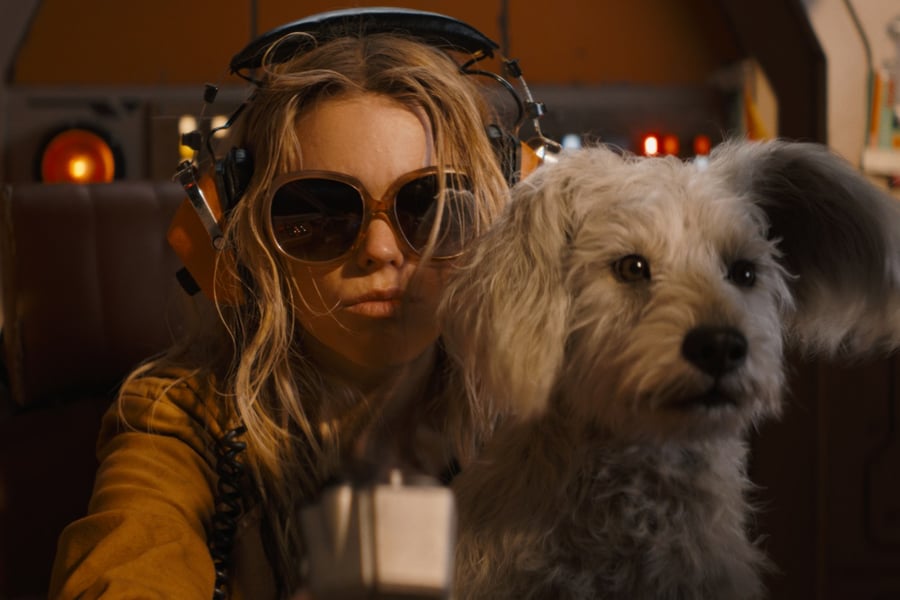
There’s no getting around it: Supergirl “didn’t meet our box-office expectations,” as DC Studios co-CEO Peter Safran told The New York Times. Nevertheless, the film sparked more than its share of discourse, and one of the most-discussed moments — along with an eyebrow-raising needle drop — is the ending. Supergirl’s actions toward the villainous Krem at the end (which, fair warning, will be spoiled in the interview that follows) were a major change from Woman of Tomorrow, the comic-book miniseries that inspired the film. Three days before the movie’s release, Rolling Stone spoke to director Craig Gillespie and screenwriter Ana Nogueira about their choices.
Craig, you were saying you always loved the ending of the script, where Supergirl kills Krem.
Gillespie: I thought it was incredibly emotionally satisfying. She’s gone on this very messy journey of self-discovery and dealing with trauma, and it just felt honest for her to do that. I think anything else would’ve felt like a betrayal of her character to me.
In the comic, Krem is just sent to the Phantom Zone.
Nogueira: Yes.
Gillespie: But then Ruthye kills him, right? Which is a not dissimilar kind of energy. [Tom King, who wrote “Woman of Tomorrow,” has clarified that while an aged Ruthye strikes Krem with her cane after he emerges from the Phantom Zone, he and artist Bilquis Evely didn’t intend readers to think Krem dies.]
So Ana, was it in your first draft that you made Supergirl do it? How did that come about?
Nogueira: No, that was in my pitch. It’s never changed. I couldn’t find my way in for a while, ’cause I knew we couldn’t jump forward however many years. And I also found the book’s ending quite dark in a different way. That he’s — first of all, that Ruthye’s held on to it for that long. Which is tragic to me in a different way. And also that Krem is repentant before she kills him. It’s really dark. Which is not bad, but it’s different-dark. So I was like, “What is gonna be satisfying with this guy?” And like Craig said, it wouldn’t feel honest really for him to die by accident, and I didn’t know what to do.
And then, because writing is a mystery, you don’t know what you’re gonna do, you don’t know where you go. You can’t find your way into the story, and then something hits you. And I remember being hit by the lines, “This is for my dog, and this is for what you did to that little girl.” And I was like, “Oh, I know. Oh, I know what happens.” I know what she does, and I know how she does it. And before going into my pitch, I knew James was open to this happening. So I wasn’t totally being like, “And now I’m going to break the whole universe with this pitch.” But, yeah, as Craig said, it felt true. It felt satisfying. It felt like anything else would just not be who this woman is.
It draws a line between them — this Superman wouldn’t do that, but this Supergirl would.
Gillespie: Which is what I love about it. They’re almost polar opposites in that way, in how they approach the world and how they see the world. Which I think will make it really interesting as they move forward. I feel like her story’s far from complete in terms of her emotional journey. The thing I did love about that ending — and it was always in there, and of course, as you start shooting, murmurs come up. And not from James [Gunn] and Peter [Safran], but murmurs come up of “Should we have a backup?” in case we’re in a test screening and the audience is just, “What the?” And James was just like, “No.” So we’re in Iceland shooting this thing, and I turned to Peter, I’m like, “Are we talking about a backup at all?” He’s like, “Nope.” He said, “We’re good.” And I’m like, “Great.” I wasn’t gonna push it.
Love Music?
Get your daily dose of everything happening in Australian/New Zealand music and globally.

Nogueira: No, totally. There was just this feeling of, “If this is what we’re doing, let’s do it.” And we have found — look, everyone has opinions. But I think people are generally satisfied when she does it.
Gillespie: It is an interesting thing because it’s a very complicated moment. Pete at one point was like, “I feel like people should be cheering.” And I’m like, “I don’t know how you can cheer in this moment.” She’s lost a part of herself here. She’s taking on this burden. It’s not that straightforward.
Nogueira: Correct. I think that’s exactly right.
She’s also protecting Ruthye’s innocence by doing it herself.
Gillespie: And carrying this burden. So it’s not necessarily a cheering moment.
Nogueira: No. You know that this will affect her. But that she’s willing to sort of move forward with that. But, no, I don’t think it is a cheering moment. I think it’s hopefully surprising and satisfying and sad. For her, not for him.
Another spoiler-y note: the same poison Krem uses on Krypto — what’s the story logic behind how it can affect Supergirl when she has her powers?
Nogueira: We feel it affects her somewhat. That was something that James [Gunn] said to me early on also, was power-set stuff. Which is, we’re taking them back a little bit. Superman at the top of the Superman movie is bleeding. He just got his ass kicked. Which, you don’t normally see that, and he has to actively heal. And so there was this thing throughout of she can get — these things can affect her.
Craig Gillespie: She can be compromised.
Nogueira: She can be compromised, exactly. It’s not gonna do to her what it does to Krypto necessarily, but it’s not like that version of these characters that are so invincible. I think it’s helpful for storytelling, too.
Gillespie: Typically, that poison would completely immobilise somebody. So she can still fight, but she’s being compromised and having difficulty maybe with balance and vision and flying out the window and smashing through things and Ruthye asking if she’s drunk.
From Rolling Stone US

