



























New Zealand Cinema Wouldn’t Be the Same Without Sam Neill
From 'Sleeping Dogs' to 'Cinema of Unease' to 'Hunt for the Wilderpeople', Sam Neill changed New Zealand cinema forever

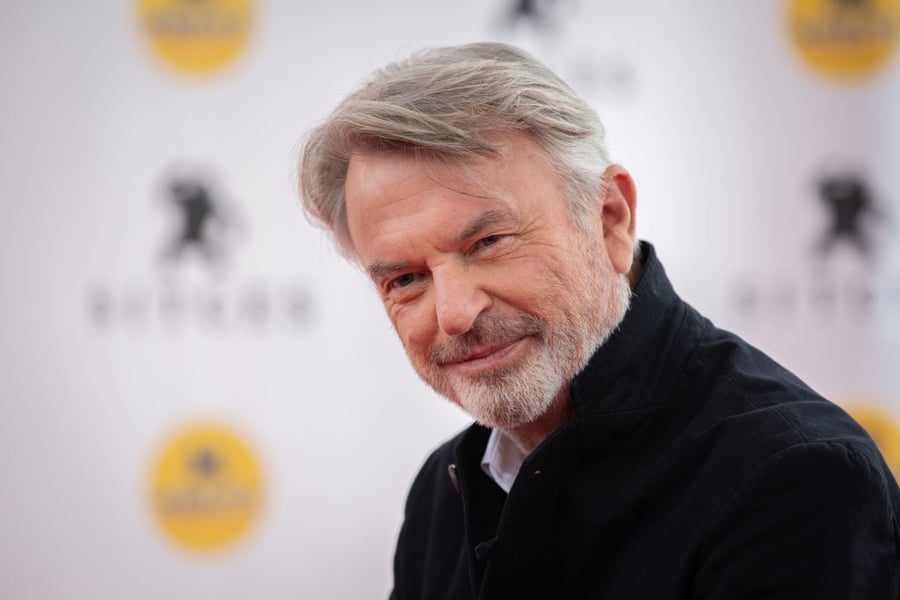
It’s not inconceivable, nor inconsiderate, to say that Sam Neill changed New Zealand cinema forever.
As the late, great actor himself said, New Zealand film was “the funniest idea” in the early ’70s. The notion of this country having a national cinema to showcase to the rest of the world back in those days, he told The Guardian in a 2016 interview, was “the stupidest, most ridiculous thing you could possibly consider.”
At the time of his passing this week at the age of 78, after a glittering six-decade career that took in Hollywood blockbusters and just as many meaningfully homegrown films, New Zealand cinema now has a global reputation, one which Neill helped to forge more than any other actor.
He spoke to The Guardian 10 years ago for — what else? — Hunt for the Wilderpeople, Taika Waititi’s quintessentially Kiwi classic which took its “skux” stars all the way to Sundance. In the Wellington-born Waititi, Neill, who moved to this country from Northern Ireland with his family aged 7, found a filmmaking partner who equally believed in the uniqueness of the New Zealand people.
Hunt for the Wilderpeople was based on a book by New Zealand comic author Barry Crump, who wrote about his experiences as a “bushman.”
“I grew up with his books – we all did,” Neill said. “So the idea of that kind of blend of cool, strange New Zealand comedy, which is like nothing else on the planet, with the old-school, rough-and-ready stuff that Barry Crump represents – that was fairly irresistible.”
He was blown away by the local reaction to Waititi’s fourth film.
Love Music?
Get your daily dose of everything happening in Australian/New Zealand music and globally.

Where he once recalled an audience scoffing when his first short film was shown at the 1974 New Zealand Film Festival (“For fuck’s sake. It’s a New Zealand movie!” Neill alleged one frightened audience member yelled out at the screening), he was now starring in a film that achieved the biggest opening weekend ever for a local feature; you’d be hard-pressed to find a Kiwi today, even in the quietest of country towns, who hasn’t seen Hunt for the Wilderpeople at least once.
“‘Hunt for the Wilderpeople’ brought me back home and put a smile smack bang where it was needed. Go see it. Kiwis aren’t clapping at the end of the movie for no reason,” Stuff‘s touching review concluded.
Alongside Rhys Darby and Jemaine Clement and Bret McKenzie, aka the Flight of the Conchords, Waititi was part of, according to Neill, the “school of cool,” and he wanted to feed off their energy while entering the twilight of his career at 68. His career didn’t need revitalising in 2016, but Hunt for the Wilderpeople was nevertheless a deep reminder of how formidable he was as an actor.
“Dennison, Waititi and Neill find depth within the characters, as small moments become the foundation for the film’s emotion. They don’t play the coming-of-age arc, they play the reality of each scene. It may sound obvious, but so many films like ‘Hunt for the Wilderpeople’ try to play the emotion instead of grounding it in character,” RogerEbert.com‘s review praised.
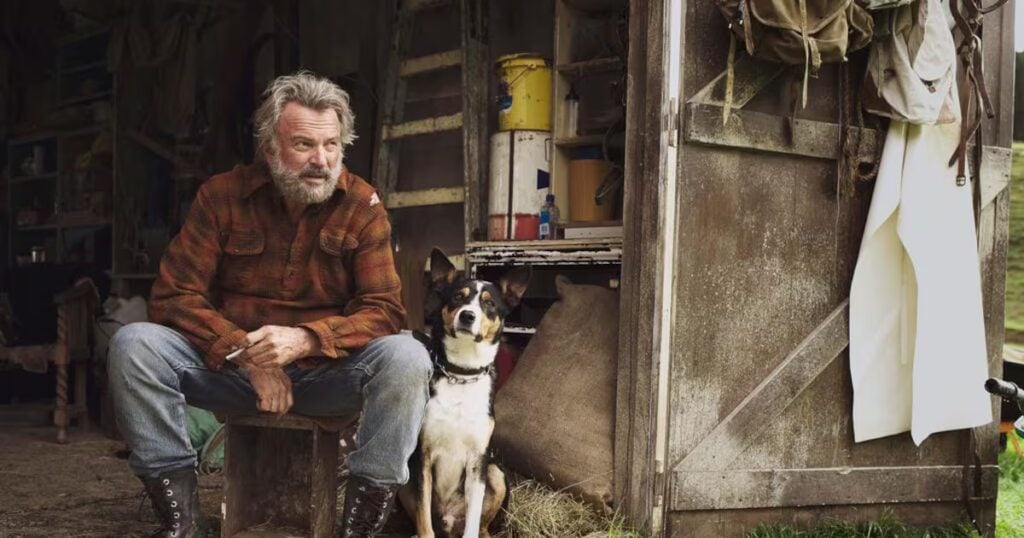
Image: Neill in Hunt for the Wilderpeople Credit: The Orchard
One of Neill’s great gifts as an actor was always his generosity. Just shy of two decades before he became the perfect onscreen partner for Dennison in Hunt for the Wilderpeople, he was a striking supporting player in another fundamental New Zealand film, Jane Campion’s The Piano (1993).
Neill’s quotes on that film are poignant. “It sits on my funny old CV like a medal on my chest. It wasn’t my film. It was Jane Campion’s. I wasn’t the star of the film. That was Holly Hunter,” he said in his 2022 memoir. “But there is honour to be found in the second fiddle. Or fourth. No one notices you much, you don’t get nominated for things. But you served.
“I was there in an important feminist film. I was there on the front line in an important New Zealand film. Neither of these labels does the film justice. It’s a work of art. And look, that tiny little figure in the fabric — see down there on the right — that’s me. It’s a film that will always have a place in cinema history. And I served in it.”
After studying at Canterbury University, where he harboured acting ambitions, Neill joined New Zealand’s government-owned National Film Unit, where he would spend six years learning all about documentary production.
Actor Sam Neill sitting in front of his editing machine at the National Film Unit, Miramar, Wellington, 1977. Digital NZhttps://t.co/g7kbgT4l4S pic.twitter.com/fBJrWquJT8
— Early Aotearoa New Zealand (@ZealandEarly) July 13, 2026
His feature film debut, Landfall (1975), helmed by his colleague Paul Maunder, was rarely shown in their home country but still won a major award at the Pacific and Asian Film Festival in Shiraz. His breakout performance came two years later with Sleeping Dogs, a capital-S seminal release in New Zealand cinema which proved Neill’s ability to lead a film.
In typically Kiwi fashion, Sleeping Dogs was doggedly DIY, director Roger Donaldson — who, like Neill, became a defining figure in New Zealand cinema afterwards — giving the cast and crew a two-day break in the middle of shooting as he hastily made a TV advert to ensure continuous funding.
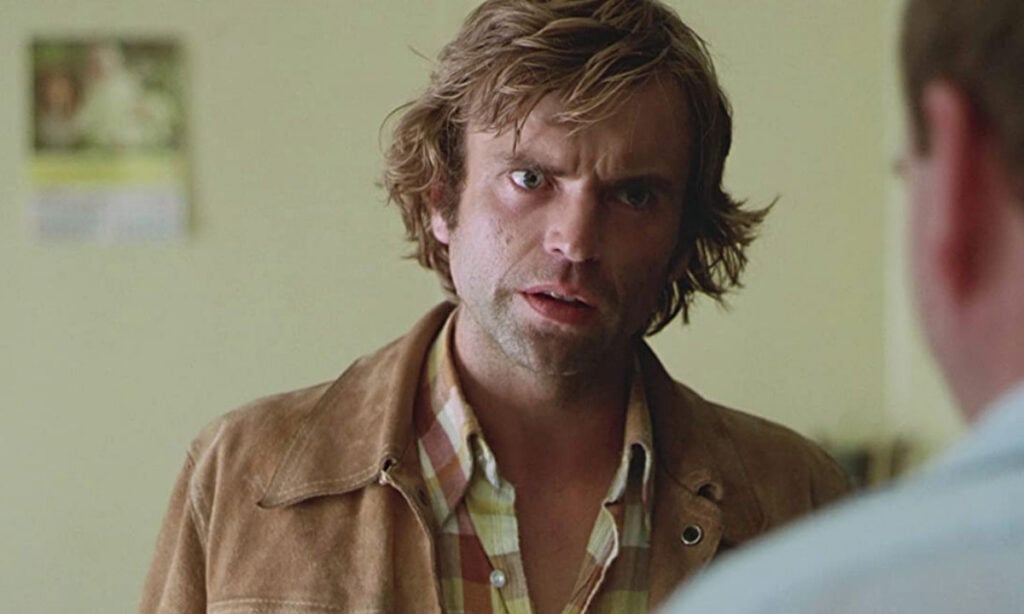
Image: Neill in Sleeping Dogs Credit: NZ Film Society
Neill took a break from New Zealand productions for more than 14 years, returning home to shoot The Rainbow Warrior, a made-for-TV drama, and The Piano in the early ’90s. But while much of his career heyday was spent lending his significant talent to mostly Australian productions and European films, New Zealand was never far from his mind.
His time at the National Film Unit came in handy when he was tasked by the British Film Institute (BFI) to make a personal documentary about New Zealand film as part of a series of international documentaries marking 100 years of cinema. The result was Cinema of Unease (1995), co-directed by Neill and Judy Rymer, which remains one of the outstanding cinematic portraits of this country’s cinema.
Cinema of Unease was well-received overseas. The New York Times‘ critic Janet Maslin hailed the film, which screened as part of the prestigious Cannes Film Festival in 1995, as “a highlight” of the BFI’s series, writing that “[n]ot much about Sam Neill’s ordinary leading-man roles (in films like ‘Jurassic Park’) and even his better ones (in ‘The Piano’ and ‘My Brilliant Career’) is preparation for his tart, perceptive directorial voice in a very good film of his own.” It
Neill’s documentary received a comparatively lukewarm reception in New Zealand — perhaps because Neill’s documentarian eye proved to be so forensic, contending with the titular sense of dark ‘unease’ he felt lurked at the heart of many local productions, or perhaps because he was no longer based in New Zealand at the time of production — but Cinema of Unease was still awarded Best Documentary at the 1996 NZ Film and Television Awards.
Neill kept acting right into his ’70s.
The fervent words of his many admirers in tributes this week speak to a man whose work ethic and gravitas made him, in his own unshowy manner, one of the best actors of his generation.
“The last time I saw him I took the opportunity to tell him he was an inspiration to me,” Russell Crowe revealed on social media. “He was charming, kind, funny, and intelligent. He will be greatly missed, and my heart goes out to his family,” Nicole Kidman said. “Aside from being an international all-round legend. Sam was the kindest, cheekiest, most generous and supportive friend going around . A great man! A great loss!” David Wenham posted.
The Australians often liked to claim Neill as one of their own, an “honorary Aussie,” but unlike Crowded House, where the delineating lines between New Zealand and Australia are often murky in the public imagination, Neill has always been a proud Kiwi, first and foremost, taking any opportunity to praise home in interviews.
He founded a winery, Two Paddocks, in Otago, in the ’90s, in a region where he spent many happy holidays as a child. “I think a lot of people’s idea of paradise is the place they used to go to for holidays and when you’re lucky enough to end up living there you kind of fulfil a childhood dream,” he once told news.com.au.
And when a mining company threatened to open a controversial goldmine nearby, Neill famously joined the fight to stop a controversial goldmine from opening up nearby.
“My family has been here for over 150 years. I’m connected to this land like nowhere else on earth,” he said. “It’s perfect for wine. It’s great for tourism. And it’s one of the most beautiful and strange, remote places in the world. I’m not against mining. I’m against this mine. If this mine goes ahead – and God willing it won’t – everything that you see [there] is under a claim [by the mining company]. And there will be mining all around us, and that’ll be the end.”
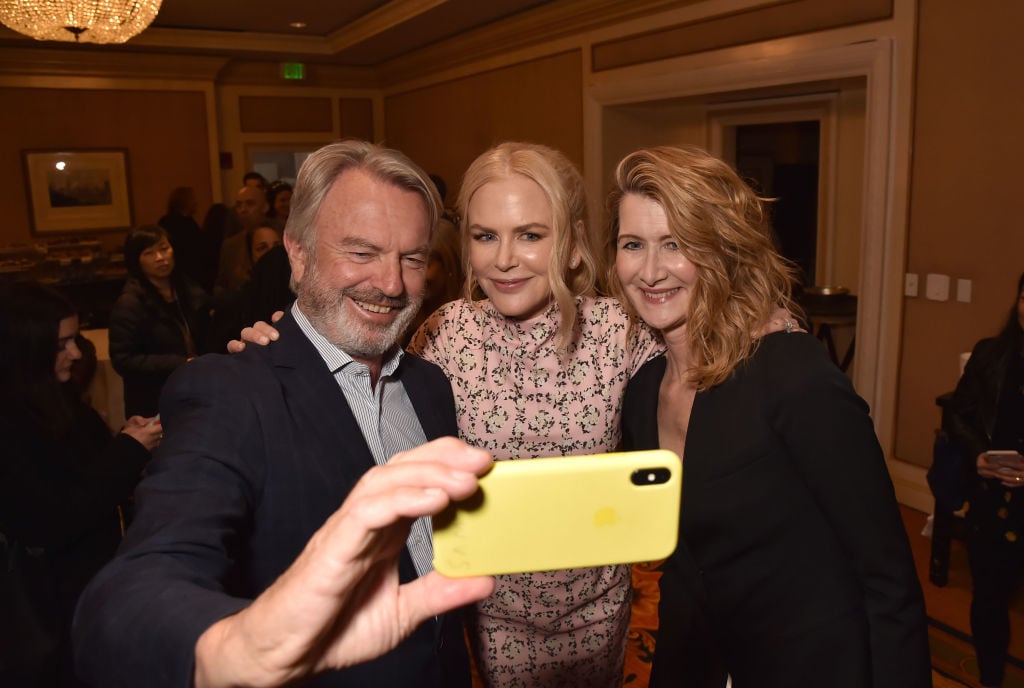
Image (L-R): Sam Neill, Nicole Kidman and Laura Dern Credit: Jeff Kravitz/FilmMagic for HBO
“It wasn’t something I expected or went after. There was no precedent, there was no one from New Zealand that had had a screen career before me. It wasn’t something anyone had thought about,” he humbly reflected in conversation with Metro Mag in 2016. “When I left New Zealand, I was like a message in a bottle. I threw myself off the cliff and who knew where I’d end up.”
Neill’s passing comes a few weeks ahead of the 2026 edition of the New Zealand International Film Festival (NZIFF), and the strength of this year’s local slate is the finest tribute to Neill’s legacy I can imagine.
There are documentaries about the great people of this country (Lomu, a film about All Black legend Jonah Lomu); there are the type of quirky, offbeat comedies that Kiwis seem to make better than anyone else (Mum, I’m Alien Pregnant, the work of uproarious filmmaking duo THUNDERLIPS); there are arthouse features that don’t shy away from the woes currently ailing this country (Conor Bowden’s The Ungrateful Tenant, a silent comedy-horror about “disastrous flatting situations”); and so much more.
Even outside of NZIFF, this past year has seen The Weed Eaters enter cult-favourite territory and gothic-horror Mārama impress critics and audiences alike abroad.
New Zealand cinema is currently in such a strong state, certainly in terms of the talent both in front of and behind the camera, because its actors and directors aren’t trying to be something else — they’re trying to be themselves. “I think New Zealanders will take it to heart. Because it’s about us,” as Neill once said about Hunt for the Wilderpeople.
Thanks for everything, Sam.

