





























Perth Festival once again transformed the city into a north star of music and storytelling. Across theatres, galleries and unlikely spaces, this year’s program leaned into themes of connection – between cultures, communities, and personal histories.
For 70 years, the festival has been celebrating Perth, its people, and its culture. Helmed by Artistic Director Anna Reece, it takes risks, pushes boundaries and strives to reflect the wonderful and complicated world we live in.
Here are my highlights.
Mama Kin Spender
Mama Kin Spender’s Promises & Wild Beasts performance was so much more than a gig. Marking their theatrical debut, the evening unfolded as a poetic story of love, separation and finding your way back again, told through their 2025 ARIA-nominated album Promises and beyond. The concept record – which they performed a Rolling Stone AU/NZ In My Room session for last year – explores love’s optimism, decay, rampage and transformation.
Backed by five stunning singers, the duo – Mama Kin (Danielle Caruana) and Dingo Spender – personified love itself, adding a deeply intimate layer to the performance.
At one point, the intensity reached a literal breaking point when Dingo’s guitar string snapped mid-song – though he kept his cool and the momentum never faltered. The finale brought nearly 30 additional choir members onstage, swelling the closing songs – “We Are the Water”, “Dance With Me”, and “A Love That Will Not Die” – into something transcendent, transforming the room into a moment of communal celebration.
Love Music?
Get your daily dose of everything happening in Australian/New Zealand music and globally.
View this post on Instagram

Annahstasia
Annahstasia’s stripped-back acoustic set proved the perfect way to wrap up my time at Perth Festival. Her debut album Tether (2025) is a record born of patience – something that felt beautifully reflected in the stillness of her performance.
Performing in the warm acoustics of Perth Town Hall, which transformed into The Embassy, the evening unfolded with comfortable silences and easy conversation between songs, allowing her uniquely rich, raspy voice to take centre stage. While I only caught the final stretch of her set, she moved effortlessly between stillness and swelling emotion, each song leaving me with goosebumps.
Blak Out – Baker Boy with Snotty Nose Rez Kids, MĀ & 2LUBLY
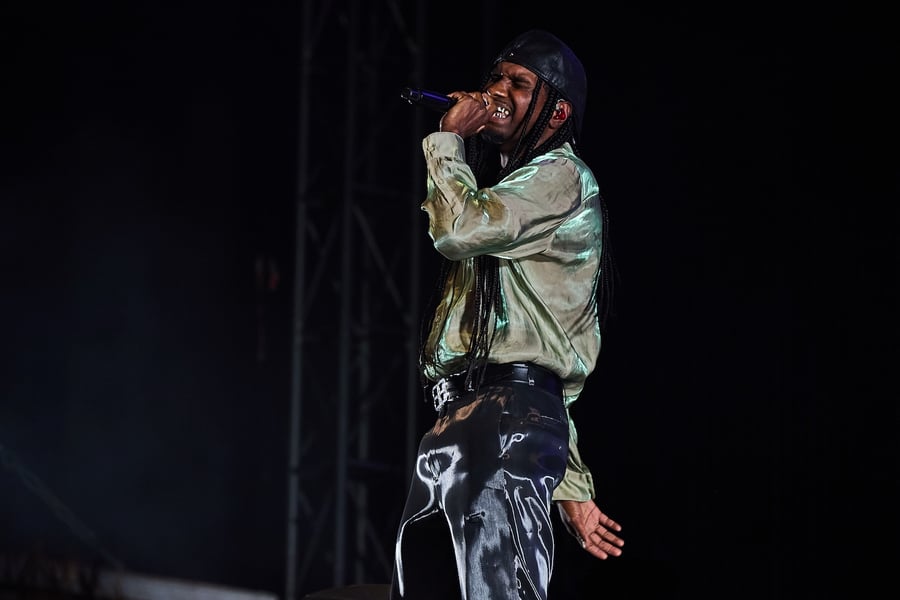
Baker Boy – the proud Yolŋu rapper, dancer and five-time ARIA Award winner – returned to Perth for the first time since 2022 as part of Blak Out, a celebration of First Nations music from around the world.
Performing many tracks from his acclaimed 2025 album DJANDJAY – which he gave us a track-by-track breakdown of last year – the energy was off the charts. Taking over the East Perth Power Station (a venue otherwise dormant year-round) he commanded the 1,000-strong crowd with explosive energy and effortless confidence.
He was joined by Snotty Nose Rez Kids, the duo of Yung Trybez and Young D from the Haisla Nation in British Columbia. Their blistering trap beats and sharp lyricism paid homage to their upbringing while tackling broader themes of Indigenous identity, politics and resistance, making them the perfect support.
The night also featured a set from Māori musician and artist MĀ, who won over the crowd with a distinct blend of rap and neo-soul, alongside DJ sets from 2LUBLY.
View this post on Instagram
Haribo Kimchi
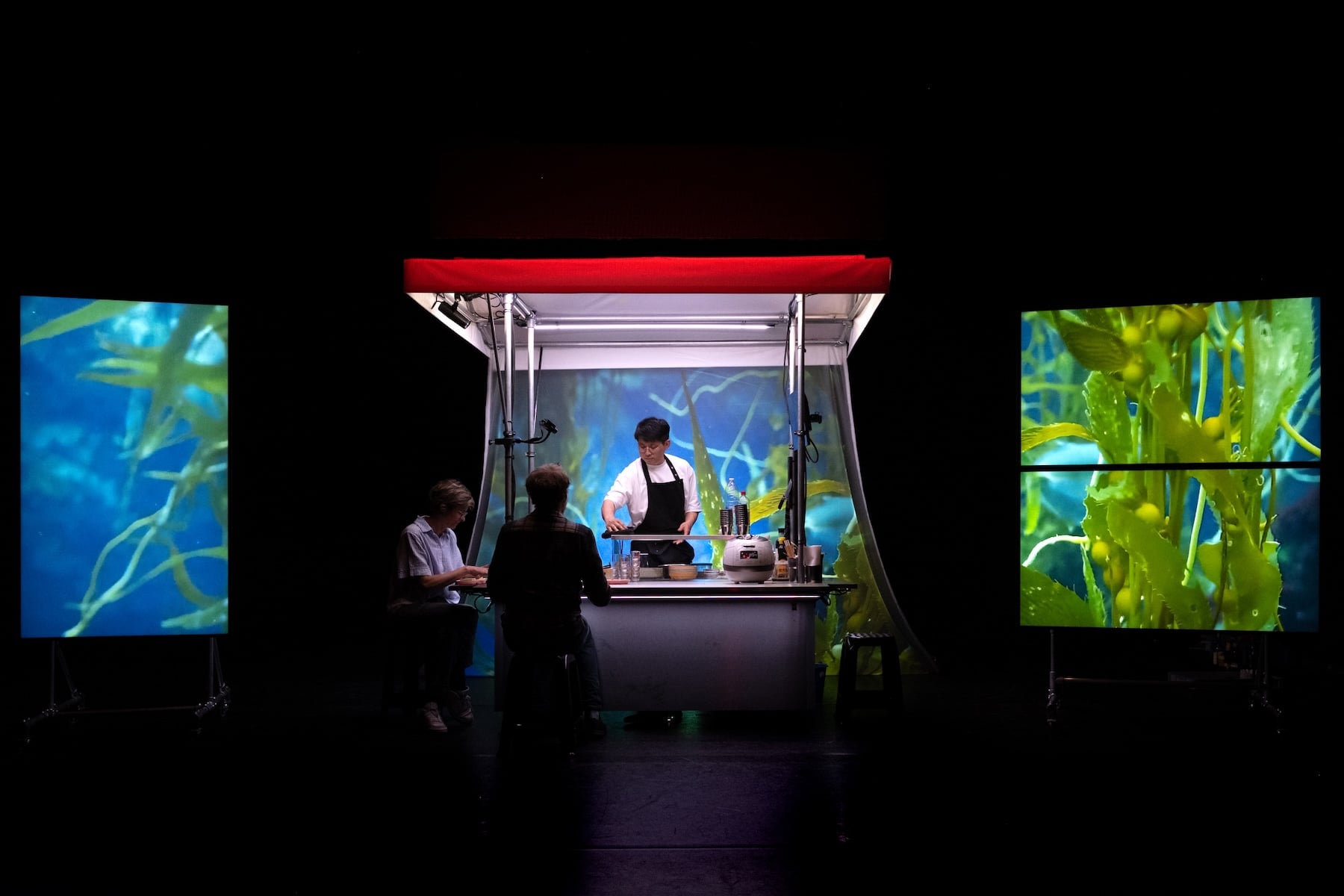
Jaha Koo’s Haribo Kimchi was one of the festival’s most inventive works. Through a series of intimate, often absurd anecdotes, Koo explored alienation, identity and the experience of navigating racism while searching for belonging.
Drawing on his life in South Korea before moving to Germany, the performance threaded together stories involving gummy bears, snails, eels and train journeys – each strange vignette revealing something deeper about migration and cultural identity.
One line in particular stuck with me: “Routes are stronger than roots.” While Koo celebrated his South Korean heritage, he also embraced the idea that identity is fluid – allowing different versions of himself to co-exist. The result was something unexpectedly moving and bizarrely beautiful.
Birrundudu Drawings
To understand the Birrundudu Drawings, it helps to look back to 1945. Anthropologists Ronald and Catherine Berndt had travelled to Birrundudu Station – a vast cattle property on the border of Western Australia and the Northern Territory – to investigate labour conditions. Aboriginal men working on the station watched the Berndts sketching and documenting their findings, and soon began doing the same.
Over the course of three months, 16 men created an extraordinary collection of 810 crayon drawings depicting Country, ceremony, and the realities of station life.
At Perth Festival, more than 100 of these never-before-seen works were revealed in an exhibition marking the 50th anniversary of the Berndt Museum. Each drawing told its own story, accompanied by Ronald Berndt’s careful annotations attempting to interpret what he saw.
Representing one of the most significant bodies of historical imagery ever introduced into the Australian art world, the Birrundudu Drawings took my breath away. While I, a non-Indigenous Australian, won’t ever fully grasp the cultural significance of these works, their power and presence were undeniable.
View this post on Instagram
Rolling Stone AU/NZ travelled to Perth as a guest of Perth Festival.

