





























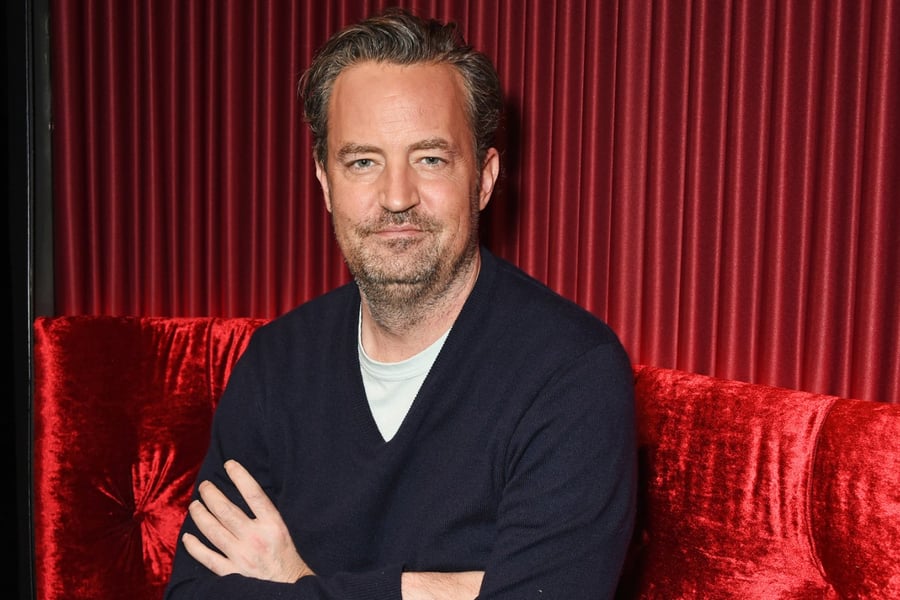
The Los Angeles drug dealer prosecutors dubbed the “Ketamine Queen” was sentenced to 15 years in prison on Wednesday for supplying the powerful dissociative anesthetic that killed actor Matthew Perry in his backyard jacuzzi two and a half years ago.
Jasveen Sangha had asked for a lenient sentence of time served, citing her lack of a prior criminal record and the 20 months she’s been locked up since her August 2024 arrest. But the judge agreed with prosecutors that she deserved one year more than the 14 years behind bars that federal probation officials recommended.
“I do find you were probably one of the most culpable in the series of defendants before this court,” Judge Sherilyn P. Garnett said from the bench. “This is not a reflection of you being a bad person [but] engaging in illegal conduct. … You’re going to have to show some epic resilience.”
The judge also ordered Sangha to serve three years of supervised release. She declined to let Sangha leave custody for a medical procedure and then self-surrender to prison.
Keith Morrison, Perry’s stepfather, delivered a victim impact statement describing Perry as a “funny and brilliant person” who carried “a lot of ghosts.” He said Perry repeatedly overcame addiction and, as his sitcom stardom receded, went on to become an acclaimed playwright and bestselling author.
“It’s a daily, grinding sadness and sorrow that we all feel. The loss isn’t just to us, it’s to everybody,” he said. “There was a spark to that man I have never seen anywhere else. He was one of a kind.”
Morrison then addressed Sangha directly. “I don’t hate you,” he said, looking over at the defense table, where Sangha was seated in a beige jail jumpsuit with shackles around her ankles. “Sometimes Matthew would think of [dealers] as his best friend, sometimes as his worst enemy. But the fact is, you supplied an addict.”
Love Music?
Get your daily dose of everything happening in Australian/New Zealand music and globally.

After the hearing, Morrison said he believed Sangha heard his message. “She was visibly emotional about it,” he said outside the courthouse in downtown Los Angeles. “You’d have to have a heart of stone to wake up every morning and make a business out of feeding off the addictions of vulnerable people who are desperate for drugs, and then, when you’re forced to, you know, confront what you’ve done, if you don’t feel some sense of shame or sorrow, you’re not even human. And she is clearly human. She is now facing her sentence. I think she’ll do fine in prison.”
In her own address to the court, Sangha said she had learned from her “poor decisions” and wanted to make amends. “I shattered people’s lives,” she said. “I wear my shame like a jacket.”
Sangha, 42, pleaded guilty to five federal criminal charges last September, admitting she supplied a large quantity of ketamine to Perry, including the fatal dose, and that she sold four vials of the drug to another man, Cody McLaury, in August 2019. McLaury died hours later from a mixed drug overdose with acute ketamine toxicity.
Perry, best known for his role on Friends, died on Oct. 28, 2023, from the acute effects of ketamine, his autopsy determined. He was 54 and had published his best-selling memoir a year earlier, publicly detailing his decades-long struggle with alcoholism and addiction.
According to her plea agreement, Sangha conspired with middleman Erik Fleming, 55, to sell the ketamine to Perry in October 2023. Sangha admitted she sold 51 vials that were delivered to Perry’s live-in personal assistant at the time, Kenneth Iwamasa. On the day of his death, Perry received at least three intramuscular injections of Sangha’s ketamine from Iwamasa, prosecutors said.
After learning that Perry died, Sangha called Fleming on Signal and updated the settings on her encrypted messaging apps to automatically wipe their messages. She also instructed Fleming to “delete all our messages,” forensic evidence revealed.
Fleming pleaded guilty on Aug. 8, 2024, to one count of conspiracy to distribute ketamine and one count of distributing ketamine resulting in death. He is scheduled to be sentenced on April 29. Iwamasa, who was the first to reach a plea agreement with prosecutors, pleaded guilty on Aug. 7, 2024, to one count of conspiracy to distribute ketamine resulting in death. He admitted that he repeatedly injected Perry despite having no medical training. He is scheduled to be sentenced on April 22.
The sprawling criminal case nabbed two medical doctors as well. They eventually pleaded guilty to selling large quantities of liquid ketamine to Perry in the weeks before he started buying from Sangha. Dr. Salvador Plasencia was sentenced to 30 months in prison last December, while Dr. Mark Chavez was given eight months of home detention and three years of supervised release.
Last month, Slash’s ex-wife Perla Hudson wrote a letter to the court, defending Sangha as a “selfless” person who deserved mercy. She said their friendship dated back to 2012, and Sangha frequently attended her son’s birthday parties and other family events.
“Over the years she has become like a younger sister to me and a beloved ‘fairy godmother’ to my sons,” Hudson wrote in her letter to the court. “When I went through my divorce, one of the most difficult times of my life, Jasveen was a constant and loyal friend.”
When she pleaded guilty last year, Sangha admitted she packaged her liquid ketamine in unmarked glass vials that did not indicate its strength. Before her sentencing, Sangha’s lawyers contested the quantity of drugs seized from her apartment. They argued that investigators tested only 27 pills out of more than three pounds of suspected methamphetamine.
“The court should not attribute the full seizure weight to methamphetamine without evidence showing that the sample reliably supports that conclusion,” her lawyer, Alexandra Kazarian, wrote in a sentencing memo. She said the record didn’t explain how the 27 pills were selected or whether the larger batch was uniform, undermining the “extrapolation” used to calculate Sangha’s sentencing range.
Kazarian and her co-counsel, Mark Geragos, also challenged the fairness of adding an enhancement to Sangha’s charges for running a drug-involved premises when she already pleaded guilty to operating a stash house. While acknowledging that investigators found drugs, cash, packaging materials, a scale, and transactions tied to the apartment, they argued prosecutors had not proven that drug distribution was a primary use of the residence. The judge overruled the objection on Wednesday, noting that Sangha installed a lockbox outside where she would leave drugs for customers.
“Defendant’s sentencing position tries to rewrite history to paint defendant — not those who died ingesting her drugs — as the victim,” Assistant U.S. Attorneys Ian Yanniello and Haoxiaohan Cai wrote to the court. “But defendant is not a victim. She repeatedly sold dangerous drugs in high volume; she ran a stash house and directed others to help sell her drugs; she obstructed justice to conceal her actions; and she was fully aware that her drug dealing contributed to at least two deaths — yet kept selling the drugs to others.”
Prosecutors said their decision to test a sample of the thousands of “identical orange counterfeit” pills recovered from her apartment in March 2024 followed standard nationwide practice. They called it “meritless” to suggest they were required to test each of the 3,792 pills to support their conclusion that all contained methamphetamine. The judge agreed.
Prosecutors also argued that Sangha showed a striking lack of remorse during a recorded jail call on Christmas Day 2024. After an unidentified caller said, “We’re gonna sell those book rights,” Sangha responded, “Oh I know, the plan is in, the fucking trademark is going down,” according to a recent filing. Yanniello argued on Wednesday that “without a doubt, Ms. Sangha is the most culpable” in the case, adding, “She chose herself and profit.”
From Rolling Stone US

