



























Home Culture Culture Lists

The Biggest Gaming Trends of 2025

From the return of classic genres and iconography to the rejection of generative AI, these are movements that defined the year in gaming
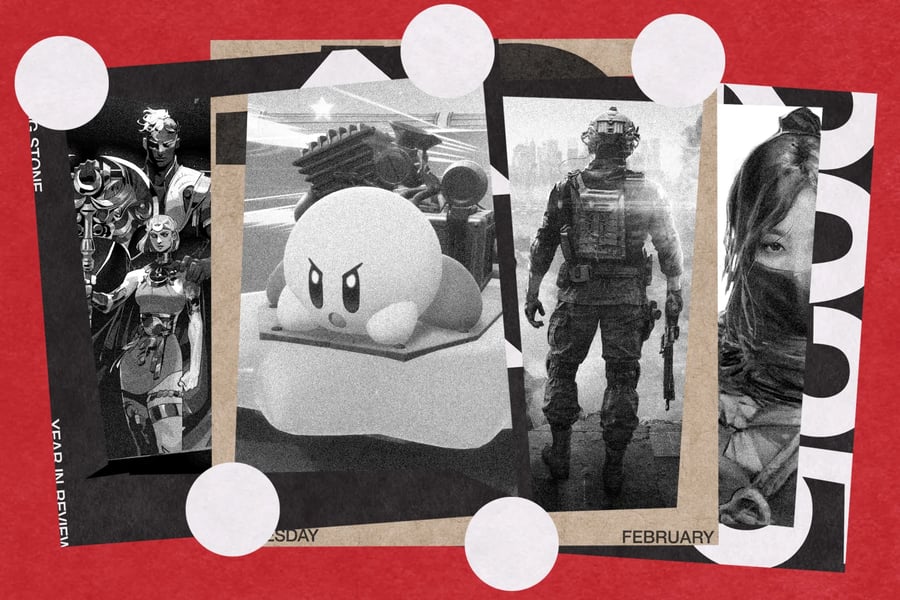
Photo illustration featuring video games

ILLUSTRATION BY MATTHEW COOLEY

Images in Illustration

Supergiant Games; Nintendo; Electronic Arts; Ubisoft

While 2025 was by no means a quiet year for gaming culture, it sure felt like it slipped by in relatively lissome fashion. As the page turns on the midpoint of this decade, much of what made headlines and filled the endlessly scrolling feeds amounted to more or less the same big issues and debates that have defined everything post-Covid; it’s all the bad stuff, but worse.

It’s been a year filled with industry layoffs and studio closures, major delays that rattled fans and release calendars alike, and the looming specter of generative AI as a development tool that has gamers turning on their favorite creators as ethical boundaries continue to fall.

And yet, things don’t feel quite as dire as they should. While the capitalist machine continues its march toward perpetual “enshittification,” studios big and small are working hard to maintain the joy that gaming should bring. This year saw the arrival of the next generation of Nintendo hardware with Switch 2, bringing with it a great lineup of ambitiously sugary-sweet games that seem almost surgically aimed at negating cynicism.

Mid-sized dev teams from across the globe reignited the appreciation for classic genres with a fresh twist, ushering in a new audience for everything from old school RPGs to narratively-driven episodic storytelling. And, without fail, it was another banner year for indie gaming, where complex puzzle experiences and lizard-brained action showed up hand-in-hand to champion personal artistic merit.

Some of the year’s biggest trends are more a matter of circumstance than anything intentional. Many big releases arrived in 2025 due to delays, or the necessity of timing with a new platform launch. Others aren’t the result of any real methodology imposed by designers or the industry — it’s just gamers doing what they do, making weird stuff fun as they play with or against the expectations of the virtual toys allotted to them. And from a developer perspective, years of anti-art sentiment and the ever-tightening constraints of the marketplace have pushed many to do their best work, pushing back against homogeny.

Love Music?

Get your daily dose of everything happening in Australian/New Zealand music and globally.

With that, these are some of the best trends from across the gaming industry and community that we’ve observed in 2025.

Ninjas Sneak Their Way Back Into the Zeitgeist

With pop culture being so cyclical, it’s only a matter of time before specific ideas and iconography slip back into the collective psyche. Some concepts never really die, merely retreading periodically until their next big flare up, like pirates, cowboys, and vampires. But one specific resurgence that defined 2025 was the return of ninjas, a beloved staple of schlock from the Seventies to early Nineties that haven’t been big in gaming since the early 2010s. Although FromSoftware’s Sekiro: Shadows Die Twice did a great job of rekindling the shinobi spirit back in 2019, this year saw a frankly ridiculous number of games centered on ninja action — to the point where it seems almost calculated.The trend kicked off in January with Ninja Gaiden II: Black, an enhanced remaster of the 2008 Xbox game, and continued in March with Ubisoft’s Assassins Creed Shadows, the long-running series’ first foray into a feudal Japanese setting. Originally slated for 2024 before an extended delay, Shadows was celebrated for its return to the stealthy mechanics of the earlier entries in the series — spearheaded by Naoe, one of two playable characters, who utilizes ninjutsu on her quest for revenge.By summer, the year of the ninja was in full swing with not one but two 2D side-scrollers based on classic properties: Ninja Gaiden: Ragebound and Shinobi: Art of Vengeance. While both games aim to modernize their respective franchises with slick action and sneakily improved systems that only appeared retro, their design choices couldn’t be more different. Ragebound employs a beautifully rendered pixel art style that evokes the Nineties while remaining fluid; Shinobi is a wonderfully hand-illustrated work that often resembles a painting come to life. Ragebound is also built on shorter, more contained levels that emphasize precision and speed, while Shinobi offers greater exploration in its branching areas and more intensive combat.Lastly, Ninja Gaiden 4 delivered the first true sequel to the mainline series since 2012, bringing back the white-knuckle action the franchise is known for alongside its comedically gratuitous violence. Frankly, the trend could’ve been defined by the Ninja Gaiden series alone, with three games releasing in a single year, but we’re thankful that there was even more.

Kart Racers Are Cool Again

There was a time when just about every company had their own kart racing series. Popularized by Nintendo with the Mario Kart franchise in the Nineties (and improved by Diddy Kong Racing), the subgenre exploded for a while as everyone from Lego to Disney trotted out their own take on mascot-friendly vehicular action. PlayStation themselves took multiple swings, releasing Crash Team Racing (1999), Jak X: Combat Racing (2005), ModNation Racers (2010), and LittleBigPlanet Karting (2012) in a cross-generational effort to step on the podium owned by Mario.Eventually, the fad ended, leaving 2014’s Mario Kart 8 and its later deluxe Switch version to thrive as the default racer of its kind while companies like Nickelodeon filled out the bargain bins with its own middling efforts. But that changed in 2025 with an unexpectedly high volume of contenders vying for the crown of best modern kart racer.The obvious leader of the pack would be Nintendo’s own Mario Kart World, released as a launch title for Switch 2 in March. After years of coasting on Mario Kart 8’s knack for printing money, Nintendo kicked off its new generation with the biggest entry the franchise has ever seen, with an explorable open map filled with challenges and secrets, on top of chaotic 24-person multiplayer across its competitive modes. Some would argue that the developers played it safe, but the casual appeal of Mario Kart World is undeniable. For naysayers, 2025 ended up being a year where there were actual alternatives to the norm.Sonic Racing: CrossWorlds was an unexpected treat when it was released in September; the follow-up to 2019’s mediocre Team Sonic Racing is more than just competent — it’s pretty fantastic. Running on higher-end hardware like PS5 and Xbox Series X, the game is faster and better looking than Mario Kart World, and has an insane roster of paid DLC characters from franchises like Minecraft, Pac-Man, and Spongebob, with Mega Man, TMNT, and more on the horizon.The true dark horse of the genre in 2025 is Kirby Air Riders, which is so wildly different from the rest, Nintendo needed to release a series of videos warning players that the game isn’t just another flavor of Mario Kart. It’s basically Smash Bros. on wheels, and a wonderful throwback to an older era of game design.Also, there was Garfield Kart 2 – All You Can Drift, which has Garfield.

Cooperative Multiplayer Makes People Kinder Online

The last year has been particularly stellar for multiplayer gaming — of sorts. While 2024 saw some absolute catastrophes like complete implosion of PlayStation’s Concord, which went offline just two weeks after launching, there were some huge wins with a (rare) good Call of Duty entry and surprise hit Helldivers 2 helping popularize extraction shooters for casual audiences.This year, everyone’s been trying to replicate those successes, to divergent results. Sony once again dropped the ball with the extraction shooter Marathon, which was delayed indefinitely following the poor reception to its closed alpha playtest. Call of Duty was also back on its bullshit, following up the acclaimed Black Ops 6 with a more multiplayer-focused Black Ops 7, which has since failed to live up to fan expectations.But in the wake of big-ticket shooters, a kinder kind of cooperative gaming has filled the void for players looking to embrace the social experience. Two-player titles like EA’s Split Fiction and Lego Voyagers let friends and family team-up for story-driven puzzle adventures driven by couch co-op. An unofficial multiplayer mod for the intentionally frustrating physics game Baby Steps has also made a stir, allowing groups of bumbling manchildren to stumble around together with jelly legs.An online trend dubbed “friendslop” has seen numerous smaller scale games with lo-fi aesthetics like R.E.P.O. and Peak bringing players together online to work in tandem to complete some pretty grueling challenges. R.E.P.O. is a horror-tinged treasure collection game, while Peak sees users fighting to ascend mountains, desperately gripping each other’s arms to hang on. Both utilizes proximity chat, a feature that lets people speak to each other only when they’re physically close in virtual space, making terrified whispers or comforting words of “I’ve got you” more intimate than bombastic vox channel chat.Proximity chat also plays a huge role in the communal atmosphere fostered in one of the year’s biggest surprises, Embark Studios’ ARC Raiders — the one big extraction shooter to actually find traction in 2025. The third-person shooter sees squads of players (or solo explorers) canvassing the destroyed wastelands of Earth on salvage missions; it’s technically a PvPvE game (players vs. player vs. environment), meaning that anyone can kill each other out in the wild. But the community of ARC Raiders has developed into something surprisingly more benevolent, with competing players frequently choosing to live and let live, or guide newcomers rather than prey on them — at least, for a little while.

Retro Revivalism Counteracts Remake Culture

These days, remakes and remasters are a dime a dozen, and 2025 has been no different. Nintendo trotted out basic 1:1 re-releases of Donkey Country Kong Returns and the two Super Mario Galaxy games as marketing for upcoming projects; Bethesda shadow dropped a visually overhauled take on The Elder Scrolls IV: Oblivion that most people have already forgotten; and after years of playing coy, Konami finally resurrected the Metal Gear series with a zombified remake of Snake Eater that oversold its all-new offerings.But it wasn’t all a total bust. Trails in the Sky 1st Chapter showed the value of reintroducing games that were previously poorly localized in North America, giving a new lease on life to franchises that never got their due in the West. Square Enix gave a gorgeous pixel art overhaul to the first two Dragon Quest titles, as well as adding just enough to earn a Final Fantasy Tactics remake that feels even more politically impactful now than it did back in 1997.Outside of the deluge of remakes, the retro spirit bled through into all kinds of game design. Publishers like Dotemu went all in on old school platformers like Ninja Gaiden: Ragebound and beat ‘em ups like Marvel Cosmic Invasion, which evoke rosy memories of the coin-op era aesthetically and mechanically. Devolver Digital’s Ball x Pit made the Arkanoid-style arcade block-breaking feel into an obscenely good roguelike designed to soak up the hours well into the night. Even hyper specific mechanics and storytelling philosophies brought back the days of old, with Game of the Year contender Clair Obscur: Expedition 33 channeling the rhythmic parrying system from 1996’s Super Mario RPG and the somberness of Xbox’s Lost Odyssey.And although it’s no surprise to see Nintendo trading in nostalgia, the late year arrival of Kirby Air Riders pushed things further — placing a bet that audiences would dig a sequel to an obscure 2003 game that plays exactly the same (jank and all).

Human Artistry Rejects AI Slop

The biggest hot button issue across all areas of the entertainment industry these days is the use of generative AI — and it becomes even more complicated in gaming given how much is buried beneath the surface in coding. While the major corporations leaning into cost-cutting tools is entirely expected, the acceleration has led to blowback from fans and developers alike.Activision’s cultural stock took a hit when the already poorly received Black Ops 7 was outed as having AI generated assets. Two more big studios also waded into the mess, as Embark took flak for using the technology to create voice lines for this year’s breakout multiplayer game ARC Raiders — a practice that was subsequently defended by Arrowhead CEO, Shams Jorjani, who’s in charge of Helldivers 2, a game famous for championing human-driven community support.And while the usual suspects like Ubisoft go all-in on controversial technology, with games fully designed around generative AI, the pressures facing thousands of skilled workers and artists has led to push back. Speaking to GamesIndustry.biz, AdHoc Studio’s co-founder and Dispatch director, Nick Herman, didn’t mince words, saying, “AI feels like a production solution, not a creative one. Maybe it’s a creative one if you aren’t creative.”But it isn’t what developers are saying that matters most, it’s what they’re doing. Indie creators have already begun branding their games as “AI free” on digital storefronts, a trend that some filmmakers also want to see set in motion. And although anti-AI advocates might feel assuaged by the sentiment, perhaps the greatest comfort is seeing the swath of incredible games released throughout the year with a distinctly human touch.Action games like Absolum, Hades II, Hollow Knight: Silksong, and Shinobi: Art of Vengeance combine hand-drawn designs and digital rendering with stunning motion effects. First-person experiences like the dreamy Despelote or puzzle-mysteries Blue Prince and The Séance of Blake Manor wear their personalities on their sleeves with intimate detail. Even the big players like Xbox Game Studios have put their best foot forward with the stop-motion inspired visuals of South of Midnight, a AAA title whose humanity bleeds through in the tiniest minutiae of its world.While the future of generative AI in gaming remains unknown, 2025 has shown that there are many developers who aren’t willing to concede their artistry in the face of industry trends. For fans, it’s good news — the response to pressure might just lead to a whole new creative renaissance.

In This Article: Gaming, video games
