




























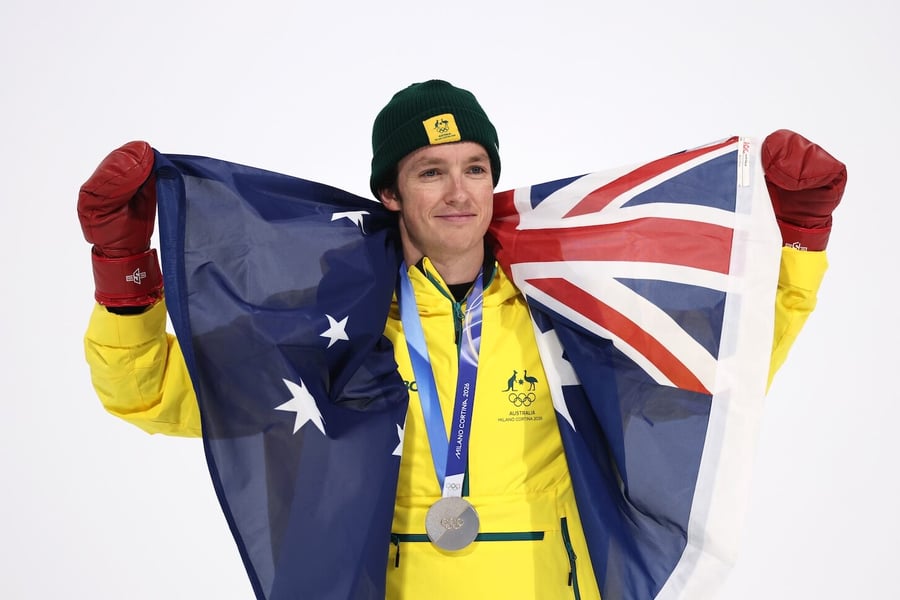
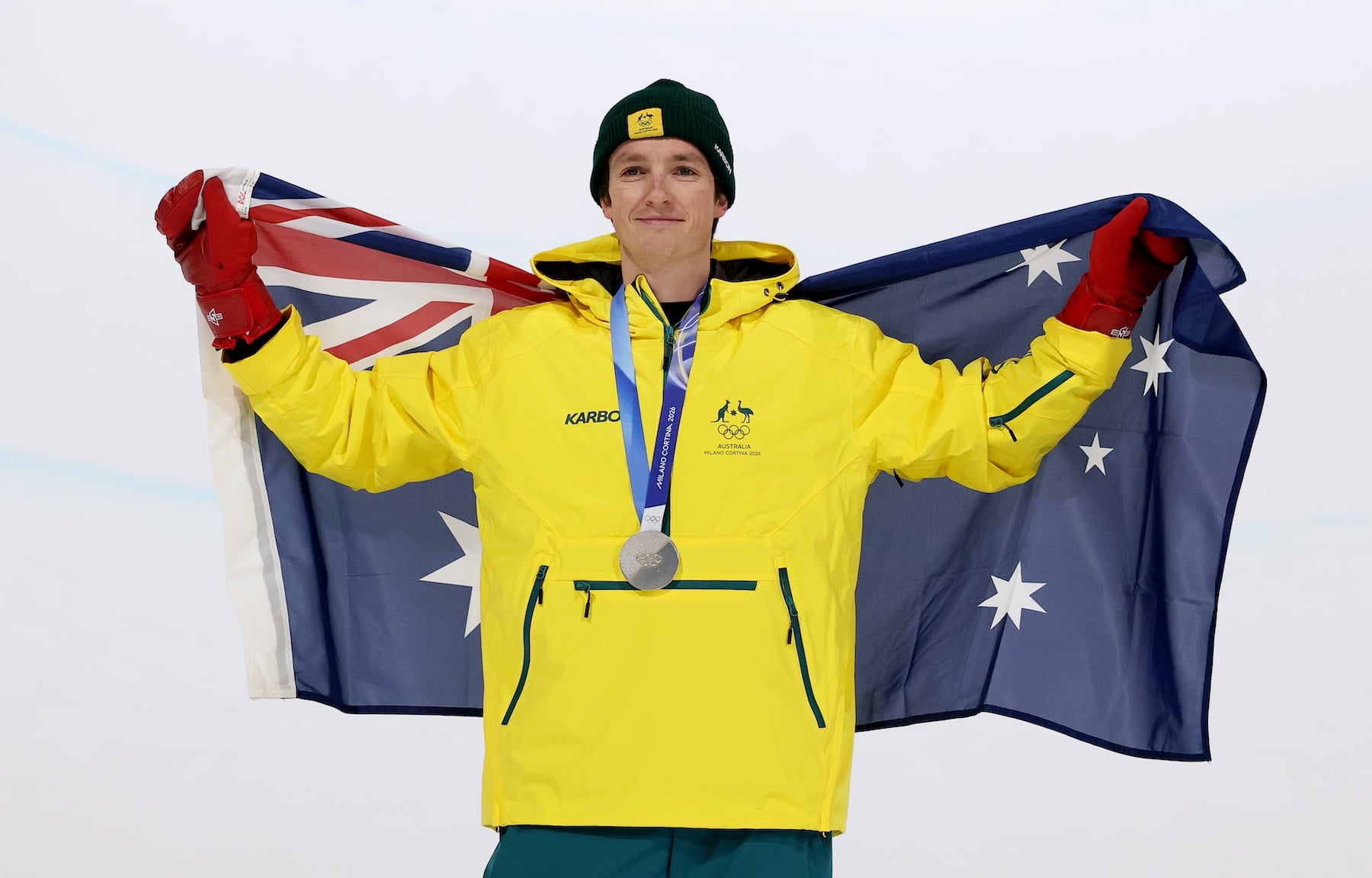
Scotty James doesn’t really need an introduction, but here it is anyway: he’s Australia’s most decorated Winter Olympian, a four-time world champion and an 11-time X Games medallist in halfpipe snowboarding. He also came agonisingly close to the top gong, taking Silver at this year’s Winter Olympics.
At this point in his career, though, James is looking well beyond the next podium. Olympic Gold remains unfinished business – and he’s already thinking about what it will take to get there in France in 2030 – but the 32-year-old is also becoming increasingly invested in what snowboarding and action sports look like for the generations coming behind him.
At home, that’s taken shape through Mookie’s Mini Pipe Cup, his Thredbo event giving young Australian snowboarders a platform and financial support, while overseas, he’s helping rethink one of action sports’ biggest institutions as both an athlete and investor in X Games.
Rolling Stone AU/NZ caught up with James during a brief stretch at home, squeezed between family time, the footy and a packed calendar of commitments, on the eve of his flight back to the US for the inaugural X Games League winter draft. The new team-based competition is part of an ambitious attempt to shake up how action sports are watched, with James drawing inspiration from unlikely places – including the NFL and Formula One – as he considers how X Games can reach new fans without losing the culture that made it matter in the first place.
Before heading back overseas, he spoke with us about building the team around one more run at Olympic Gold, learning to appreciate what he’s already achieved, and why music remains inseparable from his life on the snow.
Rolling Stone AU/NZ: How has it felt being back home for this stretch? Have you had a bit of a break?
Scotty James: It’s been really nice – coming back to Australia always is. Seeing family and friends, going to the footy, doing the stuff I did growing up. I wouldn’t say it’s been less demanding calendar-wise, though. It’s been busy, with a lot of different commitments with sponsors and events. So a busy time, but a fun time in Aus.
Love Music?
Get your daily dose of everything happening in Australian/New Zealand music and globally.

Tell me about Mookie’s Mini Pipe Cup in Thredbo last month!
Mookie is a character I created – we’ve done two kids’ books with Penguin Random House about him embracing being courageous, being curious, and taking on the challenges that come naturally through life, but also being a sports person. The Mini Pipe Cup is built around that. The mini pipe is a much smaller version of what I do at the professional level. For context, the mini pipe is roughly 12 feet and then the super pipe’s 22 feet.
We run a local event for the kids here and it’s an awesome community day. We get a lot of really talented young kids in Australia pursuing snowboarding professionally, and we hand out a Mookie Missions grant to a boy and a girl winner to help fuel their journey with a bit of financial support. We’ve done it a few years running now, and it’s always a good time.
View this post on Instagram
When you see that next generation coming through, is there anything that feels really different from your own experience starting out?
Honestly, it’s pretty similar. You’ve got the same challenges that come with being from Australia and pursuing a winter sport. The resources for the Australian team are much better now than when I was growing up, mainly for slopestyle. But that foundational commitment – travelling overseas and navigating that with your family, your parents, your siblings at home – is still a huge ask. That part hasn’t changed much from when I was a kid.
Your résumé speaks for itself – Australia’s most decorated Winter Olympian, four world titles, 11 X Games medals. Do you ever get the chance to look back and think, ‘I’ve done pretty well for myself?’
Being Australian, we don’t do that often enough, if I’m honest – we stay pretty low-key and grounded, which is one of our better characteristics. But I try now, especially later in my career, becoming a dad has taught me this too, to smell the roses more and be present. I’ve done that more recently. I’m really proud of the achievements from a snowboarding perspective and of what I’m building now with Mookie, the Mini Pipe Cup and my endeavours at X Games. I’m proud of it all, and looking forward to using that momentum to build even more moments.
Olympic Gold is the one thing missing. How are you feeling heading into 2030?
Yeah, I missed it in February this year and ended up with Silver, which I’m still really proud of. But calling a spade a spade, I would have loved to come away with Gold. Coming into 2030 in France, I do a lot of training in that area, so it’s an exciting prospect. I’m really focused on what I’m doing now and preparing for this season – I take it year by year. But it’s achievable. I just have to build the right systems around me to make it happen and see how we go.
What does building the right systems actually look like?
It starts with a vision statement – what tricks do we want to land in the next 12 months, what do the runs look like in four years, how technical are they? Then you look at what it demands physically and mentally. Who’s in my corner? Do I have a full-time physiotherapist? A good snowboard coach who can act like a caddy and steer me in the right direction on the hill? I’ve got an amazing mentor who helps me on the mental side and keeps the train on the tracks, a nutritionist… there are so many parts to it.
But they’re all key to making sure that when the moment comes, whether it’s World Championships, X Games or the Olympics, you can perform at your best. It’s a huge commitment, but that supportive ecosystem, everyone aligned on the goal, is what makes it work.
2030 will be your sixth Olympic Games. Has the importance of any of those pieces shifted over the years?
Definitely the physical side. Sport can be really demanding, and I’ve doubled down on what it takes physically and on who’s helping me stay in shape so I can keep spearheading my sport. That’s the area I’ve really committed to, and it’s going to be a huge asset long-term.
What keeps snowboarding exciting for you after all these years?
Snowboarding is explosive, creative, an exciting sport by nature, so that’s part of it. But it’s also this constant pursuit of finding different ways to be better every year – evolving, whether that’s new tricks or fixing something technically. It’s in my nature to embrace those challenges, and that’s what keeps me going.
I also love the competition side, you know, going through the training and preparation and then seeing how that translates in competition is really exciting.
You’ve moved into a strategic role with the X Games. What made you want a hand in shaping the sport off the snow?
It’s more typical for athletes to get into a role like this after their career, so it was probably a matter of timing. I invested in the company in 2022 and jumped on it. I’ve had plenty of chances to invest in different things as an athlete, but getting the opportunity to invest in an industry I know so much about, that’s been my life, was something I jumped at because I do think I can bring a lot of value.
X Games is a live event company that hosts some of the biggest action sports events in the world, and it starts with the athletes. My influence is very much athlete-driven: what can we do better for them, which in turn enhances the experience for the people watching. Getting feedback from athletes in real time while also feeding that to the business and still competing has been an interesting dynamic, but one I’ve enjoyed.
Can you talk about what you’re working on for X Games right now?
We just launched our first league – a format with privatised teams, four in summer and four in winter. I’ve actually got the draft coming up, which is exciting. It’s going to change the format, how it’s consumed by fans, and the competition for the athletes. I think it’s the most exciting thing to hit our industry in a long time.
The way action sports were being consumed had become a bit stagnant, a bit boring – too much like how it was ten years ago – and we needed to evolve to reach a different audience. We had a really successful first summer season, and the winter one kicks off in January 2027.
View this post on Instagram
Growing up with that action sports culture – snowboarding, skateboarding, X Games – it felt like the coolest thing going. Do you think it still has that same cultural power today?
I’d say one of the main questions has been how you evolve while keeping the brand that resonates with people who love X Games – a bunch of misfits, essentially, who gravitated to action sports at a young age because it was a bit outside the box. You have to keep that audience on the journey while shifting how it’s consumed digitally, on social media, on TV.
You’ll always get sceptics – like fashion, our OGs, the people who got behind the industry early, are extremely critical of everything X Games does, and so they should be, because it’s their world. We want to keep them on the journey while also capturing a new audience. The league and the new formats are about changing the approach to bring in that new audience while keeping the identity of what X Games was back in the day. It’s a tough balance, but I think we’re getting there.
Music is a huge part of the X Games experience – do you have any say over the lineups?
Honestly, not really, mainly because the team would pick better music than I would! Or at least what everyone’s actually listening to right now. I’m a bit more classic in what I listen to, quite a bit of rock and roll, which is what I grew up on with my Dad. I do say what I’d like, but they’ve got it pretty well covered.
Music is a massive part of X Games culture, and it’s a big part of my own routine too – I’ve got headphones in when I compete, whether that’s X Games or the Olympics, and I press play on whatever I’m into at that moment. That’s pretty unique in sport generally.
Leaning into music brings in an audience that might not be a fan of the league or the athletes yet, but they come for the music and end up watching the sport too – joining the two has been integral to where we’re heading.
Do you have any go-to songs, anything that helps hype you up before a run?
It changes all the time – sometimes rap, sometimes hardcore, rock and roll, depending on my mood. That’s what I love about music. If I’m having a tough day, it has this ability to tap into a different emotion and change how I’m feeling so I can have a good day.
I’ve got a really vivid memory from World Championships last year – the weather wasn’t good, training was going badly, and I thought back to driving up the hill in New Zealand as a kid. We had this old car with a tape player that had a Cat Stevens album stuck in it, we couldn’t eject it, so it just played on repeat, morning and night, because the radio didn’t work either. Mum would be the one driving me up and down the hill.
So at World Champs, I played Cat Stevens, and it completely changed my mood – I smiled, thought about the journey and what that song meant to me, and ended up having an amazing day. I won the event.
You were in Melbourne for the NFL game recently. What was that experience like?
It was crazy – chaotic, but in the best way. The way the NFL throws events, and how Melbourne interpreted that at the MCG, was amazing. The energy was incredible, the game was really good, and having a regular-season NFL game here is a huge deal. Getting out on the pitch beforehand, watching the players warm up, the performers, the crowd that turned out… it was a really cool, amazing experience overall.
Did you take anything away from that day that you’d bring to the X Games?
Entertainment, mainly. NFL can be a slow game to watch from a viewing perspective – there are time-outs every few minutes between plays. If you’re sitting there with no audio or entertainment happening, unless you really love watching football, it can feel long. But there’s never a dull moment! Between every play there’s music, or they’re playing a game with the crowd. There’s always something happening, and it keeps you engaged. That’s something we’re trying to do at X Games. This year, between runs and finals, we had music playing and a light show happening, so there’s a consistent energy through the whole event and no dull moments. I think a lot of companies, X Games included, can learn from how a business like the NFL operates a game.
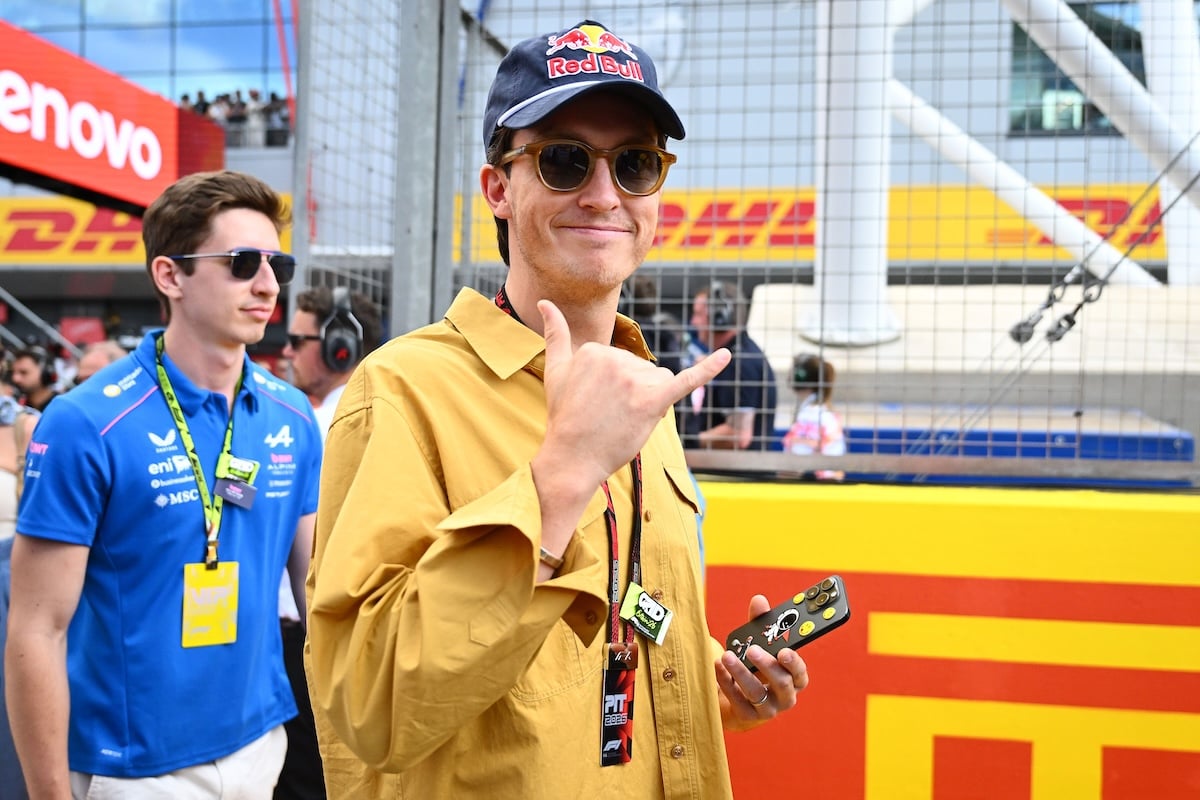
You’re also a regular at Formula One races, which is a completely different kind of chaos. Do you take anything from that world too?
Yeah, I learn a lot. Everyone uses F1 as a benchmark now, from an entertainment and storytelling perspective – what they’ve done with Netflix is awesome, I mean, the amount of times you hear another sport say, ‘We need to do what F1 did’… I think they’ve done an incredible job.
What they lean into is the hospitality, that high-end experience – the food and beverage, the luxury of it all. But you can also get right up close to the drivers in the paddock, get a photo, watch them ride past on a scooter drinking their bottle. NFL isn’t like that, and neither are a lot of other sports, like boxing. There’s this aspirational side to F1 – the money, the cars – but also this eye-level access, and I think they’ve balanced that really well.
You’re flying back to the US tomorrow for the draft. What does the rest of the year look like after that?
Hopefully I get drafted! We’ll see what team I go to, which will be exciting. After that I head to Switzerland to start training and get ready for the season. I’m on the glacier through October and November, then my first event is in China, and the season kicks off from there.
The goal this year is just to keep working on my craft, bring some new creative elements to my run, and hopefully stand on top of a few podiums.

