





























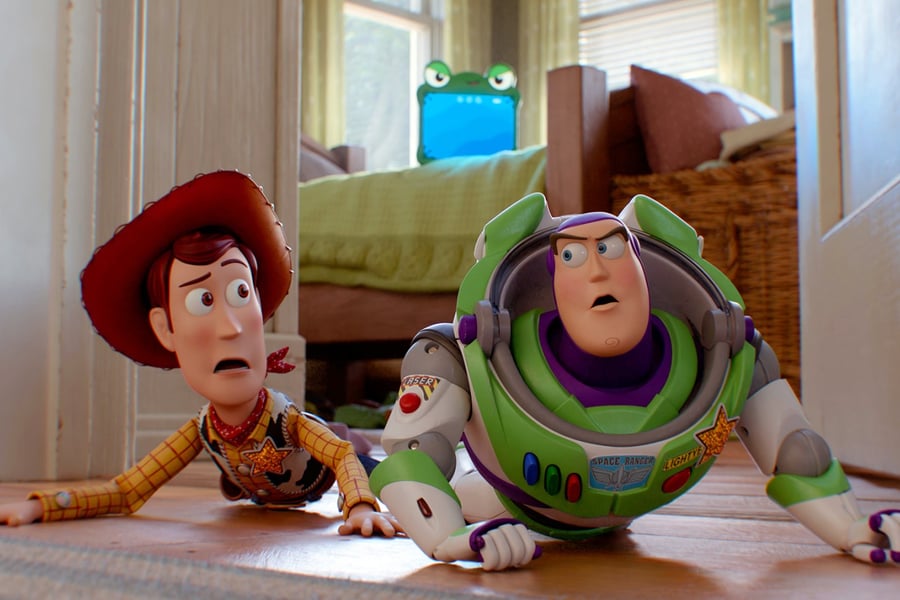
We’re not one to look a gift horse in the mouth, especially if that horse is a 10-inch-tall faithful steed named Bullseye. So let’s begin by accentuating the positive and acknowledging that Toy Story 5, the newest chapter of Pixar‘s flagship franchise, is essentially a reunion tour. It’s all about nostalgia, playing the greatest hits, the joy of seeing old faces. Or in this case, hearing old voices, one in particular. Welcome back, Joan Cusack — her take on Jessie, the yodeling cowgirl that was introduced in Toy Story 2 over a quarter of a century ago, has always been one of the movies’ highlights. The actor has been more or less AWOL from screens since the previous Toy Story entry and a brief appearance in second season of the streaming show Homecoming. At the animated movie’s premiere last week, she told a red-carpet reporter that she’s spent the last six years or so living a normal life in Chicago. You’ve been missed, Ms. Cusack.
The best thing about this late-series cash grab entry is that Jessie (and thus Joan) finally gets to take center stage, having now become the alpha in the toybox. She’s the de facto favorite of Bonnie, the nine-year-old who is happy spending afternoons putting the gang through mock weddings and murder mysteries. The faux groom is Buzz (Tim Allen), the resident space ranger smitten with his rootin’, tootin’ bride-to-be; he’d love to make their union official, if only he didn’t get so dang tongue-tied around her. Jessie doesn’t have time for all that lovey-dovey business, however. The lady in the red Stetson is on a mission.
Because Bonnie is an introverted kid, the shyest of the shy. She’d like to bond with the twins across the street, but every time she tries to get them to come over and play with her, her social awkwardness gets the best of her. Besides, all the preteens on her block — and in her neighborhood, and at her school, and likely within a 100-mile radius — don’t play with dolls and plastic dinosaurs and Slinky-dogs anymore. They have iPads. In the Toy Story universe, this digital harbinger of doom is known as a LilyPad, and sounds like Greta Lee doing a passive-aggressively polite voice. It connects children to “the Pond,” where they can text and play games and act like the phone-addicted zombies commonly known as “grown-ups.”
Bonnie’s parents, worried that their daughter will never make a “real” friend, get her a LilyPad. And now the screaming starts. “The age of toys is over!” cries one anxious character. The era of all screens, all the time, is now in full effect. The toys are headed to the garage. Jessie eventually calls in the cavalry, in the form of Woody (Tom Hanks) — now rescuing lost toys with Bo Peep and the whole crew from Toy Story 4. But after a LilyPad-related incident at a sleepover goes horribly wrong, the cowgirl decides to take things into her own tiny plastic hands. Also, should you have forgotten, Jessie has some serious abandonment issues when it comes to her owners getting older and growing up. It’s only natural that she and Bullseye will find themselves at the exact same site where her Sarah McLachlan-scored trauma took place all those years ago.
Speaking of the past: Has it really been over three decades since that first Toy Story movie dropped and forever revolutionized modern animated features? In the mid-Nineties, its mix of bleeding-edge tech and old-fashioned, emotionally resonant storytelling felt like an evolutionary leap for the medium. Move over, Mickey, there’s a new sheriff — and, er, spaceman — in town! Several generations have grown up nurtured and wowed by Woody and Buzz’s adventures, and that tender, funny ode to childish things became the cornerstone of the Pixar empire. The Bay Area-based company experienced successes, failures, scandals, and the growing pains associated with brand-name companies whose films become a genre unto themselves. But they always had their flagship IP, the title-turned-franchise that started it all and defined what a Pixar movie was.
So nobody blinked when a sequel and a threequel arrived, each of them blissfully expanding on the universe that Toy Story established and both proving to be (arguably) superior to the original. Had Pixar stopped at 2010’s Toy Story 3, they’d have gone out on a high and kept the title in mint condition; we disagree with Quentin Tarantino on a lot of things, but we completely co-sign with his notion that it’s a virtually perfect movie trilogy. When a fourth movie hit theaters in 2019, you could feel the seams starting to fray. Still, milking the series for one more round was forgivable. A fifth entry, however? That would be pushing it.
Toy Story 5 does come with a warning, a sense of righteousness, and several acres’ worth of windmills to tilt at. We live in a world in which screens have not only taken over our dwindling attention spans but warped the entire concept of childhood, it tells us. The idea of play has been replaced with prefabricated distractions masquerading as user engagement, and the devices that have promoted online brainrot and IRL divisiveness have come for our kids. Tech once gave us a world in which animated toys (and bugs, and cars, and even a tween’s sense of joy) moved with a fluidity and an artistry that was breathtaking. Now tech is the villain — something that’s hard to disagree with in 2026 — and the further the children, a.k.a. our future, get away from analog playthings, the less likely they are to develop into healthy human beings. No argument here.
Love Music?
Get your daily dose of everything happening in Australian/New Zealand music and globally.

We’re assuming that Pixar is aware of the irony that their movie decrying such antisocial tendencies is destined to be endlessly watched on screens and devices a lot like LilyPad. Whether they’re aware of the bigger irony that a movie all about the dangers of outsourcing imagination also suffers from a serious lack of imagination is anyone’s guess. Toy Story 5 is a screed in search of a story, and not even Jessie’s heartfelt tale of healing her owner’s loneliness or her own history of heartbreak can stave off the letdown of diminishing returns. (Though Cusack does her best to sell the pocket-size hero’s woundedness and redemption, and again, you’re reminded of how much this performer has been missed.) Everything surrounding her story — the legion of marooned Buzz action figures in search of a leader, the return of Woody around the halfway point, the quaint first-gen devices belonging to another, equally socially awkward tween named Blaze — somehow feels like filler. At least we get a new Taylor Swift song out of it.
Why are you doing this, Pixar? I mean, we know why [cue sound of millions of coins being spewed from a slot machine]. But regardless of well-deserved worries about screen time or not, there doesn’t feel like there’s a reason for this to exist other than keeping your stockholders happy. This fifth entry in the series is designed to be a cautionary tale for our contemporary in-crisis moment of Silicon Valley’s stronghold on our lives. But it’s even more of cautionary tale on brand management. This is what happens when you beat a franchise to death.
From Rolling Stone US

