





























Supplied
‘The Rest Is History’: Savage Tells Us About His Incredible Career Journey (EXCLUSIVE)
Savage reflected on his entire legendary career in a series of exclusive chats with Rolling Stone AU/NZ
Savage has made a momentous impact in music scenes around the world, but there’s a certain power in his songs that makes him a legend within Aotearoa New Zealand.
In his famous collaboration with Akon, he showed that Kiwi artists could achieve greatness on the world stage, further demonstrating to a legion of young fans that the glass ceiling could be shattered with the right combination of talent and grit.
He reminded Kiwis of that a second time when the infectious floor-filler “Swing” featured in the 2007 film Knocked Up, starring Seth Rogen and Katherine Heigl. Savage, the hip-hop hitmaker from South Auckland, seemed unstoppable.
While some will recall the thunderous delivery of “early in the morning” that supercharged Markeo’s 2003 “Stop, Drop and Roll” featuring Deceptikonz, others might know him best from his commanding vocals on the Timmy Trumpet hit “Freaks”. Between those two releases, which dropped more than 10 years apart, he showed an ability to adapt and flow with the times.
Longtime fans still celebrate “They Don’t Know” with Aaradhna from 2005 — and likely still remember every word. The song hit deep, capturing the highs and lows of love, resonating with everyone from teens navigating their first crush to lovers with a complicated history.
His feature in Scribe’s “Not Many — The Remix”, with his iconic “chee hoo”, from the same year ignites a sense of nostalgia today, and at the time it helped usher in a fresh phase of hip-hop on these shores.
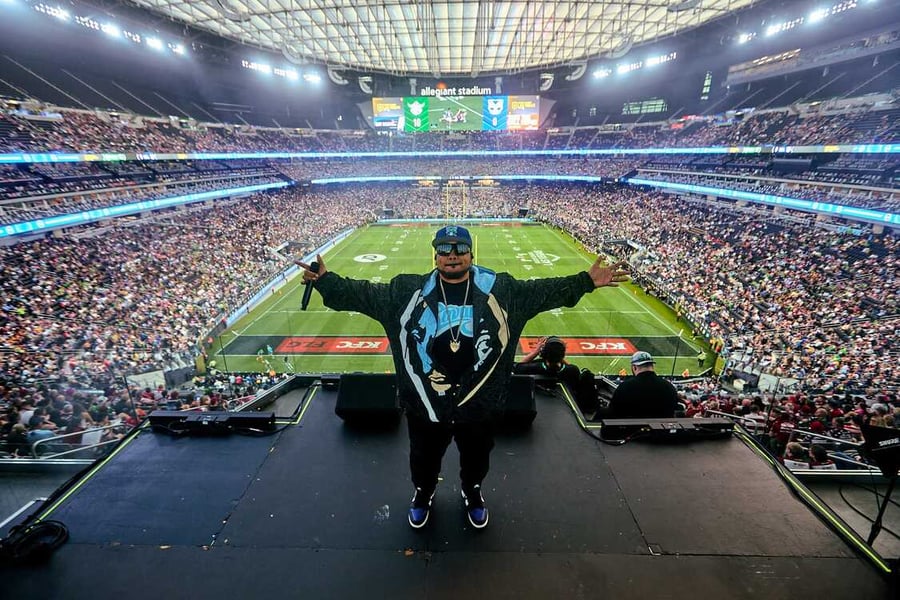
New Zealand Warriors fans will know Savage as the powerhouse behind the anthem that backs their favourite NRL team, released in 2025; some of them might have even seen him perform in Las Vegas at Allegiant Stadium’s rugby league extravaganza last year.
Love Music?
Get your daily dose of everything happening in Australian/New Zealand music and globally.

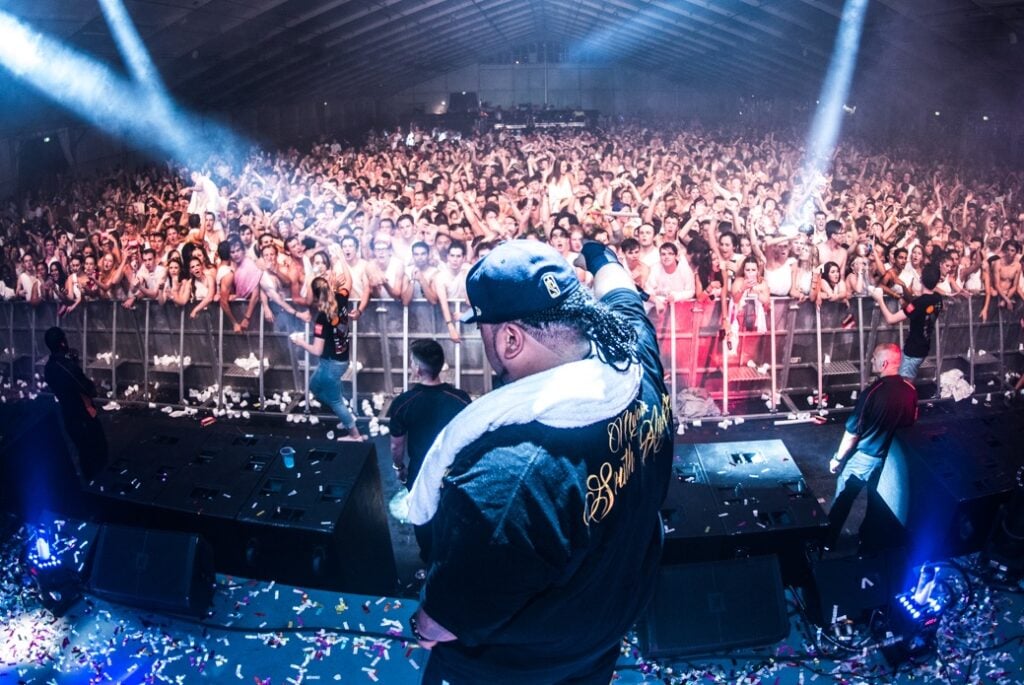
And just this month, Savage stood in front of 38,000 people to perform inside the brand-new One New Zealand stadium in Ōtautahi Christchurch, being part of a historic moment for the Canterbury city.
That’s the thing about Savage: whether it’s an electronic dance anthem, one of his hip-hop classics, or a slower R&B-infused jam, he always brings a particular energy to each song. Beneath his flair for lyrics and raw vocals lies a supreme work ethic, a determination to maximise his potential, and a soft humility.
View this post on Instagram
Now, Savage is opening up like never before.
In a series of exclusive chats with Rolling Stone AU/NZ, he reflected on chasing success, his early groundbreaking moments, what changed when he learned the business side of music, and the aspirations he holds for making a difference to the next generation coming through.
Savage started writing music at just 11 years old. With four older siblings and two younger half-siblings, he credits his older brother for introducing him to hip-hop and rap at that young age.
He has fond memories of the pair listening to Roger Troutman blasting out of an old school Aiwa stereo in the late ’80s — an enviable piece of hardware among his peers at the time.
“Whenever there was new hip-hop music coming out, he always had it and would play it loud on the stereo,” Savage says.
The first album he ever owned had been a gift from his brother for his birthday – Tougher Than Leather by Run-D.M.C.
“I still remember taking it to school for show and tell, and the teachers letting me play certain songs… Run-D.M.C. were pretty clean back then,” he recalls with a big laugh.
As he dug deeper into the genre, nothing resonated more than hearing Boo-Yaa T.R.I.B.E for the first time because he could relate on a whole new level.
“Me and my brother were walking through the lounge on the way to school when ‘Raid’ came on TV. My brother looked at me and said, ‘They look like Samoans.’ Then we saw the tattoos and realised they actually were Samoan!
“As young Samoan kids, seeing Samoan rappers on TV was insane for us. I remember us walking to school singing ‘Raid’ loud and proud. They were the group that made us believe it could actually be done.”
With his interest piqued and with his brother’s blessing, Savage figured out how to play an instrumental, record over it, and use headphones as a microphone.
“I’d record one layer of vocals, switch tapes, put in another blank tape, and double my vocals. That’s how I started recording my own verses over instrumentals,” he says.
With a bit of practice, he stepped up to performing in front of others by rapping at house parties. Between the social circles and demo tapes, he soon honed his skills and his confidence. “I started meeting other rappers who were on the same path. That’s eventually how I met the guys from Deceptikonz.”
Savage, his cousin Mareko, Alphrisk, and Devolo helped launch a flavour New Zealand audiences didn’t know they needed under the guidance of Dawn Raid Entertainment, headed up by Andy Murnane and Brotha D.
“It really took us by surprise,” he says. “None of it was mainstream. Then we released ‘Elimination’ and later ‘Fallen Angels’, and suddenly we were pushed into the mainstream. It was crazy seeing our music accepted on that level.”
When Mareko moved to New York to record his solo album, work began on the second Deceptikonz album back home. At the same time, “Stop, Drop and Roll” started to come to life.
“I remember playing it for Mareko, and he told me to redo the chorus,” Savage reveals. “I originally rapped it normally, but he kept saying, ‘Nah, yell it from the bottom. Yell it as loud as you can.’ I remember getting dizzy doing take after take. When we finally listened back to it, we realised how catchy it was.”
The group had initially been directed to make a pop song that could help push them towards mainstream radio, and although skeptical at the idea at first, they felt like they had one in the bag.
“As underground rappers, we thought that was pretty whack – but we took the challenge anyway,” Savage says. “If you listen to ‘Stop, Drop and Roll’, it’s almost like we were parodying a pop song, but it just ended up being incredibly catchy. Even the bridge was inspired by a Chaka Demus & Pliers track.”
The song was initially flagged for the group’s second release, but when radio picked it up from a teaser sent to the station, they made a quick decision to release it as part of Mareko’s debut record with Deceptikonz as featured artists. It quickly hit No. 6 on the album chart.
“Creatively, the Deceptikonz space was amazing. I always focus on the positives of that era because we were doing things that had never really been done before,” Savage says.
Credit: Supplied
Among their achievements was the nationwide ‘Boost Mobile Hookup Tour’ featuring hip-hop and R&B acts such as Scribe, Adeaze, and DJ Sir-Vere. It was 18 dates, with just one day off.
“Seeing the camaraderie between artists outside of Dawn Raid like Scribe, David Dallas, and P-Money was incredible,” Savage recalls fondly. “We all grew together in that space. It was surreal seeing everything take off. We were selling out arenas and venues everywhere we went. The public support was undeniable.”
The 6-figure deal came about as part of a promotion for Telecom — now Spark — through ad agency Saatchi & Saatchi. Deceptikonz featured in a run of adverts, reeling in huge viewership during program breaks and further projecting New Zealand hip-hop onto the national stage. They included the now infamous advert which sees Savage roaring “HOOK IT UP” before strolling onto a stage to an awaiting crowd.
Amidst the hype, the idea was planted of Savage stepping up for his shot at a solo career. “As Deceptikonz, we followed the blueprint of groups that started together and then branched into solo projects. Mareko was the first one leading the way. His solo success opened doors for the rest of us,” he reflects.
Savage is the first to admit they didn’t get every decision right along the way. He was forced to learn some tough lessons in business, and he has spoken publicly about the eventual financial breakdown within the record label that helped launch his career.
“It was an amazing journey. Of course, when creativity becomes business, the lines can get blurred. But I was always the one in Deceptikonz asking questions and trying to understand what we were getting into. We had a great lawyer and learned a lot through that process. The biggest positive was that we built these platforms that launched all our individual careers.”
Riding the buzz of “Stop, Drop and Roll” and the Deceptikonz whirlwind, Savage featured on Scribe’s “Not Many” remix alongside David Dallas just six months later.
Fans’ allegiance to the song has remained steady across the two decades since its release; comments on the official YouTube video describe the song, which spent weeks on both the New Zealand and Australian charts, as “lit,” “the South Auckland national anthem,” and “legendary.”
“The flows and production are straight FIREEEEEEEEE!! Nearly blew up my speakers with this track!!!” reads one comment. “It’s cray to think NZ hip hop was this stacked…we didn’t know how good we had it early 2000s,” says another.
Credit: Supplied
The segue from writing collectively to penning entire tracks on his own took some getting used to, but Savage credits the Deceptikonz crew for always being by his side. “Even though people saw those projects as solo albums, they were still team efforts. We all contributed to each other’s work.”
Throughout all the excitement, there were moments where he felt pulled in different directions, but he was intent on making sure he wasn’t what other people wanted creatively. “I wanted control over my own image,” he says.
When he was penning “Swing” in November 2004, he was blessed with input from esteemed producer DJ Sir-Vere, known for his impeccable ear for spotting a banger. Savage still remembers the moment he shared the future classic with the DJ for the first time. “His reaction told me everything,” Savage laughs. “Because he’s brutally honest.”
Savage debuted “Swing” at Big Day Out in Sydney before its official release the following January, and the festival crowd’s “insane” reaction told him he was onto a winner.
“As soon as we walked off stage, major labels approached us,” Savage reveals. “That’s when we knew the song was about to do something different.”
While it hit the top spot on the New Zealand singles chart, it was a tune destined for bigger things in the years to follow. But with a bit of momentum on his side in the meantime, ideas quickly started flowing for the video shoot.
“People were pitching all these flashy concepts with lights, women, and jewellery,” Savage says. “Coming from an underground background, I thought it was corny. I wanted to show more humour.”
He remembers being approached by music video director Sophie Finlay, who pitched shooting in a South Auckland laundromat with a mini-Savage running around. “It felt fun and comedic, which matched the song perfectly. That immediately clicked with me.”
Credit: Supplied
Savage continued writing music, but it was his instinct for identifying hard-hitting beats that he could stamp with his own style that became a key element of his success.
When Mareko recorded his debut album, White Sunday, in 2003 in New York with Kirk Harding from Loud Records, they had brought back demos from artists they were considering signing. In the pile of records was one from a then-unknown artist named Akon. The demo included “Locked Up”, “Ghetto”, and “Lonely”. At the time, no one knew who he was.
“I became obsessed with that demo. I played it constantly. My cousins started loving it too, but I was gatekeeping the CD because I knew Akon was about to get signed,” Savage says. “Somehow one of my cousins copied it, and suddenly everyone in South Auckland was playing Akon before his album had even come out!”
Credit: Supplied
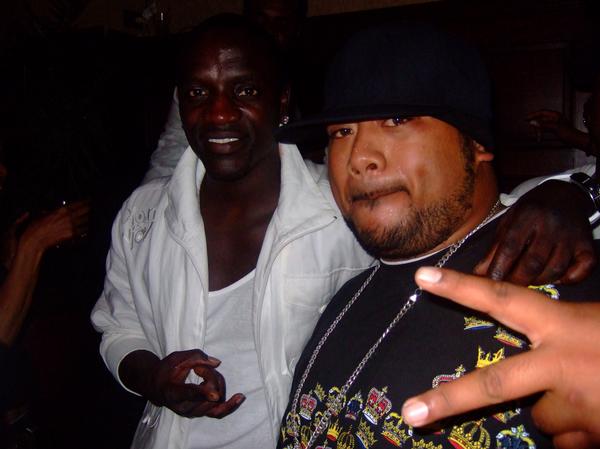
When it came time to choose who he wanted to collaborate with for “Moonshine”, he was overwhelmed with established artists to choose from. Beyond the demos, the list included Lil Wayne, Wu-Tang Clan, Fat Joe, and Mobb Deep.
“I told Kirk I wanted Akon. He couldn’t believe I was choosing an unknown artist over all those established names. But I believed in Akon’s voice and songwriting. We jumped on a call together and he asked me where New Zealand even was. I told him it was the bottom of the world and he laughed.”
They talked through the concept of the song together before Akon went away and wrote the chorus.
“The rest is history,” Savage says. “We actually recorded the song at the end of 2003 but held onto it for a couple of years because we wanted the timing to line up. By the time ‘Moonshine’ came out, Akon was blowing up internationally with ‘Lonely’. Everything aligned perfectly and the song just exploded from there. The collaboration with Akon was probably the most mind-blowing moment of my career.”
“Moonshine” was released as the second single from his first solo album in March 2007, making it to both the New Zealand singles chart and ARIA singles chart in Australia.
In the same year, “Swing” was swept into the spotlight once again when it was included in the memorable bar scene of Judd Apatow’s romantic comedy Knocked Up. In 2008, a version featuring Soulja Boy hit the Billboard Hot 100 in the US. Once re-released, “Swing” made its way back into the New Zealand charts for a second time and was certified platinum in America.
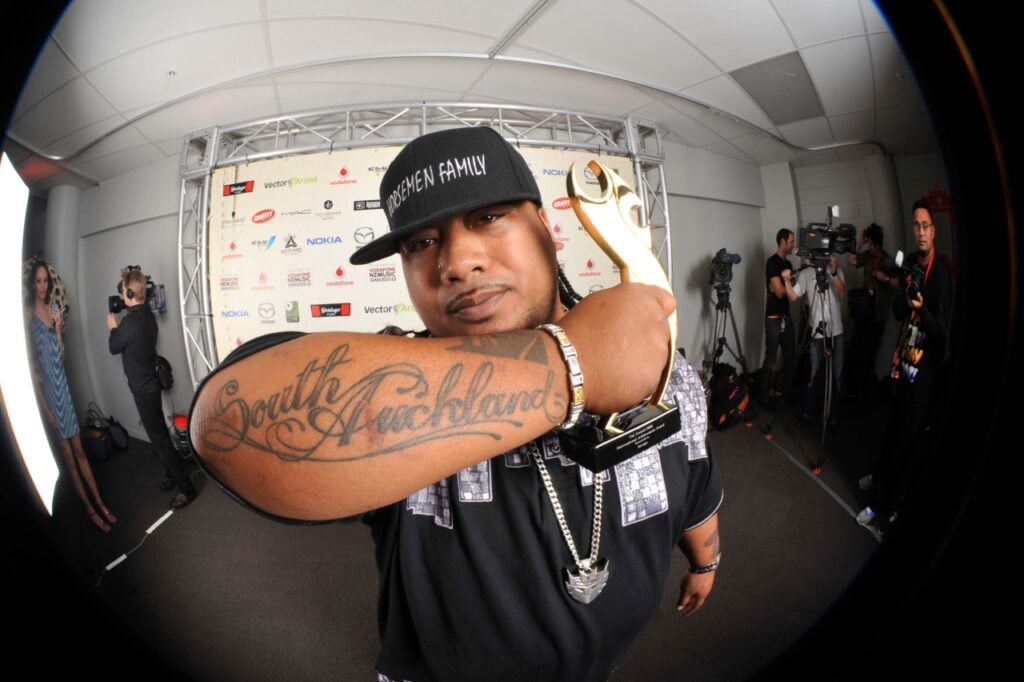
That year, Savage won the International Achievement award at the New Zealand Music Awards. A year later, he was honoured with the International Breakthrough award at the Pacific Music Awards, an accolade created just for him.
Throughout 2009, the Savage frenzy continued, with a collaboration with Baby Bash on “Wild Out (Chooo Hooo)” again striking big. He embarked on a nationwide tour with Scribe in 2010 dubbed ‘Battle of the Century’, where the pair faced off back to back before the crowd picked a winner.
He released Mayhem & Miracles in 2012, which was mostly recorded in LA, and finished off his record deal with Dawn Raid when he decided he was ready for some time out.
“I actually took all of 2013 off, which is probably the only year I didn’t release music. I was fully focused on learning the music business,” he explains. “Every month, I would sit down with my lawyer for two or three hours and bring every contract I’d ever signed. He would break down every term line by line so I could properly understand what was in those agreements.
“It was honestly one of the best things I ever did because it taught me what I was entitled to as an artist and what I should actually be fighting for.”
He considers his own motivations to achieve success second to the responsibility of being a strong role model for his family. “As a father, one major responsibility is to provide. The year that I took off to learn the business was the same year where I decided that every decision has to have my kids [in mind]. Meaning, if it doesn’t benefit my kids, then I’m not going to do it. It has to be in favour of my family and my children’s future.”
Credit: Supplied
While he was learning the backend of the business, he got the feeling people were counting him out. He felt a pull to prove something — not to others, but to himself.
“People were saying the run was done and there was nothing more I could achieve,” Savage recalls. “Going platinum in the US as a rapper from New Zealand was already seen as impossible, so a lot of people thought there was no way I could ever do it again. But in my head, my ultimate goal was to go platinum in the US again.
“I didn’t know how I was going to do it, but I was determined to prove to myself that I could create something that big again.”
Taking the time out allowed him to reassess the landscape within New Zealand music. He noticed a shift and felt an urge to adapt.
“A lot of rappers were crossing over into reggae, but I just couldn’t see myself doing that. Then I remembered a friend of mine, Nick Audino, telling me years earlier that my vocals would suit dance music. Back then I didn’t understand it at all, but eventually I decided to research it and head in that direction.”
View this post on Instagram
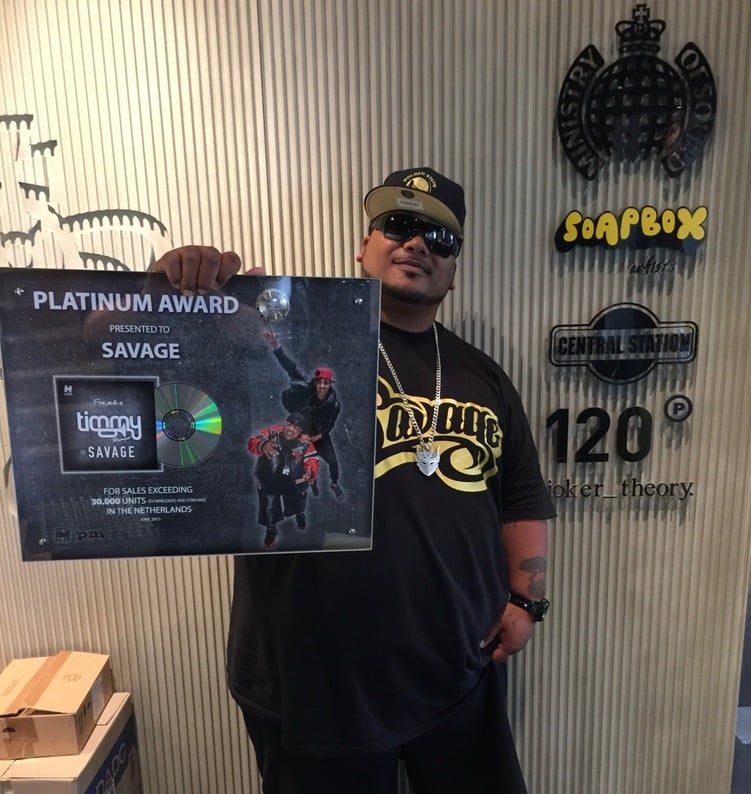
Savage began writing over dance-style productions and scouting for fresh trap beats. At the same time, he was contacted by Ministry of Sound who were ready with a remix of “Swing” by Joel Fletcher.
“When I heard it, I instantly loved it. I realised this could be the bridge into the direction I wanted to move in creatively,” Savage says. “I cleared the remix and it ended up going 4-times platinum in Australia.”
The move opened the door for him to start working with dance artists. He remembers approaching the Ministry of Sound and asking them if they could ever see a rapper on their roster, even though they were known for DJs and producers.
At first they laughed, but soon it was obvious he was serious. “I told them to send me songs that needed vocals. I said, ‘Let me record on them and if you like what I do, let’s make a deal.’ They sent me records from TJR and also Timmy Trumpet’s ‘Freaks’.
“I still remember hearing ‘Freaks’ for the first time and thinking the instrumental was already so good it didn’t even need vocals. But I kept replaying it on a flight back to New Zealand and started writing the chorus and verses on the plane. I called my engineer before I even landed and told him to pick me up from the airport and take me straight to the studio.
“That same day, I recorded ‘Freaks’ exactly how people hear it now. I sent everything back to Ministry of Sound and didn’t hear anything for about two weeks. Then suddenly they called me and said they were putting ‘Freaks’ out.”
While he was delighted the song blew up, this time was different. Having spent the time learning the business, he structured the deal so that the terms could work in his favour.
“That meant I became the first artist from New Zealand and Australasia to go platinum in America in two completely different genres. That’s something you can’t fake or buy.”
When the world shut down during the COVID-19 pandemic, Savage began to reflect on his life and career. While other artists he knew were struggling due to relying on touring for income, he was still making money through publishing and royalties.
“The reality is that most artists release songs hoping fans love them, hoping they chart, hoping they go gold or platinum, and then maybe hoping they eventually get synced somewhere. But sync licensing is actually where the biggest money and long-term opportunities are. Songs like ‘Swing’ being used in games and commercials showed me that,” he notes.
He proved his own concept with “My G”, written for one of Australia’s biggest mortgage companies, and combined two of his biggest passions — the NRL and making music — for the birth of “Warrior Nation”, now the soundtrack backing his favourite team, the mighty New Zealand Warriors.
Savage credits his wife for always encouraging him to put his ideas and words into action. “No doubt, she’s helped to get me to where I am,” he says.
When they traveled together for the NRL grand opening where Savage was performing, she turned to him and told him “you manifested this song into existence.” That’s why he says that without her believing that he could do it, none of it would be possible.
What does Savage have left in the tank? Lots.
There are big plans for the future. More music, of course, as well as talks of a film depicting his life. Already this year, he’s teamed up with Hooligan Hefs to release the dance-rap anthem “Whistle”.
Part of his mission now includes passing on his knowledge to the next generation, having lived the highs of hitting it big and the lows of not knowing what he was getting into.
“I really want to encourage artists to set goals and create stepping stones to reach them. But it all starts with understanding the business side of music. Artists are creatives, and a lot of them leave the business to other people, but at the end of the day, this is still a business built around your name. You have to understand what you’re signing and what you own,” he says.
“That’s what I’m passionate about now — educating artists and helping them realise they actually have more power and ownership today than artists did back when I started.”
He wants to create a space that can educate artists and help them build sustainable income streams through publishing, licensing, and ownership.
“If another pandemic ever happened, I want artists to be in a position where they can survive comfortably instead of losing everything overnight,” he says. “It made me think deeply about how I got to that position and how other artists could do the same.”
While he’s aware of his feats, he’s not done kicking down doors. He acknowledges moments where he’s considered moving away from putting out music, but he’s always been drawn back to relighting the fire — and keeping his head in the right space has been key.
“I believe that your words are very powerful. What you say about yourself is very powerful. Whether you say positive things or negative things, they actually all come back to you. It’s the law of attraction. I try to keep my words about myself and about what I want to do in a positive light.”
“It’s something I’m getting better at as I get older,” he says, before adding with a smile, “I think.”
Bringing others up and making his kids proud is just as much a part of his game plan as making more records that connect.
“I really want to empower people because I know, especially from my background, believing in yourself and believing in your ability has been shut down by people around you growing up. What I’ve done in my career and in the space of my lifespan as an artist is something that I want to use as a tool to help other people gain confidence for themselves to try.
“Think of something you want to achieve and then try and make a way to achieve it. Before you know it, you’ll start to overachieve what you had planned to do.”

