





























For almost two decades, Cate Le Bon has been one of the most distinctive voices in modern indie music, whether as a solo artist or through working with the likes of Dry Cleaning, St. Vincent, Devendra Banhart, and Kurt Vile.
The Welsh musician returned late last year with the dense and emotional Michelangelo Dying, a record tightly built and shaped by collaboration, control, and detail.
Michelangelo Dying drew strong attention across international music press, with Rolling Stone describing the album as “opaquely alluring and genuinely moving.”
“I feel like I’m being subsumed in this album when I listen to it,” NPR wrote, while The New Yorker said, “It’s hard not to compare her to iconoclasts who seem like aliens, such as David Bowie or Björk.”
Le Bon now brings the album to Aotearoa New Zealand for two shows. She plays Auckland’s Powerstation on Friday, June 5th as part of the Strange Universe winter series, before she then heads to Wellington’s Meow Nui on Saturday, June 6th, for the opening night of Lōemis Festival.
The live set brings together a close group of long-term collaborators. Euan Hinshelwood plays a key role as musical director and saxophonist, and the band also includes Toko Yasuda, Stephen Black, Paul Jones, and Dylan Hadley.
Love Music?
Get your daily dose of everything happening in Australian/New Zealand music and globally.

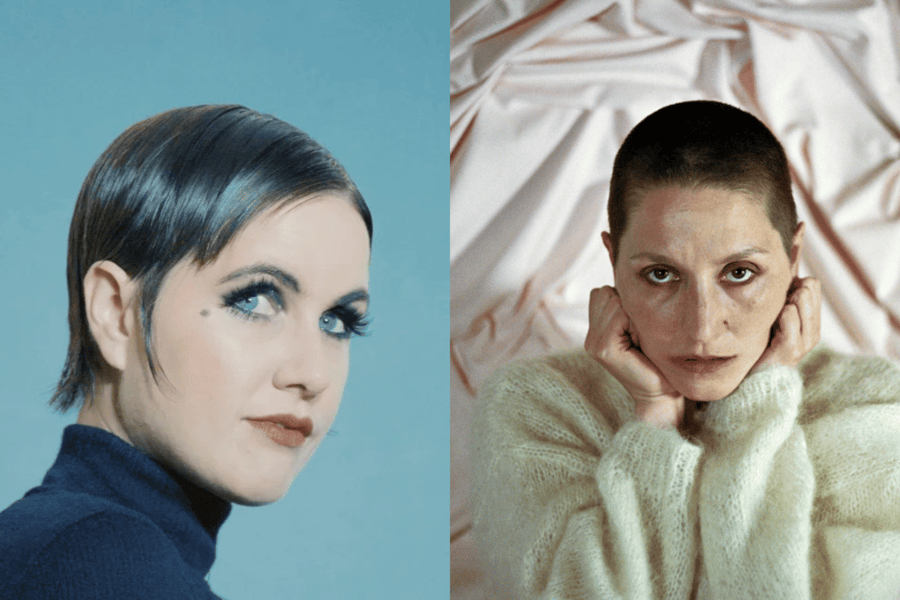
Ahead of her return to Aotearoa, Rolling Stone AU/NZ wanted to speak with Le Bon about her music and upcoming shows. But who’s better placed in this country to speak with an artist of Le Bon’s calibre than Princess Chelsea, Taite Music Prize winner and all-round art-pop virtuoso?
Read the full conversation between Le Bon and the Auckland-based artist below, touching on Michelangelo Dying, how emotions evolve with music over time, and much more.
Ticket information for Cate Le Bon’s Auckland show can be found here. Ticket information for her Wellington show can be found here.
Princess Chelsea: Michelangelo Dying feels very deliberately shaped. When you begin a record, are you imagining the sonic world early on, or does that reveal itself gradually?
Cate Le Bon: It came into formation very fluidly. Everything informed everything else as it came into formation. Like an echo chamber.
Princess Chelsea: You’ve described the album as coming out of a kind of surrender. Was there a moment where you realised you had to abandon the record you thought you were making?
Cate Le Bon: Of course, I did not want to write an album about heartache, but I could not sidestep it without it feeling contrived so I let it happen. It needed to be expunged. Things need to be put down.
Princess Chelsea: When you’re writing, do you feel a clear separation between your “songwriter brain” and your “producer brain,” or are those instincts happening simultaneously now?
Cate Le Bon: I try not to think about it too clinically. I suppose when you make anything you trust that you’ll make the right decision in the moment. I work with a great co-producer, Samur Khouja, on my own stuff and he allows me to toggle between the two without interruption.
Princess Chelsea: Your collaborators feel integral to the sound, but the world remains very singular. How do you guide those contributions without over-directing?
Cate Le Bon: I work with people who I have forged a strong relationship with, and we all allow ourselves to sit in a mess for a long time. To be patient as we find the stone that sings.
Princess Chelsea: You collaborate with John Cale on this record. What are some of your favourite pieces of music by or involving him?
Cate Le Bon: I think of Cale as one ever evolving body of work. I truly love everything he has done. It’s his approach and sensibility, his forward-facing appetite to creating.
Princess Chelsea: What have been the biggest challenges in bringing Michelangelo Dying into a live setting? Are there songs on the record that simply don’t translate naturally to the stage, and if so, how do you approach reshaping them? Have any songs surprised you in how they behave live?
Cate Le Bon: It’s been hugely rewarding working it out and very dependent on Euan Hinshelwood, who is the musical director and saxophonist, so he has been integral to the album’s world. He understands the emotion and destination of each song and so it has been a very thoughtful and intuitive process. The songs have the capacity to change and respond to each unique audience and room, and I very much enjoy and am moved by that experience every time we play.
Princess Chelsea: Performing songs rooted in heartbreak night after night. Does that create distance from the original emotion, or keep you inside it? When performing in a different geographical context like, say, for instance New Zealand, does that shift your relationship to those emotions?
Cate Le Bon: I have found myself finding new meaning and understanding of the songs as I perform them outwardly. Recording the album was such an inward exploration, and it all happened in a fragmented and chaotic outpouring that it was hard to identify at times the weight and shape of it all other than trusting it was real.
Princess Chelsea: Do you think audiences perceive “heavier” emotions as more powerful in performance, or is that something you resist as a performer?
Cate Le Bon: I believe that audiences respond to anything that feels real, whether its joy, absurdity or heartache. They often co-exist.
View this post on Instagram
Princess Chelsea: After spending time in Joshua Tree, were there things about Wales you found yourself missing, and what has it felt like returning to them? Did distance from Wales change how you relate to it creatively?
Cate Le Bon: There are not many places that feel like another planet like the desert does. It’s interesting to feel like you’ve imagined the familiar place where you grew up and when I am in Joshua Tree it feels like nothing else exists. I don’t know how to separate places when it comes to creativity.
Princess Chelsea: You’ve spent a lot of time producing for other artists. Does that experience feed back into how you approach your own work? When producing others versus yourself, do you notice a shift in how you make decisions?
Cate Le Bon: Every session I have ever worked on informs the next. I will only ever work on a project if I feel it deeply, and so there is the same commitment and same drive in making any decision but it has to be conducted differently.
Princess Chelsea: What does your creative process look like these days, if you were describing it to a fellow musician?
Cate Le Bon: I don’t have a repeatable process. I think it’s important to sit in a mess for as long as you can and have a good look around, as uncomfortable as that can often be.
Princess Chelsea: Do you have a favourite instrument or sound at the moment, something you keep returning to because it unlocks ideas?
Cate Le Bon: I have a new drum machine that is a really nice point of entry to writing something new. It’s the MFB Tanzbar and I am finding it to be so malleable and inspiring. For a long time it was the bass and then I got bored.
Princess Chelsea: What have you been listening to lately — anything that’s quietly influencing you or just a favourite you’d like to share?
Cate Le Bon: Recently I have found myself returning to Robert Wyatt by way of a friend’s love for him and I’ve been loving Linnea Talp very deeply.

