




























It is April 11, 2026. President Donald Trump is in Miami, sitting cageside at his favourite live show on Earth: the Ultimate Fighting Championship, the pinnacle of the bloody sport of mixed martial arts. At his side is perhaps his best friend in the entire world, UFC President Dana White. The fights that night are electric: knockouts, cuts, blood all over the mats. At that very moment, Vice President J.D. Vance is in the final stages of failing peace talks with an Iranian delegation in Pakistan, but for a few short hours, the president has a front-row seat to a much more entertaining war. There is only one thing missing: Trump’s favourite fighter.
White will get a chance to rectify that at this month’s extravagant Freedom 250 celebration, featuring the first-ever UFC event on the White House’s South Lawn. “He looks at me and says, ‘Why is Derrick Lewis not on the White House [fight] card?’” White remembers of that April fight. “He doesn’t like Derrick Lewis. He loves Derrick Lewis.”
Lewis, for those unfamiliar, is a veteran heavyweight nicknamed “the Black Beast,” infamous for ripping off his shorts at the end of fights. After one recent win, Lewis dropped trou, got on all fours, and hiked a leg in front of his defeated opponent’s corner, pretending to piss on it like a dog. He is, in other words, an American hero, and all it took was that one question to make White spring into action. By the end of the night, Lewis was slated to fight at the White House.
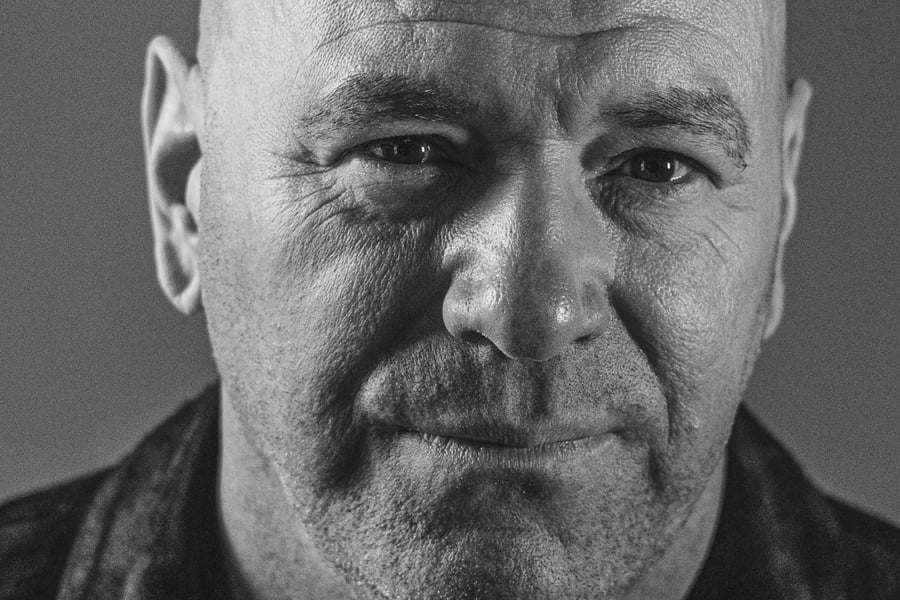
The upcoming cage match in honour of the country’s 250th birthday was arranged at the behest of the president and will be put on by perhaps the single most important figure in American sports. At 56, White is no longer a small-time boxing coach from South Boston. He’s not even the fast-talking Vegas card shark and fight promoter who first captured the eye of a certain real estate titan from Queens. He is the gateway to America’s most intimate displays of violence, a multi-platform empire that he tells me will encompass “every way that you could possibly kick another person’s ass.” That business has intersected with some of the most powerful people in every corner of the world — after our interview, White casually told me he’d lost a key matchup for the Freedom 250 event because Vladimir Putin called one of the Russian participants and told him not to perform at a site that represents the heart of a rival superpower.
To best understand how White got to this place, you have to understand the allure of watching someone get punched in the face — or better yet, of doing it yourself. I’ve been fighting recreationally for years and can attest to the delirious sense of power that comes from your fist meeting an open chin. That’s what White is selling: the chance to live vicariously through his shredded roster of modern-day gladiators. And in recent years, business has been good: In 2025, White inked a new $7.7 billion deal with the Paramount Skydance Corp., giving a sport that was once deemed too violent for TV a prime-time slot.
In late April, White dropped by New York City for the Rolling Stone Interview. Two nights after we met, he was at the White House Correspondents’ Dinner when a gunman burst into the building. White was captured on camera shortly after, absolutely glowing, saying, “I didn’t get down. It was fucking awesome.”
That’s who White is, I think. He’s here for the crazy, for the surprising, and most of all for the violent. He wants to build, expand, and conquer. He wants to take it all in and ask, “What’s next?” The day that question doesn’t have an answer, White won’t be drawing breath.
Love Music?
Get your daily dose of everything happening in Australian/New Zealand music and globally.

The first time Rolling Stone profiled you was in 2008. We wrote: “The way things are going, Dana White, president of the Ultimate Fighting Championship, may soon be hailed as the greatest sports promoter ever, of all time, bigger even than boxing’s Don King, bigger even than pro wrestling’s Vince McMahon.” Vince might have words about that, but 18 years later, most of it has come true. Did you ever see yourself reaching this point?
Well, thank you, first of all. If you separate me from the sport and the UFC, I always believed the sport could be where we are today. This thing wasn’t allowed on pay-per-view. We spent $10 million to buy our way onto TV. That was to produce The Ultimate Fighter and air it on Spike [in 2005]. Our first media-rights deal was $35 million. We go from Spike to Fox for $100 million. We go from Fox to ESPN for $3 billion, and then we go from ESPN to Paramount for $7.7 billion. I mean, we’re everywhere now. We’re going to Azerbaijan again this year. So, the long-winded answer to your question is, I believed that the sport could be where it is today, and I always knew that I was going to be the guy to do it.
You started out as a boxing guy. What captivated you about MMA?
The first time I had seen it was on pay-per-view in 1993, when the first [UFC event] happened. And then I sort of lost track of it. It wasn’t until me and the Fertitta brothers [Lorenzo and Frank, Las Vegas casino magnates and White’s childhood friends] started taking jujitsu, and we started to meet a lot of the fighters, and they were just so much different than boxers. Came from different places, had different backstories. And then we went to our first UFC event, and we started going, “Imagine if they did this” and “imagine if they changed that, this could be big.” That was really how it all started.

What drew you to fighting?
When I was young, my uncles used to put the fights on ABC’s Wide World of Sports, and there was just always this energy and buzz in the house when the fights were on that I became addicted to. We had big football games because we were Patriots fans, but just nothing felt like it felt when it was a fight on. I fell in love with it.
There’s an energy to combat sports that you don’t get from a lot of other places.
And it wasn’t just boxing matches either. It was, like, Bruce Lee movies, Chuck Norris movies, and all the different martial arts. I was into all different styles of fighting. You know, Instagram is the devil. I’ll lay in bed at night and watch street fights on Instagram till five in the morning. I just like fighting.
Getting this sport in front of America hasn’t been easy. Was there ever a moment in the early days when you thought, “Maybe this isn’t going to work out”?
The fight business is the hardest business in the world to run, to organize. There’s been plenty of those moments in the early days. When we were trying to secure a TV deal, when we were trying to get back on pay-per-view, when we were going through all the commission stuff for sanctioning, and then the day that Lorenzo [Fertitta, then-CEO of the UFC] called me and said, “I can’t keep doing this. Me and my brother keep putting all this money in. I want you to get out there and see if you can sell this thing.” I started making calls that day. I called him back and said, “You probably get 6, 7, 8 million bucks for it.” And we were thirty-something million in the hole. And he said, “OK.” We hung up the phone, and the next morning he called me back and literally said, “Fuck it. Let’s keep going.” Lorenzo always talks about it. He’s like, “It’s amazing what a good night’s sleep can do to you.”
With this big roulette wheel that you’ve been spinning for so many years, when was the moment you felt like you hit?
I remember it like it was yesterday. We financed the $10 million for The Ultimate Fighter to go on Spike TV. The ratings on The Ultimate Fighter go just like this [mimes a graph going up]. At that time, in the cable-television world, if you had a show that was that successful, it was everywhere — on buses in New York, billboards. Spike TV? Flatline, nothing [to promote the show]. Halfway through the season, the president of the network gets fired. Nobody’s returning my calls. It was an insane time. When it should have been, “Holy shit, we should be cutting a new deal for the next season of this thing” — none of that happened. It was the exact opposite.
So then that night at the Cox Pavilion at UNLV’s campus, the finale fight happens with Forrest Griffin and Stephen Bonnar, and it sounded like a train was going through that place. People were stomping their feet and chanting “one more round,” and we went in and gave them both a contract. And I literally remember that night going, “I don’t give a shit if Spike signs a new deal or doesn’t, this is going to end up somewhere.” And then that night, the guys from Spike took us out in the alley, and we drafted a television deal on a napkin — literally on a napkin — sort of the bullet points of what a deal might look like. And then that was it. We were on our way.
“There was this buzz in the house when fights were on that I became addicted to.”
You held some of your first events at Trump’s casinos. What did you think when he told you he was going into politics?
When he first called me [in 2015], he said, “Listen, if you don’t want to do this, I completely understand, but I’d be honoured if you’d speak for me at the Republican Convention.” Everybody told me not to do it. The two reasons were, number one, you don’t want to get anywhere near politics, and number two, he’s never going to win.
But you did it. You’ve described that moment to me as really being a turning point, both in your personal relationship with him, but also in his political movement. You’ve become pretty close personal friends since then, right?
We’re really close.
I have this theory that you’re one of Trump’s only real friends left. I think as his power and position have grown, a lot of the relationships are transactional. People fall in and out of favour, because that’s the world that he’s in. But your relationship throughout has been steady.
I don’t want anything from him. I’m not looking for anything from him. There’s nothing transactional in our relationship. We’re friends. And when we get together, it’s literally no different than any other person in this room when you get together with somebody you’re friends with. You talk about things that friends talk about. I think when he is dealing with shit that I can’t even dream of, when he wants to get away, he comes to a UFC fight. You can tell the difference from when he first gets there to when he leaves at the end of the night, he needed it.
As human beings, it’s almost necessary to be a fan of something, whether it’s a band, the Boston Celtics, the UFC, to get out one night and just be a fan of something and just not give a shit about anything else that’s going on other than sitting there and enjoying yourself.
At the end of the day, everybody has to remember Donald Trump is human. And as human beings, we all need that — everybody’s got a thing. Donald Trump’s thing is the UFC.
Has he ever asked you to take a greater hand in his actual political work — said, “Dana, I need you in D.C. now”?
Never. Never.
That changed in the 2024 cycle, when you helped engineer a media blitz on podcasts and social media for him. It seemed like you were a little more comfortable utilising the networks and the audience that you had built to—
I know everybody leans on that one, but I mean, when we bought the company in 2001 and we did the fight at the Trump Taj Mahal [in Atlantic City, New Jersey], the Trump brand was up there [motions above his head], UFC brand down here [motions to his waist] — he showed up to the first fight of the night and stayed till the last fight. This guy is my really good friend. He has been for a very long time. He loved coming to the UFC before he ran for president. But why would I not make a big deal out of the sitting president of the United States coming to my event?
Sure.
If it was Reagan, Obama, Bush — any of these guys that show up, it’s the president of the United States. You can make anything overly political if you want to, but that is not our relationship. And even when I’ve spoken at these conventions or rallies, you never hear me talk politically. You never hear me say anything left, right, this, that. I’m right down the middle, common sense, that’s me.
Have you ever felt like that relationship has alienated any of your fans?
I travel all over the world to places that are heavily liberal. New York City, I’m here all the time. I was just in Seattle, Washington. Nobody ever has ever said anything to me negatively, screamed anything. I’ve never had any negative interaction with anybody anywhere I’ve ever gone in the world due to my relationship with the president. The exact opposite, to be honest with you.
“Donald Trump is human. Everyone’s got a thing, and Trump’s thing is the UFC.”
How did the event that’s happening next month at the White House come about?
We’re at a fight, and he looks at me in the middle of the fight and says, “You know what? We should do a fight at the White House.” And I’m like, “Yes, you should do a fight at the White House.” I don’t know if you’ll ever meet anybody more proud of the White House than he is. He absolutely loves that place and he feels like it’s America’s house, and we should do things where more people can come to the White House and be able to experience it.
The media frenzy around this White House fight has gotten pretty hot. Trump’s overall popularity is at one of its lowest points. The war with Iran has been a low point, and he’s even gotten criticism from some once-reliable backers. Joe Rogan has wondered about the safety and security of going forward with the fight event, given the national context. Was that ever a concern for you?
I [kept fights going] through Covid. Nothing like that ever concerns me. And listen, the world is a very rough place, man. There’s always bad things going on. I own a global business. I have Russians, I have Ukrainians, I have Israelis, I have Pakistanis — you name it, I have them all on my card. And guess what? For the rest of existence, that stuff’s going to be going on. And when you own a global business, you can’t just bend and break and roll over for every bad thing that happens in the world, because I guarantee you, a lot more shit is going to happen this year, and I’m not going to not run my business because of it. To have the opportunity to fight at the White House — we’re in.
[With everything going on,] he probably wishes he didn’t say that to me. But again, we’re in. It’s happening. Everything’s in motion. He’s never said anything to me like that, but this guy’s dealing with shit that people like you and I can’t even imagine and don’t want to. And we don’t get into that kind of stuff.
What do you talk about?
We definitely don’t talk politics. We talk about everything but. How his family is, what’s been going on, how’s he feeling? I mean, this guy doesn’t sleep. I’m not a big sleeper either, but his level of sleep is inhuman. I don’t even know how he does it, especially at his age.
Has there ever been a moment where something that he said or something he did—
Listen, I mean, at one point, did I wish he would stay off Twitter? Yeah. I’m the guy that’s always walking around [defending him], going, “You don’t understand.” I challenge everybody — you can be as far left as you could possibly be. If I take you to dinner with Donald Trump for an hour, it is impossible for you to leave that dinner and go, “I hate that guy.” It’s impossible.
In the future, can you imagine having a similar relationship with a Democratic president if they want to come to UFC events?
Other politicians have said to me, “I would like to come to the event, and I’d like to walk out with you” — like, uh-uh. No. But I’m an American citizen. If the president of the United States calls me and says they need something, consider it done. Democrat, Republican, you bet your ass I’m going to figure out how to help.
Did you ever think you’d be a sort of power broker for one of the most powerful people in the world?
No. You believe in your business, you believe in the sport or whatever it might be, but you never … I mean, I talk to the royal family in UAE. I’m super close to them. And the list goes on and on. I met with the prime minister of the U.K. last year. You don’t see those types of things coming.
“You never hear me say anything left, right. I’m right down the middle.”
What’s that feel like? You go from haggling with Atlantic City casino owners to now meeting with prime ministers.
It really makes you aware of levels. There are levels in life, and it’s cool to go and see these things and to interact with these powerful, incredible people.
Have you ever been starstruck?
I think the only guy that would make me even remotely starstruck is Michael Jordan. I’m a big Jordan guy.
Tell me about your personal health and fitness routine. What are you into now?
I cold-plunged before I came here this morning. When I set my sights on something and I say, “I’m going to do this,” I’m all in. I got in the best shape of my life [in 2022]. I went hardcore for three years. I got off all pills, I got off blood-pressure medicine, cholesterol medicine, all the shit that I was on. I mean, I got ripped to shreds. I did the whole thing. Now, I’ve found this happy medium where I can actually live a little and have some fun, too.
What about combat sports? Do you ever hit the bag, get back in the ring, roll [jujitsu] with anyone?
No, I haven’t done any of that in a while. At my age — I’m about to be 57 in July — I’m trying not to get fat, I’m trying not to get hurt. Those are my goals in life right now.
You met your wife when you were both 12 years old, and have been married since 1996. With the three kids now, how much time do you get with your family?
My wife is one of those people that pulls everybody together. She’s the best at it. We do three big family trips a year. She’s all over that shit. It’s not like, “Oh, I go home [every night] for dinner …” When we go somewhere, we go for 10 days, which is a long fucking time for me. By day three, I’m like, “Oh, my God.” By day seven, I’m like, “If I have to put lotion on my skin one more time …”
You’re on planes constantly. What’s your cultural diet like? What are you listening to, what do you read?
Nothing. I just sit there. It’s the weirdest fucking thing ever. I just sit there on the plane, nothing. I don’t listen to music. I don’t watch TV. I don’t do anything. Sit there. Yeah. I don’t like watching TV. Very few shows can pull me in. I’ll start watching a show, and five minutes in, I’m like, “This is bullshit. I can’t get into this. This is whatever.” If I watch the first episode and you got me, then I binge-watch the whole thing. I’m chomping at the bit for Landman and Mobland.
A common criticism of the UFC, and of your business as a whole, is how much the fighters get paid. The WNBA agreed to a new salary minimum of around $270,000 a year, which is reportedly more than a journeyman MMA fighter earns. Do you ever see a future where a UFC fighter can immediately make a living wage?
Fighter pay has gone up every year, and it will continue to go up as long as we continue to be successful. But to compare it to the WNBA, that’s ridiculous. First of all, if you come into the UFC, let’s say you sign a three-fight deal, we’re going to find out if you even belong in the UFC. I should pay you $370,000 to see if you belong in the UFC?
For more than 20 years, you’ve been the face of not just the UFC, but of the sport of MMA as a whole. What happens to the sport of MMA after the Dana White era?
I run this entire business. I make all the decisions, and I’m very involved, from production to matchmaking, to you name it. It will be very different when I’m not here anymore. Still exciting, still fun, but it’ll be different.
How much longer do you think you’re going to keep doing it?
I don’t know. I still love what I do. Every way that you could possibly kick another person’s ass, I’m getting involved in. And in the next 10 years, I’m going to build the biggest combat-sports company ever. I mean, we’ve already done that, but I have more ideas and more plans. We’re just going to keep building. Nothing will ever exist like this again.
That’s the Dana White legacy, I guess.
I don’t give a shit about legacy. I have these plans and these ideas and things that I want to do, but I don’t ever think about legacy or any of that kind of stuff.
So what’s the point then?
It’s what I like to do.
You don’t care if it lasts?
I could give a shit.
The way you’re talking about legacy reminds me of Trump — “I’m here to build as big as I can build in the time that I have here.”
Dead on.
You know how many book offers I’ve had? I’ll never do a book. Legacy doesn’t mean shit to me. I’m right here, right now. What are we going to do? What are we going to build? How big are we going to make this? The day that I decide to walk away, that’ll be it.
Do you ever have a voice in your head saying, “All right, we’ve got the Paramount deal, now we’ve built something that’ll last.”
Oh, hell no. That’s not how it works. I get up every day, and I want to do something. I want to win. I want to break a record. I want to go to the next level every time that I get out of bed. And I don’t know how I retire. I don’t know how I stop.
From Rolling Stone US

