

























Home Music Music Lists

The 100 Greatest Punk Albums of All Time

We rank the 100 greatest punk albums of all time: Ramones, Clash, Sleater-Kinney and more.
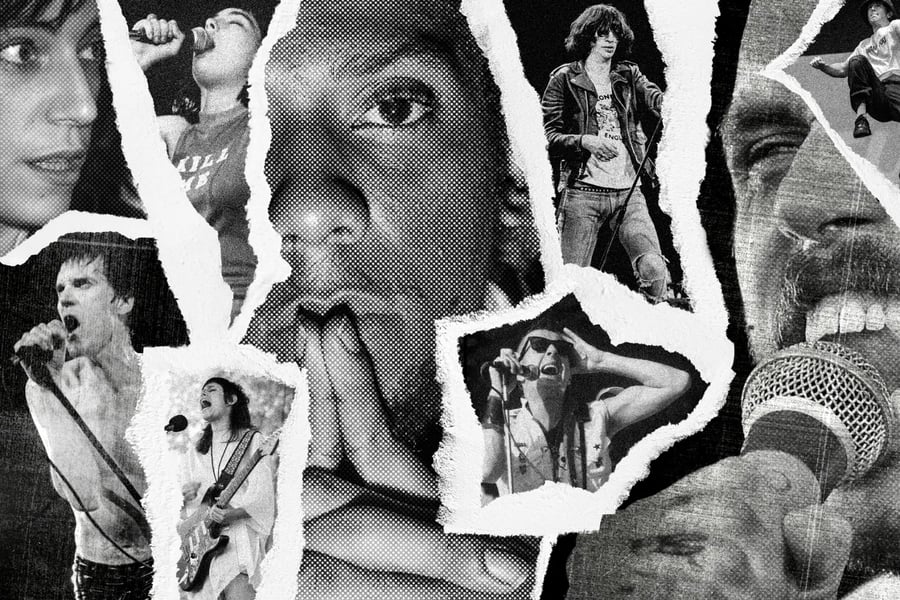
Punk albums photo illustration

ILLUSTRATION BY MATTHEW COOLEY

Punk rock started in 1976 in New York, when four cretins from Queens came up with a mutant strain of blitzkrieg bubblegum. The revolution they inspired split the history of rock & roll in half. But even if punk rock began as a kind of negation — a call to stark, brutal simplicity — its musical variety and transforming emotional power was immediate and remains staggering. To celebrate the 50th anniversary of the Ramones’ toweringly influential self-titled debut, we’ve compiled a list of the 100 Greatest Punk Albums of All Time.

If Ramones was Year Zero for punk rock, it didn’t come without precedent, so we included essential forebears like the Stooges, the New York Dolls, and Patti Smith, artists who were punk in spirit before the style really had a name. When punk did happen, it was an explosion of ideas and possibilities. Along with the Sex Pistols and the Clash, Black Flag and the Descendents, Bad Brains and Minor Threat, you’ll find Gang of Four mixing funk attack and Marxist theory, the ice-storm goth of Joy Division, the Mekons’ existential country visions, riot grrrl radicals like Bikini Kill and Sleater-Kinney, ska punk from Rancid and Operation Ivy, multiplatinum pop-punks Green Day and Blink 182, and new-look hardcore bands like Turnstile and Soul Glo.

Punk and its many offshoots have spawned so much great music that we’ve included a list of 200 related albums to check out. “Punk rock should mean freedom,” said Kurt Cobain in 1991, just as Nevermind was exploding punk values across the middle American mainstream. Here’s one map to where that freedom can take you.

Photographs in illustration by:

Richard E. Aaron/Redferns/Getty Images;  Lindsay Brice/Michael Ochs Archives/Getty Images; Peter Noble/Redferns/Getty Images;  Gus Stewart/Redferns/Getty Images; Jim Dyson/Getty Images; PAUL BERGEN/ANP/AFP/Getty Images; Paul Bergen/Redferns/Getty Images; Lisa Lake/Getty Images/Anheuser-Busch; Richard McCaffrey/Michael Ochs Archive/Getty Images

Contributors:

, , , , , , , , , , , , , , , ,

Love Music?

Get your daily dose of everything happening in Australian/New Zealand music and globally.

From Rolling Stone US

68

Dead Kennedys, ‘Fresh Fruit for Rotting Vegetables’

The original dirtbag leftists, Dead Kennedys pioneered a style of sardonic sneercore that pushed anti-imperialist and anti-capitalist commentary via venomous, provocative humor. Inspired by the prankish polemic of the Yippies, leader Jello Biafra turns inequality into Swiftian satire (“Kill the Poor”), envisions Jerry Brown’s political career as the start of a new age dystopia (“California Über Alles”), offers spoiled American college students a trip to a genocide (“Holiday in Cambodia”), and unleashes nerve gas on a country club (“Chemical Warfare”). More than just masterful snark, DK were also one of the most musically ambitious bands in the California hardcore diaspora, filling their debut with demented surf licks, proto-math-rock dissonance, and dramatic tempo shifts. —C.W.See also: D.O.A., Hardcore ’81 (1981); Agent Orange, Living in Darkness (1981)

67

Dropkick Murphys, ‘Do or Die’

There weren’t many bands in the late 1990s kicking off albums with a bagpipe rendition of “Scotland the Brave” — but Dropkick Murphys weren’t any other band. Years before their music was used by Martin Scorsese in The Departed or their songs made it onto sports stadium soundtracks, the Dropkicks were combining the the tough-kid singalongs of Oi! bands with Warped Tour pop punk to create endless odes to working-class Boston. Do or Die is the only album with vocals from original singer Mike McColgan, but it established the themes — friendship, drinking, the joys of being a (nonracist) skinhead — that the band would come back to for decades. Even after the band’s mainstream succsss, “Barroom Hero” will still inspire a room full of punks to sing along. —E.G.P. See also: The Vigilantes, No Destiny (2000); Cock Sparrer, Shock Troops (1982)

66

Suicide, ‘Suicide’

Clad in leather and wielding a motorcycle chain, minimalist synth-punk duo Suicide cut a stark figure among their CBGB peers: no guitar, no bass, no drums, just the haunting throbs of Martin Rev’s embryonic electronics rig and the harrowing, howling agony of lead bloodletter Alan Vega. Their panting, pulsing songs like “Cheree” and “Rocket U.S.A.” turn the greasy trash of ’50s pop melodies into apocalyptic nightmares, ultimately producing music that Travis Bickle would hear in his head. No moment on their classic debut is more visceral than the 10-minute “Frankie Teardrop,” a murder-suicide tale so raw and scream-saturated that Bruce Springsteen put it on his bad-mood board for 1982’s “State Trooper.” —C.W.See also: Chrome, Half Machine Lip Moves (1979); Fad Gadget, Fireside Favourites (1980)

65

Le Tigre, ‘Le Tigre’

Le Tigre started with a radical approach: Instead of writing about the “bad stuff,” Johanna Fateman suggested to her new bandmate, Kathleen Hanna, when the two got together in 1998, “We should write about the good stuff.” Instead of singing about staring into the abyss as Hanna had in Bikini Kill, they wrote songs about being in love, dancing all night, debating art, and riding the subway. Instead of the standard rock-band lineup, they used a drum machine. Instead of a Pacific northwest grunge aesthetic, they embraced matching day-glo outfits. The result was a riot-disco revelation — political but positive, upbeat but punk. “We want to write political pop songs and be the dance party after the protest,” Hanna said in 2019. And it worked. —E.G.P.See also: ESG, Come Away With ESG (1983); Erase Errata, Other Animals (2001)

64

Stiff Little Fingers, ‘Inflammable Material’

While some first-wave punk bands were moving on to headier, artier material, Stiff Little Fingers were doubling down. Their sound was tough, all nail-gargling vocals and revolutionary lyrics — written in part by Gordon Oglivie, who’d quit his career as a journalist to manage the band, as well as singer Jake Burns. In songs like “Alternative Ulster” and “Suspect Device,” the band tackles the complicated political climate in their native Belfast, Northern Ireland, amid the guerrilla warfare and state crackdowns of the Troubles. Their political urgency may have helped Inflammable Material become a crossover hit, but it’s the non-paramilitary moments about life amid wartime — falling for the wrong girl in ”Barbed Wire Love,” languishing through teenage boredom in “Here We Are Nowhere” — that make it so timeless. —E.G.P.See also: The Undertones, The Undertones (1979); The Vibrators, Pure Mania (1977)

63

Screaming Females, ‘Ugly’

New Jersey has long been a state stuffed with punk scenes, and New Brunswick has always been one of its most vibrant hotbeds. Screaming Females cut their teeth in New Brunswick’s basements, developing a furious, fuzz-bombed sound that raged wonderfully alongside singer-guitarist Marissa Paternoster’s swallow-the-world howl. Ugly, the trio’s fifth and finest album, offers an expansive, adventurous vision of punk. Rippers like “Extinction” and “Something Ugly” sit alongside tracks that move with a menacing strut (“Expire”) or a jittery skitter (“Red Hand”). But the album is at its best when Screaming Females are at their heaviest. “Leave It All Up to Me” and the towering “Doom 84” can make the muscles in your neck strain, the sweat pour from your face. —J.B.See also: The Ergs, Dorkrockcorkrod (2004); Noun, Throw Your Body on the Gears and Stop the Machine With Your Blood (2015)

62

Fear, ‘The Record’

This bruised-knuckle L.A. hardcore band led by singer-guitarist Lee Ving had already brought punk to Middle America’s living rooms, courtesy of an infamous 1981 Saturday Night Live appearance. Their debut album makes good on the dangerous promise of that appearance, immediately shoving their snotty nihilism in your face with “Let’s Have a War.” Songs like “Beef Bologna” and “We Destroy the Family” (“Steal the money/From your mother/Buy a gun”) don’t win any sensitivity points; “New York’s Alright If You Like Saxophones” is a Top Three punk diss track; and the instant hardcore anthem “I Don’t Care About You” sums up the subgenre’s early ethos in a haiku of a chorus: “I don’t care about you/Fuck you.” —D.FearSee also: Various Artists, Repo Man (1984); Various Artists, The Decline of Western Civilization(1981)

61

Against Me!, ‘Transgender Dysphoria Blues’

It takes real guts to come out as trans, essentially, via a record — and no one could ever accuse Laura Jane Grace of being gutless. Just as importantly, she wrote a rager of a record with Transgender Dysphoria Blues, which gave a once under-recognized group an anthem with “True Trans Soul Rebel,” and forged pain, loss, and love into a fist-pumping ode to being yourself, no matter what. From the achingly sweet “Two Coffins,” written for Grace’s daughter, to the ripping take on transgender violence of “Osama Bin Laden as the Crucified Christ” to “Black Me Out,” about casting out false friends, Against Me!’s sixth album (a de facto comeback for the beloved Florida band) proves that Grace’s punk credentials never expired — they just got more legit. —Brenna EhrlichSee also: Laura Jane Grace, Stay Alive (2020); Wayne County and the Electric Chairs, Man Enough to Be a Woman (1978)

60

Flipper, ‘Generic Flipper’

When punk got faster and tighter, San Francisco’s eternally contrarian Flipper got slower and sludgier. They had two singer-bassists, Bruce Lose and the late Will Shatter, atonally moaning existential mantras (“Life is the only thing worth living for”) while guitarist Ted Falconi played nagging, off-key drones. They also had devoted fans, especially in Nirvana: Kurt Cobain wore his homemade Flipper T-shirt everywhere, and Krist Novoselic even joined the reunited Flipper for a few years. Their first and greatest album, released in 1982, is a druggy, pummeling fog that ends with seven minutes of their seven-word, one-chord showstopper “Sex Bomb.” —D.W.See also: Killdozer, Uncompromising War on Art Under the Dictatorship of the Proletariat (1994); Melvins, Ozma (1989)

59

Iceage, ‘New Brigade’

This Danish band — whose members were all in their teens when they released their stunning debut — sold knives at their merch table and posted photos of fans who’d been bloodied at their shows. On New Brigade, they deliver a dervish blur of hardcore violence, Scandinavian austerity, and goth introspection — all pushed beyond the sonic and emotional breaking point. New Brigade exuded a sense of wonder at its own chaos and ugliness, but at the heart of the album, you can hear singer-guitarist Elias Bender Rønnenfelt hungering for meaning amidst the maelstrom. “It’s a life, paranoid/You’re blessed with holy hands,” he sings on the cathartic album-closer “You’re Blessed,” his implosive rage fueling a spiritual quest. —J.D.See also: Protomartyr, Under Cover of Official Right (2014); Royal Headache, High(2015)

58

Liliput/Kleenex, ‘Liliput’

LiLiPUT were one of the most fiercely original punk bands — Swiss women chanting in fractured English, in a herky-jerky rush of avant-garde playground bangers and experimental art-funk. The Zurich feminist collective started out calling themselves Kleenex, until the lawyers came knocking, then became LiLiPUT halfway through their career. They were kindred spirits to the Slits and the Raincoats; Kurt Cobain listed “anything by Kleenex” on his famous list of 50 favorite albums. But despite a great string of Rough Trade singles — “Ain’t You,” “Split,” the irresistible “Ü” — they were barely known in the U.S. before breaking up in 1983. This collection has all 46 of their songs, an anarchic hop that practically demands you pogo along, jumping up and down to yell, “Ain’t you wanna get it on?” —R.S.See also: Scritti Politti, Early (1979/2005); Television Personalities, And Don’t the Kids Just Love It (1979)

57

Gun Club, ‘Fire of Love’

Los Angeles’ Gun Club melded the gutter-dwelling ferocity of L.A. punk with the swampy grooves of American blues, with Texas-born yelper and slide guitarist Jeffrey Lee Pierce bringing together his past and present in combustible fashion on cuts like the chugging “Sex Beat” and the cracked-mirror reimagination of blues guitarist Tommy Johnson’s “Cool Drink of Water.” Their 1981 debut has bare-bones production that places Pierce’s frenzied howl at the fore, his stories of sex, drugs, and demons portraying America’s steadily growling underbelly and getting an extra charge from his band’s runaway-locomotive playing. —Maura JohnstonSee also: Rocket From the Crypt, Scream, Dracula, Scream (1995); The Jon Spencer Blues Explosion, Orange (1994)

56

Public Image Ltd, ‘Second Edition’

When the Sex Pistols collapsed, Johnny Rotten started using his given name John Lydon and formed Public Image Ltd. The U.K. release of their second LP was titled Metal Box and retailed as 7-inch singles in a tin can; the traditionally packaged American version was called Second Edition. In any form, this was going to be one of the harshest, strangest records in your collection. Lydon’s surrealist yammerings on “Swan Lake,” Careering,” and “Albatross” ricochet off Jah Wobble’s molten dub-reggae-influenced bass lines and Keith Levene’s banshee guitar peels. “Hindsight does me no good,” Lydon offers on the magisterial meltdown “Poptones,” casting aside his old role as U.K. punk’s biggest rock star. By now, PIL’s revolutionary post-punk has influenced just as many bands as the Pistols. —J.D.See also: Magazine, Real Life; Radio 4, Gotham (2002)

55

Operation Ivy, ‘Energy’

From its opening growl, Operation Ivy’s only studio album lives up to its title. The originators of the California ska-punk sound — combining the gruffness of suburban hardcore with the rhythms of Jamaican dance music — the band went on to influence generations of skateboarders and punks alike, putting Berkeley’s Gilman Street collective on the map in the process. Still, Energy is more than just infectious upbeats. Guitarist Tim Armstrong, who would later go on to start Rancid, and singer Jesse Michaels wrote songs that tackled philosophy (“Knowledge”), scene infighting (“Unity”), commercialism (“Artificial Life”), and even colonialism (“Missionary”) — showing teenagers that they could slam dance and think for themselves. —E.G.P.See also: Screeching Weasel, My Brain Hurts (1991); The Suicide Machines, Destruction by Definition (1996)

54

The Cramps, ‘Songs the Lord Taught Us’

When Songs the Lord Taught Us landed with a thwack onto the world in 1980, it was something of a Rorschach test: Sure, you had turned-off skeptics horror-struck by lines like “I use your eyeballs for dials on my TV set,” but there were also legions of overjoyed misfits thrilled by the way the band’s mix of high-camp, smuttiness, and violent delights toyed with the punk orthodoxy in an unapologetic B-movie kind of way. Luckily, the latter view is what’s prevailed: Though the album was marked by notoriously tough recording process, helmed by temperamental rock icon Alex Chilton, it stands as a testament to the Cramps (and the everlasting love and chemistry between Poison Ivy and Lux Interior) and the instinct and imagination across their careers. —J.L.See also: Pussy Galore, Right Now! (1987); Electric Eels, Having a Philosophical Investigation With the Electric Eels (1989)

53

Devo, ‘Q: Are We Not Men? A: We Are Devo’

Devo bounded out of Akron, Ohio, with a bunch of bizarrely fun songs that treated the hilarious imbecility of modern American late-capitalist existence like a cosmic in-joke. Formed by college buddies in the early Seventies, they sped up their sound after hearing punk rock to create their landmark debut. Are We Not Men? has something weird to say about sex (“Uncontrollable Urge”), religion (“Praying Hands”), masculinity (“Mongoloid”), technological utopianism (“Space Junk”), and much more, with a tense, clattering, oddly jovial sound that made their gospel of devolution sound a lot more fun than whatever the other kids in Middle America were driving around to. —J.D.  See also: Tin Huey, Contents Damaged During Shipping (1979); Human Switchboard, Who’s Landing in My Hangar (1981)

52

The Pogues, ‘Rum Sodomy & the Lash’

The Pogues blasted out of London in the 1980s, bashing Irish folk music in the rowdy spirit of the Sex Pistols and the Clash. “We were all into punk,” singer-poet-blackguard Shane MacGowan told Rolling Stone in 1985. “And once you’ve heard and liked that feel, you can’t really go back to being laid-back.” Growing up in London as Irish immigrant kids, despised by the English as outsiders, they infused their punk attack with the sound of the Celtic diaspora, full of accordion and tin whistle. Rum Sodomy & the Lash has their toughest down-and-out tales, with MacGowan snarling “The Sick Bed of Cuchulain” in his glorious tooth-spitting rasp. —R.S.See also: The Pogues, Red Roses for Me (1984); The Jacobites, The Ragged School (1985)

51

Rancid, ‘…And Out Come the Wolves’

The Bay Area road warriors Rancid evolved from the cult favorite ska-punk band Operation Ivy in the early Nineties. By the time their platinum-certified second album came out in 1995, American punk rock had become neatly codified as ’77 revivalism, from its mohawks to its combat boots, and the band’s co-frontmen, Tim Armstrong and Lars Frederiksen, rarely broke from the doctrine of the first Clash album. But they brought inexhaustible gusto to their spiky-wristbands-in-the-air choruses and always kept punk’s curious links to Jamaican music in sight: The hits “Roots Radicals” and “Ruby Soho” are basically rocksteady songs in bondage pants. —D.W.See also: Voodoo Glow Skulls, Who Is, This Is? (1994); Rancid, Let’s Go (1995)
