






























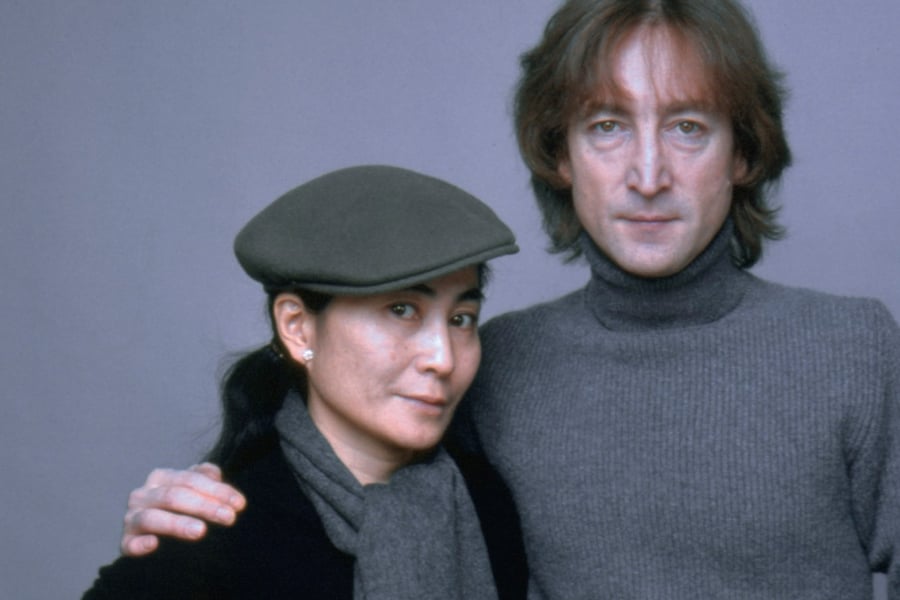
Filmmaker Stephen Soderbergh defended and explained his decision to use some generative artificial intelligence in his upcoming documentary centered around John Lennon’s final interview.
Announced last year, John Lennon: The Last Interview features the audio from an interview Lennon and Yoko Ono gave to RKO Radio on Dec. 8, 1980, just hours before Lennon was murdered. Soderbergh paired much of the audio with archival material, offered up with the support of Lennon’s estate. But during the moments when Lennon and Ono started to get philosophical and abstract, Soderbergh decided a different kind of visual accompaniment was needed.
While it was previously disclosed that Soderbergh had decided to use AI for these sections, in a new interview with Deadline, he offered an in-depth explanation of his use of AI and the reasons behind it. He also revealed that the AI portions of the film were created in partnership with Meta, who provided both tech tools and financial backing.
As Soderbergh explained, the more abstract portions of the interview that he paired with AI comprise “about 10 percent of the entire film.” He said he was looking for “imagery that enhances” what Lennon and Ono are saying, “but is metaphorical,” referring to the concoction as “thematic surrealism.”
The director acknowledged that AI is “a very emotional subject,” saying later that he thought a lot of that emotion was “legitimate,” especially when it comes to AI’s use in non-creative contexts and how it’s “affecting our lives.” But he insisted he wasn’t using AI in his doc to “fool” or “manipulate” viewers, “to create an image that you want them to think is real.” Rather, he said they were using it “essentially in the way that you would use VFX or CGI or any sort of non-photographic technology.”
Soderbergh detailed two sequences from the film that exemplified why AI “turned out to be perfect for” the film. In one, he said, “a series of one-year-old babies dressed in Sixties outfits are bawling their eyes out; it’s a way of comically illustrating something that John is talking about. You can’t shoot that. And even if you did somehow — you came up with some justification for shooting a bunch of one-year-old babies dressed in tie-dye outfits, crying their eyes out — even if you did it, if people knew it was real, it wouldn’t be funny. And we were trying to be funny here.”
The other sequence features “cavemen acting out some of the things that John is discussing when it comes to male behavior. Going out and shooting those images of men dressed up and made up as cavemen doing the things that are in this sequence: not as funny. It’s funnier if you know it’s not real.”
Love Music?
Get your daily dose of everything happening in Australian/New Zealand music and globally.

Soderbergh pushed back against what he figured were the worst conclusions people jumped to when news of his use of AI broke: “He’s going to try to bring John Lennon back to life.” The director countered: “And all I can say is, have we met? Do I look like somebody that would do that? So it’s a little hard to talk about also because I feel once you’ve seen the movie, you go, ‘Oh, of course.’”
He continued: “My moral obligation to myself and to Sean and Yoko and to the audience is the best version of this film, period. And we were able — luckily, through good timing — to get our hands on some tools that I know resulted in the best version of this film. And all I can do in any of these discussions about AI is just be transparent. I mean, that’s got to be rule number one in trying to figure out how to use this stuff, is to be transparent about it. So I want a minimum of mystery here. I think that in addition to owing the best version of something, I owe people honesty in how we achieved certain things. That’s fair.”
As for Meta’s involvement, Soderbergh said his manager/producer, Michael Sugar, brought the idea to him, citing the company’s new video generative tools. “They were open and wanted to see the film, so we showed them the film, and they said, ‘Well, this is good timing because we really would like and need a filmmaker to stress test some of these tools that we’re working on. And if you agree to be a test case for us, we will provide the tech and finish the movie,’” Soderbergh recalled. “So I said, ‘Yeah, let’s do that.’ And that was kind of the last stage, was building these sequences that have images that are impossible to shoot.”
From Rolling Stone US

