





























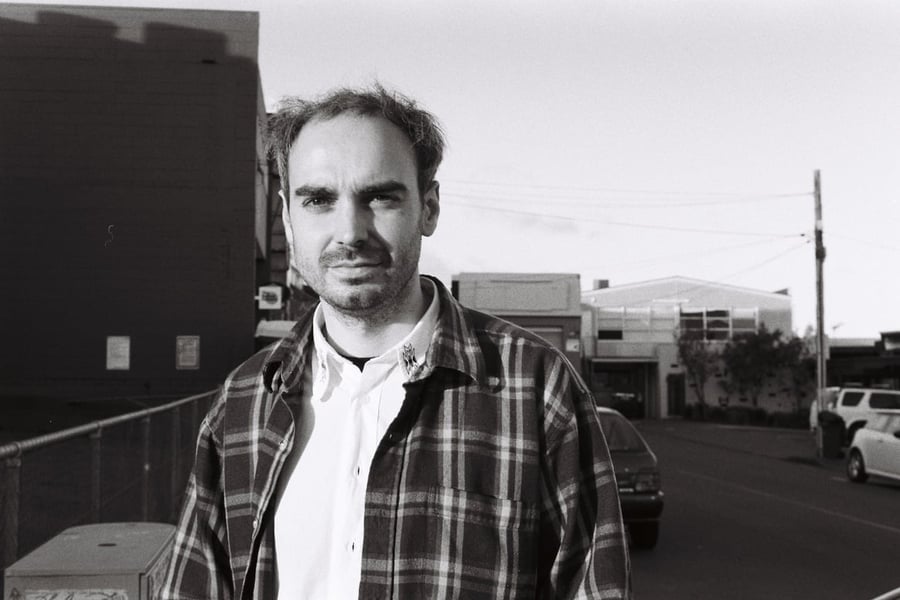
Rosa Cameron
Peter McCall Finally Went All Out With His Fazed on a Pony Project. It Resulted in His Best Album Yet
The hard-working indie musician tells Conor Lochrie about the major life changes that led to 'swan', his chart-topping new Fazed on a Pony album

It’s a rite of passage for any and all high school students. One day you’re sitting in class, bored out of your mind again, when you look at the teacher lecturing at the front of the class and think: who is this person? What do they do once school finishes? Do they become an NPC as soon as the clock strikes 4pm?
High school teachers aren’t NPCs in the evenings, but chances are that not many of them are chart-topping musicians like Peter McCall.
When he’s not teaching English at a school in West Auckland, he performs as Fazed on a Pony, his indie-rock-meets-alt-country project that released an AOTY contender in the very first few weeks of 2026.
That album, swan, shot straight to the top of the Aotearoa Albums Chart in January, also reaching the top 30 on the main chart. RNZ’s Tony Stamp was amongst several critics to give swan a lovely review, writing that “carefully observed truths and aural loveliness abound” in the album.
“I can’t imagine it going any better,” McCall says. “[I’m] feeling pretty blown away, to be honest. My expectations were much lower than what’s come, which is awesome.”
It’s the very start of the new school year when we speak, and McCall doesn’t mind admitting that it’s been “kind of hard to adjust.”
“Just kind of mentally going from emailing people about shows and organising things and press and stuff and kind of the excitement of that, and then straight into planning your year,” he sighs. “Yeah, feeling a little bit burnt out at the start of the year is a little anxiety-inducing, but I think now that I’ve had a few days, it’s actually fine. You kind of turn up and you realise, ‘I know how to do this as well.’”
Love Music?
Get your daily dose of everything happening in Australian/New Zealand music and globally.

Going from musician life, with such critical and commercial fervour, to getting into the teaching mindset once again — it’s the sort of career whiplash that would affect anyone.
“[A]t first I was a bit worried about my public and private life mingling,” McCall says. “And then now I just kind of embrace it — I think generally they think it’s quite cool, but they’re not amazed by it.”
McCall went all in — and then some — with his new album. The result is career-best work, and a record that is giving one of Aotearoa’s most underrated musicians his due.
His previous record it’ll all work out had many merits, but its meek title encapsulates McCall’s self-admitted approach to its rollout.
While he insists he was never “anti-promotion,” he admits that he “never put any kind of thought or effort into” pushing out his previous records. He would simply “just chuck it on Bandcamp,” send out some hopeful emails, and “just see what happens.”
“I’m someone who kind of preempts rejection a little bit,” he further admits. “I’m like, ‘Oh, you’re not gonna like it, so I’m not gonna show it,’ sort of thing. And then [with] this one I thought — I don’t know, maybe just having a kid and getting a bit older, just, you know, give it a go. And it’s been really overwhelmingly positive.”
Having a kid, McCall tells me, deeply impacted his new album and its rollout.
“I’ve been more focused and more committed and more on it since having her, which is interesting… The best way to describe it is [that] it makes everything seem really real. All of a sudden. And I could settle a little bit with the album. [I] was like, ‘Why not?’ Just to even have an LP was like a huge aspiration of mine.
“It’s made me more focused and I have way, way less time, but I do way more with it.”
After becoming a dad for the first time, McCall “cut out everything” that he didn’t need in his life. “You just realise how many things you don’t need to be doing and the things that you do need to be doing,” he says.
Buoyed by this changed perspective, he saved up the “exact amount of money” to work with his good friend De Stevens at Roundhead Studios in Tāmaki Makaurau. The recording session — around 11 songs tracked in two days — was momentous. “I wouldn’t say it’s [the] best two days of my life, but easily in the top 10,” McCall says.
Close collaborators Rassani Tolovaa, Hamish Morgan, and Shaun Malloch were also there, and the entire experience, recounted by McCall, sounds idyllic. “I would just bike in in the morning, get there, have a shower and have a coffee. It’s all very lush in there [Roundhead]. It was kind of like a dream. All I had to do for two days was just ask my very talented friends to play my songs and then get to hear them coming back through these beautiful speakers in this really comfortable environment.”
“It was like a dream and it sounded so good and De is just so fucking good at his job. All aspects of his job. I think he’s an amazing mixer. He’s got really creative ideas… He played piano on the album as well,” McCall adds of Stevens. (Side note: I receive hundreds of press releases a day working at Rolling Stone, and it can be difficult to sift through them, but whenever I see Stevens’ name mentioned in the credits of an album, it’s become a guaranteed mark of quality.)
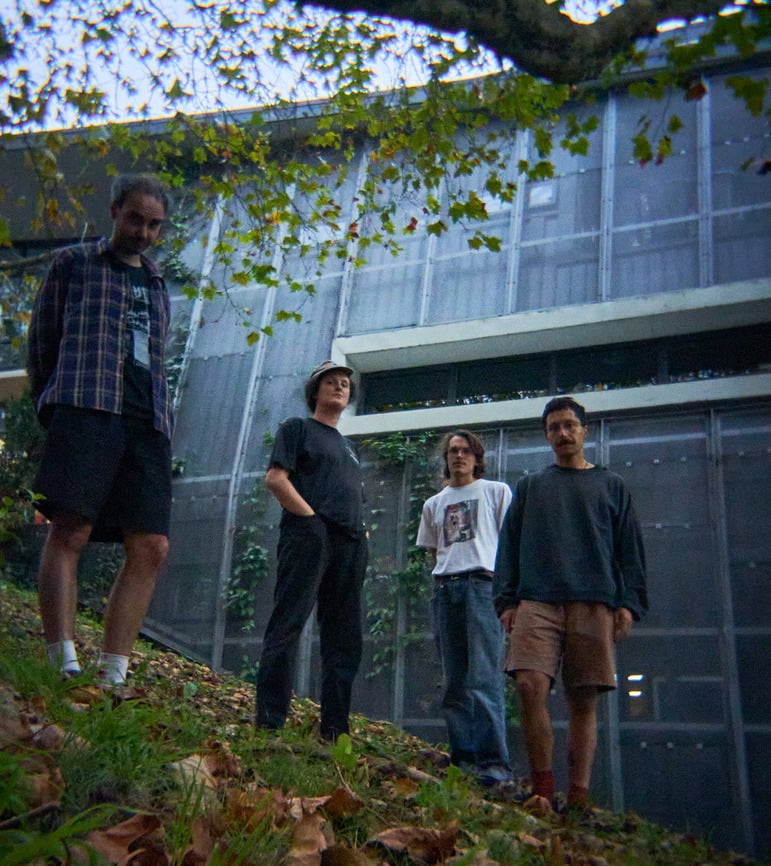
Image: Peter McCall and his full band Credit: Sara Hewson
After recording vocals and guitar at home alone, McCall returned to Roundhead to mix the album with Stevens. “[I]t was short and it was good straight away. And I don’t know if I always thought I’d go around here [Roundhead] and feel like an imposter, but it just felt good, which was surprising in a really nice way.
“I think [it’s] because of the people I was working with… I don’t even know if confidence is the right word, but there’s this thing maybe when you pass 30 and you’ve been writing songs for a long time and you’ve got a kid and you’ve got other more important things to worry about — it’s like that focus I was talking about.
“It’s not really confidence… it’s just focused. I’m gonna do a good job. It sounds good. There’s great people here and I’m not gonna go in there and then have all these awesome people work on my thing and then be sulky about it. I’m gonna fucking enjoy this… Yeah, it was this kind of certainty that this is pretty close in execution to something I wanted to make — not that it was going to be this hit record, but just like that I was doing what I genuinely wanted to do and I thought it sounded good.”
McCall found the perfect home for swan at Melted Ice Cream, the Ōtautahi-based label which is, like Sunreturn in the big smoke, consistently putting out some of the best independent releases in Aotearoa: Martin Sagadin, Aotearoa Music Award winner Jim Nothing, and Wurld Series, to name just a few.
The label wasn’t messing about with its press release for swan, claiming that “McCall’s mix of wry humour, sincerity, and melodic instinct has drawn comparisons to MJ Lenderman, David Berman, and Sparklehorse.”
McCall laughs when I bring this stunning trio of indie music excellence up.
“[T]he MJ Lenderman thing, I honestly kind of dropped in there just to catch a bit of a cultural wave. [You] know, people go, ‘Maybe this is the next best thing!’”
He says he “loved” Sparklehorse, too, but concedes Mark Linkous’s project was “more of an influence when I was doing more of a bedroom-type thing.”
David Berman though? That’s the big one. Berman is, like he is for so many thoughtful indie singer-songwriters like McCall, the man. “The name Fazed on a Pony came from the insert of a [David Berman’s band] Silver Jews record,” McCall reveals. “It was just something scribbled in there. So as a lyricist, he’s probably number one for me.”
“The sad boys”: that’s how McCall describes his go-to singer-songwriters — Elliott Smith is also cited as an influence alongside Sparklehorse and Berman.
But what happens when life is good — you’re making music with mates at a top-class recording studio, you’ve been blessed with a kid, you’ve struck a great balance between your day job and your artistic pursuit — and your music taste tends towards those melancholic, depressive types?
“It’s like a paradoxical thing because that stuff still resonates with me the most — it’s the music that moves me,” McCall reflects. “Why are you so sad basically? And that stuff is still the stuff that cuts me… but it’s like, I guess, learning to manage.
“I’ve gone through my fair share of those feelings as well, as you [can] probably tell in the music, but I feel like now I’ve moved through it — I have an amazing partner and a kid and meaningful job and good friends and stuff, so I feel buoyed by that.”
Here’s another interesting line from the swan press release: “However, Fazed on a Pony lives within its own antipodean aesthetic and sound.”
One of the best things about McCall’s newest songs is how they clearly sound like the work of a Kiwi musician, similar to how Courtney Barnett first put herself on the global map with her distinct Aussie drawl.
According to McCall, “a little bit of American” can be heard in his very first EP, but he’s found the confidence to sing in his own voice since then.
“[W]hen I was starting to write music, there was [sic] so many good musicians that were just singing in their voice or even hamming it up a little bit, even like super Kiwi… I didn’t go that far, but it was quite inspiring to see you could make really awesome music and there’s almost a sense of cultural pride that comes through. We’re not trying to be American, you know?”
McCall does sound a little like MJ Lenderman on swan, but it’s in the relatability of his songwriting and persona, rather than in a chasing-a-trend way.
“[…] McCall perfects a certain type of amiability… At times it feels like he’s pulled you aside for a chat, firm but friendly, and always with your best interests at heart,” as the RNZ review states.
“I feel like I boxed myself in a little bit with the last album, these kind of chunky cowboy chords with nerdy lead lines on top, which is this classic indie formula that to me, just as a musician, kind of has its limitations,” McCall says.
“[T]hat’s how I learned to write songs, learned to play in bands, and it’s so easy to make something sound good straight away. But I just got more interested in other ways of producing songs. And honestly, a lot of them still turned out in that way.
“But I think I let myself not have to be, I don’t know, [the] indie rock guy — I could just write a song and then think about how the production of the song will serve that feeling or allow other people to take the lead or, you know, [handle] other instrumentation.”
He brings up This Is Lorelei, US musician Nate Amos’s shapeshifting solo project.
“[H]is previous album was just so diverse and something [that] really resonated with me because I’m someone who just really loves a good song,” McCall says. “I don’t really care about — well, I do like ornamentation, but it’s not like I love the indie rock sound. It’s just [that] I love a song.” He stops himself. “But then, on the other hand, [with] the tools at my disposal, I have some proficiency on guitar and almost none on anything else. They’re going to be guitar-driven!”
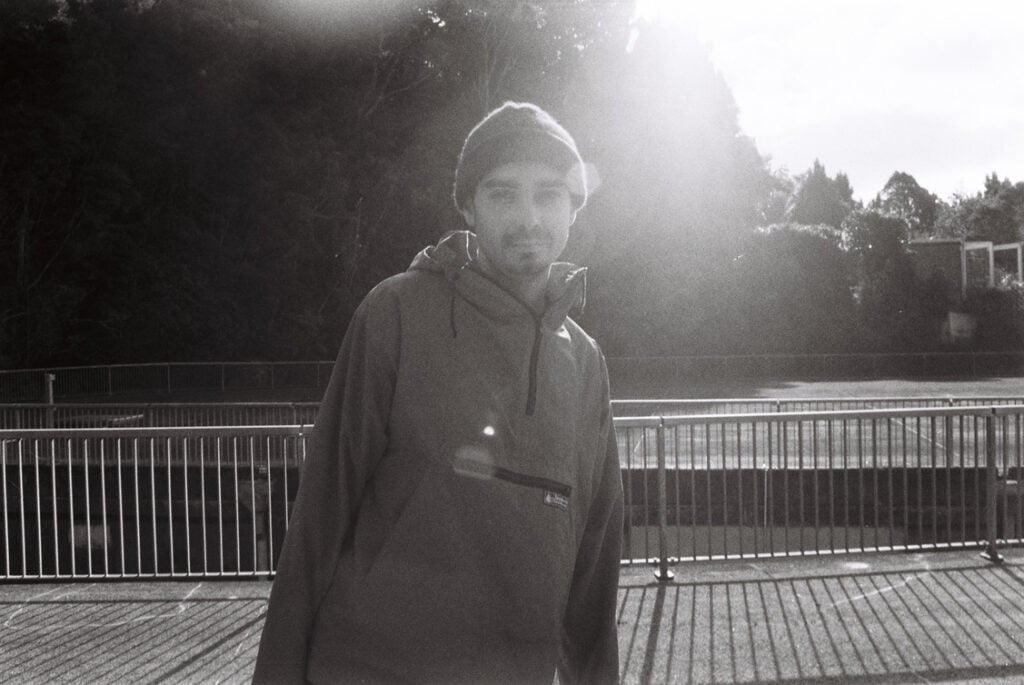
Credit: Rosa Cameron
We’re here to chat about swan, but McCall is also only too happy to dig into his years in Ōtepoti Dunedin for our special Scene Report series.
He moved up to Auckland in 2022, but he spent 12 years in Dunedin before that after moving to the city for university. It fundamentally changed his career. “I feel like if I had stayed in Auckland, maybe I wouldn’t have kept doing music in the same way,” he says.
It was in Dunedin where he met Kane Strang, going on to play in Strang’s solo band. The pair remain good friends to this day — so much so that Strang was staying at McCall’s house a few days before our call.
“I went to about 15 of his shows before I said hi to him!” McCall says. “I would see him around and you just kind of make friends because you’re always at the same stuff.”
Alongside Strang and McCall, Dunedin’s fertile music community at the time also featured the likes of Asta Rangu, Death and the Maiden, Opposite Sex, Trick Mammoth, and A Distant City, one of Josh Nicholls’s early bands before Dale Kerrigan came into being.
McCall recalls his first encounter with the latter band.
“I entered the Battle of the Bands at uni when I was 18, [it] was the first time I’d ever performed my own songs. And I go to the first heat and it’s Josh and it’s A Distant City… they start playing and he just rips into this drum solo and I’m just like, ‘Holy fucking shit. I’ve made a huge mistake!’”
Not for the first time in conversation with a Dunedin-connected musician, I find myself discussing Chick’s Hotel, the beloved and much-missed Port Chalmers venue.
“I didn’t know where Port Chalmers was, so I would just get on the bus,” McCall laughs. “They had this bus that would just run from town… we were all really drunk and then you get on a bus somewhere near the city centre and then you get off a bus and you’re in this place. You don’t really know how you got there, and it’s just this magic, isolated little venue. Because everyone’s just stuck there until the bus goes again at the end of the night.
“It’s really intimate and I saw so many good gigs there, like New Zealand [acts] but also international [acts]. I saw Stephen Malkmus play there two nights in a row, went to both, and Parquet Courts played there.”
View this post on Instagram
McCall is in the midst of a national tour in support of swan. The tour will swing by the iconic Crown Hotel in Dunedin on March 27th, before ending with a final show at Christchurch’s Darkroom the following night. The first tour stops came weeks ago, but McCall doesn’t mind. “[I]t’s just spread out because of family, life, and work.”
The tour will be followed by a busy year of teaching. Surely having a chart-topping album and a glowing RNZ review and now a Rolling Stone interview will help with McCall’s reputation at school? Not that the humble musician is the type to get a big head with all the praise coming his way, but he can always count on his students to keep him grounded regardless.
“[S]ome of them like to yell out the band name in class, or they’ll tell me that they didn’t do their homework because they were listening to Fazed on a Pony,” McCall says with a laugh. “[S]ome of them are cool and they like to chat about music and stuff. Mostly they think it’s funny — I think a lot of them mention it to kind of see how I’ll react.”
Fazed on a Pony’s swan is out now via Melted Ice Cream. Ticket information for his Aotearoa tour is available here.

