




























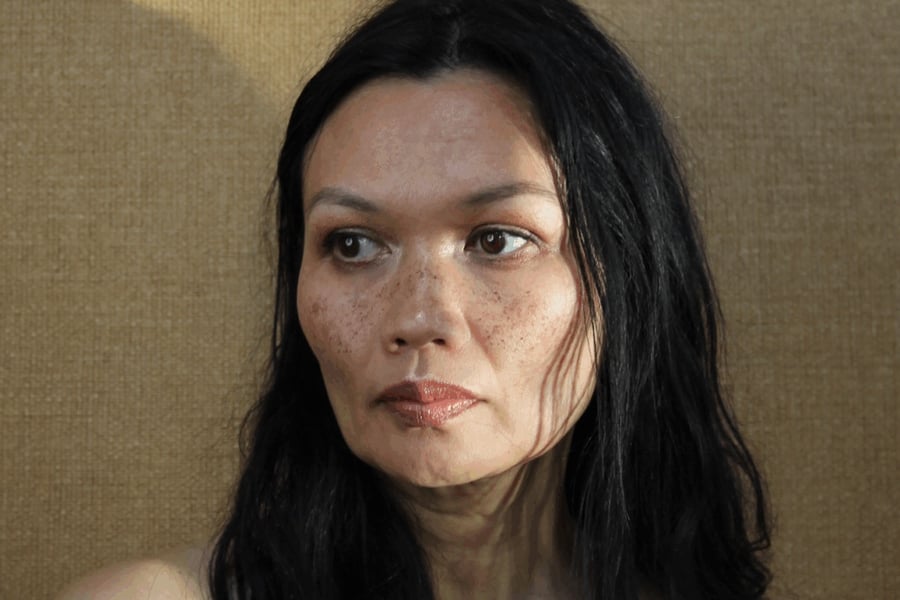
Supplied
The Stunning Reinvention of Bic Runga
Bic Runga just returned with 'Red Sunset', her first album of all-original material in 15 years. But as she told Rolling Stone AU/NZ, it's not really a 'comeback' record at all.

On a bitterly cold Wednesday night in September 2023, Bic Runga attended the second-ever Rolling Stone Aotearoa Awards. She was the main attraction, performing a few classic songs from her extensive repertoire in front of a mixed-bag crowd of other esteemed Kiwi musicians (The Beths, Georgia Lines), New Zealand media, and industry hangers-on. sShe received the Icon award, too, given in recognition of her achievements over the course of her career. After a pleasant, self-effacing speech inside St Matthew’s-in-the-City, that was that — another accolade to go along with her Silver Scroll award, her official Order of Merit, and more Aotearoa Music Awards than should be humanly possible to win in one career lifespan.
To a casual observer in the crowd that night, they might have thought they’d not hear much else from Runga. It had been seven years since she’d last released an album, after all (2016’s Close Your Eyes), which mostly features covers), and Icon awards aren’t usually given out in the middle of a career — they’re usually a full stop.
But Runga, deep down, perhaps even on that very September night when people came to laud her past achievements, knew she had much more to give.
“[…] I think it’s really cool to come back and make new songs because you just know so much more,” she says over the phone, just over two years later. “And if you don’t let the industry make you believe that it’s only about being young then you’re fine.”
Runga returned this February with the atmospheric Red Sunset, her first album of all-original material in 15 years (2011’s Belle).
Her sixth album is the furthest thing from an exercise in nostalgia or cheap commercial fodder — the tracks are definitely not what a long-time fan would expect a Bic Runga song to sound like.
She avoided both of these pitfalls by making a record that is both forward-facing, in touch with modern sounds, and influenced by the past, chiefly French pop of the ‘60s and ‘70s; timeless, in other words.
Love Music?
Get your daily dose of everything happening in Australian/New Zealand music and globally.

“I guess I’m always trying to make something timeless,” Runga acknowledges. “I think it [Red Sunset] sounds modern enough without sounding like I’m having a midlife crisis.”
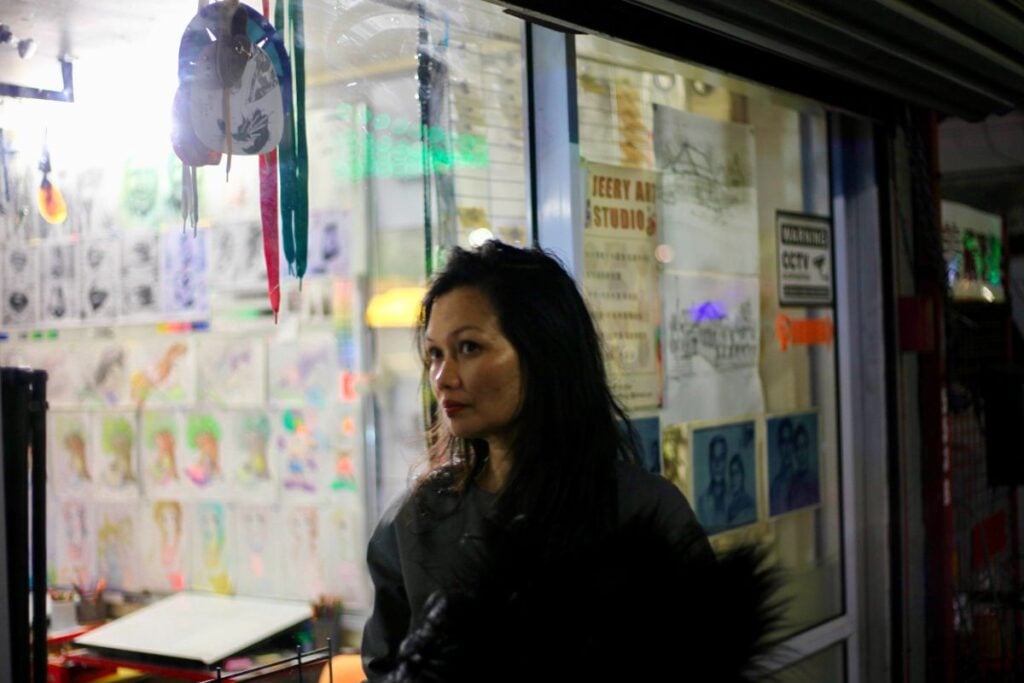
Credit: Aileen Chen
One month before our call, Runga turned the big 5-0. For the better part of the previous two decades, she focused on raising her family.
When her eldest child — she has three children, aged 10, 12, and 18 — recently went off to university, Runga felt like it was the ideal time to properly get back into music.
“I’ve [now] got more space in my brain for songwriting because songwriting takes more concentration than I was able to give it whilst having my family.”
She refutes any suggestion, however, that she ever ‘gave up’ music during this period of her life. She recalls reading an interview with Patti Smith in which the evergreen punk warrior revealed that she once “took out 10 years” from music.
“[…] I think I was reading that when my children were infants. When you think that it’s never going to end, you think this is like a Groundhog Day [situation] that is so exhausting. And you just think, ‘I’m never going to get back to my work.’ And so I think after a little while I just stopped struggling with it after I read that, and I just thought, ‘Just do one thing at a time.’”
Let’s put Runga’s longevity into perspective.
when Drive, her era-defining debut album, topped the NZ Albums Chart in August 1997, Runga shared the top 10 with, to name a handful, the Bee Gees, Savage Garden, Jewel, and Hanson; when Red Sunset landed in the top 40 last month, Runga’s name was alongside the likes of Justin Bieber, Fred again.., and sombr. Will sombr still be making music in 29 years? Probably not (one can hope).
Modern music increasingly feels like a young person’s game, but as Runga astutely notes, it wasn’t always this way.
“[W]hen I was growing up it felt like there were a lot more middle-aged icons that I was listening to when I was only about, you know, 10. I mean, people like Diana Ross. Or Shirley Bassey was my mum’s age… I think it’s almost like music’s been so devalued… it can [also] be a bit of a sausage factory. Like, if you fail, you’re out, and so they just get someone else. But I think that’s just quite short-sighted. You don’t get time to develop.”
Runga feels that she “had a really clean run” for her first three albums — Drive, Beautiful Collision (2002), and Birds (2005) all topped the chart — but this meant she “hadn’t learnt how to get up after a so-called failure.”
The “so-called failure” in question, 2011’s Belle, still charted in the top 5 in Aotearoa, but Runga says “it was just not doing the same numbers as what a major label would like.”
“I didn’t really know what you were meant to do after that and nobody told me either,” she adds.
After she says this, I can’t help but think about the myriad female Aotearoa artists who have told me about their transition to being an independent artist: RIIKI REID, Theia, Fazerdaze — the list could go on.
When Runga sat down with current Kiwi pop star BENEE for Rolling Stone AU/NZ’s Musicians on Musicians series two years ago, they (trauma) bonded over the difficulties of being a woman in music, no matter the year or decade.
“[T]hese are still things that need correcting,” Runga says. “I think the industry actually could fix this. And it’s really horrible to see that happening to people… It doesn’t have to happen. [I] think it’s sort of quite knowable. Those things that happen to you are quite understandable.”
Looking back, Runga says that what she was experiencing at the peak of her career would now be called “burnout.” It wasn’t the only reason she took a step back from music, but relentless touring quickly took its toll on her health.
“[Y]ou definitely didn’t talk about mental health then. There’s no way. You wouldn’t do that, because there was not a supportive environment to voice that stuff. So you just had to figure it out for yourself.”
She lauds the example shown by Metallica in Some Kind of Monster, their vulnerable 2004 documentary which captures one of the most turbulent periods of the heavy metal band’s career (James Hetfield entering rehab for alcohol issues was just the start).
“It’s really old — it’s over 20 years old now. But I remember thinking at the time — I mean, they go and see a sports psychologist because they don’t know how to make a comeback after so much success… [They’re] sort of imploding as a band, as a team, they don’t know how to get along anymore. But it’s actually textbook, you know, and good on them for airing all that stuff.”
Runga is the first (and quite possibly the last) artist to ever turn the tables on me in an interview.
“Hey,” she begins. “You have a Scottish name.”
“Yes, I’m Scottish. I’ve been here for seven years now.”
“It’s funny, I was actually just looking up your surname because it’s clearly a Scottish name, and it says that it means ‘Lake of the King’.”
“It does, yeah. It’s from the old Gaelic, I think.”
We talk about Ōtautahi Christchurch, where I currently live and where she is originally from.
She was raised in the city by a Chinese Malaysian mother and a Māori father, and her parents instilled in her an unorthodox music taste, including a fondness for the unfashionable but well-regarded German composer James Last.
“I guess my taste is sort of rock and roll and I don’t really make music that I necessarily like stylistically — it’s not that I don’t like my own music, but it doesn’t represent my taste,” she says.
“I guess I can’t undo that, but that kind of orchestral pop stuff definitely infiltrated my senses… I’m also a really massive Led Zeppelin fan, and I love all the classic drummers. I’m really inspired by all the great drummers. Jimi Hendrix’s drummer, the Deep Purple drummer, you know, [and] John Bonham.”
Another of her personal favourites, Jimmy Page, came to see Runga perform during the height of her early success. She still sounds a little shocked, all these years later.
“He came to two of my shows, and MOJO magazine took a photo. I want to find that photo! I can’t find it anywhere. But it was honestly a highlight of my career, [of] my life… Led Zeppelin was always my favourite band growing up in Christchurch.
I just thought, ‘I can quit now.’ I can die happy, that’s it. I don’t need to do [it] anymore. And I actually didn’t do [it] anymore! I went home and I had my family. I was just like, ‘That’s it, what else is there?’”
That’s what makes this new chapter of Runga’s career so rejuvenating, so freeing: the shackles have been well and truly removed.
She co-produced Red Sunset with Kody Nielson, Mint Chicks hero and Runga’s creative and life partner, in the pair’s home studio.
“[H]e’s become a really great mixer and engineer and we’ve really invested in our home studio,” she says. “We have every bit of gear that we ever wanted now — it sort of seems like the right time to make records again for us as a family because we’ve got our studio sorted.”
The pair returned to “analog stuff,” which Runga says suited her style. “There’s something about my voice that doesn’t suit being just all-digital… [I] think it makes my voice sound sort of squeaky, like an ad or something.”
“He’s a great creative partner and we work really well together,” she continues. “We just do whatever we want to do, you know, because that’s the thing about being at the level we’re at — we just do what we want. It doesn’t matter.” (Nielson’s other project, Silicon, will support Runga on her upcoming tour. Runga says she’s playing drums in his band at the shows.)
Runga and Nielson made a conscious effort to not chase music trends during production. It’s a difficult tightrope for any pop star to traverse: for every Music by Madonna, there’s 143 by Katy Perry.
“I’m very aware of what’s happening [in music]… I sort of use it more as a benchmark to push against… they’re just like road markings or something… I don’t really feel like I belong anywhere anyway, but I’m aware of the way things sound.”
Runga remembers the thrill of seeing Amyl and the Sniffers play live at the ARIAs a few years ago, a performance, led by the inimitable Amy Taylor — surely the best punk frontperson of her generation — that had her “on the edge of my seat.”
“I was like, ‘At last, something that I understand.’ That’s pure rock and roll and that’s a real star. When I see that sort of stuff I feel so relieved…”
Runga looked for inspiration from other artists, aside from Patti Smith, who made a successful return to music following a lengthy absence.
“I remember Depeche Mode coming back. I’m always watching how that’s done but there’s not huge examples of it these days — it’s rare to have industry support for those kinds of moves.” Such comebacks “usually involve some sort of Christmas album,” she says wryly. A festive record is not her style.
“Red Sunset” — the title track — is more her thing. It’s a song so comfortable in its own skin, Runga slinking her way through her and Nielson’s dazzling dance-pop production.
When it was released as the album’s lead single last year, I couldn’t help but be reminded of “Padam Padam”, Kylie Minogue’s great renaissance hit of 2023 — both songs are thrillingly modern without ever sounding forced.
“I was trying to make a record that sounded like I wasn’t completely ignorant to how music’s meant to sound in 2026, but also not trying to be something I’m not,” Runga says.
“I love Kylie. She’s another example of someone that just kind of knows her audience and can nail it… I never had that critical massive audience where we could keep going like that. I’m still sort of quite underground in my own mind.”
It feels erroneous to call someone of Runga’s stature “underground” — those types of artists don’t have Aotearoa Music Award gongs in the double figures — but she stands by her word choice.
“[…] the thing about being sort of ‘underground’ is that no one was expecting a record from me anyway,” she insists,” so I could just make anything that I wanted to make.”
Aotearoa, it must be acknowledged too, is a curiously isolated country, culturally speaking: Six60 sell records like the Beatles here, but their presence is virtually non-existent in the Northern Hemisphere.
It’s this isolation that allows someone like Runga to walk the streets of Paris as a, quote unquote, nobody, just soaking up the inspiration of the French capital.
Red Sunset was recorded there last winter, Runga returning to the city she lived in at the turn of the century, this time accompanied by her family.
“I guess I was just trying to recapture something that I felt there because I used to live there and I hadn’t taken the family over before,” she explains. “And, you know, seeing it new through their eyes.”
“Paris in the Rain”, one of the album’s standout tracks, is about “when you go back to Paris after 25 years — it’s still the same Paris, but everything else in the world has changed. [There] were massive floods just before we came, so there’s this kind of apocalyptic feeling.”
The song contrasts “the familiarity of Paris” with a “dark, bad news feeling that’s happening in the world as well… So [I] was trying to make a song that captured those two things.”
Of Paris’s inevitable charms, one word comes to mind.
“[…] I don’t really like using the word ‘vibe’ but I kind of can’t think of a better word,” she says. “I just wanted to get some of that ‘vibe’ in the music.”
They pulled it off in style. As RNZ’s glowing review notes, Red Sunset “sounds French, seemingly drawing inspiration from that country’s pop music of the ’60s and ’70s.”
As the reviewer, Tony Stamp, goes on to say, much of the album “evokes the era of Françoise Hardy and Serge Gainsbourg.”
“These three were all singles and form a statement: Runga is trying new, unexpected things. It’s a thrilling start to the album, not to mention a brave move from an established artist,” his review adds.
Not only does Runga surprise me with the “underground” assertion, she goes on to insist that she’s not a fantastic singer, either.
“[…] I do think of myself as a songwriter first — I have a pretty small range as a singer, [I] think I stick within my wheelhouse.”
“If I had to get up and sing a Whitney Houston song, I would fail miserably! I know not to do that,” she adds.
I try to reassure her. “I think most singers would fail with a Whitney song.”
Some of the best albums ever have been made by singers with limited ranges, or, in the case of a Lou Reed or Bob Dylan, singers who couldn’t sing at all.
“[Y]ou can get everything right and tick every box and be technically perfect, but it might still not have anything going for it, you know?” Runga says.
“[…] if you listen to like a Rolling Stones record, there’s so much depth and and so many nuances to the drumming… and I wouldn’t want to call them mistakes because that’s just not what it is, but people chuck that stuff out now, they don’t don’t appreciate those little accidents.”
Runga’s now looking to the future. Next year marks 25 years of Beautiful Collision, but she isn’t keen on reminiscing too much.
“I think it’s time to maybe move on to new things now. [I] think now that I’m looking forward I’m not trying to look back so much.”
View this post on Instagram
Before then, she’s taking Red Sunset (and older material) to crowds across Aotearoa and Australia over the coming months, beginning in Kirikiriroa Hamilton next Saturday (March 21st).
“It’s good to play new things. It’s good to have something new in the repertoire, for sure,” she says. She’d like to secure a run of European dates, while a long-awaited return to the UK (“It’s been well over ten years since we visited you,” she wrote in a social media announcement) is booked for June.
There will be no burnout this time round, though. In this new, healthier chapter, Runga’s feeling no pressure whatsoever. Long may it continue.
Bic Runga’s Red Sunset is out now. Ticket information for her tour dates is available here.

