






























This Deep Dive is part of a new Scene Report on Dunedin. Check out the series here.
In February 1992, the 3Ds came onstage at the Logan Campbell Centre in Auckland to play before Nirvana and proceeded to do the unthinkable — they blew the headliners away.
Certainly that was my feeling as a young grungehead standing in the crowd. Kurt Cobain et al sounded solid, but restrained. That was something you could never say about the 3Ds — their songs were feral beasts that would nuzzle your leg briefly, before they erupted into howling and ran wild laps around the yard.
The following year, the 3Ds reached their glorious height with The Venus Trail (1993). Their label, Flying Nun Records, had a reputation for indie rock that still had its seams showing. The Dunedin bands on the label took the DIY attitude of punk but deflated all the anger out of it, while keeping the rawness and the catchy choruses.
By the 90s, two of Dunedin’s biggest Flying Nun bands — The Chills and The Straitjacket Fits — had gone to the US, where they foolishly ironed the creases out of their music and ended up with duds. Instead it was the 3Ds who created the quintessential Dunedin album of the era, despite the band containing three Auckland-bred musicians.
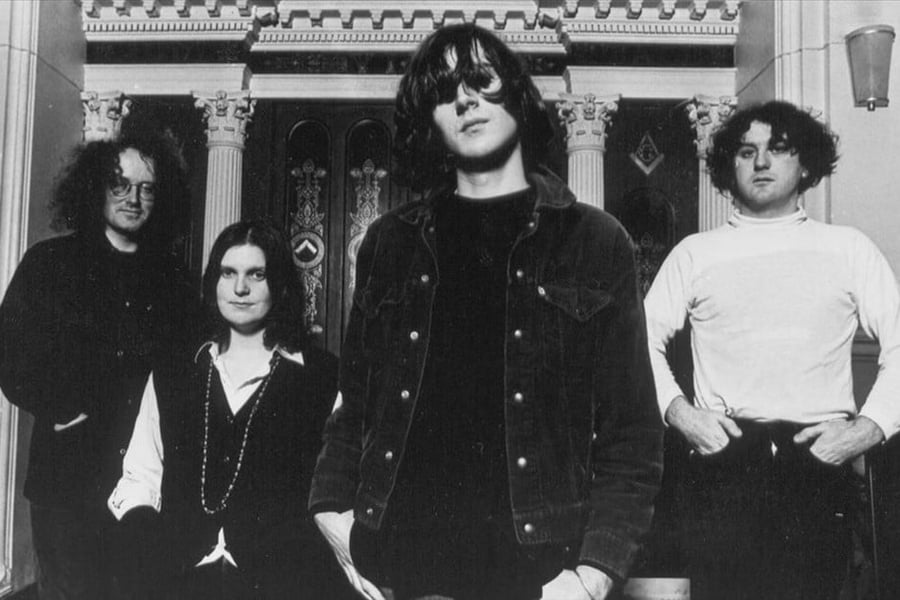
David Saunders, David Mitchell, and Dominic Stones had moved to Dunedin because it was somewhere you could live cheaply while making music. They were joined by Denise Roughan from another seminal Flying Nun band, Look Blue Go Purple. Yet, there was no question that the 3Ds were a Dunedin band at heart, given all their main releases were recorded in the city using the audio equipment from local studio Fish Street, though in the case of Venus Trail they set it up within the eerie halls of a Grand Masonic Lodge.
The 3Ds might’ve had the distorted guitars, but unlike the gloomy Seattleites, they retained a sense of humour. Album opener “Hey Seuss” comes across like a desperate plea to an absent god, but it’s threaded through with childlike wordplay — “My mouth is stuckered / And my lips are puckety-puckered” — and the video features characters from Dr Seuss.
Love Music?
Get your daily dose of everything happening in Australian/New Zealand music and globally.

Saunders and Mitchell both wrote earworm guitar riffs, which they often played in unison like some demented version of a heavy metal harmonised guitar solo, with the two lines soon coming into conflict — bending out of tune with one another and then going off in their own directions.
What held it together was the rhythm section. Stones provided the kind of propulsive foundation that Steve Shelley supplied to Sonic Youth, ensuring even the noisiest moments retained a backbone. Denise Roughan did a similar job on bass, though could also provide some rhythmic counterpoint when it was needed — as in “Cash None”, where the verses are kept off-kilter by the movement of the bass and an answering chirrup of guitar, which allows the chorus to be all the sweeter when the band falls together
The balance of elements is what makes each element on The Venus Trail seem like a necessary addition, placed perfectly in contrast to one another. Every tender lyric or sweet melody is answered by darkness and dissonance. Roughan’s vocals might have a twee fragility to them, but the lyrics are always bittersweet, as on “Golden Grove” when she sings: “In summer I walk in the golden grove / But winter’s been in every leaf I see.”
This track is one of many coulda-been-hits on the album, alongside “Beautiful Things” and “Summer Stone”. Yet the band had no interest in pandering, so instead made a music video for “Man on the Edge of a Nervous Breakdown”, which is too unhinged to be anybody’s idea of a pop single — the guitars chugging out a sludgy riff, then squealing for mercy between rounds.
Though just when you had Mitchell pegged as the frenzied guitar player, who sang on the edge of yelling, he turned up at the end of the album with the acoustic number “Spooky” — a maudlin classic worthy of Elliott Smith.
The Venus Trail proved the 3Ds were ready to take on the world and they made a start — touring the US supporting Superchunk, which led to Merge Records distributing the album. But life on the road didn’t suit them and they broke-up after failing to find any new ground on their next album, Strange News From the Angels.
Their middling success seemed unbelievable to me at the time. After all, I’d been floored when I attended a launch gig for the album. I skateboarded along from my student flat in Ponsonby to see them play at The Gluepot. In the midst of a solo, Mitchell grabbed my skateboard from where I’d rested it on the side of the stage and dropped his still-feedbacking guitar on top of it, then sent it careering across the stage.
Sometimes you can be in a small shitty venue and feel like you’re seeing one of the best bands in the world. When I listen back to The Venus Trail, it makes me think I really was.
The Venus Trail is available to purchase here.
Gareth Shute is a writer and journalist from Aotearoa. His latest book, Songs From the Shaky Isles: A Short History of Popular Music in New Zealand, is available to purchase here.

