




























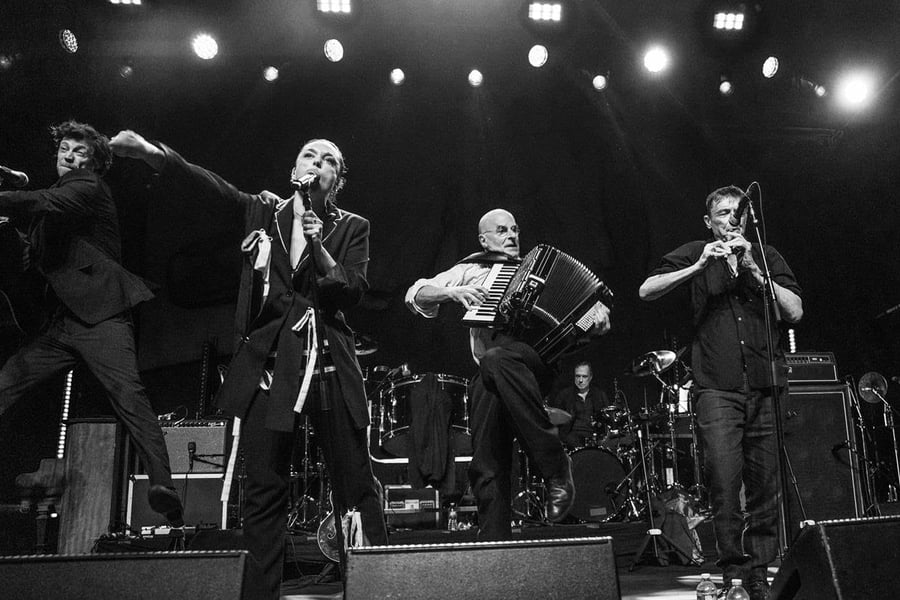
Fourteen years is a long time between visits. For a band like The Pogues, whose songs have long lived somewhere between pub folklore, punk rebellion, and literary poetry, it’s practically another lifetime.
So when Spider Stacy reflects on the band’s upcoming return to Australia, he sounds equal parts surprised and delighted that it’s happening at all.
“It’s not something that I ever imagined would happen,” he says, laughing at the strange sequence of events that has brought the band back onto international stages.
The catalyst, as with many things in the band’s orbit over the past couple of years, traces back to the death of frontman and chief songwriter Shane MacGowan in late 2023. For a moment, Stacy thought the story had reached its natural conclusion.
“With Shane’s passing… it seemed like, okay, that’s it,” he says. “We’ve drawn a line under everything now.”
But music — especially music as beloved as The Pogues’ — rarely stays finished.
A few months later, Stacy received an email that quietly set the whole thing in motion. Tom Coll, drummer for Irish band Fontaines D.C., was helping organise a small weekend of Irish music at a folk club in East London. It coincided with the 40th anniversary of Red Roses for Me, The Pogues’ debut album, and Coll wondered if Stacy might like to curate a night devoted to the record.
Love Music?
Get your daily dose of everything happening in Australian/New Zealand music and globally.

The idea was meant to be modest. A few musicians, a couple of hundred people, a one-off celebration. Instead, it snowballed immediately.
“We announced it and the place sold out straight away,” Stacy says. “It only held a couple of hundred people and suddenly there was this huge waiting list.”
The show quickly moved to the nearby Hackney Empire, a grand Victorian theatre that holds more than 1,500 people. With the larger venue came a larger vision. Stacy began assembling a backing band and inviting singers from across the contemporary Irish music scene to reinterpret Pogues songs.
The experiment worked better than anyone expected.
“These kind of things can sometimes… you organise them and then it’s just dreadful,” Stacy says. “It just doesn’t work. But this was extraordinary.”
From there, the project took on a life of its own.
“It just grew legs,” he says.
A follow-up show in Dublin drew around 7,000 people to the Three Arena. Tours across the UK and North America followed. Each performance brought in new collaborators, new voices and new interpretations of songs that have long been embedded in the DNA of folk and punk alike.
Now that same celebration of the band’s music is heading to Australia and New Zealand — The Pogues’ first visit to the region since 2012.
There’s acclaimed singer-songwriter Lisa O’Neill, whose devastating performance of “Fairytale of New York” at MacGowan’s funeral went viral around the world. There’s John Francis Flynn, whose experimental approach to traditional music has made him one of the most exciting voices in modern Irish folk. Musicians connected to bands like Lankum and Goat Girl also appear in the lineup.
For Stacy, the enthusiasm these younger artists bring to the material is infectious.
“In the case of the Irish musicians particularly, they all seem to have grown up listening to The Pogues and they really, really love the band,” he says. “So for a lot of them it’s like, ‘Oh, this is fucking brilliant — I’m playing with The Pogues.’”
The expanded lineup has also changed the energy onstage in ways Stacy appreciates.
“It’s not just this roaring masculinity,” he says. “It’s a kind of roaring femininity as well. It’s raw, but it’s better to have that balance.”
One of the most powerful moments in the show arrives during “Rainy Night in Soho”, when O’Neill’s voice is accompanied only by harp.
“When we first rehearsed that,” Stacy recalls, “everyone was looking at each other going, ‘I’m not crying, you’re crying.’”
Despite the evolving lineup, the philosophy behind the project is simple: honour the songs rather than turn the tour into a memorial.
“I thought it was a really good way to honour Shane without doing the whole thing where it’s like, ‘This is a tribute show to our singer who died,’” Stacy says. “He would have hated that.”
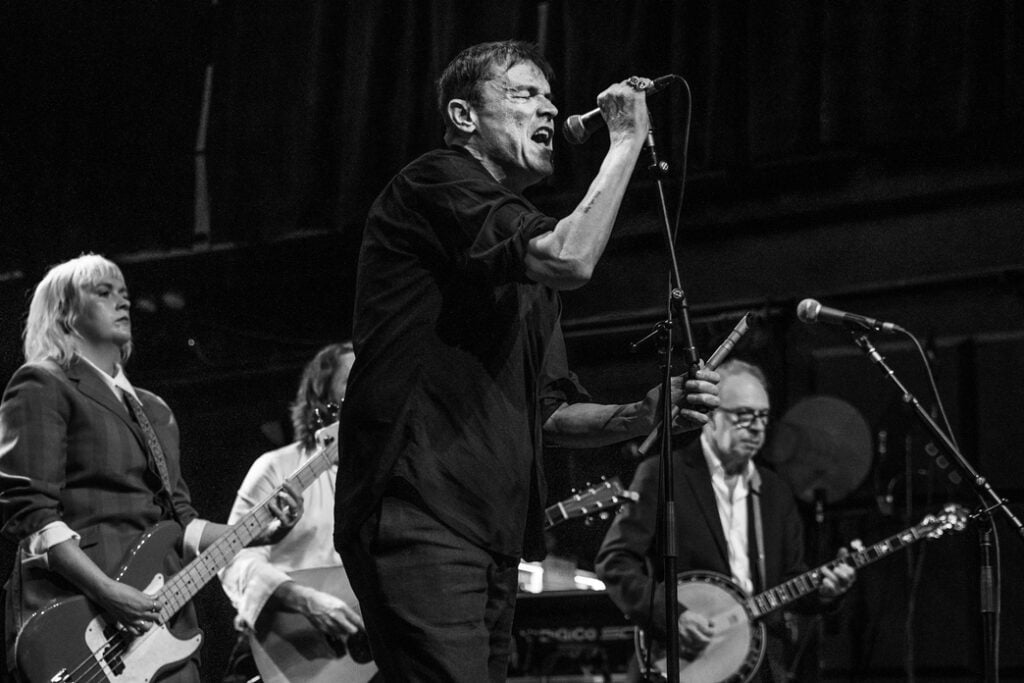
Image: Spider Stacy Credit: Graham MacIndoe
Instead, every performance becomes a living tribute simply by playing the music.
MacGowan’s songwriting remains the beating heart of The Pogues’ legacy. His lyrics, equal parts gutter poetry and literary elegance, gave the band a voice unlike anything else in punk.
“He wrote like a proper writer,” Stacy says. “The language could be the language of the gutter or the language of the stars. Shane could do both.”
That talent was already evident when the band recorded their 1985 masterpiece Rum Sodomy & the Lash — the album that forms the backbone of this tour’s setlist.
Produced by Elvis Costello, the record expanded The Pogues’ sonic palette while preserving their scrappy punk instincts.
Looking back, Stacy admits his memories of the recording sessions themselves are hazy.
“There was a lot of sitting around,” he says. “Because the tin whistle cuts across everything, I’d often be waiting to overdub later. So when I’d done my bit I was quite happy to go down the pub.”
What the band always recognised, even in those early years, was the strength of MacGowan’s songwriting.
“We always had a strong sense of how good we were,” Stacy says matter-of-factly.
He remembers a moment during one of the band’s earliest tours when the idea crystallised.
“I said to Jem [Finer] one day, ‘I think we are the best band in the world,’” he recalls. “And he said, ‘Do you?’ And I said, ‘Yeah, actually I do.’”
It wasn’t arrogance, he insists — just an honest recognition of the chemistry they had.
“I think you have to be able to say that to yourselves,” he says. “Sometimes it actually is true.”
Four decades later, those songs continue to find new audiences.
At recent shows, Stacy says he’s been struck by the mix of generations in the crowd.
“You go see bands from the ’80s and there are a lot of shiny bald heads in evidence,” he laughs. “Which is brilliant. But it’s really great when you get twenty-somethings really fucking going for it.”
Part of that appeal comes from the way The Pogues’ music is passed down within families. Parents play the records to their kids. The songs survive by word of mouth.
At the same time, a new wave of Irish artists — from Lankum to Kneecap and the Mary Wallopers — has reignited global interest in the country’s folk traditions.
“They’ve made people very aware of Irish folk music again,” Stacy says.
The Australian leg of the tour will bring the project to some of the country’s most unique venues, including Fremantle Prison and the Sydney Opera House.
When Stacy first saw the Opera House listed on the itinerary, he admits he had to double-check.
“You look down the list and suddenly it’s like — wait a minute, Sydney Opera House?” he says. “How could you not be chuffed about that?”
The band will also appear at Bluesfest, though festival time constraints mean the set will be slightly condensed.
“The set can be contracted without losing any of its momentum,” Stacy says.
Momentum is a fitting word for a Pogues performance. Even with a large ensemble onstage — whistles, banjos, pipes, brass and percussion colliding — the music often feels gloriously on the verge of chaos.
“It’s a headlong rush a lot of the time,” Stacy says. “Like bits might fly off the sides. It’s a bit like a rickety rollercoaster, but a big, solid one.”
For a band that once played more than 200 shows in a single year during the mid-1980s, touring looks a little different now. The pace is saner, the pressures different.
Still, Stacy acknowledges that the relentless touring schedule of those early years eventually took its toll, particularly on MacGowan.
“We were touring way too much,” he says. “In hindsight, things might have been handled differently.”
Yet despite the turbulence that often defines rock history, The Pogues themselves remained remarkably cohesive.
“There were never rival camps or festering animosities,” Stacy says. “Maybe the odd terse word when drink had been taken, but nothing like the horror stories you hear about some bands.”
View this post on Instagram
Today, performing these songs again alongside musicians who grew up loving them has become something unexpectedly meaningful.
“It’s been really life-affirming,” Stacy says.
And as long as audiences keep showing up, he sees no reason for the journey to stop.
“As long as we can keep doing it, and people want to hear the songs, and there are people who want to play them with us — why not?”
After everything The Pogues have survived — the chaos, the decades, the loss of their most iconic voice — the music keeps finding new ways to live.
“I know Shane would have been delighted,” Stacy says. “I can’t think of a better way to honour him than this.”
Check out The Pogues’ Australian and New Zealand tour dates here and here.

