





























From underground club nights and 12-inch dance records to multiplatinum albums and multiple ARIA and Grammy Awards, the Sydney- and L.A.-based independent record label, artist management team, touring agency, and music publisher Future Classic has seen it all.
Co-founded by partners Nathan McLay and Jay Ryves in 2004, Future Classic has become an industry powerhouse over the last two decades, pushing artists such as Flume, G Flip, Chet Faker, SOPHIE, Flight Facilities, Hayden James, Sycco, Wafia, Ta-ku, and a host of others into the spotlight.
As the Future Classic crew celebrates their 20th anniversary (they actually turn 22 this year, if we’re splitting hairs) this month, McLay, Ryves, and fellow co-founder Chad Gillard sat down with Rolling Stone AU/NZ for an oral history covering Future Classic’s storied past, as well as what’s on the horizon for the label in 2026.
2004: A Dream & An Aggressive Kitten
McLay: It started at the end of 2004 when I was working for another music company, Inertia, and I was advising them on the nascent digital music space that was coming. As part of that, I was fortunate enough to travel with the managing director at the time, Ashley Sellers, to conferences and to meet their labels in the UK and Europe. I was showing them some music from Australia that was unreleased and was stuff I was playing around town when I’d DJ. One of those partners asked if I’d be interested in starting a label and putting some of it out, and I asked Ash if he was OK with that, and he said to go for it. Soon thereafter, we kicked off with the first album release, which was a compilation of Australian music called Australia Select.
Chad joined as our first full-time staff member in our little tiny terrace house in Darlington with our aggressive kitten.
Gillard: I met Nathan at my sister’s 21st birthday party when I was 17. My band were playing, and I showed Nathan a cover that we’d done that we’d recorded on a MiniDisc recorder and Nathan actually knew the original song. He was probably the only person other than the guys who played in my band that even knew that artist or that song, and I was like, “Whoa, that’s crazy.” I thought I was very esoteric and obscure and he actually knew what it was, and it sort of started from there. It was the early days of the internet, you couldn’t find this stuff easily. You needed to go get treated badly by a record store clerk to learn this stuff.
2005: 40 Brides, Apples & Cognac
McLay: Jay and I were always interested in art as well as music, and she came from the visual arts side, so that was always prominent in the way we were thinking about things. In the beginning, it wasn’t a commercial endeavour by any stretch. It was really just, “Hey, let’s make some stuff, and let’s do a photoshoot — what have we got access to?”
Love Music?
Get your daily dose of everything happening in Australian/New Zealand music and globally.

Ryves: I started out doing design at the Museum of Contemporary Art, which was very much about not being a shouty graphic designer and working with the visual artists to let their work really be the centerpiece. And the graphic design, while it had to be clever and well designed and everything else, it was really there to support the art. You couldn’t crop the art, you couldn’t change the colour of the art, and the artist had to be at the forefront. I think that I always approach Future Classic artwork in the same way, with really trying to let the artist have a voice and let them say what they want to say — then it’s about finding solutions to do that. I think Future Classic’s identity is very simple, and people recognise it, but it’s always generally pretty subtle, and we try to sit beside the artists.
McLay: One of our early artists, Jamie Lloyd, his girlfriend at the time, her father was loaning out wedding dresses for people to do wedding photoshoots. It was pretty lo-fi, but we were like, “OK, we’ve got access to a warehouse full of wedding dresses, that’s a cool prop. Let’s use those, let’s do a shoot with 40 brides.” So we put a call out and asked for people to volunteer to be part of this shoot for a cover.
Gillard: It was slightly misleading though, we said “Come get married to Jamie Lloyd.”
McLay: We gave everyone a wedding dress and an apple to eat.
Gillard: You gave them apples and cognac Nathan, there was some booze involved too.
McLay: Jamie, who is an acupuncturist now, has always been very softly spoken, and suddenly he has this situation with dozens of girls turning up in these wedding dresses, and he’s sort of just like, “What’s going on here?”
Gillard: The photographer shot those images standing on the roof of my grandmother’s car. We were pretty DIY at the time.
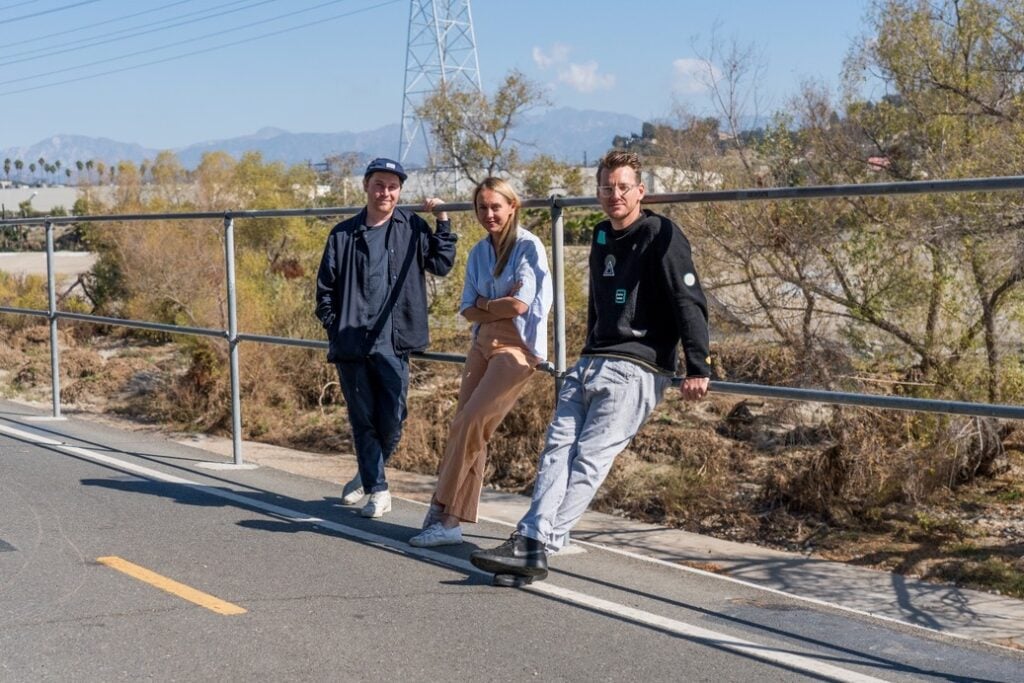
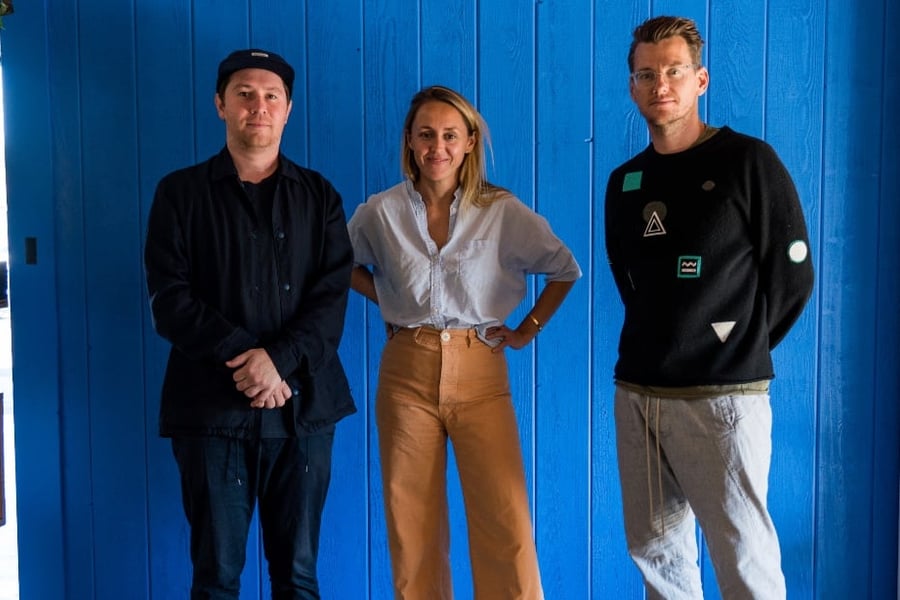
Image: (L-R) Chad Gillard, Jay Ryves, Nathan McLay Credit: Supplied
Sydney’s 2000s Club Scene & Running From the Cops
Gillard: Nathan ran multiple weekly parties back then.
McLay: We had an event that was called Superpeople at Hotel CBD, and we were working with different DJs and producers and pairing them up with different jazz people from the jazz scene. There was kind of a nascent scene bubbling away, that was quite exciting. One way we’d promote them was by putting up posters in the dead of night.
Gillard: We got chased away by police a lot of times. I never got caught, but we had other people we brought in who did, which was more awkward. We also used to go to record stores, cafes, cool clothing stores and would take them flyers. We would talk to them about the parties — it was super grassroots. We printed up the flyers, and Jay really cared about the paper stock, like it had to be a certain sort of weight and uncoated.
McLay: The early days were pretty tricky. We would put on parties, and one would make money, and then the second would lose money. But it didn’t really matter — we were DJing in bars, and we rented out a couple of desks in a little creative space we had in Redfern.
Bringing Out International Artists: Rejected Remixes & Tennis with System of a Down
McLay: We toured a lot of the early house and disco artists, people like Todd Terje and Joakim Bouaziz from France. We had a good little run there with monthly nights that were mostly sold out.
Gillard: Having some of those DJs coming and playing for us at our parties, getting to meet them properly, getting to send them music [was amazing]. We’d tour someone in the hope that they might do a remix for us, and then they’d do the tour, we’d lose money on the tour and then they’d say no to the remix, and we’d be like, great.
The first artist I organised a tour for was Todd Terje, I think that was 2007, and I don’t think that many people knew about him then, he was still very obscure. I had no idea what I was doing, but it worked. It was fun. I still see him around the traps every so often, like once or twice a year at festivals and things. That one felt really exciting and good to me.
We had Holy Ghost play the Big Day Out. It was the first artist we ever put on a touring festival, so I went on that tour and tour managed it, which was crazy, because it was like Big Day Out at its peak, 60,000 people a day. I played tennis with Serj Tankian from System of a Down one night on that tour, which was insane. I never thought that I’d be doing things like that.
Gillard: For most of those early tours, it was the first time those artists had come to Australia. So for them it’s the first time they’re trying to get business class flights because they don’t want to travel 24 hours from Europe, but we also don’t know if there’s going to be anyone that really outside of our circle cares or knows about them. It was nerve-wracking. In one sense, we’re trying to show the artist to this market, but on the other hand, is that going to mean we just lose all of the money we put into it because no one might care or know about them? I do think that carried over into the label side of the business. I think historically we’ve been best at taking things that people don’t know about and shining a light on them and breaking them.
McLay: I think your point about touring an artist so they can do a remix for us was always about trying to co-create in some ways with these people and touring can be pretty transactional, particularly as it gets bigger. I think we’ve always gravitated towards trying to be close to the creative process and close to the artists themselves, which lends itself more to the management or the A&R side of the business.
2011: Enter Flume
McLay: We’d made a relationship with Harley [Streten, aka Flume] before any music had come out. He was working at the Hard Rock Cafe and for a newsagent delivering papers in Manly. We’d run this competition in collaboration with a studio to win some recording time. The music that he sent in was obviously self-produced and didn’t require a full recording studio. It was made on his computer, but was really different and very interesting, so he became the first artist that we took on from a much more holistic perspective. We were thinking about how do we present Flume on stages, even when we had very little budget. There were very early, scrappy shows. We were just really thinking about the whole artist, their identity and the business and all the different things, which was exciting because it was a real opportunity for us. Chad is classically trained and knows how to structure songs and give feedback to artists that is very detailed, and Jay has the visual aesthetic to be able to pair great creative directors and brief people well on the visual side. So, it was a really great kind of combination of us all being able to lean into the areas that we had to support an artist like him. And obviously it was moving and growing very quickly — it was exciting.
2017: Flume Wins a Grammy Award for Best Dance/Electronic Album
McLay: It was amazing. It was really good to be able to go on this journey that grew from Sydney and then into other regions of Australia and then touring internationally — it really gave us the opportunity to grow. It did feel like we had a lot of people rooting for us from all those years of going to record stores with flyers, and I think that there was a consensus that we were coming from a passionate place musically. So it was quite nice to feel like the underdogs back at that time of people wanting us to win. So yeah, that moment was pretty surreal.
Gillard: At the time, people thought of his trajectory as this overnight success, but it wasn’t. It took years — we started working with him in 2011. That record [Skin] came out five years later. Nathan, Jay and I all relocated to LA for half of 2015 to be with him, to branch out and try to make a bigger, more ambitious record. He did sessions for six months in LA, lots of big names, and lots of collaborative stuff. There were probably 40 or 50 songs made for that record that were then whittled down to 16. I remember saying to our crew at a dinner, “I think Harley can win a Grammy on this album.” I think at the time, because the record wasn’t even turned in yet, it was a bit like, “That’s funny,” bit of a pat on the head, like, “Nice, that’s a cool idea.” But then as the year went on and the campaign got into motion, I think it was apparent to all of us there was something brewing. I don’t think it’s ever just the music. He made an incredible record, and he really dedicated himself and made something special, but there’s so many other things that have to align for that stuff to actually come to fruition. For a record to fly like that, obviously there’s hard work from us and all of our partners that we work with, but you just need things to happen that you can’t always control.
I remember a week or so after the first single “Never Be Like You” came out, and it was obviously the biggest song we’d ever released. It was starting to really get a reaction. I remember Kate Hudson reposted it and I said to Harley in the lobby of a hotel in California, “Oh my God, Penny Lane from Almost Famous just reposted ‘Never Be Like You’!” And he’s like, “Who’s that?” Like, he just didn’t care.
I think for Harley, the journey would have been insane. Like that feeling of being in your mid-20s and all of a sudden, the world has opened up.
Ryves: We went to Lady Gaga on the weekend and watching that amazing production made me think back on a lot of the live shows we did with Harley over the years, which were obviously big moments. The Flume 10-year anniversary show at the Forum in LA was a good example of that. And the Coachella moments have all been quite special, because so much time and energy goes into preparing those live shows and working with all these amazing collaborators to put those together. For me, those creative moments when we really get stuck in as a team and everyone has a role to play putting together those special productions, those are memorable.
Brushes with Big Boi, Skrillex, Diplo, Elon Musk & Invites to DJ at the White House
Gillard: The celebrity things that just started happening were just crazy for him. I remember during our third or fourth trip to LA together, Harley’s having dinner with Sean Parker and Elon Musk turned up. It was crazy, like all of a sudden the world had just changed, and we’re like, “Wow, this is someone that we met through a competition with a local record store that’s now touring the world and playing arenas.” I can’t remember the numbers, but that tour that we did in 2016, we sold hundreds of thousands of tickets globally. It was a massive step up for us.
In 2013 in London, at his first proper London show, Mark Ronson pulled up, which felt like a big deal at the time. David Beckham was at one of the shows in like 2014 or 2013, I think.
In 2014, Harley and I went to Stankonia Studios to meet Big Boi. We were really hoping Andre 3000 might have been there, but he wasn’t. We hung out at Stankonia for a few hours with Big Boi and the Organized Noize crew, the guys that produced all those OutKast records. That felt particularly crazy.
President Obama’s daughters were at one of his DC shows. I think someone OD’d at the show, so they had to be filed out and we weren’t allowed to talk about them having ever been there because that would have been scandalous, which is crazy to think in today’s media and political climate — no one would give a shit.
The gig that Harley never did that still upsets me, is he got invited multiple times to DJ state dinners at the White House, and he had no interest in doing that, so he didn’t do it. And it was the Obama White House, so that would have been so cool. But he was like, “I don’t really DJ.”
I remember in 2013 we were in Miami at a hotel and we spotted Skrillex and Diplo at the next table with 20 people. And to Harley’s credit, he was not that shy. He kind of was a shy person, but a mutual friend at the table said, “You should come and meet the guys,” and then Harley straight out the gate is like, “Hi, I’m Harley, I make music as Flume.” He just went straight in, and they were both like, “Oh yeah, we know your record, that’s amazing.” We were like wow, here are the guys that are running electronic music on a commercial and ticket-selling scale, and they’re fans of what he’s doing. That they even knew what he was doing felt kind of crazy, to be honest.
I think one of the things that has changed in the last 10 years is the sort of co-sign social media thing. That’s such a big part of it now. If you have someone with a massive following on TikTok or Instagram, people are chasing that. It didn’t feel like anyone was chasing that back in the day. Like, Harley was really good friends with Charli XCX years before she had her brat moment. She would be coming around to his house. He was also working with Damon Albarn and things like that. If anything, it was me being like, “We need to get a photo of you two,” and he’s [ambivalent]. It wasn’t like, “Yeah, cool, hit the like and subscribe button!” It was just, “OK cool, I met this person, they’re cool.”
In Bed with SOPHIE
McLay: SOPHIE would like to kind of shock me, it felt like. She’d invite me over and she’d be in bed with her partner and I’d be like, “Sorry if I’m here at the wrong time.” She’s like, “No, no, this is exactly when I was expecting you.” And I’m like, “But you’re naked in bed with your partner.” I’m like, “This is the meeting?!” So yeah, there’s been times when you come back and go, “Wow, I had a pretty wild day today. That was interesting.”
Key Releases: Jagwar Ma, Touch Sensitive, G Flip, Chet Faker & More
McLay: Jagwar Ma was a very exciting project. When we first heard the demos that Jono [Ma] and Gab [Winterfield] had, it felt very unique at the time — very fresh, a new energy. It had immediate resonance in the UK which was interesting, and made sense given Jono’s understanding of music and history and where his influences were coming from. We were fortunate to be able to be part of that incredible first album and thereafter.
Touch Sensitive is one of my oldest friends. I was DJing at a club that he was also playing at. My now wife Jay wanted to come to the event with a friend of hers, and her friend was like, “I know one of the guys playing.” So in a way we actually got together through Touch Sensitive. He’s been a friend for over 25 years, so it’s been really nice to be able to continue to have him put music out. He collaborated with a lot of people on our records. He plays bass on so many records from so many artists from Australia and abroad. He’s playing at a house party at ours pretty soon — he’s very much like the spirit animal of Future Classic.
G Flip — another one of those artists that we discovered before their first music came out, and Dan Zilber, who was with us as a team member for a number of years, credit to him for developing G. We heard that first demo that became their debut. It felt like it was DIY but quite fully formed, great songwriting, and it immediately became something that just stood out to us as having something very unique and resonant about it. It’s been a credit to G to continue to evolve and their work ethic is one of the most incredible that I’ve ever been around — just very, very committed.
Gillard: Hayden James was another one who we worked with from very early days. He was in another act that we had signed, and that act went south for reasons we don’t fully know, as in one of the other guys in the act locked him out of the socials and it just fell over. I remember Nathan being like, “Let’s back Hayden, he’s going to do a solo thing, let’s go for that,” and it turned out pretty good.
I think some of my favourite things are the ones that people probably don’t even know or in 2025. There’s an EP we did for Charles Murdoch that I still really love and think stands up… I still love that record.
I think both the SOPHIE records were important releases, particularly the posthumous record that we put out last year. That was a very interesting experience to be working with the family to get that out and trying to tell that story in terms of what SOPHIE had done, what that record is and was. We’ve never done a campaign like that. We’ve never worked with an artist who was no longer around. It’s a strange thing to have done. I’m glad we did it, but it was a very difficult thing to do, to be pitching something and you’re in the room with all these editors from Spotify, and you’re just thinking about “Fuck, I remember sitting next to SOPHIE in the studio talking about this song.” It feels weird that she’s not here.
Chet Faker — that was one of the few projects we’d signed at the time that actually had a bit of steam going already. At that point, everything else we’d signed was kind of unknown, whereas he’d already had an EP out. It felt like there was some groundswell on that one. It felt very much like Nick Murphy [aka Chet Faker] knew who he was and what he was doing and was very confident. The stars just aligned around that debut in a way that was incredible, and we’re obviously extremely proud of him. Nick and Harley were both on Laneway Festival in 2013, and then off the back of the festival, they just put a joint social media post up saying, “We need a house somewhere by the coast in Victoria for a week so we can make some music.” And then they did a collaborative EP, the Locked Door EP. I’m sure people at the time were probably like, “That’s so clever and conniving, they put Flume and Chet Faker together,” but they became friends on that tour — they worked together a bit and they were like, “Let’s go do more.” Nick’s project was just crushing it at the time. He was touring and going to markets that Flume has still never been to — selling thousands of tickets in Istanbul and places like that.
That period was probably the most insane for us. It was so heady. Everything was clicking. Touch Sensitive was having big success — he had one of the most played songs on Triple J that year. Another act, Panama, I remember there was a two-year period where every time we were in New York and in the back of a taxi, the little TV screens on the back of the seat, it felt like half the songs in those ads were Panama songs. It was a crazy time.
Ryves: In terms of releases that are my favourites, they’re not necessarily the big ones, and they’re often the ones that have slipped under the radar, but they’re equally special. My most played artist on Spotify last year was eee gee, who’s a small Danish artist that we were working with and released two albums for. I’m super proud of her records and I love the artwork and her whole energy is amazing.
2017: A Move to LA
Gillard: In 2017, we fully moved to LA and opened the LA spot. It was a little bit like we’d gotten to a certain place in Australia, then we were the little fish again in a much, much bigger pond. It was scary.
We partnered with Dropbox for that HQ, so they gave us a pile of money to build studios there from scratch. I keep this list of the alumni of people that have come through the studio and it’s an impressive list — SOPHIE, Moses Sumney, Glass Animals, Mount Kimbie, John Talabot, Mk.gee, Dean Dawson, Caroline Polachek, and Danny L Harle, who did production on the last Dua Lipa record. I think from a community perspective, it was really important for us, being new in that place, having something where we could meet people, and it didn’t feel transactional. It was just like, “We have a space you can use for free” — we still don’t charge anyone to use it. It’s very much a curated thing where people can come through, we get to meet them on their turf and they’re making something rather than having a lunch talking about music. It’s better to just sit with them and listen to some music.
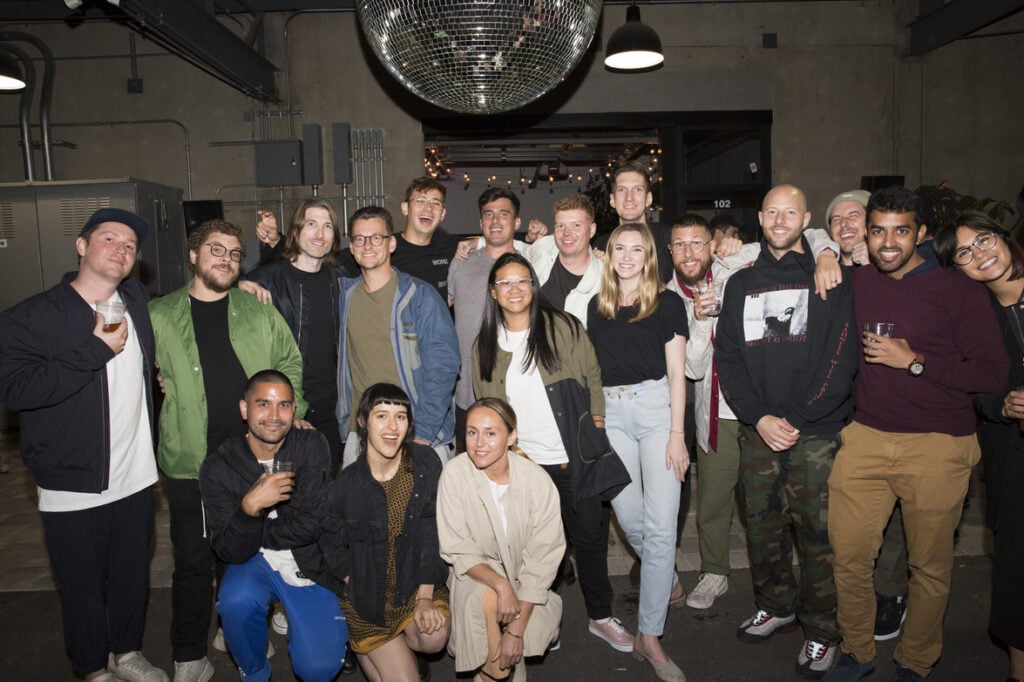
Image: Future Classic team in 2017 Credit: Maddie Cordoba
Music Video Highlights: Sleepovers at the Opera House & Drumming Marathons
Ryves: We stayed overnight at the Sydney Opera House to shoot a video for Harley [for 2016’s “Some Minds (ft. Andrew Wyatt)”, directed by Clemens Habicht], and it was torrential rain all night long. It was crazy.
McLay: It was quite surreal being in that building at in the early morning.
Gillard: And eerie.
Ryves: The G Flip video that we shot in the warehouse in LA [2019’s “Bring Me Home”, directed by Juan Sebastian Baron] was also pretty intense. That was incredible. The idea was to make a video where G was just drumming for like 10 hours and their hands were becoming raw, because the song was very emotional and raw, and G wanted to cry. So we got this warehouse in downtown LA and it was pretty sketchy, and it was like a 40-degree day, no AC and in a tin shed, basically. It was horrendous. G sat there and drummed for the whole day for hours.
McLay: The idea of doing it almost documentary style was the concept, so we had a paramedic there and G was quite literally deteriorating over hours from just continuously playing, and it was trying to capture that real emotion and real pain that was coming physically, which was a great concept.
2026: Future Classics?
McLay: We’re working on the sophomore record for a Manchester artist called Freak Slug, who had her first year in 2025 touring the world, played Sydney and touring in North America for the first time. That has been really exciting, and it’s nice to work with someone from that region of the world. We’ve done singles and bits and pieces with British artists, but it’s nice to have a longer-term relationship and be working on the follow-up album for her.
We’ve been working with this Danish duo called Kenton Slash Demon for a number of years. We did some early 12-inches with them years ago, and it’s one of those nice full circle moments where we’re now working on an album with them, which will be out this year. It’s very interesting, cutting-edge club music that I’m personally very excited about.
Gillard: Jersey, a French duo who are brothers from Paris, are working towards a record. They put on a very high energy show. That’s really fun.
There’s an act called Machine Girl we signed a couple of years ago that just put out their second record. It’s so much wilder and crazier than anything we’ve ever released before — it’s just intense, abrasive, crazy. Somewhere between punk and metal and hardcore electronica.
Emma Louise has an album that’s coming. She’s collaborated with Flume and with Flight Facilities over the years. It’s a beautiful singer-songwriter record, and there’s some incredible collaborators that she made the record with like Tobias Jesso Jr. and Shawn Everett. It’s a heartbreaking record — a record for still moments.
Two Decades of Future Classic
Gillard: It’s also a crazy ride that when we started this, streaming and downloads weren’t really the thing yet. It went from physical to MP3s to streaming to social media. It makes me feel old. The thing that we do has changed immeasurably in 20 years, and to still be doing it, to still have things that feel relevant [feels good]. It’s a pretty varied canon of work that comes into our catalogue. There are things like SOPHIE and Flume, which is very forward-looking electronic music trying to push boundaries. But then we also have folk singer-songwriter records that we’ve released. As Nathan and I get older, the things we listen to change, like we’re not in the club five nights a week anymore.
McLay: We’ve been fortunate to have younger team members join who will pull up records or find demos just like we would and still do… That’s a really great upside of what we do, because it’s like the equivalent of those record store clerks pulling out things from the back that may be a bit more obscure that we get to be excited about. Discovery is still the piece that gets me most excited.
It is a fascinating ride that we go on with artists to understand where they are and put work out that reflects that. To align what the artist is doing with what our expectations are and what we’re interested in — that Venn diagram is delicate and fragile. I don’t know how long these things are meant to last for — it’s a question that we sometimes ask ourselves.
Ryves: I’m super proud of everything and how far it’s taken us. We’ve had so many fun adventures together, all three of us, and the wider team as well. There are highs and lows obviously, and it’s tiring and all those things, running your own business. But it started really as an art project and something fun to do, so I’m obviously endlessly amazed that we managed to make a living out of it for this long, which is nice.
McLay: I’d just like to thank all of the staff, present and past. The directors, stylists, designers, roadies, tour managers — there’s so many people that sit behind this small group that you’re speaking to. It is totally a collective effort around every artist project, and it’s only by having their enthusiasm and us having this ecosystem where we support each other that we’re able to do these things.
It’s been really special to keep the team together for so long. Looking back at this milestone, 20 years or whatever, there’s been lots of ups and downs — we had the pandemic, there’s all these things in the rearview mirror, but we’ve learned so much together. We’ve managed to have these moments that really galvanised us as a group, and equally with the artists. Some of the artists are no longer releasing with us, or we’re not necessarily working day to day with them, but we’ve managed to maintain good relationships with nearly everyone, which is pretty great and something we’re really proud of.

