




























Good things take time. Exceptional things take even longer.
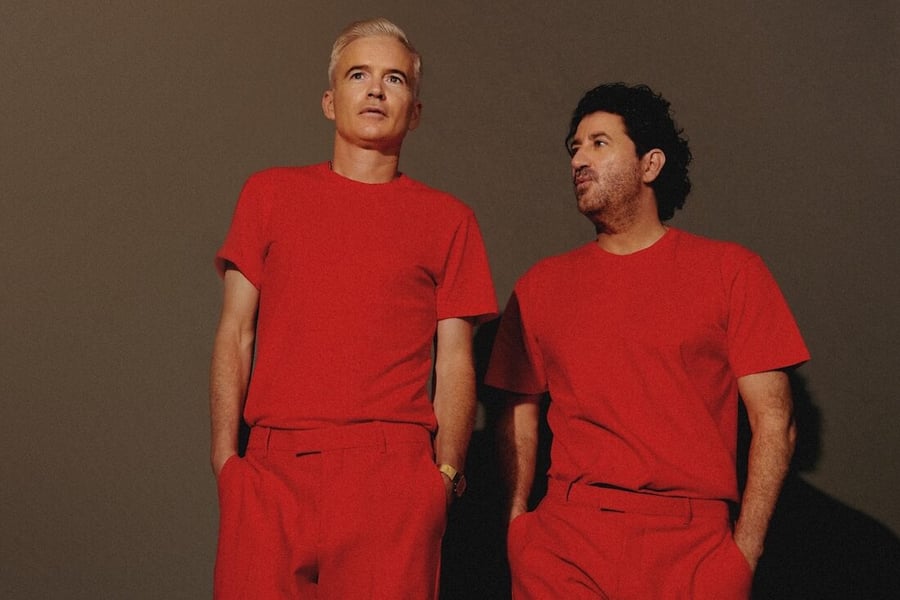
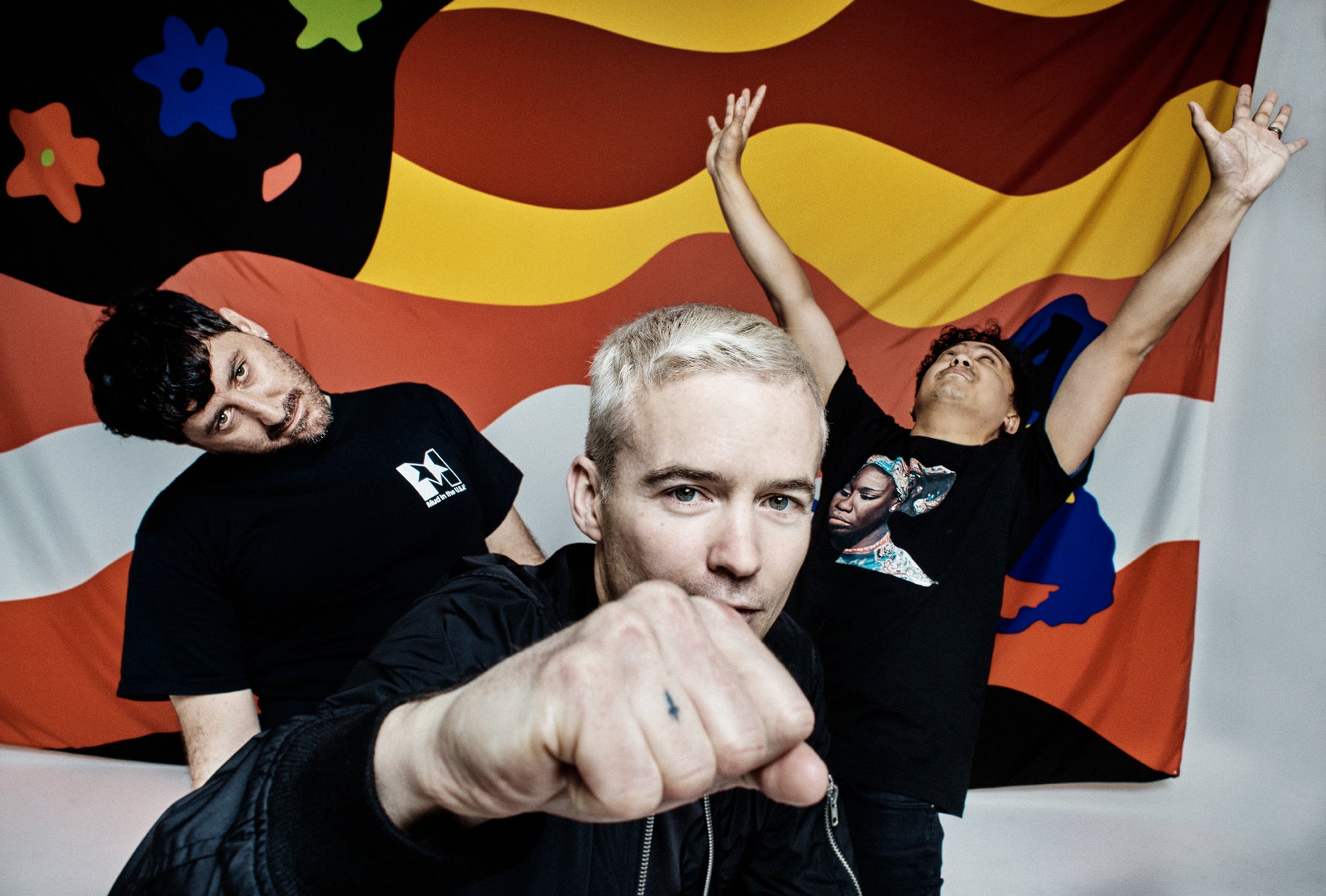
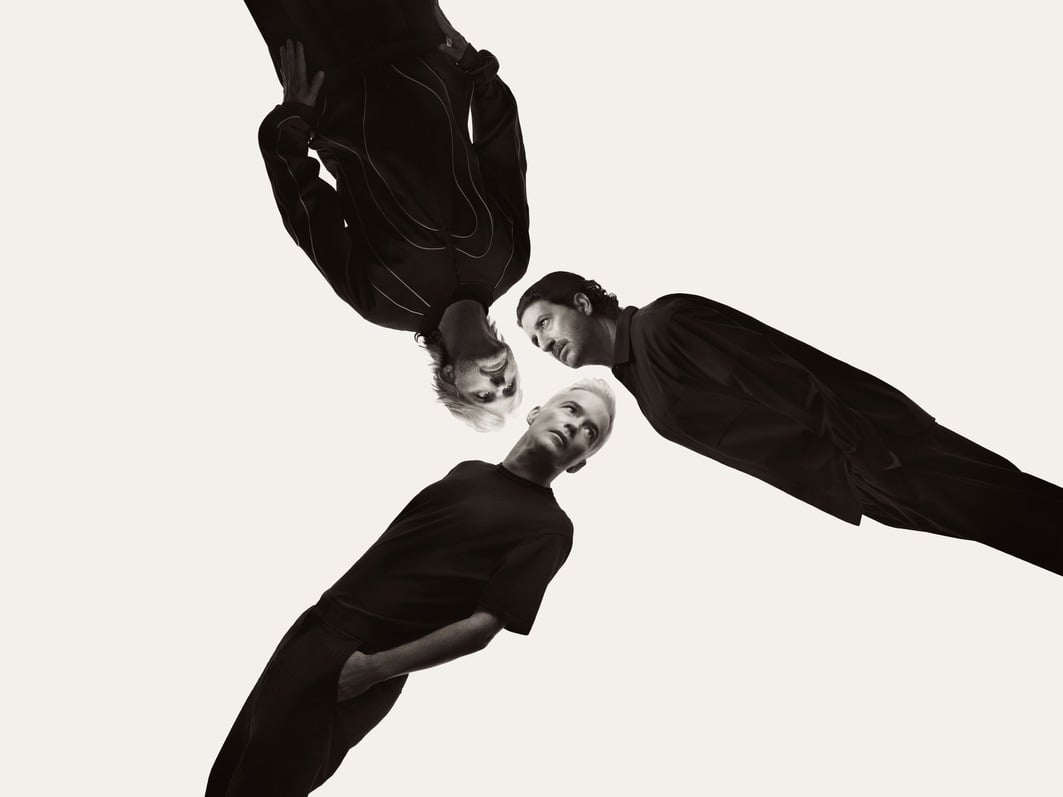
Australian electronic group The Avalanches — Robbie Chater, Tony Di Blasi and new member Andy Szekeres — are releasing their fourth album since forming almost 30 years ago, equating to about one LP per decade.
The discography may be modest, but that’s the price to be paid when your lauded music is a painstakingly crafted blend of bountiful samples (an estimated 3,500 on classic debut Since I Left You), carefully curated guests and other assorted instruments.
The number of creatively time-consuming interludes that act as crucial connective tissue on Avalanches albums has also increased over the years — 2020’s We Will Always Love You runs to 25 tracks — so it’s a surprise to learn that the follow-up to We Will Always Love You was initially intended to arrive quickly and be the group’s shortest set of songs yet.
“I remember at the start of this record kinda going, ‘Let’s just do 10 songs in a row, no joining them all together, ‘cause it’s easy and we could do it really quickly,’” says Di Blasi over lunch at Universal Music Australia’s Sydney headquarters. “It is time-consuming, and it adds a few years onto what we could do if we did it that simple way. So, we wanted to, but I just don’t think it’s us to do that.”
Still, the six-year wait between We Will Always Love You and the new album No Bad Memories is nothing compared to the agonising 16-year gap between 2000’s evergreen plunderphonic masterpiece Since I Left You and 2016’s brilliant follow-up Wildflower. The group admits that Since I Left You’s canonisation as a classic shortly after its release played a key role in the lengthy wait for Wildflower.
Love Music?
Get your daily dose of everything happening in Australian/New Zealand music and globally.

Does Since I Left You continue to set a hard-to-reach benchmark for each new project?
“Not anymore,” says Di Blasi. “I think why Wildflower took so long to be made was that expectation of matching something that was so revered, and then over time, it’s gotten even more revered. The pressure did start to mount on us, but I think that’s gone now.”
In terms of repeating past glories, Chater believes that, as much as some people may think they want a Since I Left You Part II, the reality wouldn’t match the fantasy.
“People would often be like, ‘I just want something like Since I Left You’,” he says. “Not to tell people what to think, but I wonder what would happen if we did do something just like Since I Left You — whether it would be, ‘Well, that’s good, but we already have one of those’.”
“It wouldn’t be as fresh and exciting for them as they think it would be,” adds Di Blasi.
“Since I Left You was a thing and a vibe because it was unexpected, and it was pretty crazy sounding for its time,” Chater continues. “We just like to keep that attitude in what we do now, and then hopefully the spirit is still the same, even though the albums are different.”
While the fresh and forward-thinking No Bad Memories — its title taken from an Eighties floppy-disk advertisement — is entirely its own thing, it still manages to do what the Avalanches do best: create music that hits the sweet spot between joy and melancholy, pulling at the heartstrings as often as it pulls you to the dancefloor.
Chater brightens at the suggestion that No Bad Memories sounds, in many ways, like a 21st-century update of their cherished debut, rather than a simple rehash.
“It felt like it a bit making it, ‘cause it was fun and summery and freer,” he says. “Maybe we did make [another] Since I Left You! [laughter] I remember the final bit of making Since I Left You, where you don’t know what you’re doing, you’re trying to figure out what this thing is, and then it starts to click and cascade, and it goes [makes whooshing sound] and this six-month amazing period of creativity comes. While you’re making it, you’re discovering what it is, like ‘I can see what it could be’, and this [album] was the same in that way.”
Di Blasi agrees that creating No Bad Memories harkened back to the late Nineties, when the group was making Since I Left You.
“We did say we wanted to do something that’s more like Since I Left You — something free and expanding without intentionally going, ‘OK, let’s make a song like that,’” he says. “It comes across in our attitude, and without overthinking or over-planning how it should be. It’s more like going with the flow of how it is.”
Szekeres, formerly of Melbourne electronica band Midnight Juggernauts and a key contributor to We Will Always Love You, says the listener’s role is another reason why past glories can never be repeated.
“To recapture how you felt at that time, your life at that moment, experiencing that music — it’s like an impossible dream to go back,” he says. “Even if you put the exact same record out 26 years later, it’s gonna be a different interpretation. What makes music magical is that it is a timestamp to a time and experience. Every record ever made is influenced by its time and the circumstances of what [the listener] went through. You can still appreciate it for the rest of your life and honour that moment.”
“I don’t think people quite realise how much they’re an equal partner in that memory and that whole thing,” adds Chater. “It’s like when you play live, and people are like, ‘That was a great show’. It’s like ‘No, you guys made it great tonight’. You know what I mean?”
At its heart, each Avalanches album is a romantic dive into memory and nostalgia, and Chater says No Bad Memories is no different. This time around, however, the chief inspiration for the LP comes from the way old storage devices preserve our memories — you can hear the sound of the group’s dusty hard drives booting up on the record — and how advertising shapes so much of who we are.
“Because we sample, you’re always playing with memory,” says Chater. “You’re always playing with someone else’s past life and what they were going through at the time when they wrote that particular love song or whatever. It’s like all the samples come loaded with all this history already. And then I guess it was being a little older and reflecting on your own life and story and what has your own memories and your own identity, and how much advertising forms who you are.
“With consumerism, when you’re a kid, what sneakers you choose to wear will say so much [about you], or what band you’re into. Looking at the power of advertising, a Rolex watch says a certain thing and it’s showing who you are to others, and it’s really fascinating. So I think it was like a parallel journey of self-reflection and how you relate to the world as a consumer.”
The music used in advertising that can surreptitiously be embedded in our subconscious — jingles, idents and even device start-up sounds — played a substantial role in establishing the sonic identity of No Bad Memories.
“On a basic level, we love discovering how things are created and diving into that whole world of advertising jingles — it’s such a rich vein creatively,” says Chater. “We chatted a lot about ‘Is it less valuable that [music] was written to sell something if it’s a great little jingle, as opposed to a beautiful song or something that was written just purely as an expression of lost love or whatever? Is it any less of an accomplished piece of songwriting because someone was paid to do it?’”
“It’s actually really powerful and kind of makes you realise that they know what they’re doing by making these tunes that stay in your head, which is the intention,” says Di Blasi. “Is it evil? Probably a little bit, but a good evil [laughs].”
Landing on the key themes of memory and identity was enough to send the group into creative overdrive. Earlier this year, they unveiled the mysterious Takumi Digital Archives (tagline: “At Takumi, your memories are safe with us”), a website that features fictional vintage magazines and advertisements. Some of the fictional products advertised include El Dorado cola, the Superfun™ games console and a game called Unicorn Quest, with physical prototypes being made for each.
“It’s just a big art project that has different elements,” says Chater. “I feel lucky to be able to always learn something new, whether it’s filmmaking or the language of advertising music or gaming music. I just wake up and I’ll be like, ‘What I’m doing for work today is I get to learn and research about something that I’m really interested in’, and I feel like, ‘What a great job’.
“It also has a lot to do with our relationship with [Australian artist, designer and music-video director] Jonathan Zawada, who we worked with on the last album. We’re always chatting with him, and a lot of these conversations around memory and advertising happened with him as well. So it was like one big thought, and he was making stuff and we were sending him ads.”
Despite the fruitful explosion of creative ideas, Szekeres admits there was a point where possibly too many avenues were being explored.
“At some point, we realised we were gonna have to try and somehow rein this in, because we could take it in so many amazing directions,” he says. “I mean, the fact that we were getting to the point where we’re creating our own ads, we’re creating our own taglines and music for those ads, and then we’re thinking, ‘Oh, maybe we’re going to make prototypes’… it’s like you start going on tangents that are away from music and the original feeling of listening to the song.”
“I don’t know, we just go down rabbit holes,” explains Chater. “It’s a fine line between being inspired by something new that gives you this excited energy to make a record, and getting lost in the rabbit hole where we’re making cola.”
“And Googling how to start a perfume company,” laughs Di Blasi. “That was the rabbit hole that we were trying to stay away from! That would have been another year.”
No Bad Memories continues the Avalanches’ penchant for bringing in outside collaborators, with a sizeable roster of 21 guests.
We Will Always Love You veterans Rivers Cuomo, Karen O and Jamie xx are back; others joining them this time around include UK rapper/producer John Glacier, Tunisian footwork producer Khadija Al Hanafi, Animal Collective’s Panda Bear, influential Japanese pop artist Haruomi Hosono, Mike Patton and electronic composer Suzanne Ciani, the woman behind the iconic sound of a bottle of Coca-Cola being opened and poured, used in the brand’s ads.
The most surprising guest of all may be Hollywood actor Haley Joel Osment (The Sixth Sense, A.I. Artificial Intelligence, Pay It Forward), who provides a voiceover for some of the fake ads on No Bad Memories. He’s also been roped into yet another Avalanches side quest: a surreal 35-minute short film shot in Japan that will come out after the album’s release.
“We were so lucky to get him involved in the film, which we shot over two weeks,” says Di Blasi. “We all just became so close and he’s a big fan of the band. He’s very comical. All the things he says, it just sounds like it should be in a song or in an ad. He also suggested Andres Arochi as the cinematographer, who shot the Nicolas Cage movie Longlegs, which looks so beautiful. They both turned out to be such amazing people and are really good friends now.”
“We felt like we had to keep saying to him, ‘Just before we begin, you know we’ve never made a movie, right?’” laughs Chater. “It’s nice to be able to just still be learning new things.”
Carly Simon also shows up in sampled form on “One More Fantasy,” which Szekeres sourced from the American singer-songwriter’s little-known 1985 track “Make Me Feel Something.”
For Szekeres, working with — and sampling — big-name artists continues to be a surreal experience.
“When you’ve got samples or guests who are iconic, to see their name attached to the thing you’re doing — you don’t feel worthy,” he says. “Honestly, it’s an odd feeling. I feel that way with Mike Patton. I mean, everyone on it is incredible, but those people that you knew when you were young… I don’t think that feeling ever is gonna go away where you just feel like, ‘How are we doing a song? Something’s wrong here.’”
“[‘One More Fantasy’] is another one where you’re just like, ‘Are we going to be able to get that cleared?’” says Di Blasi. “It’s just the lucky one that we got over the line. When it did, I was like, ‘YES!’, ‘cause it’s such an amazing track.”
“And it’s tricky to finish [the song] too because you assume, ‘Well, that one maybe we won’t ever be able to use’,” adds Chater. “So it’s hard to plan. You learn not to get your hopes up.”
Sampling continues to be an important part of the Avalanches’ creative process, despite being both expensive and time-consuming (the group estimate that sample clearance adds 12 to 18 months to an album’s release date).
“Even though we’ve used less samples on No Bad Memories than Since I Left You, it’s more expensive than ever, and the paperwork is insane,” says Chater.
“People are more sample-conscious now and know what they can get out of it, so they’ve got you over a barrel,” says Di Blasi. “It’s definitely getting more difficult, unless you’re a Kanye with millions and millions. It’s tougher for a little guy to do that. We had to leave some samples off because we couldn’t quite clear them.”
With so much going on in the Avalanches’ universe, I enquire when the trio knows a project is finally done.
“The day we’re about to master!” says Di Blasi, to knowing laughter from his bandmates. “I think the last few records have been all up to that deadline — tinkering, tinkering, tinkering, tinkering, and then send it at the last hour. That’s how we know it’s finished! If there wasn’t a deadline, this record would be different because there would be more things added and subtracted. So it’s good having a deadline. We learned that after a 16-year record-making experience.”
Chater agrees that record-label deadlines are crucial.
“We’ve learned to say to the record label, ‘Can you give us a deadline? We want to get it out in 2026’,” he says. “And then we’ll get a deadline from there, and then we’ll miss it about five times until we’re at the real, real, real, real deadline of like, ‘This is the only opportunity you’ve got, or else it’s coming out in 2027.’”
Regardless of whether the gestation period is six or 16 years, the Avalanches are, somewhat remarkably, still able to weave a multitude of disparate elements into a cohesive, magical whole. As with the albums that preceded it, No Bad Memories conjures a special emotional resonance that deftly glides between euphoric joy and bittersweet heartbreak, even if that description doesn’t quite do it justice.
“You can’t describe what it is — it’s a feeling that I don’t think we can put into words,” says Chater.
“We talk a lot about pushing into the unknown and going into the unexpected,” says Di Blasi. “Where we’re in this new place of not just going down the same line. It’s like, ‘Let’s try and go over there’ — even though we don’t know where ‘there’ is.”
No Bad Memories by the Avalanches is out now.

