



























A film’s original release date no longer tells you much about the age of its audience.
A theatrical run ends. A television series finishes. A game is overtaken by new hardware. But streaming, gaming and online fandom give the worlds they create new ways to reach people, including those who weren’t around for the original release.
The first audience no longer has to be the last.
When Supanova Comic Con & Gaming arrives in Adelaide and Brisbane this October and November, James Cameron’s Aliens will be celebrating its 40th anniversary. So will Highlander. The Lord of the Rings: The Fellowship of the Ring will be 25. Firefly will be 24.
None of them has really gone away.
That may be the more revealing thing about a Supanova lineup that stretches from Christopher Lambert and a contingent of Colonial Marines to Sean Astin, Karl Urban, Alan Tudyk, X-Men ’97, Baldur’s Gate 3, Genshin Impact and The Amazing Digital Circus.
This isn’t simply nostalgia. It is what happens when familiar stories keep finding new audiences.
Love Music?
Get your daily dose of everything happening in Australian/New Zealand music and globally.

Forty Years Later, the Marines Are Still Fighting
Supanova’s recent additions make the phenomenon particularly difficult to miss.
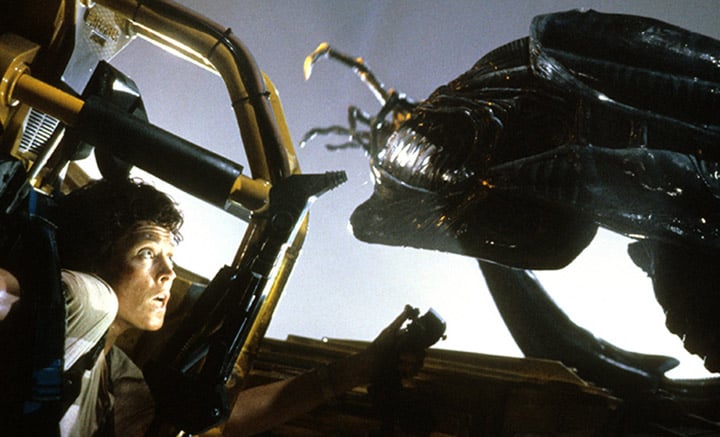
The convention has assembled several cast members from Aliens for the film’s 40th anniversary, including Jenette Goldstein, Mark Rolston, Daniel Kash and Cynthia Dale Scott, alongside Carl Toop, who performed as an Alien Warrior.
Goldstein played Private Vasquez; Rolston was Private Drake; Kash played Private Spunkmeyer; Scott appeared as Corporal Dietrich. All are currently scheduled to appear in both Adelaide and Brisbane.
Four decades is enough time for a film to disappear completely from the popular imagination. Aliens instead belongs to the smaller class of genre movies that became infrastructure.
Its influence is visible across action cinema, science fiction, gaming and the endless permutations of the Alien franchise itself. Its Colonial Marines helped establish a visual and narrative language that games in particular would spend decades borrowing: the military squad, the industrial corridors, the motion tracker, the mounting certainty that everybody is profoundly outmatched.
At Supanova, the anniversary therefore works on two levels. There is the straightforward pleasure of getting several pieces of the film back into the same building. But there is also an audience that has had 40 years to discover, rediscover and inherit it.
Aliens no longer belongs exclusively to people who saw it in 1986; neither does Highlander.
Christopher Lambert is appearing in both cities as that film reaches the same anniversary. His Connor MacLeod became the centre of a franchise that moved through sequels and television, while Lambert later found another durable place in genre culture as Lord Raiden in 1995’s Mortal Kombat — a role he eventually revisited in Mortal Kombat 11. He is scheduled for Q&A panels, photographs and autograph sessions across both weekends.
Forty years on, both films still have an audience to meet.
Middle-earth Never Really Left
Middle-earth provides an even better example of how durable these worlds have become.
Sean Astin is heading to Adelaide and Brisbane more than two decades after Peter Jackson’s The Lord of the Rings trilogy turned Tolkien’s Middle-earth into one of the defining cinematic worlds of the early 2000s.
He’ll be joined by Jed Brophy, Bruce Hopkins and Stephen Hunter, while The Hobbit star Graham McTavish is among Brisbane’s exclusive guests.
The Middle-earth lineup has changed as the events approach.
Elijah Wood had been scheduled to return to Supanova for the first time since 2019, but the convention announced on September 23rd that newly confirmed production obligations would prevent him from travelling to Adelaide and Brisbane.
Supanova simultaneously announced that Karl Urban, Éomer in Jackson’s The Lord of the Rings films and, for a very different modern audience, Billy Butcher in The Boys, will make an Adelaide exclusive appearance on Sunday.
Those appearances also reflect how far Middle-earth’s audience extends beyond the films’ original release.
The children and teenagers who watched Frodo and Sam cross Mordor are now adults, but Middle-earth did not spend the intervening decades sealed inside a DVD box set. Tolkien’s world continued through games, merchandise, memes, streaming television and repeat exposure to Jackson’s films. A franchise can now acquire new audiences without requiring its original audience to relinquish it.
That changes what an anniversary means.
Popular culture once had a relatively legible generational rhythm: parents had their touchstones, children acquired their own, and revivals arrived after enough time had passed to make the old thing feel new again.
Streaming, gaming and online fandom have made that separation much harder to maintain.
At Supanova, someone whose foundational fantasy text was Jackson’s Lord of the Rings can occupy the same convention floor as a fan whose attachments were formed by Baldur’s Gate 3 or Genshin Impact. Neither necessarily regards the other’s obsession as belonging to another cultural era. It is all available now.
New Audiences, Familiar Worlds
Alan Tudyk may be the ideal actor for this environment.
For one audience, he remains Hoban “Wash” Washburne from Firefly and Serenity. Another knows him as K-2SO from Rogue One. His extensive voice work has carried him through animation and games while the projects that established him have continued circulating long after their original releases.
Lenore Zann offers an even clearer illustration of how these stories connect generations.
Zann voiced Rogue in X-Men: The Animated Series, which debuted in 1992, then returned to the character more than 30 years later for X-Men ’97. The revival did not simply commemorate the original cartoon; it continued it for a streaming audience that included both viewers who remembered Saturday-morning television and people encountering that version of the X-Men for the first time.
Elsewhere, the current lineup includes Star Trek: Strange New Worlds star Anson Mount and Once Were Warriors and Moana actor Rena Owen.
The result brings several generations of screen culture onto the same convention floor.
Gaming Changed the Convention Floor
Part of that transformation has come from gaming.
Comic conventions have long extended beyond comics. Film and television celebrities have been central to their appeal for decades, while the boundaries between film, television, comics and gaming fandoms have become increasingly fluid.
Characters migrate between them, as do actors and audiences.
A person can first encounter a fictional universe through a game, watch its adaptation, buy its comics and then spend hundreds of hours discussing it online. Someone else can travel the opposite direction.
That helps explain why contemporary convention programming can accommodate performers associated with Baldur’s Gate 3, Overwatch, Apex Legends, Mortal Kombat, Genshin Impact and The Amazing Digital Circus alongside people whose signature roles predate the PlayStation.
The supposedly competing eras are not competing at all.
Even the comics side demonstrates the same principle. Teenage Mutant Ninja Turtles co-creator Kevin Eastman is among the names appearing in Brisbane. The Turtles began in an independent comic in the 1980s and have since passed through cartoons, films, toys and games often enough that asking which generation they belong to is almost meaningless.
That is how modern franchise culture works at its most durable: not by remaining unchanged, but by continually finding another doorway.
Fandom, Face to Face
That enduring audience also helps explain the convention business.
Conventions are one of the places where online fandom becomes a shared, physical experience. Streaming may keep decades of entertainment accessible, and social media may allow fandom to operate every day of the year, but people will still travel to stand in a room with the person who played a character they care about.
The object of affection might be 40 years old or four; that distinction matters less than it once did.
Which makes the Aliens reunion an anniversary story, but also something bigger. Goldstein, Rolston, Kash, Scott and Toop are returning to meet an audience that now potentially encompasses several generations. Around them will be actors, voice performers, artists and creators attached to cultural properties born decades apart.
The convention floor brings different generations of fandom into the same conversation.
Aliens sits beside Baldur’s Gate 3. Éomer can share a building with The Amazing Digital Circus. A character from a 1992 X-Men cartoon disappears for decades and returns in essentially the same continuity on a 2020s streaming service.
Pop culture used to be easier to divide into eras because access to it was easier to lose. Television disappeared from schedules. Games became incompatible with new hardware. Films went out of circulation. Fandoms survived, but often at a distance from the mainstream.
That scarcity has eroded.
Now the past is often available to be streamed, replayed, rebooted, memed, merchandised and introduced to somebody who wasn’t alive when it first appeared.
Supanova’s 2026 lineup is what that looks like when everybody turns up in the same room.
Supanova Adelaide runs from October 30th to November 1st at Adelaide Showground, followed by Supanova Brisbane from November 6th to 8th at Brisbane Convention & Exhibition Centre. Tickets are on sale now, with guest appearances subject to health and other commitments.

