





























What LOOKOUT 2027 Says About the Strange Afterlife of ’90s Alternative Rock

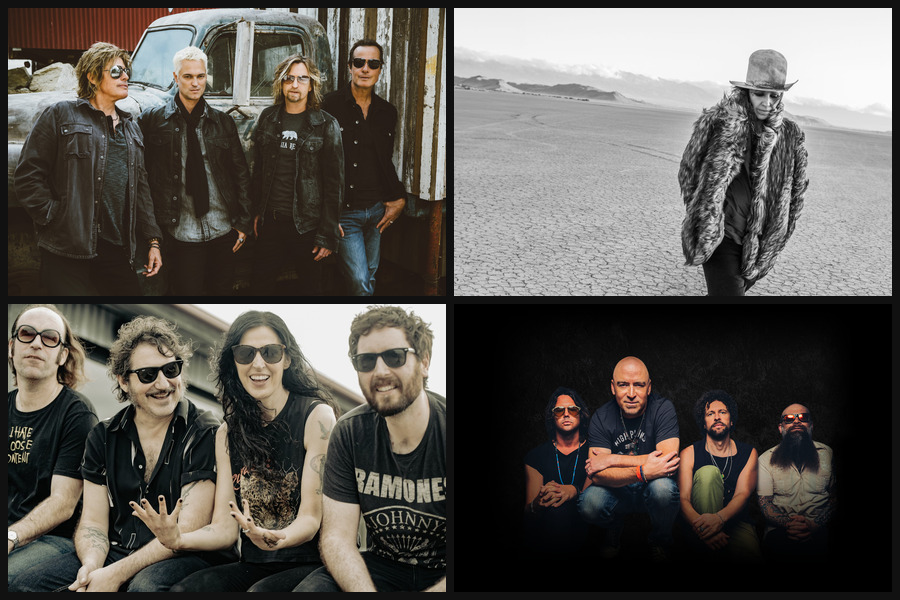
+LIVE+, Stone Temple Pilots, 4 Non Blondes and Magic Dirt aren’t simply returning to Australia. LOOKOUT is betting that the audience for ’90s alternative rock has become something bigger and more commercially durable than nostalgia.
There is a revealing detail buried in the itinerary for LOOKOUT 2027.
In March, +LIVE+, Stone Temple Pilots, 4 Non Blondes and Magic Dirt will play Rod Laver Arena in Melbourne. A week later, they will play the arena formerly known as Qudos Bank Arena in Sydney. The tour also takes in the Brisbane and Adelaide entertainment centres, alongside racecourses, wineries and outdoor sites in Bendigo, Mornington, the Hunter Valley and Broadbeach.
This is not four ageing rock bands being squeezed into a theatre and sold on memories. It is a ten-date national operation moving between arenas and destination-style outdoor shows, with general admission tickets for Brisbane advertised at $220 plus fees and early-entry VIP packages at $377.25.
That tells us something more interesting than the usual line about the Nineties being back: they never entirely went away.
The commercial infrastructure around ’90s alternative rock has instead matured with its audience. Records once sold to teenagers and twenty-somethings through radio, MTV, triple j and record stores are now being resold as live experiences to listeners with considerably more disposable income. At the same time, streaming and social platforms have separated some of the era’s biggest songs from the generation that first owned them.
LOOKOUT 2027 sits squarely at that intersection.
Love Music?
Get your daily dose of everything happening in Australian/New Zealand music and globally.

The festival itself is evidence of the market. Face To Face Touring launched LOOKOUT in 2024 with +LIVE+ and Incubus alongside Birds of Tokyo, Eskimo Joe and the Superjesus. The following year it returned with an overwhelmingly Australian bill featuring Jet, Grinspoon, the Veronicas, Spiderbait, Jebediah and Magic Dirt.
Now +LIVE+ are back for another LOOKOUT run, this time beside Stone Temple Pilots and the recently reunited 4 Non Blondes.
Three editions do not constitute a cultural revolution. They do, however, suggest that promoters have found something repeatable.
And Australia is particularly fertile territory for it.
These Records Were Huge Here
It is easy, three decades later, to flatten the alternative explosion into an American story: Seattle, grunge, MTV, Lollapalooza, major labels scrambling to find the next Nirvana.
The Australian charts tell a messier and more useful story.
In 1995, ARIA’s year-end albums chart had Alanis Morissette, Silverchair, +LIVE+, Green Day and the Offspring all inside the Top 11. +LIVE+’s Throwing Copper finished at Number Eight that year. Remarkably, it finished at Number Eight again in 1996, and was still Number 55 on the 1997 year-end chart.
That is not the footprint of a cult import.
The album was ultimately certified 10 times platinum in Australia. When +LIVE+ returned for the inaugural LOOKOUT in 2024, the band were effectively touring a record that had spent years embedded in Australian mainstream rock culture.
Stone Temple Pilots have their own evidence. Their second album, Purple, reached Number One in Australia in 1994, during a year in which the ARIA albums summit also belonged at various points to Soundgarden, Pearl Jam and Nirvana.
Then there is 4 Non Blondes.
“What’s Up?” peaked at Number Two on the Australian singles chart in 1993, while Bigger, Better, Faster, More! reached Number Four. The single finished Number Seven on ARIA’s year-end chart.
Thirty-four years later, that song is still doing an extraordinary amount of work. The important shift is where.
The Algorithm Has No Memory of 1993
4 Non Blondes are perhaps the clearest argument against describing LOOKOUT entirely through nostalgia, because nostalgia requires memory.
A substantial part of the modern audience encountering “What’s Up?” was not there in 1993.
The song underwent another viral surge on TikTok last year, helped by a mash-up with Nicki Minaj’s “Beez in the Trap”. The LOOKOUT announcement cites more than 15 billion views and 5.4 million user-created videos associated with the revival. Those figures come from promotional material and should be understood as such, but the broader resurgence is plainly visible: the track became raw material for a platform and audience that did not exist when 4 Non Blondes broke up.
That distinction matters.
Legacy music once travelled primarily through oldies radio, greatest hits compilations, film soundtracks, parents’ record collections and retrospective media. TikTok has added something less orderly. A song can return without much of its original context attached. Thirty years of cultural baggage can disappear in seconds; what remains is the chorus, the vocal, the joke, the emotional release or the fragment somebody can repurpose.
Few songs are better designed to survive that process than “What’s Up?” Linda Perry’s vocal moves from conversation to eruption, and the chorus demands participation even from people who know almost nothing about the band that recorded it.
But the 4 Non Blondes story has now moved beyond circulation of an old hit.
The band returned to proper live performance last year after more than three decades away and continued playing shows. Perry has since confirmed a new 4 Non Blondes album, 1994, for 2027.
That changes their place on the LOOKOUT bill. They are simultaneously a reunion act, a one-album Nineties phenomenon, a social media rediscovery and a band attempting to make new music.
The past is the reason the audience is there. It does not necessarily dictate what happens next.
Nostalgia Has Become a Premium Product
None of this means nostalgia is absent. LOOKOUT’s own marketing explicitly promises “pure rock nostalgia”.
The more revealing question is what nostalgia has become as a business.
At the 2025 LOOKOUT dates, general admission at Sandstone Point was advertised at $150 plus fees, with a $200 “Party Pit” offering access closer to the stage and dedicated entry and bar lanes. The inaugural 2024 event went further at some locations, offering premium hospitality areas with private bars, viewing sections and food-and-drink packages.
For 2027, Brisbane general admission floor and A Reserve tickets are listed at $220 plus fees. Early Entry VIP costs $377.25 plus fees and comes with a drink voucher, merchandise, commemorative laminate and expedited access.
The economics are difficult to miss.
The teenager who bought Throwing Copper or Purple in the Nineties is now somewhere around middle age. A live music business under pressure from rising touring costs does not have to persuade that customer to learn a new catalogue. It can sell recognition, scarcity, comfort, convenience and proximity around songs whose value was established decades ago.
LOOKOUT also understands that its audience is not necessarily looking for the same festival experience it wanted at 19.
That helps explain the geography. Mornington Racecourse and Roche Estate are not incidental additions to the capital city arenas. They turn the concert into a day out and widen the product beyond a conventional rock show. Previous editions have similarly used coastal parks and regional outdoor sites.
There is an appealing circularity to it. Alternative rock was once sold partly as a rejection of polished mainstream entertainment. Its survivors can now be packaged with VIP lanes, commemorative laminates and premium hospitality.
That is not necessarily hypocrisy. It is what happens when a youth culture survives long enough for its audience to acquire mortgages.
Australia’s Version of the Story
Magic Dirt make the bill more interesting than a package of imported catalogue acts.
The Geelong band emerged from the same broad cultural opening that allowed distorted guitars, abrasive music and independent scenes to move unusually close to the Australian mainstream during the Nineties. But their career never followed the same trajectory as the American bands above them on this bill.
That is precisely why they belong there.
Their 1996 debut album, Friends in Danger, originally peaked at Number 25 on the ARIA albums chart. When it was reissued for its 25th anniversary in 2021, it entered the chart at Number Ten, a higher position than it managed on first release. It also reached Number Three on ARIA’s vinyl chart that week.
That is unusually clean evidence of how catalogue value can grow rather than merely decay.
Magic Dirt are not being remembered only because they survived. Their work has been recirculated, reissued and reassessed by an audience capable of returning an old album to the national Top Ten a quarter century later.
Their presence also stops LOOKOUT from presenting the Nineties alternative boom as something Australia simply imported. The country produced its own ecosystem: bands, labels, venues, festivals, radio audiences and record buyers. The American alternative explosion arrived here at exactly the moment local acts including Silverchair, You Am I, Regurgitator, Spiderbait, Powderfinger and Magic Dirt were building careers of their own.
The 2025 LOOKOUT lineup made that local history the entire product: Jet, Grinspoon, the Veronicas, Spiderbait, Jebediah and Magic Dirt.
The 2027 version reconnects the Australian and American sides of the story.
The Canon Has Changed
There is another reason these tours work now: time has been selective.
The alternative era produced thousands of records and hundreds of heavily promoted bands. The modern touring market does not preserve all of them equally. It preserves songs.
That distinction can be brutal. Thirty years of career history may ultimately compress into the handful of tracks people will pay to hear in a room together.
+LIVE+ have “Lightning Crashes”, “I Alone” and “All Over You”. Stone Temple Pilots have “Plush”, “Interstate Love Song”, “Vasoline” and “Creep”. 4 Non Blondes possess the most extreme version of the phenomenon: one song so durable that it has outlived the original lifespan of the band many times over.
Streaming has made that hierarchy visible. So has festival culture. An audience does not need to have retained an entire album collection to recognise the opening seconds of a song.
Yet LOOKOUT also demonstrates the limits of the “legacy act” label.
Stone Temple Pilots continue without Scott Weiland, who died in 2015, with Jeff Gutt fronting the band. 4 Non Blondes have resumed activity after three decades and are preparing new material. Magic Dirt continue to play and periodically return their catalogue to circulation. +LIVE+ have now become recurring visitors to the LOOKOUT ecosystem itself.
These are different relationships with the past, bundled together because the songs still make commercial sense in the present.
Perhaps that is the real story of ’90s alternative rock in 2027.
The genre’s original cultural conditions are gone. The monoculture that could turn strange guitar bands into multi-platinum stars has fractured. MTV no longer determines what a generation sees. Physical albums no longer organise listening in the same way. The idea of “alternative” itself became increasingly difficult to sustain once alternative rock became one of the dominant sounds of mainstream music.
But the audience did not vanish when that system did. It aged and it acquired money. It kept certain records and forgot others. Its children heard some of the same songs through entirely different technologies. Algorithms pulled old choruses into new contexts. Anniversary reissues returned to the charts. Promoters learnt that a racecourse full of people singing songs from 1994 could still be a viable proposition.
Which brings us back to those arenas.
When LOOKOUT reaches Melbourne, Sydney and Brisbane next March, it will be selling music from an era routinely described in the language of the past inside some of the country’s biggest rooms.
Nostalgia is part of that transaction, certainly.
But nostalgia alone does not explain why Throwing Copper remained one of Australia’s biggest albums across multiple years, why a 25-year-old Magic Dirt record could reach a new chart peak, why 4 Non Blondes could disappear for three decades and return just as their defining song was being dismantled and rebuilt for another generation, or why LOOKOUT itself has made it to a third iteration.
The more convincing explanation is simpler.
This music still has an audience; the interesting part is that it is no longer quite the same audience.
LOOKOUT 2027
Saturday, March 6th — Adelaide Entertainment Centre, Adelaide
Sunday, March 7th — Bendigo Racecourse, Bendigo
Wednesday, March 10th — AIS Arena, Canberra
Thursday, March 11th — Rod Laver Arena, Melbourne
Saturday, March 13th — Mornington Racecourse, Mornington
Wednesday, March 17th — WIN Entertainment Centre, Wollongong
Thursday, March 18th — Afterpay Arena, Sydney
Saturday, March 20th — Roche Estate, Hunter Valley
Sunday, March 21st — Kurrawa Park, Broadbeach
Wednesday, March 24th — Brisbane Entertainment Centre, Brisbane
For more information visit http://www.lookouttour.com.au

